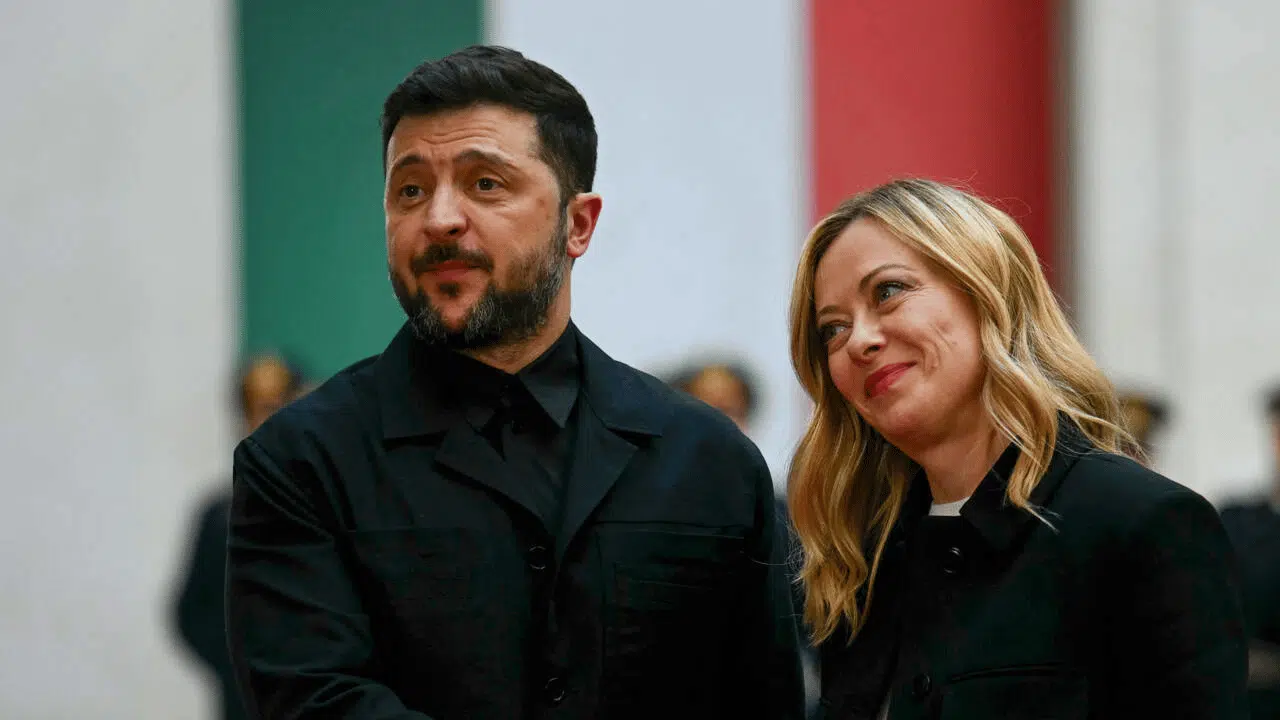
As the war in Ukraine grinds past its thousandth day, President Volodymyr Zelenskyy faces mounting pressure from Washington to consider peace terms — but he’s turning to Europe to hold the line against Russian aggression. His high-stakes diplomatic campaign underscores the deepening fissures in Western unity and the uncertain future of global security.
A War That Changed Europe
Since Russia’s full-scale invasion in February 2022, Ukraine’s war has transformed the European security order, revived NATO, and tested the endurance of democratic alliances worldwide. What began as an existential fight for survival has evolved into a prolonged, grinding conflict reshaping defense budgets, energy strategies, and political alignments across the continent.
Now, nearly four years later, with Ukraine’s much-anticipated 2024 counteroffensive yielding limited territorial gains and winter tightening Russia’s advantage, Zelenskyy finds himself facing dwindling ammunition, waning Western patience, and growing calls for a “realistic” settlement.
But conceding territory — particularly in Donbas or Crimea — remains a political red line for Kyiv. Zelenskyy insists that doing so would not only betray Ukraine’s sovereignty but also embolden future aggressors, effectively rewriting the international rules-based order that underpins European peace.
The Washington Dilemma
In recent months, leaked diplomatic briefings and statements from U.S. officials suggested that the Biden administration is quietly reconsidering its approach to Ukraine. Senior American policymakers have made no secret of their frustration over the war’s stalemate and the domestic political deadlock blocking additional aid packages in Congress.
While President Biden continues to voice public support for Ukraine’s defense, aides privately acknowledge a sense of fatigue among American voters and lawmakers alike. Economic challenges, Israel-Gaza tensions, and the approaching 2026 midterm elections have narrowed Washington’s appetite for open-ended commitments abroad.
Behind closed doors, U.S. officials have reportedly urged Kyiv to explore “creative” political options — a diplomatic euphemism that Ukrainian officials interpret as pressure to negotiate concessions. The White House denies any intention to “force” Kyiv into talks, emphasizing that “Ukraine decides its future.” Still, Western diplomats confirm that Zelenskyy now faces a subtle but unmistakable shift in tone from Washington.
Zelenskyy’s European Offensive
In response, Zelenskyy has intensified his outreach to Europe, seeking to consolidate a coalition of steadfast allies. Over the past several weeks, he has toured key capitals — Paris, Berlin, Warsaw, and Brussels — urging leaders to maintain unity and accelerate both military and financial support.
At a recent gathering of European Parliament members, Zelenskyy delivered a characteristically impassioned speech, declaring that “Ukraine will not trade its freedom for peace built on illusions.” His message: Europe must not succumb to “war fatigue” or the illusion that appeasement can stabilize relations with Moscow.
This renewed diplomatic push coincides with a series of major European decisions on long-term defense spending and ammunition production. The European Union is finalizing its €50 billion Ukraine Facility — a multi-year funding mechanism designed to ensure Kyiv’s economic survival and reconstruction amid uncertainty about future U.S. contributions.
Divisions Within Europe
Still, Zelenskyy’s European campaign faces its own headwinds. While countries like Poland, the Baltic states, and the Nordic bloc remain unequivocally supportive, others — including Hungary, Slovakia, and even parts of Germany and Italy — are increasingly ambivalent. Populist leaders such as Hungary’s Viktor Orbán and Slovakia’s Robert Fico have voiced skepticism toward what they call “unending war policies.”
Hungary’s government continues to block EU consensus on sanctions and aid packages, citing concerns about “war escalation.” Orbán has positioned himself as an informal intermediary with Moscow, arguing that “peace negotiations” should resume immediately. Though isolated within the bloc, his dissent complicates Brussels’ efforts to present a united front — especially as EU decisions on funding require unanimous approval.
European public opinion, too, has grown more fragmented. In France and Germany, opinion polls reveal declining enthusiasm for military aid, with some viewing the war as a distant conflict draining attention and resources needed for domestic priorities.
The Stakes: Territorial Integrity vs. Political Reality
For Zelenskyy, the central dilemma remains unchanged: compromising on territory risks fracturing his domestic base and delegitimizing his entire presidency. The Ukrainian public, steeled by years of hardship and sacrifice, overwhelmingly opposes any deal that rewards Russia’s aggression.
From a strategic standpoint, ceding land would also weaken Ukraine’s viability as an independent state. Crimea houses key ports and infrastructure vital to Ukraine’s economy, while the Donbas region forms an industrial backbone. Any surrender of these territories would cement Russia’s control over Ukraine’s most productive zones and limit its future sovereignty.
Nonetheless, analysts warn that absolute goals — such as fully restoring Ukraine’s 1991 borders — may no longer be militarily possible in the short term. Western defense experts increasingly describe the conflict as “strategic containment,” where halting Russian advances becomes more realistic than reclaiming all occupied territory.
Russia’s Strategy of Attrition
Meanwhile, the Kremlin continues to pursue a war of attrition. With its economy increasingly integrated into a wartime footing and energy revenues stabilized through sales to China and India, Russia appears confident it can outlast Western fatigue.
Moscow’s military doctrine has shifted toward grinding offensives, using overwhelming artillery firepower and drone swarms — much of it supplied by Iran and domestically produced within an expanding arms industry. While Russian casualties remain staggering, Putin seems willing to sustain long-term losses to exhaust Ukraine and its backers.
At home, Russia’s propaganda machine promotes a narrative of inevitability: that Russia’s victory is a matter of time, and any Western withdrawal will vindicate Putin’s defiance. The Kremlin carefully watches for splits within NATO and the EU, hoping to exploit divisions through cyber campaigns, disinformation, and covert political funding.
Ukraine’s Search for Military Sustainability
For Kyiv, sustainability is now the watchword. After years of heroic resistance, the Ukrainian Armed Forces face acute shortages of ammunition, air defense missiles, and trained personnel. Losses in key sectors during the 2024 counteroffensive further exposed structural weaknesses in logistics and coordination.
European allies have sought to fill the gap. The Czech Republic has spearheaded a multinational initiative to procure ammunition from non-EU countries; Germany has pledged additional air defense systems; and France is stepping up artillery production. Yet the logistical lag — compounded by bureaucracy and industrial bottlenecks — continues to constrain Ukraine’s operational capacity.
Zelenskyy’s administration is also navigating difficult domestic reforms aimed at overhauling military conscription and combating corruption within procurement systems. Western donors have linked parts of their financial aid to transparency benchmarks, underscoring the delicate balance between wartime pragmatism and accountability.
Washington’s Political Crosscurrents
Across the Atlantic, U.S. politics have complicated Ukraine’s cause. A divided Congress has stalled new aid packages amid partisan disputes, leaving billions in promised funding frozen. The Republican-led House has conditioned any future assistance on stricter immigration border measures, while isolationist voices gain prominence.
Simultaneously, the approach of the 2026 midterms and the shadow of the 2028 presidential race have politicized Ukraine policy. Former President Donald Trump and his allies continue to argue that excessive support for Kyiv distracts from domestic concerns and risks escalation with Moscow. Even moderate Democrats face growing grassroots pressure to prioritize domestic spending over foreign aid.
While the Pentagon and State Department insist they remain committed to Kyiv’s defense, officials privately concede that U.S. leverage diminishes as the conflict drags on without clear progress.
The Role of NATO and Europe’s Awakening
The geopolitical stakes extend well beyond Ukraine’s borders. For NATO, the war has catalyzed its most significant transformation since the Cold War. Sweden and Finland’s accession expanded the alliance’s northern flank, while defense budgets across the continent soared.
Yet NATO’s dependency on U.S. leadership remains glaring. European defense autonomy — long discussed, rarely implemented — is still years away. Zelenskyy’s appeal for Europe to “shoulder more” resonates with policymakers in Brussels, who fear that an inward-turning America could leave Europe exposed to renewed Russian aggression.
In this sense, Ukraine’s fate has become a litmus test for Europe’s sovereignty. As French President Emmanuel Macron declared earlier this year, “If Russia wins, Europe loses.” Paris, Berlin, and Warsaw are now exploring frameworks for long-term defense pacts with Kyiv, some outside NATO’s formal umbrella, to guarantee Ukraine’s deterrence capability even without U.S. security guarantees.
The Economic Battlefront
Economic resilience is another dimension of Ukraine’s struggle. Despite the destruction, Kyiv’s financial system remains surprisingly functional, supported by international loans and carefully managed fiscal policy. The war has forced unprecedented digitalization — from e-governance to tax collection — keeping the machinery of state running even under bombardment.
However, the reconstruction bill continues to soar. The World Bank estimates that rebuilding Ukraine’s infrastructure could exceed $500 billion. European and international donors are designing “Marshall Plan-style” frameworks for postwar recovery, which depend heavily on anti-corruption measures and judicial reform.
Meanwhile, billions in frozen Russian assets — held in Western banks — represent a tantalizing but legally complex funding source. The EU recently approved a structure to use profits from those assets to support Ukraine’s defense. Moscow has threatened retaliation, calling the move “theft at the state level.”
The Moral Narrative: Democracy vs. Aggression
Beyond strategy, Zelenskyy continues to cast the war as an existential clash between democracy and authoritarianism. In his speeches — addressed as much to Western audiences as to Ukrainians — he frames each request for aid as a moral imperative: the defense of shared values, not just national survival.
This framing resonates strongly in Central and Eastern Europe, where memories of Soviet occupation remain vivid. Yet in Western Europe and North America, the narrative has lost some of its urgency amid competing crises, from inflation to Middle Eastern conflicts.
Still, Zelenskyy’s singular communication skill — combining moral clarity with emotional appeal — remains one of Ukraine’s greatest assets. His ability to evoke empathy across borders has kept Ukraine’s story in global consciousness, even as headlines shift elsewhere.
Europe’s Test of Unity
The coming months promise to be decisive. The EU’s December summit may determine the scale and structure of the next tranche of Ukrainian funding. Any failure to secure consensus would signal a serious erosion in European unity — precisely the outcome Moscow has worked to achieve.
Poland and the Baltic nations have urged Brussels to move forward even without unanimity, proposing alternative funding mechanisms. “If one or two governments want to paralyze aid,” Estonia’s Prime Minister Kaja Kallas said recently, “Europe must find a way to act without them.”
Meanwhile, Germany and France seek to maintain fragile cohesion, wary that open confrontation with Orbán could deepen the EU’s internal fractures. European Commission President Ursula von der Leyen continues to frame support for Ukraine as “an investment in Europe’s security, not charity.”
Negotiating from Strength—or Survival?
Behind the scenes, pragmatic discussions are emerging about what a sustainable peace might look like. Western analysts distinguish between negotiating from strength — forcing Russia to the table after battlefield setbacks — and negotiating from survival, in which Ukraine accepts painful compromises under pressure.
Zelenskyy remains publicly adamant: any peace process must begin with Russia’s withdrawal from occupied territories and accountability for war crimes. However, with frontlines largely frozen, even his closest advisers acknowledge that achieving such conditions soon remains improbable.
Russia’s stated goal — demilitarization and “neutralization” of Ukraine — is equally unacceptable in Kyiv. As both sides dig in, a Korean Peninsula-style “armistice without peace” scenario appears increasingly plausible: a line of contact stabilized by deterrence rather than reconciliation.
The Shadow of American Elections
Looking ahead, Ukraine’s diplomatic calculations are increasingly intertwined with U.S. domestic politics. Should Washington reduce its commitments, Europe would face enormous pressure to fill the gap — a logistical, financial, and political challenge of historic scale.
The prospect of a U.S. administration less sympathetic to Kyiv has already altered European strategic thinking. Brussels is accelerating efforts to create a permanent European Defense Fund, bolster the European Peace Facility, and coordinate arms procurement — all aimed at reducing reliance on American leadership.
Zelenskyy, aware of how precarious his international support remains, has shifted rhetorically from gratitude to urgency, warning that “any pause in our defense means more graves for our people.”
Russia’s Information Offensive
Parallel to its battlefield campaign, Moscow continues to wage information warfare targeting Western publics. Kremlin-linked media and online networks amplify narratives depicting Ukraine as corrupt, divided, and unworthy of further aid. In some European countries, these disinformation campaigns have measurably influenced public opinion, according to intelligence agencies.
European institutions now face the dual challenge of sustaining public solidarity with Ukraine while countering manipulation without fueling censorship concerns. The EU’s Digital Services Act gives regulators new tools to identify and block coordinated disinformation efforts, though enforcement remains uneven across member states.
The Human Cost and the Spirit of Resistance
Amid geopolitical calculations, the human cost remains staggering. Thousands of civilians have been killed, millions displaced, and entire cities reduced to ruins. Yet Ukraine’s social fabric — though scarred — remains remarkably resilient. Volunteer networks, digital governance tools, and civic innovation continue to function even under the strain of war.
In Kyiv and Kharkiv, schools operate in underground shelters; small businesses relocate and rebuild; cultural life, though subdued, endures. This resilience reinforces the notion that for Ukrainians, the war is not just territorial — it’s existential.
Zelenskyy often frames this spirit as a “collective miracle,” proof that democratic resolve can withstand authoritarian might. It’s this conviction that fuels his refusal to trade land for peace, despite international pressure and mounting challenges.
Conclusion: A War of Endurance, A Test of Values
Nearly four years after the invasion, Ukraine’s war has transcended military and geographical boundaries. It has become a defining struggle for the post–Cold War world order, testing whether smaller democratic nations can resist authoritarian neighbors with collective Western support.
As Zelenskyy rallies Europe, his defiance against U.S. pressure underscores a broader shift: the realization that Europe must shoulder greater responsibility for its own security and principles. The road ahead promises no easy victories — only the hard politics of endurance.
For now, Kyiv continues to fight not just for its soil, but for the idea that borders cannot be erased by force and that democratic nations, even when tired, must not capitulate to aggression.