

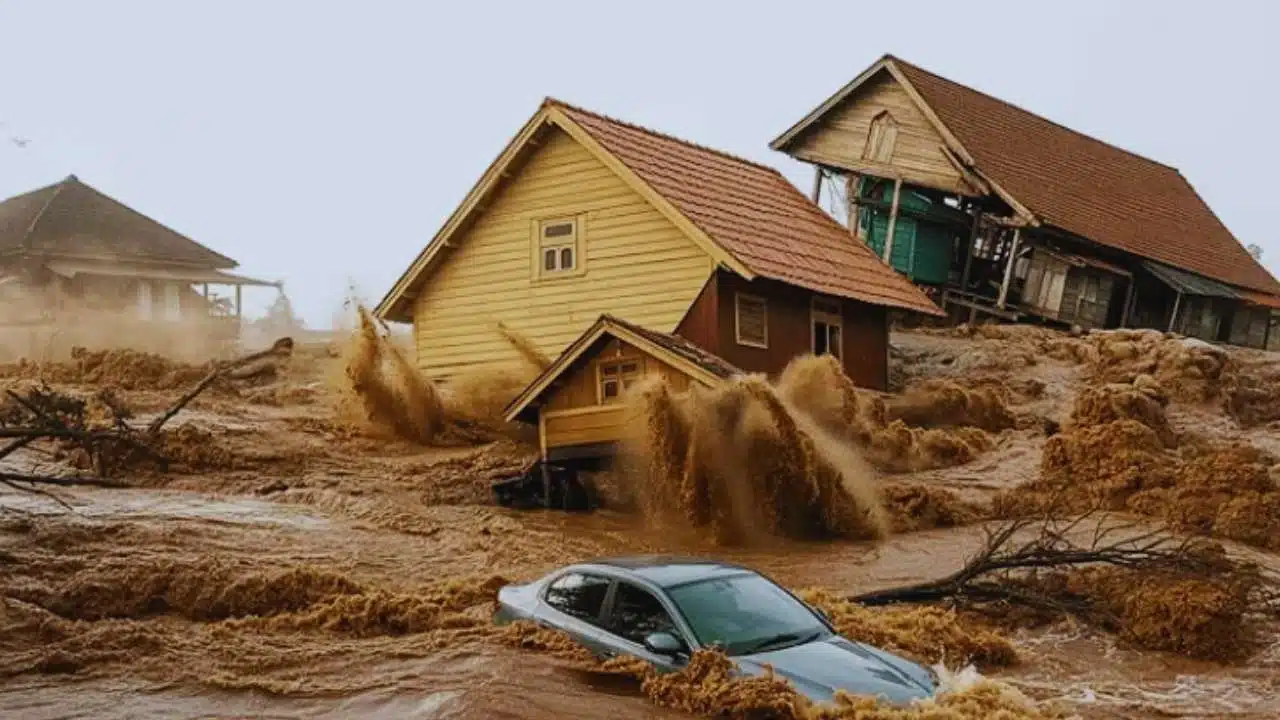
Devastating floods and landslides across Southeast Asia have claimed the lives of over 620 people and left hundreds missing, causing widespread displacement and destruction in Indonesia, Thailand, Sri Lanka, and Malaysia. This crisis unfolded after the passage of Cyclone Senyar and Cyclone Ditwah, rare and powerful tropical cyclones that combined with heavy monsoon rains to produce some of the worst flooding the region has experienced in decades.
Widespread Impact and Rising Death Toll
Indonesia has been the hardest hit, with over 435 deaths reported so far in the provinces of North Sumatra, West Sumatra, and Aceh, and more than 400 people still missing. The floods and landslides devastated communities on Sumatra island when rivers burst their banks, sweeping through villages and towns, destroying homes, roads, and communication lines. Around 80,000 people have been forced to evacuate, many stranded in remote areas cut off by washed-out roads and landslides. Rescue teams are using helicopters and boats to reach those trapped, while aid deliveries aim to supply food, water, medical care, and shelter. Some residents, fearing starvation before aid arrived, resorted to taking food and water from abandoned places. The government has dispatched aircraft carrying rescue personnel, medical supplies, tents, and generators to deal with the scale of the disaster, which officials say ranks among Indonesia’s most severe weather-related calamities in recent years.
In southern Thailand, the death toll stands at 162, primarily in Songkhla province including its largest city, Hat Yai. The area saw unprecedented rainfall over a single day—up to 335 millimeters—the heaviest rain in approximately 300 years. Floodwaters rose rapidly, submerging streets, homes, hospitals, and markets. Hospitals, overwhelmed with casualties, resorted to moving bodies into refrigerated trucks after morgue capacities were exceeded. Over 3.5 million people have been affected by the floods across southern Thailand, and more than 40,000 have taken shelter in evacuation centers. Amid rising public anger over perceived mishandling of warnings and response, two local officials have been suspended, and the Prime Minister publicly apologized, offering compensation for families who lost loved ones.
Sri Lanka suffered the impact of Cyclone Ditwah, which led to 153 confirmed deaths and left 191 people missing as landslides and floods devastated the island. More than 78,000 people are displaced, housed in nearly 800 emergency shelters nationwide. About one-third of the country remains without electricity or clean water due to damaged infrastructure. The cyclone swept over Sri Lanka, disrupting lives through mudslides and floodwaters that buried homes and cut off rural communities. Schools, roads, railways, and airports have been closed or severely affected. The government declared a state of emergency to coordinate relief efforts while the international community has begun offering aid. The destruction is compounded by fears of further rain and flooding in the coming days.
Malaysia reported more localized but deadly flooding linked to Cyclone Senyar, with two confirmed deaths and thousands displaced, mainly in northern states. About 30,000 people have been moved into evacuation centers. Though the storm weakened upon crossing Malaysia, heavy rains and rough seas continue to pose hazards, and authorities remain on alert to prevent further casualties.
Rare Cyclones and Record Rainfall
Cyclone Senyar is exceptionally rare in the region, having formed in the Malacca Strait, a narrow waterway between the Malay Peninsula and Sumatra where tropical cyclones almost never occur. Senyar is only the second such cyclone documented in this area since 2001. As it moved across the region, it drew intense moisture from warm ocean waters, fueling torrential downpours and strong winds. The cyclone’s passage triggered massive flooding and landslides, especially on the island of Sumatra, southern Thailand, and parts of Malaysia. Floodwaters surged rapidly, with some rivers overflowing and currents powerful enough to wipe away homes in seconds.
In southern Thailand, Hat Yai city recorded 335 millimeters of rainfall in 24 hours, the highest volume there in recorded history, dating back over 300 years. The geography of the area and limited drainage infrastructure exacerbated flooding, trapping thousands of residents and inundating entire neighborhoods. These extreme weather events have been linked by scientists to shifting climate patterns, with warmer sea temperatures providing more energy for intense storms and heavier monsoonal rains than traditionally observed.
Cyclone Ditwah struck Sri Lanka shortly after Senyar, bringing similarly destructive rainfall and triggering numerous landslides, especially in the eastern and central parts of the island. The extraordinary rains led to widespread flooding, power outages, and infrastructure damage. The interaction of these rare cyclones with regional monsoonal shifts has alarmed climate experts, highlighting the increasing frequency and intensity of such events due to global climate change.
Emergency Response, Challenges, and Wider Implications
Rescue and relief operations across the affected countries have struggled under the scale of the disaster. In Indonesia, inaccessible terrain and damaged roads have impeded ground movements, forcing reliance on helicopters and boats to reach stranded inhabitants. Emergency shelters are overwhelmed with displaced families, many lacking access to clean water, food, and medical care. Health officials warn of rising risks of disease outbreaks due to crowded, damp conditions.
In Thailand, emergency services are stretched managing evacuations and treating thousands of flood victims. Hospitals are over capacity, and morgues have resorted to storing bodies in refrigerated trucks. The government has pledged financial compensation for families of the deceased, but public criticism over delayed responses has intensified, leading to suspensions within local administrations.
Sri Lanka’s declaration of a state of emergency has granted authorities extended powers to coordinate resources and evacuations. Yet, the scale of displacement and destruction has overwhelmed officials and volunteers. Efforts are stretching to restore electricity, clear blocked roads, and provide humanitarian assistance. Schools remain closed, and many transport routes disrupted.
The floods have also brought forward urgent discussions about climate adaptation in the region. Experts stress the need for upgrading drainage infrastructure, enforcing safer construction practices, and implementing robust early-warning systems to mitigate impacts of increasingly frequent extreme weather events. The rare cyclones and record rainfall serve as stark reminders of a climate that is undergoing rapid and unpredictable changes, emphasizing the importance of disaster preparedness and sustainable environmental practices.
Beyond immediate impacts, the human toll is profound. Families have lost homes, livelihoods, and loved ones, with survivors recounting harrowing experiences of floodwaters rising within moments and entire communities cut off by landslides. The coming weeks will be critical for rescue, recovery, and rebuilding efforts, as affected communities seek to restore normalcy amid ongoing weather threats and infrastructural challenges.
























