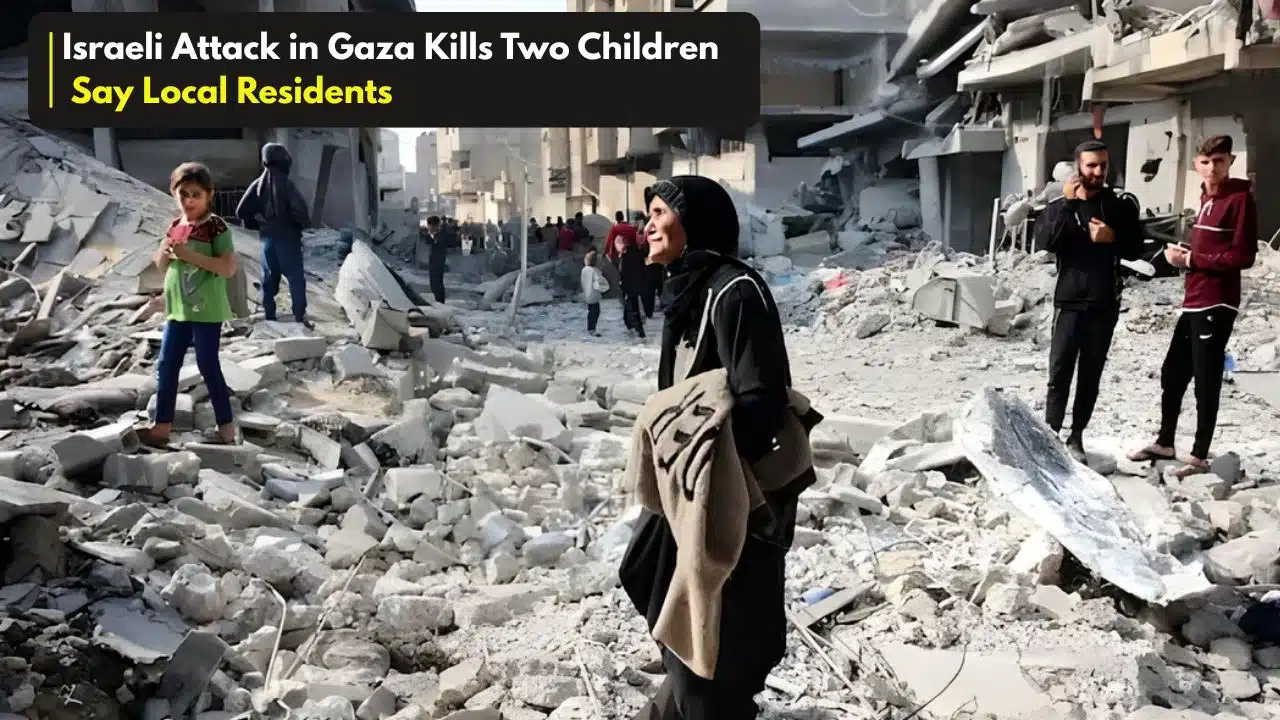
The ongoing conflict in Gaza has once again drawn global attention as reports confirm that Israeli forces killed two children in southern Gaza, despite a fragile ceasefire agreement. The incident, which occurred in Bani Suheila near Khan Younis, underscores the persistent violence and humanitarian crisis gripping the enclave, even as diplomatic efforts attempt to stabilize the region.
Incident Details
On Saturday, an Israeli drone strike targeted a group near Al-Arabi School in Bani Suheila, resulting in the deaths of two young brothers, Uma and Adi T Abu Assi, aged 11 and 8 respectively. Witnesses and local medics reported that the children were playing in the area when the attack occurred. They were rushed to Nasser Medical Complex in Khan Younis with severe injuries, but were later declared dead by hospital staff. The location of the strike is reportedly beyond the “Yellow Line,” the boundary from which Israeli forces were supposed to have withdrawn as part of the ceasefire agreement.
The Israeli military claimed that their forces identified two “suspects” who allegedly crossed the ceasefire lines and engaged in “suspicious activities” that posed a threat to Israeli soldiers in southern Gaza. The military statement said that the air force, guided by ground forces, “neutralized the suspects to eliminate the threat.” However, the statement did not clarify that the individuals were children, nor did it provide further details about the nature of the “suspicious activities”.
Broader Context of Ceasefire Violations
The ceasefire agreement, brokered by the United States and formally implemented on October 10, 2025, was intended to halt the two-year conflict that began after a Hamas-led assault on Israel in October 2023. That attack resulted in approximately 1,200 fatalities and the abduction of around 250 people, mostly civilians, to Gaza. Israel’s subsequent military response has led to widespread destruction and loss of life, with Gaza’s health ministry reporting over 70,000 deaths, including thousands of children.
Despite the ceasefire, violations have been frequent. The Gaza Government Media Office reported at least 535 violations by Israeli forces since the agreement began, including attacks, incursions, and targeted killings beyond the agreed boundaries. Humanitarian organizations and international observers have repeatedly highlighted the persistent breaches of the ceasefire terms, with localized bombardments and ground operations continuing across the Strip.
Humanitarian Crisis and Civilian Suffering
The humanitarian situation in Gaza remains dire. The International Committee of the Red Cross (ICRC) and other aid agencies report that famine conditions have been declared in parts of Gaza, with 1.5 million people in urgent need of emergency shelter as winter approaches. Over 68,000 people have died and more than 170,000 have been injured since October 2023, with hospitals operating at minimal capacity and medical evacuations often delayed or impossible due to ongoing hostilities.
The latest attack adds to the toll of children killed in the conflict. Reports indicate that, on average, two children are killed every day during the ceasefire, often as a result of drone strikes or artillery fire. The United Nations and human rights groups have condemned the continued targeting of civilians and the lack of accountability for such incidents.
Impact on Families and Communities
The deaths of the two brothers in Bani Suheila have devastated their family and community. Relatives described the children as playful and full of life, often seen helping their parents and neighbors despite the hardships of displacement and war. The loss has sparked grief and anger, with local residents demanding justice and an end to the violence.
Community leaders and humanitarian workers have warned that repeated attacks are eroding any sense of security among Gaza’s population. The psychological impact on children is profound, with many suffering from trauma, malnutrition, and the loss of family members and friends. The ongoing violence has disrupted education, with schools frequently destroyed or repurposed as shelters for displaced families.
International Response and Calls for Accountability
The international community has responded with concern over the latest killings. The United Nations Human Rights Office condemned the incident, calling for an independent investigation into the circumstances of the children’s deaths and stressing the need to end impunity for unlawful use of force by Israeli security forces. Human rights groups have echoed these calls, urging all parties to adhere strictly to international humanitarian law and to protect civilians, especially children.
Diplomatic efforts to enforce the ceasefire and facilitate humanitarian access have faced significant challenges. While some aid convoys have managed to enter Gaza, the scale of need far exceeds the available resources, and many areas remain inaccessible due to ongoing violence and restrictions on movement. The United Nations continues to coordinate with local partners to deliver food, medical supplies, and emergency shelter, but the situation remains precarious.
Ongoing Challenges and Future Prospects
Despite the ceasefire, the reality on the ground in Gaza is one of persistent insecurity and suffering. The latest incident highlights the fragility of the truce and the urgent need for stronger international oversight and enforcement mechanisms. Humanitarian organizations warn that without a sustained and comprehensive approach to ending violence and addressing the root causes of the conflict, the cycle of loss and trauma will continue.
The deaths of the two children in Bani Suheila are a stark reminder of the human cost of the conflict. As Gaza’s population endures famine, displacement, and relentless violence, the international community faces mounting pressure to act decisively to protect civilians, uphold humanitarian law, and work towards a lasting peace.
This detailed account provides a comprehensive overview of the latest violence in Gaza, its impact on civilians, and the broader context of the ongoing humanitarian and diplomatic crisis. The situation remains fluid, with new developments likely to emerge as international actors seek to address the urgent needs of Gaza’s population.