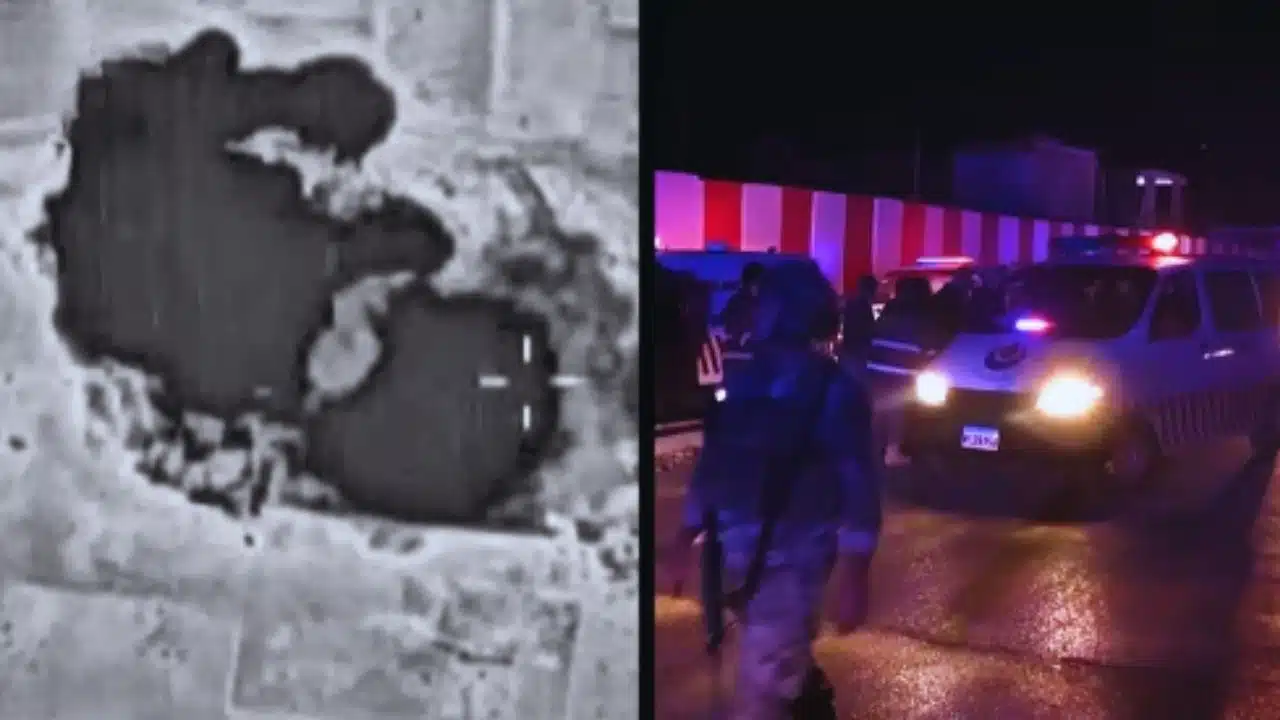
An Israeli airstrike struck a busy area near Ein el-Hilweh, the largest Palestinian refugee camp in southern Lebanon, on Tuesday evening, killing at least 13 people and wounding several others, as reported by Lebanon’s health ministry. Located on the outskirts of the coastal city of Sidon, this densely packed camp has long been a refuge for Palestinians displaced by historical conflicts, and the attack targeted what Israel described as a Hamas training site.
Emergency services rushed to the scene amid thick smoke and chaos, highlighting the ongoing vulnerabilities faced by residents in this overcrowded enclave, where narrow streets and limited access complicate rescue efforts. This incident represents the most lethal Israeli operation in Lebanon since the November 2024 ceasefire that halted the year-long war with Hezbollah, raising fresh concerns about the fragility of peace in the region.
The Scene of the Attack and Immediate Aftermath
The strike hit a parking lot adjacent to the Khalid bin al-Walid Mosque around dusk, a period when the area typically buzzes with evening activity as families gather and worshippers attend prayers. Eyewitnesses described hearing the initial buzz of Israeli drones overhead, followed by a series of explosions that damaged the mosque’s structure, a nearby community center, and several vehicles. Lebanon’s National News Agency detailed how the blasts sent debris scattering across the camp’s entrance, with one report noting that the targeted vehicle was completely destroyed, trapping some victims inside.
Ambulances navigated the camp’s labyrinthine alleys—many no wider than a few meters—to transport the injured to hospitals in Sidon, where medical teams treated at least four people for shrapnel wounds and burns. Online footage captured the pandemonium: plumes of black smoke rising high into the sky, residents fleeing in panic, and rescue workers digging through rubble under the low hum of circling Israeli warplanes. The camp’s Palestinian factions, which maintain a visible presence, quickly cordoned off the area, but the attack’s proximity to civilian hubs amplified fears of collateral damage in a place already strained by poverty and overcrowding.
Israel’s Military Justification and Operational Details
In a formal statement, the Israeli Defense Forces (IDF) explained that the airstrike was a precision operation aimed at eliminating Hamas operatives embedded in a training compound within the Ein el-Hilweh area. The IDF asserted that the site served as a hub for plotting and executing attacks against Israeli targets, with militants using the location to store weapons and conduct drills. To underscore their commitment to limiting civilian casualties, military officials highlighted the use of advanced precision-guided munitions, real-time aerial surveillance via drones, and on-the-ground intelligence gathered from multiple sources.
Shortly after the strike, the IDF released declassified video footage showing the moments leading up to and including the explosion, depicting what they claimed was a group of armed figures in the targeted zone. Despite these measures, the IDF did not disclose specific evidence linking the site to recent Hamas activities, a point that has drawn criticism from observers who question the transparency of such operations. This approach aligns with Israel’s broader strategy in post-ceasefire Lebanon, where it conducts targeted strikes to dismantle what it views as persistent threats from Palestinian armed groups operating outside Gaza.
Hamas Denial and Local Perspectives
Hamas swiftly denounced the Israeli account as baseless propaganda, maintaining that the organization does not maintain any military infrastructure inside Lebanese refugee camps like Ein el-Hilweh. In a statement from Gaza, Hamas officials portrayed the strike as a deliberate assault on civilian life, emphasizing that the hit location was an open sports field and parking area devoid of any militant activity. They accused Israel of exploiting the ceasefire to terrorize Palestinian communities and violate Lebanon’s territorial integrity, urging international bodies to investigate the incident as a war crime.
On the ground, camp residents and local Palestinian leaders echoed these sentiments, with witnesses insisting the area was populated by families and lacked any signs of a training facility—only everyday vehicles and passersby. Representatives from factions like Fatah and the Popular Front for the Liberation of Palestine, which have historical ties to the camp, condemned the attack while calling for unified Palestinian resistance against what they see as systematic targeting. This denial underscores deeper tensions, as Hamas’s limited presence in Lebanon has often been a flashpoint, with Israel citing intelligence on cross-border plotting despite the group’s primary focus on Gaza.
Ein el-Hilweh: A Historical Haven Turned Hotspot
Established in 1948 by the International Committee of the Red Cross in the aftermath of the Nakba—the mass displacement of around 750,000 Palestinians during Israel’s founding—Ein el-Hilweh was initially designed to shelter about 6,000 refugees from northern coastal villages like Acre and Haifa. Over the decades, it evolved into Lebanon’s largest Palestinian camp, spanning just 1.5 square kilometers but housing an estimated 80,000 to 120,000 people, including original refugees, their descendants, and newcomers fleeing conflicts.
The population surged after the 1975-1990 Lebanese Civil War displaced more Palestinians into the camp, and again post-2011 with the Syrian Civil War, when thousands of Palestinian-Syrians sought cheaper housing amid Lebanon’s economic woes. Today, about one-third of Lebanon’s 450,000 Palestinian refugees live here or in surrounding gatherings, facing restrictions on work, property ownership, and movement that perpetuate cycles of poverty and unemployment.
The camp’s dense, unplanned layout—marked by concrete-block homes, tangled electricity wires, and no formal sewage system—has made it a breeding ground for inter-factional clashes, with groups like Jund al-Sham and Fatah al-Islam clashing violently in the past, as seen in the 2023 fighting that damaged hundreds of homes and displaced families. Despite disarmament efforts by Lebanese forces in late 2024 under the ceasefire terms, the camp remains a tinderbox, where armed factions enforce informal security and youth grapple with limited opportunities, often turning to informal education programs run by NGOs to build skills.
Broader Regional Tensions and Ceasefire Challenges
This strike fits into a pattern of post-ceasefire volatility, where Israel has launched dozens of operations in Lebanon since November 2024, mostly against Hezbollah but increasingly against Palestinian targets to prevent regrouping. Earlier that same day, separate Israeli strikes in southern Lebanon killed two individuals, illustrating the routine nature of these incursions despite the truce. Lebanese officials and aid groups argue that such actions undermine the ceasefire, which was brokered after Israel’s October 2024 ground offensive pushed Hezbollah back from the border, but they fail to address root causes like arms smuggling.
Palestinian refugees in Ein el-Hilweh, already marginalized by Lebanese laws barring them from many professions, now face heightened risks, with women reporting restricted movement due to increased checkpoints and violence. International monitors, including the UN, have called for restraint, noting that the camp’s history of absorbing displaced people—from the 1982 Israeli invasion to Syrian inflows—makes it a microcosm of unresolved Palestinian grievances. As one resident told reporters, “We’re refugees twice over, caught between borders we didn’t choose”.
Roots in the October 7 Escalation and Lasting Human Toll
The immediate trigger for this cycle of violence stems from Hamas’s October 7, 2023, assault on southern Israel, where fighters from Gaza killed approximately 1,200 people—mostly civilians—and abducted 251 hostages in a surprise attack that shattered regional stability. Israel’s retaliatory campaign in Gaza has since claimed at least 69,169 Palestinian lives, according to the Hamas-administered health ministry there, devastating infrastructure and displacing nearly the entire population of 2.3 million. Hezbollah’s involvement began the very next day, with rockets fired into northern Israel in solidarity with Gaza, escalating into a 13-month border war that drew in Lebanon fully.
By October 2024, Israel’s aerial bombardments and ground push into southern Lebanon had neutralized much of Hezbollah’s arsenal but at a steep cost: Lebanese authorities tally around 4,000 deaths, including a significant number of civilians, and the uprooting of over 1.2 million people from their homes. Israel mourned 80 soldiers and 47 civilians killed in the fighting, with officials estimating that Hezbollah retains thousands of rockets and drones despite losses. The November 2024 ceasefire, mediated by the U.S. and Qatar, promised a buffer zone and disarmament, but incidents like the Ein el-Hilweh strike reveal simmering animosities, where Palestinian camps serve as unintended fronts in a wider conflict.
For the refugees enduring this, the human cost extends beyond numbers—generations raised in limbo, with fourth-generation youth like those interviewed in studies expressing fading hope amid economic strain and radicalization risks. As the region teeters, calls grow for diplomatic renewal to prevent further tragedy in places like Ein el-Hilweh, where history’s shadows loom large.