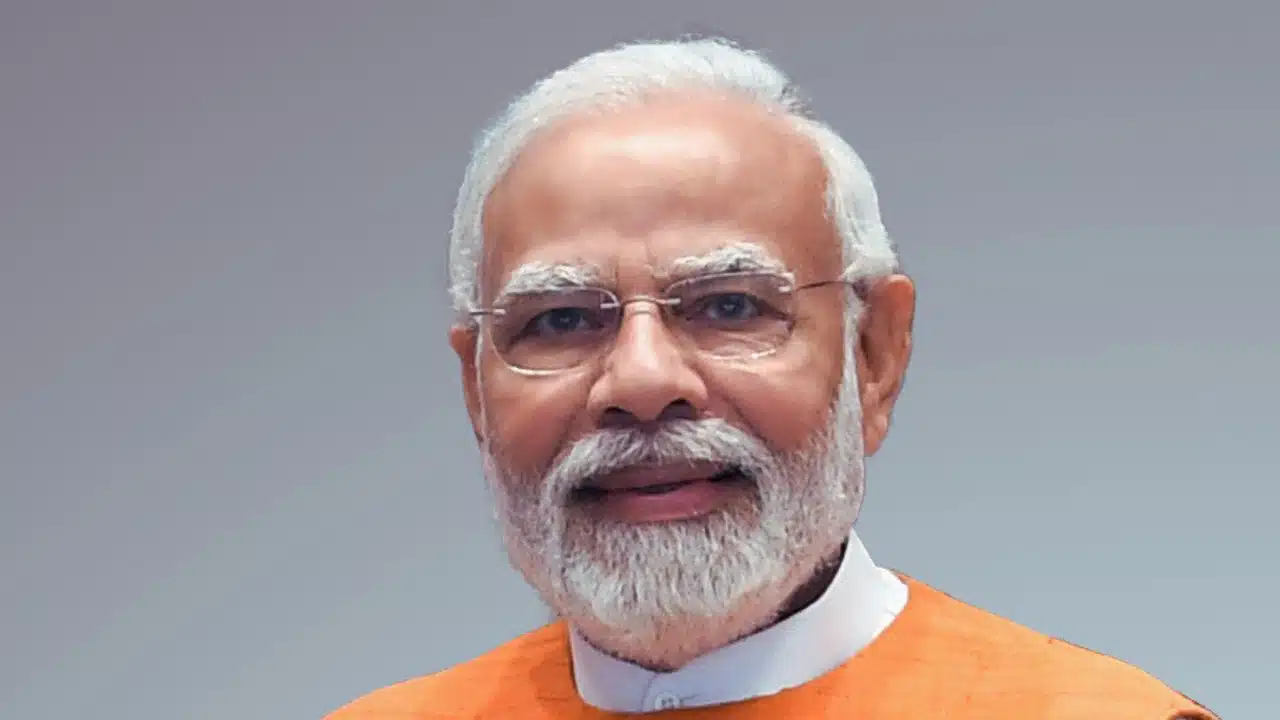
Prime Minister Narendra Modi landed in New Delhi on Monday night after completing a significant two-day visit to Tianjin, China, where he participated in the 25th Shanghai Cooperation Organisation (SCO) Summit. This was not a routine diplomatic event; it marked his first visit to China in seven years and was closely watched by analysts across the world. The trip combined multilateral engagements with important bilateral meetings with Chinese President Xi Jinping and Russian President Vladimir Putin, giving India an opportunity to recalibrate its foreign policy in a changing geopolitical environment.
India’s Strategic Context: Pressure from Washington
Modi’s participation in the SCO came at a delicate moment for India’s global position. The United States, led by President Donald Trump, had recently imposed 50 percent tariffs on Indian exports, doubling the existing duty structure. These tariffs were designed to punish New Delhi for continuing to buy Russian crude oil despite Washington’s pressure. For India, the economic strain caused by these duties added urgency to diversify its international partnerships.
By travelling to Tianjin and engaging directly with Xi and Putin, Modi signaled that India does not intend to be cornered by American economic coercion. Instead, New Delhi wants to demonstrate its autonomy in foreign policy by balancing ties with both the Western bloc and the Russia-China axis.
India, China, and SCO Engagement: A Renewed Commitment
Although India has often hesitated to fully embrace the SCO because of its close alignment with China and Russia, this time Modi chose to personally attend rather than sending a representative. His presence was a deliberate political decision, meant to show that India is not withdrawing from Eurasian forums.
The SCO itself has long been described as a counterweight to NATO and other Western alliances. By participating actively, India strengthened its claim to being an important voice in Asian security and economic cooperation, even while maintaining strategic differences with Beijing.
Bilateral Meeting with Xi Jinping: Emphasis on Cooperation
One of the main highlights of Modi’s visit was his bilateral meeting with Chinese President Xi Jinping. During their interaction, Modi emphasized that cooperation between India and China benefits not just their two nations but the world at large, since together they represent nearly 2.8 billion people. Xi responded with a broader perspective, presenting the idea that both nations should act as neighbors and collaborators rather than competitors.
A practical outcome of this meeting was the decision to restart direct passenger flights between India and China. These flights had been suspended for over five years, mainly due to the COVID-19 pandemic and ongoing border tensions. Their resumption represents an important step in normalizing ties and reviving people-to-people exchanges. In addition, both sides agreed to facilitate the restoration of tourist visas and religious pilgrimages, including the Kailash Mansarovar Yatra.
The Visuals of a “Troika”: Modi, Xi, and Putin Together
Observers around the world noted the optics of Modi engaging warmly with Xi and Putin during the summit. The three leaders were seen greeting each other with smiles, handshakes, and gestures of camaraderie. Modi at one point was even filmed pulling Xi and Putin closer together in a symbolic display of unity. These moments stood out because they highlighted India’s willingness to be part of an emerging Asian power grouping despite tensions with both Beijing and Moscow in recent years.
In sharp contrast, Pakistani Prime Minister Shehbaz Sharif was visibly isolated during these exchanges. When Modi walked alongside Putin, Sharif stood nearby but received little attention. This contrast reinforced the impression that India had elevated its standing within the SCO while Pakistan remained marginalized.
India’s Position on Terrorism: A Global Appeal
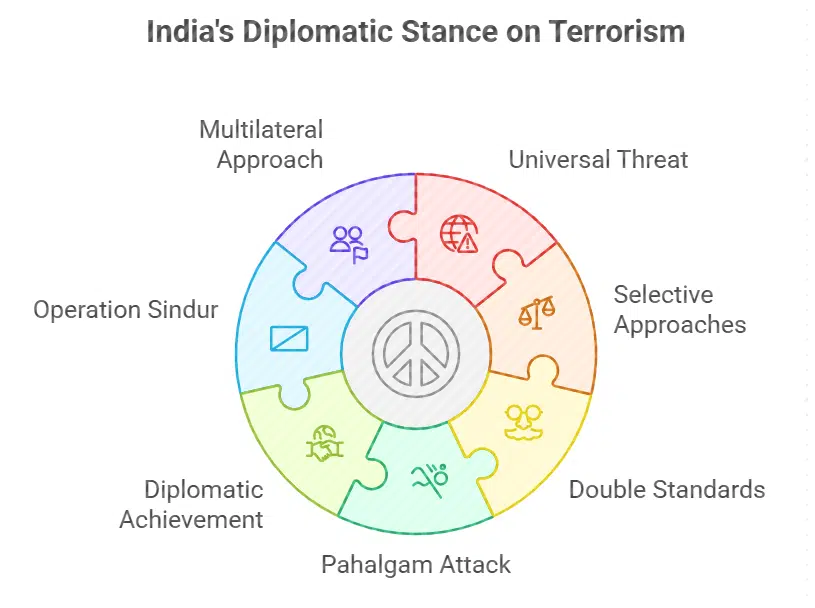
At the plenary session, Modi underlined terrorism as a universal threat that no country can afford to ignore. He warned against selective approaches that label some groups as terrorists while ignoring others. He argued that any form of double standard undermines the global fight against extremist violence.
The summit’s joint declaration specifically condemned the April 22 terrorist attack in Pahalgam, located in Indian-administered Kashmir. Although the statement did not name a specific group or country, India regarded the inclusion of the incident as a diplomatic achievement. It validated New Delhi’s longstanding demand that terrorism affecting its territory should be acknowledged in multilateral forums.
India had previously accused Pakistan of responsibility for the Pahalgam attack and had even conducted “Operation Sindur” in retaliation. However, Modi refrained from naming Islamabad at the SCO, demonstrating a more diplomatic and multilateral approach.
Connectivity and Subtle Opposition to the Belt and Road
Despite the apparent warmth in his meeting with Xi, Modi did not shy away from reiterating India’s objections to China’s Belt and Road Initiative (BRI). India has opposed the BRI because one of its main corridors passes through Pakistan-administered Kashmir, a territory that India claims as its own.
Without mentioning the BRI directly, Modi stressed that connectivity projects are only meaningful when they respect sovereignty and territorial integrity. Otherwise, such initiatives lose both credibility and legitimacy. To emphasize India’s alternative approach, he highlighted New Delhi’s investment in the Iranian port of Chabahar and its active participation in the International North-South Transport Corridor. Both initiatives are designed to strengthen India’s trade and transport links with Central Asia and Afghanistan, bypassing routes controlled by rivals.
Carpool Diplomacy with Putin: Strengthening the “Special Partnership”
One of the most memorable episodes of the summit was the informal interaction between Modi and Putin, dubbed by Russian media as “carpool diplomacy.” After the formal sessions concluded, the two leaders travelled together in a limousine to the Ritz-Carlton Hotel, where they held their bilateral meeting.
This drive lasted nearly an hour and gave them an opportunity for a completely private conversation. According to reports, no aides or interpreters were allowed to overhear the discussion, underscoring the level of trust between the two leaders.
Their meeting at the hotel reinforced the idea of India-Russia ties as a “special and privileged strategic partnership.” The agenda covered cooperation in energy, defense, and technology, along with the ongoing turbulence in the global order. Modi emphasized dialogue and peaceful conflict resolution while inviting Putin to attend the upcoming 23rd India-Russia Summit scheduled for December. He remarked that the entire Indian population was ready to welcome the Russian leader. The Kremlin has already confirmed Putin’s participation, ensuring that New Delhi will host another high-profile visit before the year ends.
Broader Significance of the Visit
The Tianjin summit illustrated India’s attempt to balance competing global pressures. While the United States remains a critical trade and defense partner, the sharp tariff war demonstrated that Washington will not hesitate to use economic measures against New Delhi. By aligning more visibly with Russia and China at the SCO, India showed it will not be dependent on a single power bloc.
At the same time, Modi’s nuanced diplomacy—where he emphasized unity against terrorism, expanded regional connectivity, and symbolic gestures of friendship without compromising on sovereignty—highlighted his government’s ability to navigate a complex multipolar world.
Prime Minister Modi’s trip to Tianjin was more than just another multilateral meeting. It was a carefully managed diplomatic maneuver designed to showcase India’s independence, resilience, and growing influence in global affairs. From the resumption of direct flights with China to private car-ride diplomacy with Putin, every moment of the visit sent a message: India intends to pursue its interests firmly and openly, while maintaining a careful balance between East and West.