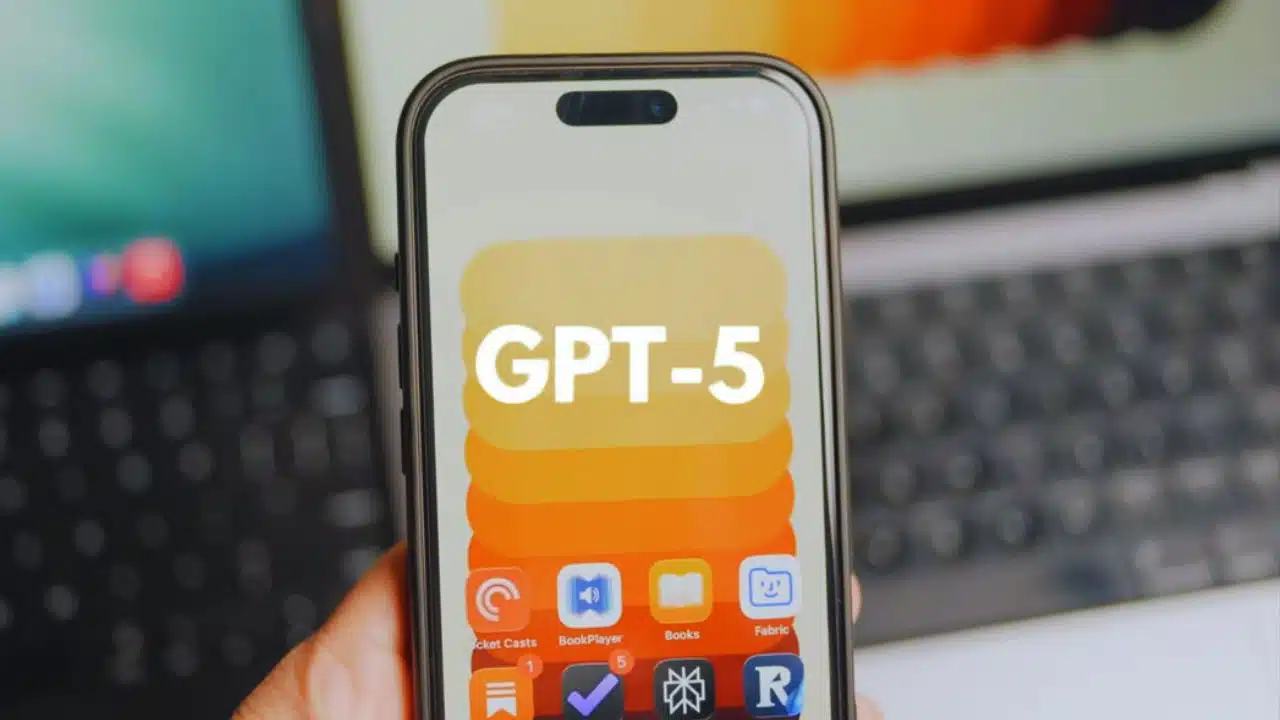
Apple is preparing for one of its biggest AI updates yet. According to multiple credible reports, the company is set to integrate OpenAI’s brand-new GPT-5 model into Apple Intelligence with the release of iOS 26, iPadOS 26, and macOS “Tahoe” 26. These updates are expected to roll out in September 2025, alongside the launch of the iPhone 17 series.
This move marks the most significant upgrade to Apple’s AI capabilities since it first announced Apple Intelligence in June 2024 at WWDC. Currently, Apple’s system uses OpenAI’s GPT-4o for certain complex tasks, but the switch to GPT-5 promises a notable leap in performance, reasoning, and creativity.
GPT-5: OpenAI’s Most Advanced Model Yet
OpenAI officially unveiled GPT-5 on August 7, 2025. This flagship large language model delivers several upgrades over GPT-4o, including:
- Improved reasoning abilities — better at understanding nuanced questions and producing logical, multi-step answers.
- Advanced coding support — improved debugging, code explanation, and language coverage for professional developers.
- Voice interaction — more natural, human-like conversation in real time, with faster response speeds.
- Video and image understanding — ability to describe, analyze, and interact with visual content.
- Custom GPT “personalities” — allowing tailored AI behavior for different tasks.
For Apple users, this means Siri, Writing Tools, and other Apple Intelligence features will be able to handle more complex or broader queries than before. For example, GPT-5 could help plan multi-day travel itineraries, debug code snippets, generate detailed summaries of long PDFs, or provide more accurate answers to follow-up questions.
How Apple Intelligence Works Today
Apple Intelligence is Apple’s AI platform designed to work both on-device and via Private Cloud Compute for more demanding tasks. On-device models handle quick, privacy-sensitive actions like sorting emails, creating reminders, or recognizing faces in photos.
When a task is too complex for the device alone, Apple securely routes the request to cloud-based AI — currently GPT-4o from OpenAI. Importantly:
- Privacy first: IP addresses are hidden, and no requests are stored by OpenAI when using the built-in ChatGPT features.
- Optional account linking: Users can connect their own OpenAI accounts to unlock premium ChatGPT features. In that case, OpenAI’s own data policies apply.
Why Apple Is Moving to GPT-5
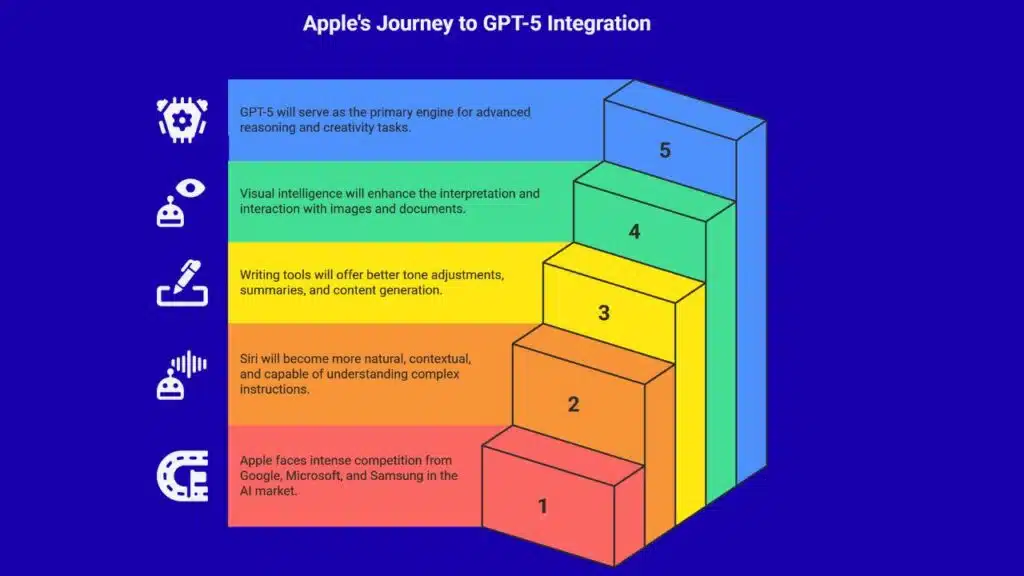
The switch to GPT-5 is not just about raw AI power — it’s about keeping Apple competitive in the fast-moving AI race. Google’s Gemini, Microsoft’s Copilot (powered by GPT-4 Turbo and soon GPT-5), and Samsung’s Gauss are all vying for leadership in consumer AI.
By upgrading to GPT-5:
- Siri will respond more naturally, remember context better, and understand more complex instructions.
- Writing Tools in Mail, Notes, and Pages will offer more accurate tone adjustments, better summaries, and richer content generation.
- Visual Intelligence will become more capable of interpreting and interacting with on-screen images or documents.
Apple’s internal models will continue to handle most tasks, but GPT-5 will act as the “heavy-duty” engine when advanced reasoning or creativity is required.
What Else Is Coming in iOS 26, iPadOS 26, and macOS Tahoe 26
Alongside GPT-5 integration, the September updates will include several new AI-powered features:
- Live Translation – Real-time translation in FaceTime, phone calls, and Messages, allowing users to converse in different languages without switching apps.
- Visual Intelligence Enhancements – Ability to analyze screenshots, identify items in photos, and link them directly to actions (e.g., tapping on an address in an image to open it in Maps).
- Smarter Reminders and Shortcuts – AI can pull tasks from emails, notes, or messages and add them to your to-do list automatically.
- Adaptive Power Mode – Intelligent battery management that adjusts brightness, background activity, and refresh rates based on your usage patterns.
- Natural Language Search in Maps – Search with conversational phrases like “Find coffee shops with free Wi-Fi near my next meeting.”
Device Support and Availability
Not all devices will get the full Apple Intelligence + GPT-5 experience. Based on Apple’s existing requirements:
- iPhones: iPhone 15 Pro and newer models are expected to support the full range of features.
- iPads: Models with M-series chips will be eligible.
- Macs: Apple Silicon Macs (M1 or later) will support Apple Intelligence.
Older devices running iOS 26 or macOS Tahoe may still get some features, but advanced AI capabilities like GPT-5 processing will likely be limited to newer hardware due to performance needs.
Offline AI Possibilities
Alongside GPT-5, OpenAI has released two open-weight models, including one optimized for Apple Silicon Macs. While Apple has not yet confirmed plans to integrate these for offline use, the move hints at a future where AI capabilities could run entirely on-device — offering privacy benefits and faster performance without cloud reliance.
Privacy and Security
Apple says GPT-5 integration will follow the same privacy safeguards as current ChatGPT use in Apple Intelligence:
- Requests processed by OpenAI’s servers will be anonymized.
- No identifying data or conversation logs will be stored by OpenAI when accessed through Apple Intelligence.
- Linking your personal OpenAI account will give you extra features but will follow OpenAI’s own policies.
Release Timeline
- August 2025: Public beta testing of iOS 26, iPadOS 26, and macOS Tahoe is already underway.
- September 2025: Final versions expected to roll out alongside the iPhone 17 launch event.
- GPT-5 Integration: Will be available to all supported devices, but users will need to manually enable ChatGPT access in settings.
At a Glance: iOS 26 AI Upgrade Highlights
| Feature | Details |
| GPT-5 Integration | Boosts Siri, Writing Tools, and Visual Intelligence with stronger reasoning and creativity. |
| Live Translation | Works in FaceTime, phone calls, and Messages in real time. |
| Visual Intelligence | Recognizes and interacts with content in screenshots and images. |
| Adaptive Power Mode | Extends battery life using AI-based power management. |
| Natural Language Maps | Lets you search using conversational queries. |
| Privacy Protections | IP masking and no storage of requests by OpenAI. |
Apple’s upcoming software rollout is shaping up to be more than just a routine update — it’s a leap forward in integrating cutting-edge AI into everyday workflows. By combining its own on-device intelligence with GPT-5’s raw capabilities, Apple is positioning iPhones, iPads, and Macs as more context-aware, responsive, and creative tools for work and daily life.
If you want, I can also prepare a side-by-side comparison table of GPT-4o vs GPT-5 so the differences in Apple’s upgrade are crystal clear. That will make this even more detailed and SEO-ready. Would you like me to add that?
The Information is Collected from The Verge and India Today.