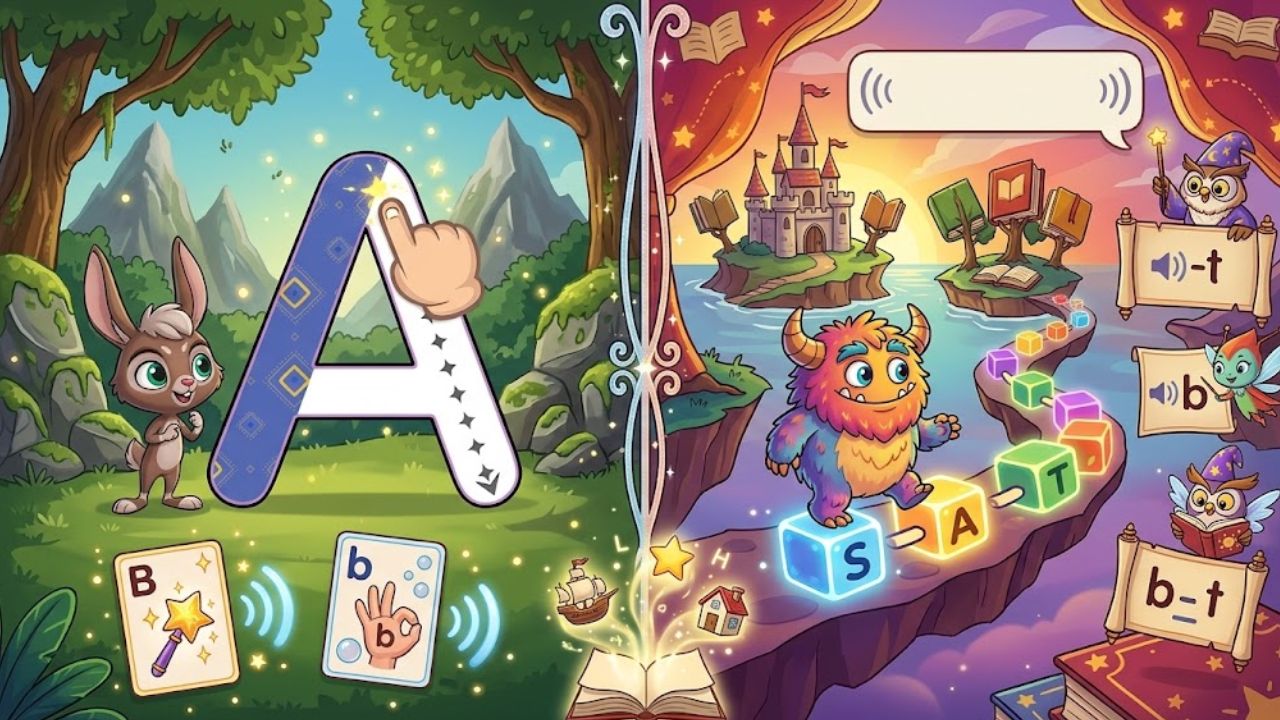
Alphabet Magic Trace and Phonics vs Teach Your Monster to Read are not simple choices between two versions of the same reading app. I found that the two products start from different places. Alphabet Magic focuses on alphabet recognition, letter formation, basic phonics, matching, and early spelling. Teach Your Monster to Read follows a much longer path from letter sounds to blending, sentences, and reading comprehension.
Alphabet Magic Trace and Phonics is one of our in-house products. I am stating that relationship clearly because it matters in a fair comparison. I know the goals behind its activities, but I have not treated that connection as a reason to hide its limits. I checked both products against the same practical questions: How do they introduce letter sounds? How do they handle blending? Is there handwriting practice? How does a child progress? What can a parent or teacher monitor?
My short answer is simple. Alphabet Magic is better for children who need direct alphabet, tracing, and basic phonics practice. Teach Your Monster to Read is stronger for a longer, structured journey into decoding and reading sentences.
Alphabet Magic Trace and Phonics vs Teach Your Monster to Read: Quick Comparison
| Area | Alphabet Magic Trace and Phonics | Teach Your Monster to Read |
|---|---|---|
| Main focus | Alphabet, tracing, matching, phonics, and early spelling | Phonics, blending, segmenting, sentences, and comprehension |
| Best starting point | Children learning letter names, shapes, and basic sounds | Children starting systematic phonics |
| Letter tracing | Yes, uppercase and lowercase | Not a main feature |
| Letter-sound practice | Yes | Yes, with a wider documented sequence |
| Blending | Basic phonics and letter-joining activities | Structured blending and segmenting practice |
| Reading progression | Alphabet to early words and spelling | Three stages from first sounds to short books |
| Game style | Short, separate alphabet activities | One extended monster adventure with minigames |
| Progress data | More limited | Individual and group progress statistics |
| Mobile cost | Listed as free | Listed at $8.99 in the US at the time checked |
| Browser access | No full browser version found | Free to play on computers |
| Best fit | Preschool alphabet and handwriting preparation | Preschool through early independent reading |
The comparison between Alphabet Magic and Teach Your Monster becomes clearer when I separate handwriting readiness from reading progression. Alphabet Magic combines those early skills in one simple app. Teach Your Monster goes deeper into systematic phonics and reading, but it is not designed as a handwriting course.
Alphabet Magic Trace and Phonics vs Teach Your Monster to Read: How I Compared Them
I used one shared learning goal for this comparison: help a beginning reader recognize common letters, connect them with sounds, combine sounds into a short word, and move to the next suitable activity.
I looked for four things during that process:
- Whether a child could hear and identify a letter sound
- Whether the app supported blending sounds into words
- Whether the child could practice forming the letter
- Whether the next activity followed a clear learning order
I also checked cost, platform access, parent or teacher controls, listed privacy information, and the amount of support available after a wrong answer.
This method exposed the main difference quickly. Alphabet Magic gives the learner several focused ways to work with the alphabet. Teach Your Monster places phonics inside a larger reading adventure and gradually adds more complex skills.
Alphabet Magic Trace and Phonics vs Teach Your Monster to Read: Letter Sounds
Alphabet Magic introduces letters through colorful activities rather than one long lesson path. Its current store description lists uppercase tracing, lowercase tracing, letter matching, letter discovery, phonics-based Star Connect activities, letter-selection games, an alphabet adventure, and spelling practice.
I find this approach useful when a child needs repeated contact with the same alphabet knowledge in different forms. A learner may trace a letter, hear it, recognize it in a matching task, and meet it again in another game. The controls are simple enough for short practice sessions.
Teach Your Monster to Read gives letter sounds a more defined sequence. Its First Steps stage covers 31 letter-sound combinations. These include single letters and combinations such as ck, ff, ll, ss, and qu. The game uses repeated matching tasks to build speed and accuracy.
I would choose Alphabet Magic when the immediate aim is broad alphabet familiarity. I would choose Teach Your Monster when I want letter sounds taught as part of a planned decoding sequence.
Teach Your Monster also has a Practice Mode. A parent or teacher can select certain letter sounds and use them in a short adventure, a minigame, or flashcards. That makes targeted review easier when a child keeps confusing two sounds.
Alphabet Magic Trace and Phonics vs Teach Your Monster to Read: Blending
Blending is where the difference becomes larger.
Alphabet Magic includes phonics and letter-joining tasks, including its Star Connect activity. It also has a spelling game that asks children to work with letters inside words. I see these as early bridges between alphabet knowledge and word building.
However, the public curriculum information does not describe a full blending sequence by word type. Parents should not assume that every phonics activity follows the same structured order used in a complete reading program.
Teach Your Monster gives blending and segmenting a central role. First Steps begins with simple consonant-vowel-consonant words. Fun With Words then adds CVC, CVCC, CCV, and CCVC patterns, along with more letter-sound combinations and tricky words.
In practice, this makes Teach Your Monster the stronger choice for a child who already recognizes several sounds and now needs to combine them into words. The child does not stay at isolated letters for long. Blending leads into sentences and meaning.
Alphabet Magic is still useful at the stage before that. If a learner cannot identify basic letters or control a tracing movement, a long decoding sequence may be premature.
Alphabet Magic Trace and Phonics vs Teach Your Monster to Read: Tracing and Writing
Tracing is the clearest advantage for Alphabet Magic.
The app contains separate uppercase and lowercase tracing activities. A child can practice the visual form of a letter while building touchscreen control. Teach Your Monster to Read does not make letter formation one of its main teaching goals.
This matters because reading and handwriting are related but separate skills. Recognizing the sound for m does not mean a child can form the letter correctly. Alphabet Magic gives parents and educators a direct way to practice both recognition and formation in the same session.
I would still supervise tracing. One App Store reviewer raised concerns about some lowercase forms and tracing patterns. A single review does not prove that every current version has the same issue, but it is a reasonable reminder to check the letter model before asking a child to repeat it.
Parents should also use paper, crayons, pencils, sand trays, or other physical activities. Screen tracing can support letter formation, but it should not replace real handwriting practice.
Alphabet Magic Trace and Phonics vs Teach Your Monster to Read: Learning Progression
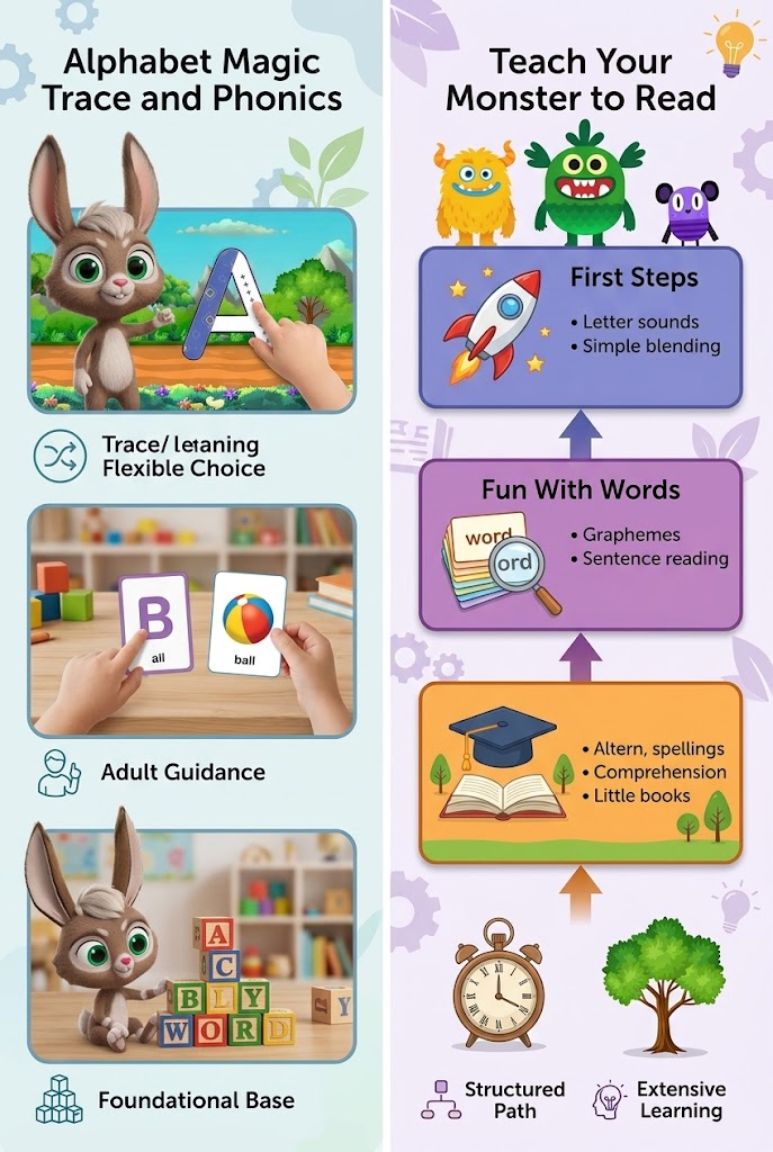
Alphabet Magic uses a collection of short activities. This gives me flexibility. I can choose tracing for one session, matching for another, and spelling when the child is ready. It works well when an adult already knows which skill the learner needs.
The trade-off is that the progression is less extensive. Alphabet Magic does not currently present the same documented path from basic phonics to sentence comprehension and short books.
Teach Your Monster has three clear stages:
- First Steps introduces early letter sounds, simple blending, segmenting, and six tricky words.
- Fun With Words adds more graphemes, harder word patterns, tricky words, and sentence reading.
- Champion Reader adds alternative spellings, alternative pronunciations, comprehension, and small books.
The official guidance says these stages cover about two years of the early reading journey. It estimates seven weeks for First Steps, 14 weeks for Fun With Words, and 22 weeks for Champion Reader when a child plays for about 20 minutes each week. These are guidance figures, not guaranteed learning times.
Teach Your Monster is therefore the clearer choice for long-term progression. Alphabet Magic works better as a focused foundation or companion activity.
Alphabet Magic Trace and Phonics vs Teach Your Monster to Read: Parent and Teacher Use
Alphabet Magic is easy to use for direct practice. I can hand a child one clear task without first setting up a long learning journey. That can be useful at home, in a preschool center, or during a short one-to-one session.
Teach Your Monster offers more support for organized classroom use. Teachers and parents can view a learner’s current level, strongest and weakest graphemes, last-played date, and time spent playing. Group accounts can show aggregate grapheme results, and the data can be downloaded as a CSV file.
That reporting is valuable when several children use the program. It gives educators evidence for deciding which sounds need more practice.
The narrative in Teach Your Monster may also hold attention for longer. Children create a monster, travel through different settings, collect rewards, and unlock new work. Alphabet Magic uses shorter minigames, which may suit children who become tired or distracted during long adventures.
Alphabet Magic Trace and Phonics vs Teach Your Monster to Read: Cost and Access
Alphabet Magic was listed as free on the US App Store when I checked it. Its Google Play page also showed an install option and described the app as ad-free. It is available on Android, iPhone, and iPad.
Teach Your Monster to Read was listed at $8.99 on both US mobile stores. Its listing says there are no in-app purchases, hidden costs, or in-game ads. The full game is also free to play through the Teach Your Monster website on a computer. Prices can change by country and store.
I would check privacy labels on the exact platform before installation. Alphabet Magic’s Apple listing says no data is collected. Its Google Play disclosure mentions device or other IDs and states that the data is not encrypted and cannot be deleted. Those store disclosures are not identical, so parents should review the current details for their device.
Alphabet Magic Trace and Phonics vs Teach Your Monster to Read: Which Should You Choose?
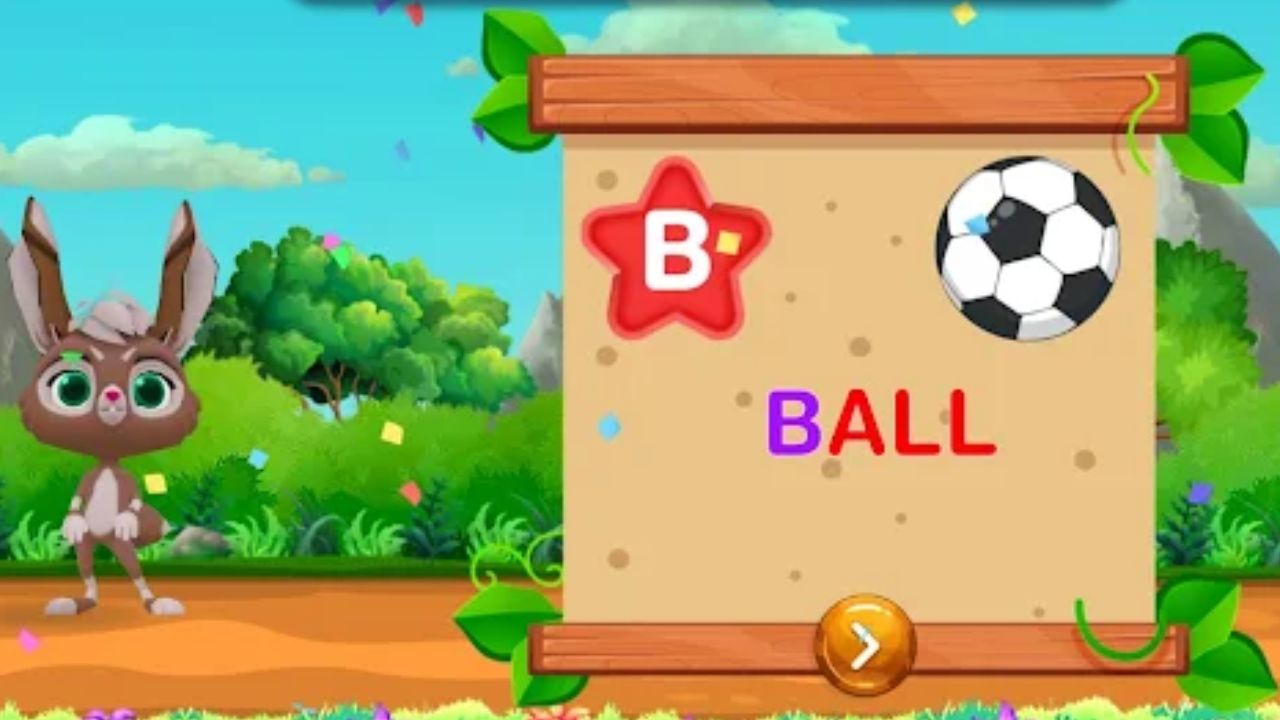
Choose Alphabet Magic Trace and Phonics if your child:
- Is still learning the alphabet
- Needs uppercase and lowercase tracing
- Needs short matching and recognition tasks
- Benefits from simple activities with little setup
- Is beginning phonics but is not ready for a long reading sequence
Choose Teach Your Monster to Read if your child:
- Already recognizes some letters
- Needs structured blending and segmenting practice
- Is ready to move from sounds to words and sentences
- Benefits from an extended game story
- Needs tracked progress for home or classroom use
Using both is also reasonable. I would use Alphabet Magic for letter formation, alphabet review, and short phonics practice. I would use Teach Your Monster for systematic decoding, tricky words, sentence reading, and comprehension.
Neither app should replace reading aloud with an adult, physical handwriting, conversation, or books. Both work best as parts of a wider early-literacy routine.
Alphabet Magic Trace and Phonics vs Teach Your Monster to Read: Final Verdict
My verdict on Alphabet Magic Trace and Phonics vs Teach Your Monster to Read depends on the child’s current need. Alphabet Magic Trace and Phonics is the better fit for alphabet recognition, touchscreen tracing, matching, and basic phonics practice. It is direct, simple, and suitable for short sessions.
Teach Your Monster to Read is the better fit for structured reading progression. It provides a clearer path through letter sounds, blending, segmenting, tricky words, sentences, and comprehension.
If I were helping a child who still struggled to recognize or form letters, I would start with Alphabet Magic. If the child knew several letter sounds and was ready to decode words, I would move toward Teach Your Monster. For many beginning readers, the strongest option is not choosing one forever. It is using each app for the skill it teaches best.
Alphabet Magic Trace and Phonics vs Teach Your Monster to Read: FAQs
Is Alphabet Magic Trace and Phonics better than Teach Your Monster to Read?
It is better for tracing, alphabet recognition, and short early-phonics activities. Teach Your Monster is stronger for systematic blending and reading progression.
Which app is better for blending sounds?
Teach Your Monster to Read has the more detailed blending and segmenting sequence. It moves from simple CVC words to harder patterns, sentences, and comprehension.
Which app teaches handwriting?
Alphabet Magic Trace and Phonics includes guided uppercase and lowercase tracing. Teach Your Monster to Read is mainly a reading and phonics program.
Can teachers track progress in both apps?
Teach Your Monster provides more detailed individual and group statistics. Alphabet Magic is better suited to direct activity-based practice but currently offers fewer documented reporting tools.
Are the apps free?
Alphabet Magic was listed as free when checked. Teach Your Monster costs $8.99 on the US mobile stores, while its computer-based web version is free. Store prices may change.