The best SaaS partnership tools depend on the job you need done. A partner program gives people a way to refer customers, register deals, or sell with your team. A product integration helps customers connect your SaaS to the software they already use.
At Editorialge, we built ImagineLab.art with seven creative labs in one workspace and a shared EDT wallet. The product publishes an affiliate and referral program and developer API documentation, so both sides of that distinction matter to us. We are also developing RankMath AI, a unified SEO platform.
I have not deployed all ten products below; these recommendations draw on their documented features and the buying questions that building our own SaaS products has taught me to ask.
Tools for Partner Programs and Co-Selling
A partner can send traffic, register a deal, or introduce your sales team to an account. These tools help you find those opportunities, follow what happens, and give partners appropriate visibility and credit.
1. PartnerStack: Best for Multiple Types of Revenue Partners
PartnerStack supports affiliate, referral, reseller, and co-sell programs. It brings partner onboarding, link and deal tracking, CRM updates, and commissions into one platform.
Our ImagineLab.art makes that distinction real for us. Its affiliate program offers commissions on sales, while its referral program awards EDT when a friend signs up, makes a first purchase, and stays subscribed for 30 days. Those are separate events and two kinds of reward. I would ask a vendor to show how it records each milestone, handles a refund or competing referral claim, and represents EDT rewards before relying on a single conversion report.
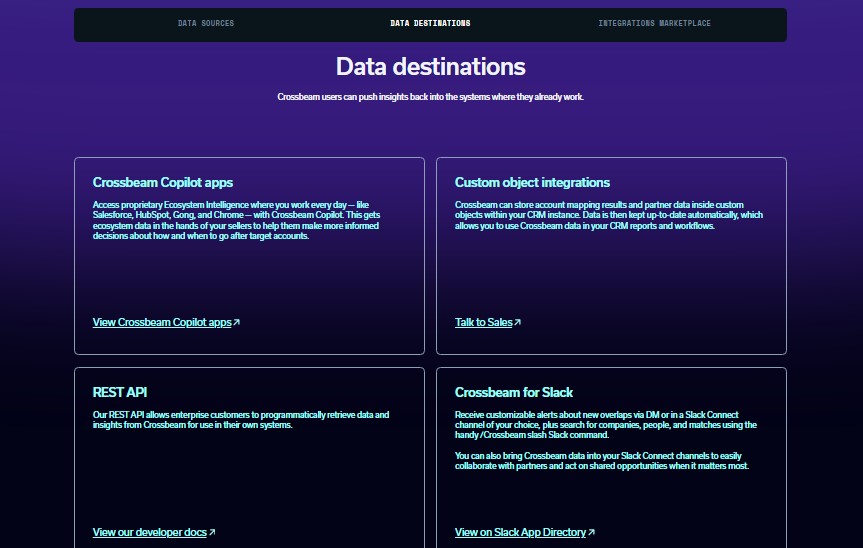
Crossbeam compares your account data with a partner’s to reveal shared prospects and customers. Sales teams can use that overlap to identify possible introductions or co-selling opportunities. Each company controls how much information it shares.
I would treat an account match as the start of a conversation, not evidence that a partner helped close a deal. Someone still needs to request the introduction, work the opportunity, and record the outcome. Crossbeam is especially relevant when that account discovery process is more important than recruiting affiliates or paying commissions.
3. Kiflo: Best for a Growing Program That Co-Sells
Kiflo combines partner onboarding, a portal, lead and deal registration, account mapping, and commission management. It suits a team that needs its partner managers and salespeople to work on the same opportunities.
That combination gives it a different role from a portal used mainly to collect leads. During a demo, follow a registered deal through the CRM and into the reward workflow. Confirm separately how the chosen plan calculates commissions and how payouts are triggered.
4. Impartner: Best for Complex Channel Programs
Impartner covers larger partner operations, including deal registration, training, business planning, marketing development funds, reporting, and CRM connections. It also offers a specialized product for partner transactions through major cloud marketplaces.
Its range is useful if different partner groups need different training and sales processes. The buying task is to identify the modules your program actually requires. Ask for a demonstration of those workflows and a proposal that clearly states what is included.
5. PartnerPortal.io: Best for Launching a Partner Portal
PartnerPortal.io gives partners a branded place to register deals, access resources, and see how opportunities progress. Its supported CRM integrations can move approved leads to sales teams and return deal updates to the portal.
If partners currently submit leads by email and then hear nothing, that visibility is a practical improvement. The free evaluation tier has limits on partners, leads, resources, and team members, so assess the paid plan against the size of the program you expect to run.
Tools for Product Integrations and Workflow Automation
These tools address a different handoff. Some help customers connect their own apps to your SaaS product. Others move information between the systems your internal team uses. The person setting up and supporting the connection should shape your choice.
6. Pandium: Best for Technology Partner Integrations
Pandium is designed for SaaS companies developing an integration ecosystem. Technology partners can submit apps and supporting materials, while customers can discover and install integrations through an in-app marketplace.
Publishing the listing is only part of the job. Pandium also provides ways to monitor activity and help troubleshoot connections. If your goal includes a partner portal or marketplace, confirm which of those capabilities are covered by the proposed plan.
7. Merge: Best for Connecting Several Apps in One Category
Merge provides a unified API for supported software categories such as CRM, accounting, and HR. Customers authorize their accounts through Merge Link, and your product works with standardized data models.
I would consider this approach when customers ask for several systems that perform a similar job. I would also check each requested provider individually. A common model simplifies development, but available fields, write actions, and sync behavior can vary between connected apps.
8. Paragon: Best for Embedded Integration Workflows
Paragon helps a SaaS team put third-party connections inside its product. It provides a customer-facing setup experience and tools for running the workflows behind each connection, with separate configurations for individual customers.
It can take on substantial integration infrastructure work. Your product team still has to decide what data should move and what a customer sees when authorization expires or a workflow fails. Those moments deserve as much attention in a demo as the initial connection screen.
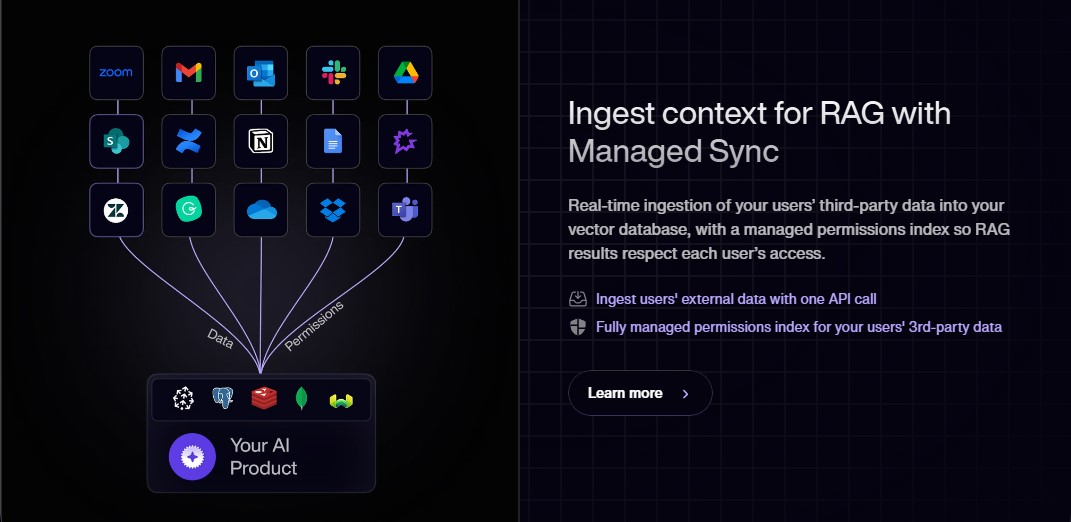
9. Workato: Best for Complex Workflows Across Business Systems
Workato suits processes that span several applications and require branching, monitoring, or error handling. A partner handoff involving a CRM, finance software, and a support desk is one example worth mapping out.
It also offers an embedded integration product. Specify whether you need internal automation or integrations inside your SaaS application before evaluating it. For a single alert or straightforward lead transfer, a simpler workflow tool may be sufficient.
10. Zapier: Best for Quick Partner Operations Automation
Zapier can connect the tools a partner team already uses. A submitted lead might create a CRM record, notify its owner, and start a follow-up task. That makes it useful when the process is clear but manual copying slows it down.
Check the precise triggers and actions available for your apps, then estimate task volume. Runs may be held when an account reaches its allowance. Zapier also has an embedded offering, which should be evaluated separately if the connection is meant for your customers.
The Two Workflows I Would Test
Our ImagineLab.art API documentation describes scoped, revocable keys for approved integrations and generation requests that return a job ID while the work finishes in the background. A successful “connected” message would not tell me whether the customer eventually received the output. I would ask to see two complete demonstrations:
- A partner deal: Submit a lead, try a duplicate, update its CRM stage, and follow it through reward calculation. Check what the partner can see.
- A customer connection: Authorize an account, complete a task, trigger a recoverable failure, and find out who can diagnose and restore it.
Those demonstrations expose gaps that a feature list can easily hide.
Make the Connection Useful
Building a SaaS product has made me wary of treating an announced partnership as the finish line. The partner should understand how they contribute and receive credit. The customer should be able to complete the task the integration promises. Choose the tools that make those two experiences work, and add complexity when the program genuinely needs it.
Frequently Asked Questions on SaaS Partnership Tools
1. Do I need partner management software if I already have a CRM?
A CRM may be enough for a handful of partner deals. A dedicated platform becomes more useful when partners need to submit opportunities, follow progress, access resources, or track rewards themselves.
2. What is the difference between an affiliate and a technology partner?
An affiliate typically promotes your product and receives credit for referred business. A technology partner connects its product with yours. One company can do both, but referral attribution and a working product integration require different processes.
3. Can one tool manage partner deals and customer integrations?
Some platforms address parts of both. Pandium connects technology partner activity with customer-facing integrations. If your company also runs affiliates or resellers, assess its needs for deal attribution and commissions separately.
4. Is Zapier enough for customer-facing integrations?
It can serve a defined connection or internal workflow. If customers expect to install and manage an integration inside your product, assess the setup experience, account-specific configuration, monitoring, and support needs before choosing an approach.
5. How do I measure whether a SaaS partnership works?
For revenue partners, track active partners, accepted opportunities, and credible partner-sourced or partner-influenced revenue. For technology partners, also examine integration installs, continued use, failures, and support requests. A partner count or marketplace listing alone tells you little.