
Do you feel like someone is watching your Bitcoin? You aren’t alone. Many people feel unsure as Governments Are Trying To Control Cryptocurrency more and more.
The U.S. government alone spent $48.7 million on blockchain analysis tools in 2023. This shows how serious they are about watching crypto. We will show you how governments are watching and controlling crypto.
Ready to learn more?
Implementing Strict Regulatory Frameworks
Governments are making rules for crypto. These rules are called regulatory frameworks. Such frameworks aim to bring virtual currency under control. They can affect how people use digital assets.
These frameworks often cover many things. One thing they address is compliance. Another is anti-money laundering (AML). Financial regulations could get very strict. Many governments are working on cryptocurrency laws.
Regulations may treat crypto as speculative investment. Economic activity involving crypto could change a lot. These rules help monetary authorities watch this new asset class closely.
Enforcing Taxation on Cryptocurrency Transactions

Tax time got you down? Well, tax agencies want their cut of crypto gains. Many see virtual currency as property, not just money. The IRS, for example, taxes crypto like stocks. This means you pay capital gains on profits.
Did you sell Bitcoin for more than you bought it for? Then, you may owe taxes on the gain. Understanding these rules is key. Compliance keeps you out of trouble.
Some countries also have income taxes on mined crypto. Other nations tax crypto used for goods and services. It can get complicated! Financial regulation of cryptocurrency is a fast changing field.
Next, we will discuss monitoring blockchain activities.
Monitoring and Tracking Blockchain Activities
Governments watch blockchain use closely. They aim to spot illegal acts, like money laundering. This oversight means tracking transactions. Sophisticated tools help them see who is sending and receiving virtual currency.
Financial regulation gains importance here, as authorities try to tame crypto’s wild side.
Many worry about privacy, though. Some think this monitoring is too much. It’s like a close eye watching every move you make. Compliance with these rules is vital for cryptocurrency users.
This is because governments want insight into economic activity involving digital assets and blockchain technology.
Banning or Limiting Cryptocurrency Mining
Some places ban or limit crypto mining. This is another way to control digital assets. China banned crypto mining in 2021. They worried about its impact on the environment and the economy.
Mining takes lots of power. This can hurt the environment. Nations may limit mining to save power or protect the environment. They might also do so to manage economic activity related to virtual currency.
These actions affect blockchain technology and speculative investment.
Establishing Central Bank Digital Currencies (CBDCs)
CBDCs are a hot topic. Governments explore their own digital cash. These Central Bank Digital Currencies, or CBDCs, could change money. A CBDC is a virtual currency. A monetary authority controls it.
Think of it as digital cash from the government. China is testing its digital yuan. Other nations study CBDCs, too.
These digital assets matter for economic policy. Financial regulation will need to change. CBDCs could impact your money directly. Financial regulations may change how you spend. What’s next for monitoring blockchain activities?
Restricting Cryptocurrency Advertising and Promotion
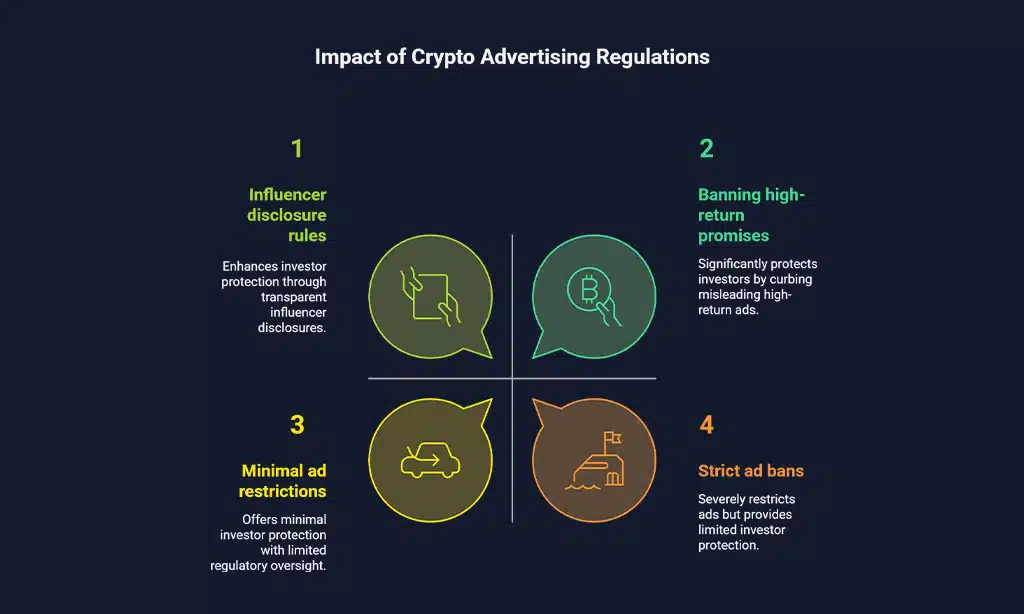
Governments watch how crypto ads reach people. Many worry about ads pushing risky digital assets. Some nations limit crypto ads to protect investors, as this can help control speculative investment.
For example, some places ban ads that promise high returns.
Also, some rules stop influencers from promoting crypto without saying they were paid. These rules affect how virtual currency gets promoted which might impact the blockchain technology sector.
Now, let’s see about freezing crypto assets.
Freezing or Seizing Illicit Crypto Assets
Now, ads are not the only target. Freezing crypto assets is a growing trend. Illicit crypto is under watch. Many want to seize these digital assets.
Authorities can freeze or take crypto. They do this if it is tied to illegal acts. Think money laundering or crime funding. Financial regulation is key here. Compliance is crucial for all users.
This action impacts economic activity a lot.
Collaborating on International Crypto Regulations
Countries work together on rules for crypto. This helps stop problems that cross borders. One way, they share ideas about crypto, like taxes and stopping crime. Also the Financial Stability Board (FSB) makes sure global finance is steady.
The FSB gave advice on how to control crypto in July 2023.
Many groups, such as the FSB, help countries work together. This is to make sure rules about digital assets are the same everywhere. Having the same rules helps stop bad people from using virtual currency for wrong things, like money laundering.
It also protects people who invest in speculative investment. Can governments restrict crypto advertising and promotion?
Takeaways
Governments are watching crypto closely. They make rules and tax digital money. Some watch how people use blockchain. Will these steps help, or hold back new ideas? You can learn more about this online.
Think about what this means for the future.