
Workplace stress is at an all-time high, leaving many employees feeling overwhelmed and burned out. Long hours, heavy workloads, and little support for mental health can harm both employee performance and satisfaction.
Employers often face challenges in finding solutions that improve workplace culture while addressing these issues.
A strong mental wellness program can address this. Supporting both mental health and physical wellness helps employees work better and feel better. It also boosts engagement, retention rates, and productivity.
This guide will help you begin a straightforward and effective mental wellness program in your office. Continue reading to create a healthier workplace for everyone!
Secure Leadership Support
Leaders set the tone for workplace culture. Gaining their support shows employees that mental wellness matters and is a priority. Highlight how a mental wellness program can lower health care costs, reduce employee burnout, and increase retention rates.
Share examples of successful corporate wellness programs like those offered by Cigna or Sun Life to build trust in your plan.
Use data to make an impact. For instance, stress-reduction strategies cut down absenteeism and boost productivity. Explain how mental health benefits also improve employee satisfaction and engagement.
A leader who champions emotional health inspires others to follow—and sets the stage for meaningful change.
Form a Mental Wellness Committee

Choose team members from different departments. Include people who care about mental health and workplace wellness. A mix of HR staff, managers, and employees works best. This ensures all voices are heard.
Define clear roles for the committee. Assign tasks like planning wellness activities or gathering employee feedback on stress management needs. The group should meet regularly to discuss goals, track progress, and share ideas to improve employee engagement.
Assess Employee Needs and Workplace Culture
Talk to employees through surveys or focus groups. Ask about workplace stress, mental health challenges, and what they need for support. Use this feedback to understand common struggles like burnout, workload issues, or emotional distress.
Observe the workplace culture closely. Check if it encourages open conversations about mental wellness. Look for signs of high stress such as overtime or employee turnover. If discrimination policies are weak or ignored, act quickly to fix them.
A healthy culture values psychological safety and promotes empathy among team members.
Develop Clear Goals and Objectives
Clear goals guide your mental wellness program. They give focus and measure success.
- Define what you want to achieve, like lowering workplace stress or improving employee satisfaction. Clear targets help track progress.
- Set realistic and measurable goals, such as reducing stress-related absences by 20% in a year. Small steps lead to significant results.
- Focus on improving employee engagement with wellness activities, like fitness classes or mental health workshops.
- Aim to boost employee retention rates by creating a healthy workplace culture that emphasizes mental well-being.
- Include objectives for offering easy access to resources, such as an Employee Assistance Program (EAP) or therapy support.
- Address both physical health and mental health with programs on stress management, weight control, or chronic conditions.
- Add clear plans to reduce burnout and enhance productivity through stress reduction strategies.
- Link goals to measurable outcomes like better retention rates, lower healthcare costs, or fewer insurance claims.
- Ensure all employees feel included through fair policies on mental wellness that avoid discrimination.
- Use feedback from employees regularly to refine the program’s focus and create benefits people value most.
Design a Comprehensive Mental Wellness Strategy
Create a plan that fits your team’s needs and goals. Include actions to improve mental health support and awareness in daily work life.
Include education and awareness initiatives
Host workshops on mental health awareness. Invite therapists or counselors to speak about stress management and wellness activities. Share facts about common issues like workplace stress, burnout, and depression.
Use posters, emails, or fitness trackers to highlight healthy living tips.
Offer online courses for employees about managing mental health disorders or high blood pressure. Create campaigns that focus on reducing stigma tied to seeking help through employee assistance programs (EAP).
Promote events during Mental Health Awareness Month for added impact.
Provide access to mental health resources
Offer employees access to an Employee Assistance Program (EAP). These programs provide free mental health counseling and resources. Include stress management workshops or group therapy options.
Share information about online platforms like sunlife.com or cigna.com for additional support.
Workplace mental health resources can also include insurance coverage for therapy and behavioral health services. Provide hotlines for immediate help. Create a quiet space in the office for relaxation during high-stress moments.
Offer clear guidelines on using these tools without fear of discrimination.
Implement Incentives to Increase Participation
Boosting participation in a mental wellness program is key to its success. Incentives can encourage employees to join and stay involved.
- Provide gift cards for attending wellness activities, like fitness classes or stress management workshops.
- Recognize participants publicly through emails or meetings to build motivation and engagement.
- Give extra vacation days to employees who consistently take part in the program.
- Offer discounts on health insurance premiums for completing wellness challenges or using resources, such as an Employee Assistance Program (EAP).
- Arrange raffles with valuable prizes like gadgets, memberships, or workplace perks tied to mental health education activities.
- Design rewards aligned with corporate social responsibility goals, such as donating to charities chosen by top participants.
- Use financial incentives like small bonuses for those actively engaging in workplace stress reduction programs.
Integrate Wellness Tools and Technology
Use apps to track mental health and fitness. Platforms like Calm or Headspace can help with stress management. Offer virtual therapy sessions through an employee assistance program (EAP).
Use tools that check workplace stress levels and share data on employee satisfaction.
Set up wearable devices to encourage physical wellness. Smartwatches can monitor steps, heart rates, or sleep patterns. Connect these devices with programs that reward healthy habits.
Technology makes it easier to improve both physical and mental well-being at work.
Train Managers to Support Mental Health in the Workplace
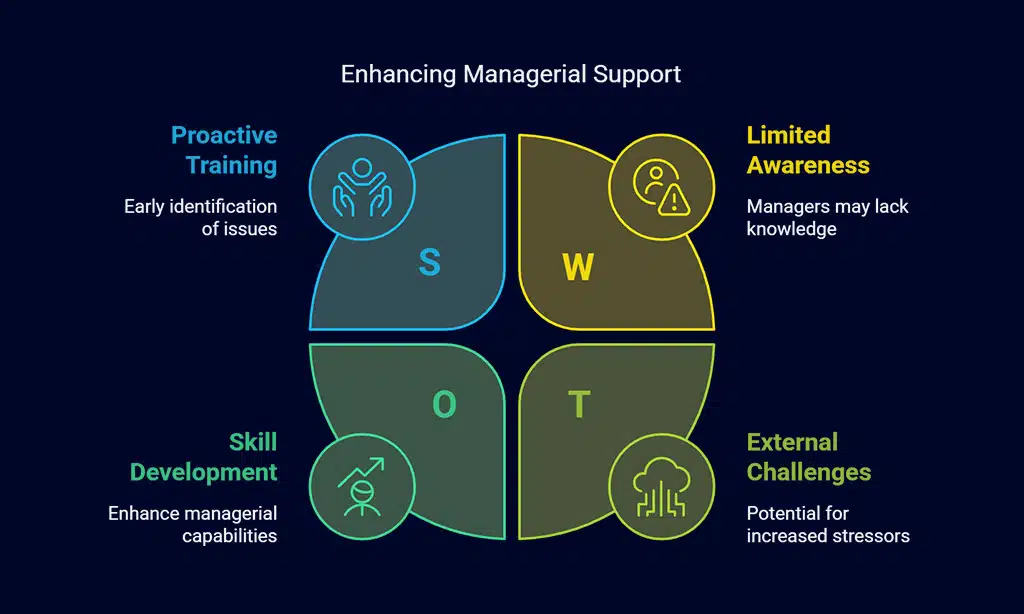
Managers play a big role in supporting workplace mental health. Training them ensures they can help employees and improve workplace culture.
- Teach managers to spot signs of stress, burnout, or mental illness early. This helps them act before problems grow worse.
- Offer workshops on active listening and empathy. These skills make managers more approachable for employees needing support.
- Provide training about employee assistance programs (EAPs). Managers should know how to connect workers with the right resources.
- Cover anti-discrimination laws like the Americans with Disabilities Act. This ensures managers handle mental health issues fairly and legally.
- Share tips for managing workplace stress as a team. For example, encourage flexible schedules or regular check-ins to ease pressure.
- Include updates on best-practice policies during COVID-19 or other crises. Managers should adapt support based on current conditions.
- Focus on teaching how to build trust within teams. Employees perform better when they feel safe sharing concerns.
- Train managers to monitor workloads and prevent burnout risk. Balance tasks so no one feels overwhelmed long-term.
- Stress the importance of creating a positive environment for everyone’s physical health and mental wellness at work.
Regularly Monitor and Measure Program Effectiveness
Tracking progress keeps a mental wellness program successful. It ensures the program meets employee needs and goals.
- Collect employee feedback to learn what works and what doesn’t. Use surveys or focus groups to gather honest opinions.
- Track participation rates in all wellness activities like fitness classes or stress management workshops. High engagement shows success.
- Measure changes in employee performance, retention rates, and satisfaction levels over time. Compare results before and after starting the program.
- Analyze health care costs regularly to check if the program lowers expenses related to physical and mental health issues.
- Review workplace culture by observing improved attitudes toward mental wellness and discrimination policies.
- Monitor burnout prevention efforts by checking for reduced workplace stress or fewer sick days taken.
- Set clear benchmarks for success, such as fewer reports of cardiovascular disease or weight gain due to stress.
- Update training programs for managers based on evolving employee needs or new workplace trends like COVID-19 challenges.
- Use HR data tools and technology to streamline data collection and reporting processes during evaluations.
- Adapt strategies based on findings to ensure continuous improvement in workplace mental health outcomes.
Continuously Improve and Adapt the Program
Mental wellness programs need regular updates. This ensures they stay effective and meet employee needs.
- Gather feedback from employees through surveys or meetings. Use their input to spot areas for improvement.
- Check program results against set goals. Look at employee participation, satisfaction, and retention rates regularly.
- Stay updated on workplace mental health trends, tools, and resources like Employee Assistance Programs (EAP).
- Add new wellness activities such as stress management workshops or fitness classes based on feedback and current needs.
- Train managers consistently to adapt to changing working conditions or challenges like the COVID era’s impact on mental health.
- Review how well the program supports both physical wellness and mental wellness equally over time.
- Update discrimination policies related to mental health as laws evolve or company values shift.
- Invest in modern technology such as apps or platforms that simplify access to mental wellness resources.
- Share small success stories with leadership to secure continued support for improvements.
- Test new ideas like financial health education sessions if employees suggest them during feedback rounds.
- Schedule regular reviews every quarter or year so changes stay consistent and timely across all departments.
Takeaways
Creating a mental wellness program can improve employee satisfaction and performance. It helps reduce stress, supports health, and boosts office morale.
Dr. Emma Collins, a workplace wellness expert with 15 years of experience in human resources and health programs, agrees. She holds a Ph.D. in Organizational Psychology from Stanford University and has led major research on employee engagement strategies.
Her work focuses on building healthy workplace cultures.
Dr. Collins highlights the importance of addressing both mental and physical well-being through clear goals, education, and access to resources like Employee Assistance Programs (EAPs).
She stresses that leadership support is critical for long-term success.
She emphasizes ethical practices too—fair policies should foster inclusion without discrimination or judgment. Transparency about mental health benefits builds trust among teams while encouraging open conversations.
To make such initiatives part of daily life at work, Collins suggests offering simple tools like mindfulness apps or fitness classes during breaks. Incentives such as gift cards or extra time off can also motivate staff participation.
This approach provides many benefits: happier employees, higher retention rates, stronger teamwork—and even reduced healthcare costs over time! On the downside? Budgeting may be tricky for smaller offices initially but gets manageable later with proper planning.
Collins concludes that investing in these efforts is worth it—for everyone involved. A thoughtful plan can transform your office into a healthier space where people thrive every day!
FAQs on How to Start a Mental Wellness Program at Your Office?
1. What is a mental wellness program for employees?
A mental wellness program helps improve workplace mental health by offering tools and resources like stress management, burnout prevention, and employee assistance programs (EAP).
2. Why are mental wellness programs important at work?
These programs boost employee satisfaction, engagement, and retention rates while reducing workplace stress and health care costs. They also support better physical health and productivity.
3. How can I start a corporate wellness program in my office?
Begin with a clear strategy that includes goals like improving employee performance or addressing workplace culture issues. Offer activities such as fitness classes or manager training to promote both physical wellness and mental health.
4. What role does human resources play in creating these programs?
Human resources ensures the program aligns with company policies on discrimination, safety, and overall employee well-being while gathering feedback to improve its effectiveness over time.
5. How do you address challenges like stigma around workplace mental health?
Create open conversations about mental health through education campaigns, strong policies against discrimination, and leadership support to build trust among employees.