

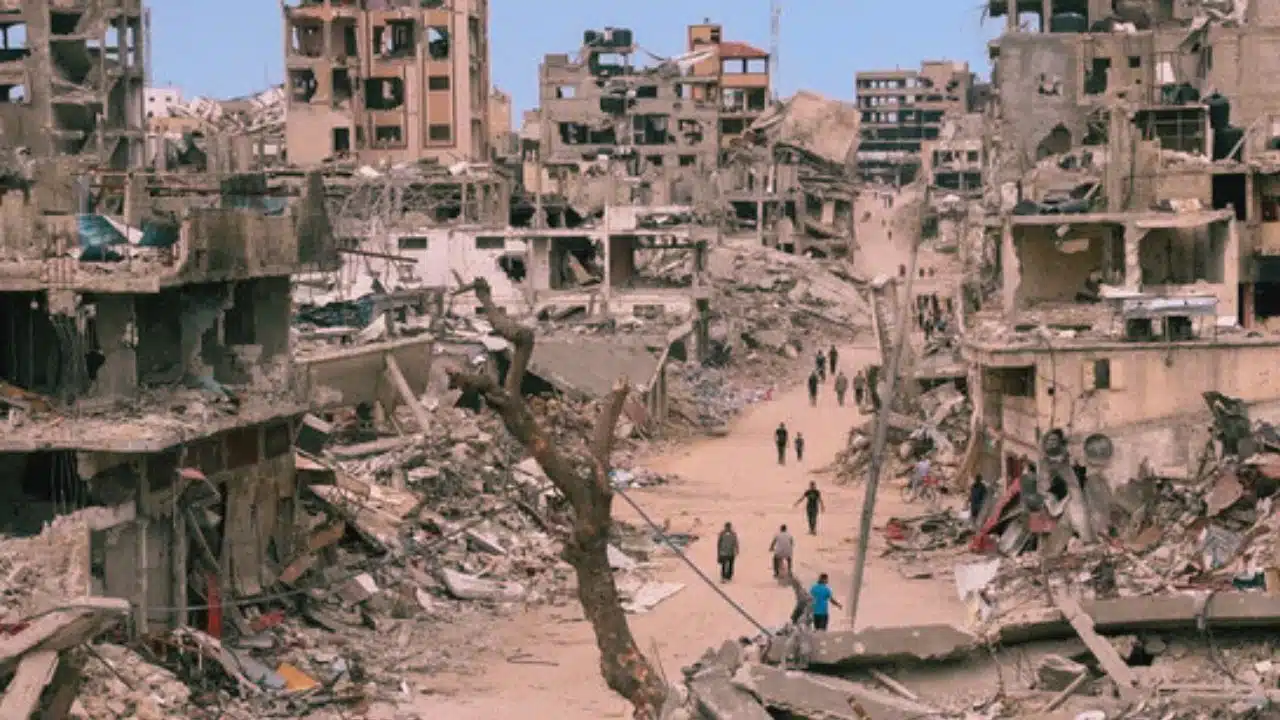
The humanitarian situation in Gaza has deteriorated to catastrophic levels, drawing sharp condemnation from global humanitarian organizations and the United Nations. Mirjana Spoljaric, President of the International Committee of the Red Cross (ICRC), issued a rare and urgent public statement declaring that Gaza has become “hell on earth” as the Israeli military intensifies its operations.
Red Cross Raises Alarm Over War Conduct
In a highly unusual move, the ICRC broke with its traditional approach of confidential diplomacy to publicly condemn the conduct of war in Gaza. As the guardian of the Geneva Conventions, the ICRC typically engages in private dialogues with conflicting parties. However, Spoljaric stated that what is unfolding in Gaza represents an “extreme hollowing out” of international humanitarian law.
Speaking to the BBC, she described Gaza’s reality as one where civilians are enduring relentless suffering, forced to relocate multiple times, and increasingly cut off from essential services. “No state, no party to a conflict can be exempt from the obligation not to commit war crimes, genocide, or ethnic cleansing,” she said. “These rules apply. They are universal.”
Mass Displacement, Civilian Casualties Mount
Since Israel resumed its offensive on March 18, following a brief pause, over 1,542 Palestinians have been reported killed by Israeli airstrikes, according to Gaza’s Hamas-run Health Ministry. The renewed violence has triggered the forced displacement of nearly 400,000 people. Many have sought refuge in areas previously designated as safe by Israel, including the coastal al-Mawasi region, only to be targeted again.
The Israeli Defense Forces (IDF) assert that their operations are in accordance with international law, explaining that Hamas militants operate within densely populated civilian areas, which complicates military strategy and often results in unintended casualties. Israel’s government has reiterated that its offensive aims to pressure Hamas into releasing hostages abducted during the October 7, 2023 attack.
Despite these assertions, data from the United Nations Human Rights Office has verified that in a sample of 36 recent Israeli airstrikes, all casualties were women and children. Israel maintains that it is investigating incidents of civilian deaths, including a strike in Khan Younis that killed members of one family, and claims to have targeted 40 “terror sites” in recent operations.
UN: Conditions in Gaza Threaten Palestinian Existence
Ravina Shamdasani, spokesperson for the UN Human Rights Office, expressed grave concern that the cumulative effect of Israeli military actions may be rendering Gaza uninhabitable. “The office is seriously concerned that Israel appears to be inflicting on Palestinians in Gaza conditions of life increasingly incompatible with their continued existence as a group in Gaza,” she said.
On multiple occasions, Israeli forces have bombed areas that had previously been marked as humanitarian zones. Tents in al-Mawasi—a designated safe zone—have not been spared, casting doubt on the credibility of evacuation orders and safe passages.
UN Secretary-General Antonio Guterres, in a somber address earlier this week, accused Israel of violating the Geneva Conventions through its total blockade of the territory. He described Gaza as a “killing field,” echoing earlier appeals from the leaders of six UN humanitarian agencies who called for urgent international intervention to prevent further atrocities.
Geneva Conventions and the Crisis of Compliance
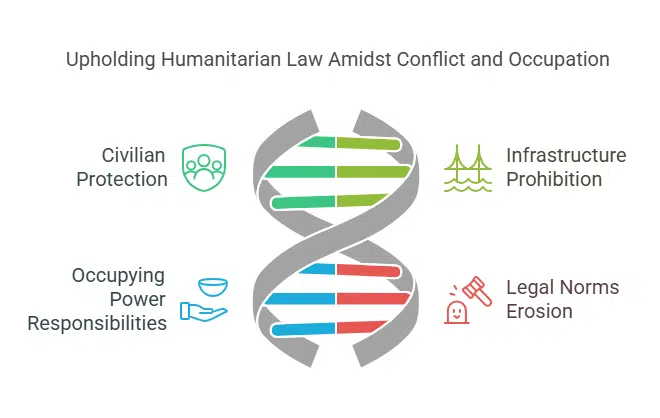
The Geneva Conventions, created after the horrors of World War II, are a cornerstone of international humanitarian law. They mandate the protection of civilians, prohibit the targeting of civilian infrastructure, and require occupying powers to provide for the needs of those under occupation, including food and medical care.
Under the Fourth Geneva Convention, Israel—as the occupying power in Gaza—is legally obligated to ensure the provision of food, medicine, and the protection of health workers and hospitals. It also prohibits the forcible transfer or displacement of populations within occupied territories. Since March 2, Israel has enforced a comprehensive blockade on the entry of food, medical supplies, and humanitarian aid—actions that multiple international bodies say constitute a direct breach of these obligations.
Ms. Spoljaric warned of a dangerous erosion of these legal norms, stating, “You have to comply with these rules no matter what the other side does. It’s not transactional.” She emphasized that the principles of international law were established to prevent the kind of dehumanization now witnessed in Gaza.
Aid Agencies and Humanitarian Access Under Fire
The ICRC and other humanitarian organizations have reported increasing difficulty in delivering aid. According to Spoljaric, during previous ceasefire periods, the ICRC was able to evacuate Israeli hostages and deliver vital supplies. The current blockade has halted such operations, and the deteriorating security environment has made it nearly impossible for aid convoys to move safely.
Humanitarian workers themselves are at risk. Multiple reports have emerged of aid convoys being attacked, even in clearly marked humanitarian zones. Hospitals are overwhelmed or have ceased functioning entirely due to lack of power, supplies, and safety.
The Ghost of October 7 and Israel’s Justification
Israel’s military campaign began in response to a deadly Hamas attack on October 7, 2023, during which 1,200 Israelis were killed and 251 taken hostage. Israeli leaders cite this attack as the catalyst for their ongoing military efforts, arguing that dismantling Hamas is essential for long-term security.
While this rationale resonates with many Israelis, critics argue that the response has been disproportionate, violating international law and deepening a humanitarian disaster. The international community remains divided on the issue, with some Western allies expressing concern but stopping short of strong condemnation.
Future Implications and the Price of Inaction
Ms. Spoljaric expressed fears that Gaza will serve as a grim example of what happens when the world turns away from atrocities. “Gaza will haunt us. It will haunt us for a long time because you cannot undo the suffering… that will last for generations,” she warned.
The ICRC and the UN insist that upholding the rules of war is not only a moral imperative but also critical to fostering any hope for sustainable peace. Violations committed today will be remembered, shaping the post-conflict future and the potential for reconciliation.
As the war drags on, the people of Gaza remain trapped in a cycle of violence, deprivation, and displacement—while the international community debates how to act. The enduring question remains: how many more must suffer before the rules of war are not just remembered, but respected and enforced?

























