

The logistics industry is undergoing a rapid transformation, driven by digital freight marketplaces (DFMs) that are reshaping traditional freight operations.
These tech-driven platforms provide shippers and carriers with real-time connectivity, automation, and data-driven insights, significantly enhancing efficiency and cost-effectiveness.
Unlike conventional freight operations that rely on manual coordination, phone calls, and paperwork, digital freight marketplaces use AI-driven matching algorithms, IoT tracking, and blockchain security to revolutionize logistics management.
The adoption of these platforms has led to cost reductions, faster deliveries, and improved collaboration between stakeholders.
In this article, we explore the Top 10 Impacts of Digital Freight Marketplaces on Logistics and how they are revolutionizing the supply chain landscape. From cost reduction to sustainability improvements, these changes are defining the future of freight transportation.
Now, let’s explore these impacts in detail.
Understanding Digital Freight Marketplaces

Digital freight marketplaces (DFMs) are online platforms that connect shippers, carriers, and freight brokers using automation and real-time data. These platforms leverage AI, machine learning, and blockchain to create an efficient, transparent, and cost-effective logistics ecosystem.
| Feature | How It Works |
| AI-Powered Matching | Automatically pairs shippers with available carriers based on demand. |
| Real-Time Tracking | Uses IoT and GPS to provide shipment visibility. |
| Automated Pricing | Dynamic pricing models adjust rates based on market demand. |
| Blockchain Security | Ensures secure transactions and contract transparency. |
Why Traditional Logistics Needed a Transformation
Traditional freight operations relied heavily on manual processes, phone calls, and paperwork, leading to inefficiencies, high costs, and lack of visibility.
Digital freight marketplaces solve these issues by automating freight booking, improving tracking, and optimizing route planning.
| Traditional Freight Challenges | How DFMs Solve Them |
| High brokerage fees | Direct shipper-carrier connections eliminate middlemen. |
| Lack of transparency | Real-time tracking improves shipment visibility. |
| Slow booking process | Automated matching reduces waiting times. |
| Inefficient route planning | AI optimizes routes, reducing fuel costs. |
Top 10 Impacts of Digital Freight Marketplaces on Logistics
Digital freight marketplaces are transforming the logistics industry by enhancing operational efficiency, increasing transparency, and reducing costs. These platforms leverage cutting-edge technologies such as artificial intelligence, machine learning, and blockchain to automate freight processes, optimize route planning, and improve communication between shippers and carriers.
As a result, businesses benefit from faster deliveries, reduced empty miles, and improved customer satisfaction. The adoption of digital freight solutions is growing rapidly, with more companies integrating these platforms to stay competitive in the evolving logistics landscape.
1. Enhanced Supply Chain Visibility and Real-Time Tracking
Real-time tracking has transformed logistics by offering accurate and instant updates on freight movement.
Businesses benefit from increased transparency, allowing them to monitor shipments in real time and take proactive measures to avoid delays.
This increased visibility reduces disruptions, enhances customer satisfaction, and optimizes overall supply chain management.
| Tracking Feature | Impact |
| Live GPS Tracking | Reduces shipment uncertainty |
| IoT Sensor Monitoring | Ensures cargo safety and compliance |
| Predictive Analytics | Forecasts delays and optimizes routes |
- Real-time GPS tracking allows shippers and carriers to monitor shipments effortlessly.
- IoT-enabled devices provide live updates on cargo conditions, ensuring safety and efficiency.
- Increased transparency in delivery timelines reduces delays and enhances customer trust.
- Cloud-based platforms allow stakeholders to access shipment data from anywhere.
- Predictive analytics tools help detect and prevent potential disruptions before they occur.
- Automated reporting systems enhance decision-making by providing detailed insights on transit performance.
2. Reduced Operational Costs and Better Pricing Models
Digital freight marketplaces significantly reduce operational expenses by eliminating intermediaries and leveraging automation.
The adoption of dynamic pricing models ensures fair and competitive freight rates, optimizing cost efficiency.
Additionally, automated invoicing and digital payment processing streamline transactions, saving both time and administrative resources.
| Cost Reduction Feature | Impact on Logistics |
| Elimination of Middlemen | Lowers brokerage fees and reduces costs |
| Dynamic Pricing Models | Ensures fair and optimized freight rates |
| Automated Invoicing & Payments | Speeds up transactions and reduces paperwork |
- Elimination of middlemen lowers brokerage fees.
- Dynamic pricing algorithms ensure fair and optimized freight rates.
- Reduced paperwork and automated billing streamline operations, saving time and labor costs.
- AI-driven cost analysis helps businesses identify and minimize unnecessary expenses.
- Predictive maintenance alerts reduce equipment downtime and repair costs.
- Automated fuel optimization systems lower fuel consumption and improve cost efficiency.
3. Faster and More Efficient Freight Matching
Digital freight marketplaces leverage AI-driven technology to streamline freight matching, ensuring quick and efficient connections between shippers and carriers.
These platforms eliminate delays associated with manual coordination and provide real-time freight availability insights. By integrating advanced analytics, they enhance load planning, reducing empty miles and maximizing vehicle utilization.
| Feature | Impact |
| AI-Based Freight Matching | Reduces wait times and enhances efficiency |
| Real-Time Freight Availability | Enables quicker booking and dispatch |
| Load Optimization Algorithms | Minimizes empty miles and increases profits |
- AI-powered matching systems connect shippers and carriers instantly, reducing empty miles.
- On-demand freight bookings allow businesses to move cargo faster and more efficiently.
- Load consolidation features help carriers maximize vehicle capacity and revenue.
4. Increased Flexibility and Scalability for Businesses
Digital freight marketplaces allow businesses to adapt quickly to fluctuating demand by providing scalable freight solutions. Companies can efficiently adjust shipment volumes without long-term contracts, ensuring optimal resource utilization.
These platforms also enhance network reach by connecting businesses with a diverse pool of carriers, enabling seamless expansion into new markets.
| Feature | Impact |
| Scalable Freight Solutions | Adjust shipment volumes based on demand |
| Flexible Contract Models | Reduce dependency on long-term agreements |
| Expanded Carrier Networks | Enable business growth in new markets |
- Businesses can quickly scale freight operations up or down based on demand fluctuations.
- Digital freight platforms offer on-demand capacity, reducing supply chain bottlenecks.
- Small businesses gain access to a larger carrier network, enhancing operational reach.
5. Improved Sustainability and Eco-Friendly Logistics
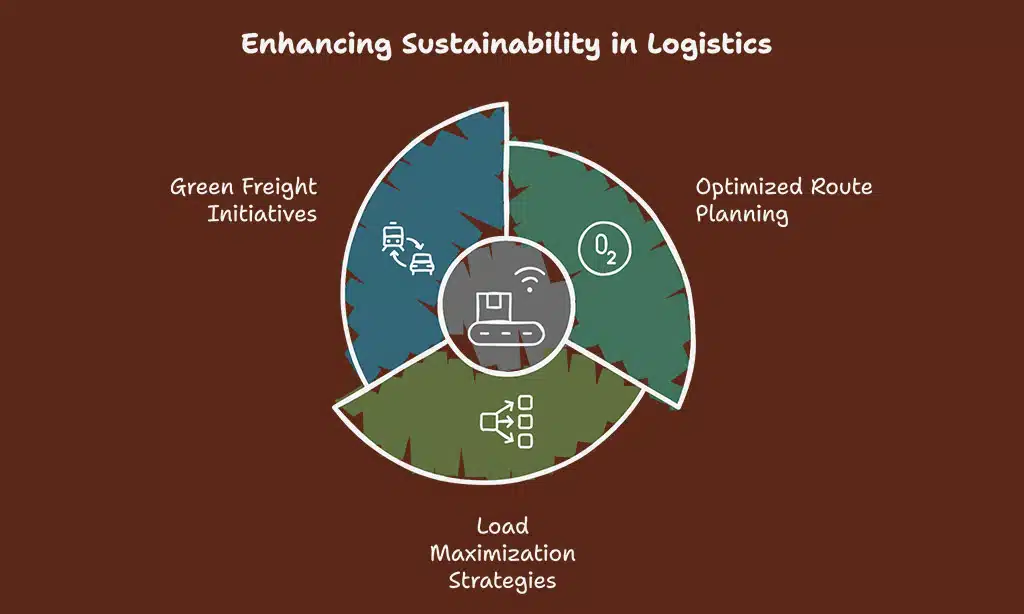
Digital freight marketplaces play a crucial role in promoting sustainable logistics by minimizing carbon emissions through optimized route planning. These platforms reduce fuel consumption by eliminating inefficient routes and maximizing vehicle utilization.
Additionally, they support greener supply chain practices by integrating electric and alternative fuel-powered freight solutions.
| Sustainability Feature | Impact |
| Optimized Route Planning | Reduces fuel consumption and emissions |
| Load Maximization Strategies | Minimizes empty miles and enhances efficiency |
| Green Freight Initiatives | Supports adoption of eco-friendly vehicles |
- Optimized routing algorithms reduce fuel consumption and lower carbon emissions.
- Digital freight platforms enable better load utilization, decreasing empty truck miles.
- Freight companies can track and report emissions, helping them meet sustainability goals.
6. Enhanced Carrier and Shipper Collaboration
Digital freight marketplaces foster seamless collaboration between carriers and shippers by providing real-time communication and transparent digital contracts.
These platforms reduce operational disputes by ensuring both parties have access to accurate shipment details and automated updates.
Additionally, integrated tracking systems and shared performance analytics enhance accountability and improve long-term partnerships.
| Collaboration Feature | Impact |
| Real-Time Communication | Reduces miscommunication and delays |
| Digital Contract Transparency | Minimizes disputes and ensures trust |
| Shared Performance Analytics | Strengthens relationships and accountability |
- DFMs provide transparent digital contracts, reducing disputes.
- Enhanced communication tools allow better coordination between shippers and carriers.
- Automated notifications improve shipment planning and reduce miscommunication.
7. Minimized Freight Fraud and Increased Security
Digital freight marketplaces enhance security measures by integrating blockchain technology to create tamper-proof transaction records. AI-powered identity verification helps prevent fraudulent activities by ensuring only verified carriers and shippers participate in transactions.
Automated digital documentation further strengthens security by reducing the risk of lost paperwork and unauthorized freight handling.
| Security Feature | Impact |
| Blockchain-Based Transactions | Ensures transparency and prevents data breaches |
| AI Identity Verification | Reduces fraudulent carrier and shipper profiles |
| Automated Digital Documentation | Minimizes risks of lost or altered records |
- Blockchain technology ensures tamper-proof transaction records.
- AI-powered identity verification prevents fraudulent carrier profiles.
- Digital documentation reduces risks of lost paperwork and unauthorized freight handling.
8. Data-Driven Decision-Making with Predictive Analytics
Predictive analytics plays a crucial role in optimizing logistics by using historical data and AI-driven insights to improve efficiency. Businesses can anticipate demand fluctuations, optimize shipment schedules, and enhance route planning based on real-time trends.
These analytics also help minimize operational risks by identifying potential delays and recommending proactive solutions.
| Predictive Analytics Feature | Impact |
| Demand Forecasting | Reduces inventory shortages and overstocking |
| Route Optimization | Improves delivery speed and cost efficiency |
| Risk Mitigation | Identifies potential delays and optimizes response strategies |
- Predictive analytics enable accurate demand forecasting and capacity planning.
- Businesses can analyze past performance data to optimize future shipments.
- AI-based insights help improve fuel efficiency, driver performance, and route planning.
9. Automation and AI in Freight Management
Automation and AI are transforming freight management by streamlining operations, reducing human intervention, and increasing efficiency. AI-powered systems predict traffic patterns, optimize delivery routes, and enable proactive decision-making, ensuring timely shipments.
These intelligent solutions also enhance warehouse automation, improving inventory management and reducing logistics costs.
| Automation & AI Feature | Impact |
| AI-Based Route Optimization | Reduces transit time and fuel consumption |
| Warehouse Automation | Enhances inventory management efficiency |
| Predictive Traffic Analytics | Minimizes delays and improves delivery accuracy |
- AI-driven chatbots handle customer queries and support 24/7 communication.
- Automated invoice processing eliminates human errors and speeds up transactions.
- Self-learning AI models help carriers predict traffic and reduce transit delays.
10. Increased Market Competition and Better Customer Experience
The rise of digital freight marketplaces has intensified competition by enabling more businesses to enter the logistics sector with technology-driven solutions.
This increased competition has led to better pricing, enhanced service quality, and greater transparency, ultimately benefiting both shippers and consumers.
Customers now enjoy faster deliveries, more flexible shipping options, and improved tracking capabilities, resulting in a superior overall experience.
| Competitive Advantage | Impact on Customer Experience |
| Fair and Transparent Pricing | Ensures cost-effective shipping rates |
| Faster Deliveries | Reduces waiting times and improves efficiency |
| Real-Time Tracking | Enhances shipment visibility and reliability |
- Digital freight marketplaces promote fair pricing and service transparency.
- Faster freight deliveries improve customer satisfaction and loyalty.
- More competition leads to continuous innovation in logistics services.
Takeaways
The Top 10 Impacts of Digital Freight Marketplaces on Logistics highlight how technology-driven solutions are transforming traditional freight operations.
From cost savings and efficiency gains to enhanced transparency and fraud prevention, DFMs are revolutionizing the logistics industry.
Businesses that leverage digital freight platforms will stay ahead of the competition, benefiting from improved sustainability, faster deliveries, and smarter decision-making.
The future of logistics is digital, and companies that adapt early will be the biggest winners in this evolving landscape.





















