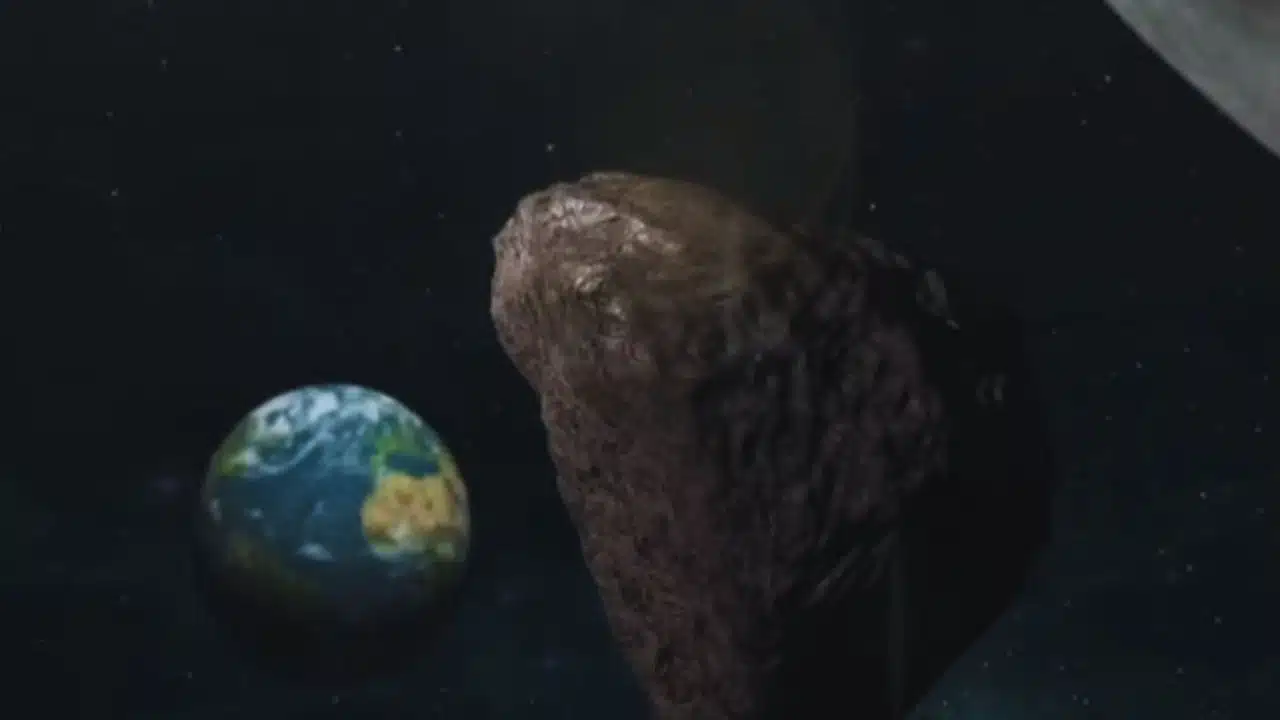
A recently discovered asteroid, named 2024 YR4, has captured the attention of astronomers worldwide.
According to the European Space Agency (ESA), new observations have slightly increased the probability of the asteroid impacting Earth. The risk has risen from 1.2% to 2.2% for a potential collision on December 22, 2032. While the risk remains low, scientists continue to monitor its trajectory closely.
Observations Could Further Refine the Risk Assessment
Astronomers emphasize that as more data is gathered, the impact probability will likely fluctuate. The ESA noted that newly discovered asteroids often follow a pattern where initial risk estimates rise before eventually dropping to zero.
A similar situation occurred with the asteroid Apophis, which was once considered a major threat. However, further observations in 2021 confirmed that it poses no risk of impacting Earth in the foreseeable future. Experts anticipate a similar outcome for 2024 YR4 as they refine its orbital path.
How Big Is Asteroid 2024 YR4?
The asteroid is estimated to be between 131 to 295 feet (40 to 90 meters) wide. According to Dr. Paul Chodas, manager at NASA’s Center for Near Earth Object Studies (CNEOS), this size is comparable to a large building. If it were to strike Earth, its impact could cause significant damage within a 50-kilometer (31-mile) radius—but only if it lands in a populated area.
One of the primary reasons for concern is the speed at which 2024 YR4 would enter Earth’s atmosphere. Scientists estimate it could be traveling at 17 kilometers per second (38,028 miles per hour), generating an immense amount of energy upon impact. However, experts stress that an impact remains unlikely at this stage.
Past Asteroid Events and Potential Impact
Asteroids of this size impact Earth every few thousand years, often causing regional devastation. Some historical examples include:
- Tunguska Event (1908, Russia): A 98-foot-wide (30-meter-wide) asteroid exploded over Siberia, leveling trees across 2,150 square kilometers (830 square miles).
- Chelyabinsk Meteor (2013, Russia): A 66-foot-wide (20-meter-wide) asteroid exploded in the atmosphere, releasing energy 20 to 30 times greater than the first atomic bomb. The explosion damaged over 7,000 buildings and injured more than 1,000 people.
How Was 2024 YR4 Discovered?
The Asteroid Terrestrial-impact Last Alert System (ATLAS) telescope in Rio Hurtado, Chile, first spotted 2024 YR4 on December 27, 2024. ATLAS is one of NASA’s key programs designed to detect near-Earth objects (NEOs).
Soon after its discovery, automated warning systems flagged the asteroid due to its nonzero probability of impacting Earth. It was quickly added to the ESA’s asteroid risk list and NASA’s Sentry risk list on December 31. Since then, various observatories, including the Magdalena Ridge Observatory (New Mexico), the Danish Telescope, and the Very Large Telescope (Chile), have been tracking its movements.
Currently, 2024 YR4 is more than 28 million miles (45 million kilometers) away from Earth and is moving farther from our planet. Scientists expect it to remain visible until early April 2025 before disappearing from view. It will return to Earth’s vicinity in 2028, offering another opportunity for detailed observations.
What If Scientists Lose Sight of 2024 YR4?
If astronomers are unable to track the asteroid before confirming a zero-risk scenario, it will remain on the official risk list until 2028. Davide Farnocchia, a navigation engineer at NASA’s Jet Propulsion Laboratory (JPL), emphasized that continued monitoring is crucial.
“The longer we track an asteroid, the more precise the prediction,” he explained. With additional data, uncertainties about its position in 2032 will decrease, allowing scientists to make more accurate forecasts.
How Scientists Plan to Respond?
The discovery of 2024 YR4 has prompted two international asteroid response groups, endorsed by the United Nations, to monitor and assess any potential threats:
1. International Asteroid Warning Network (IAWN): Chaired by NASA, this group is responsible for tracking and studying the asteroid. If necessary, they will develop impact assessment strategies.
2. Space Mission Planning Advisory Group (SMPAG): Led by the ESA, this group explores mitigation strategies if an asteroid remains a potential threat. Options include:
-
- Deflecting the asteroid using techniques like NASA’s Double Asteroid Redirection Test (DART), which successfully altered the path of an asteroid in 2022.
- Evacuating potential impact zones if deflection is not feasible.
The SMPAG recently met in Vienna, Austria, and will reconvene in late April or early May once 2024 YR4 disappears from view. At that time, they will reassess the risk and determine whether further actions are necessary.
What Comes Next?
For now, scientists remain optimistic that 2024 YR4 poses no significant risk to Earth. Continuous tracking and new data will help refine impact predictions, and experts believe the chances of a collision will likely decrease over time.
While asteroid threats are rare, ongoing advancements in space observation technology will improve our ability to detect and respond to potentially hazardous objects in the future. NASA and ESA continue to track thousands of near-Earth asteroids, ensuring that any real threats are identified well in advance.
As of now, there are no other known large asteroids with a more than 1% chance of impacting Earth in the foreseeable future, according to NASA.
The Information is Collected from CNN and USA Today.