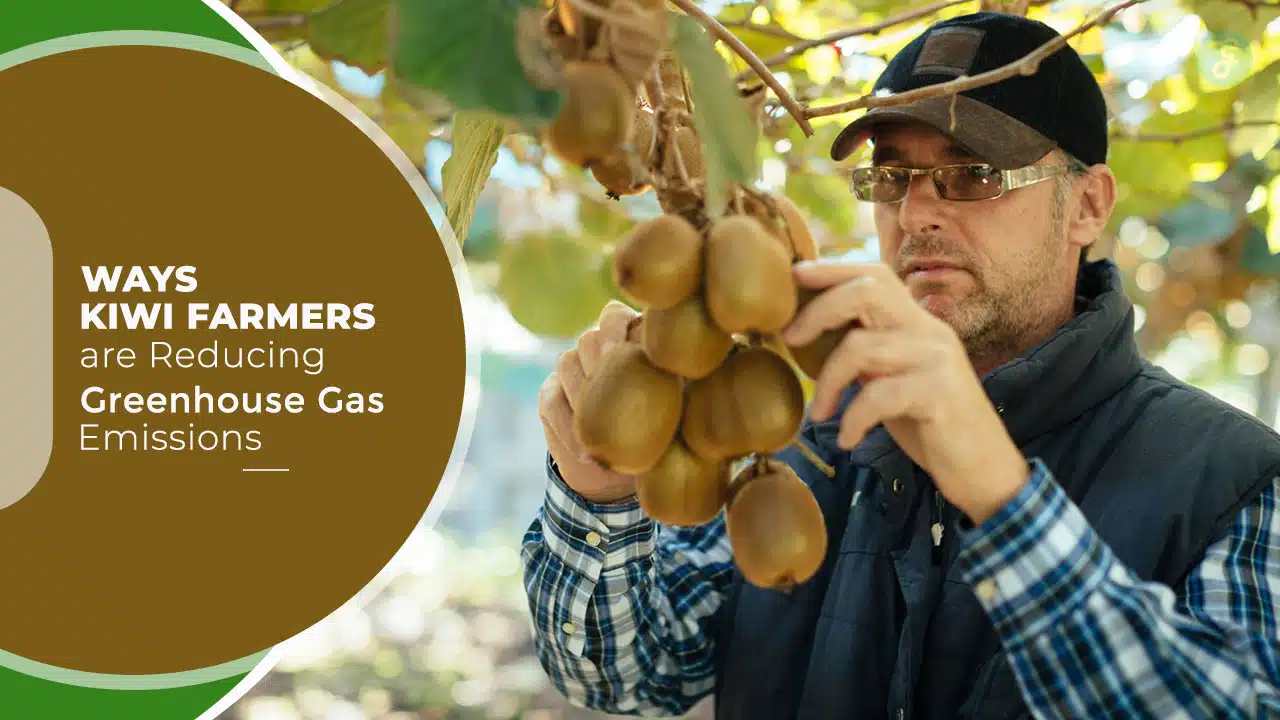
Agriculture plays a significant role in New Zealand’s economy, and Kiwi farmers are at the forefront of innovative efforts to combat climate change. With agriculture accounting for nearly 50% of the country’s greenhouse gas emissions, implementing sustainable practices has become a priority.
Farmers are embracing new technologies, practices, and partnerships to reduce their carbon footprint while maintaining productivity. These efforts showcase how the agricultural sector can adapt and thrive in an eco-conscious future.
Reducing greenhouse gas emissions is not just an environmental responsibility; it also aligns with consumer expectations and helps farmers meet stringent regulatory requirements.
This article highlights 10 ways Kiwi farmers are reducing greenhouse gas emissions, offering insights into how they’re leading the charge toward sustainable farming.
Key Strategies for Reducing Greenhouse Gas Emissions
1. Utilizing Low-Emission Livestock Feed
One of the primary sources of emissions in agriculture is methane produced during livestock digestion. Kiwi farmers are using low-emission livestock feed that modifies the fermentation process in ruminants, reducing methane output.
These specialized feeds contain additives like seaweed, fats, and essential oils proven to curb methane production effectively. This approach exemplifies how the 10 ways Kiwi farmers are reducing greenhouse gas emissions address industry-specific challenges.
Case Studies of Successful Feed Implementation
For example, research conducted by AgResearch New Zealand demonstrates that incorporating red seaweed into cattle feed can reduce methane emissions by up to 80%. Similarly, trials using fat-based supplements in Canterbury have shown a 20% reduction in methane without impacting livestock productivity. Many farmers have adopted these feeds, reporting both environmental and economic benefits.
| Key Benefits | Details |
| Methane Reduction | Up to 80% with red seaweed additives |
| Livestock Health | Improved digestion and efficiency |
| Environmental Impact | Significant reduction in GHG emissions |
2. Adopting Precision Agriculture
Precision agriculture uses advanced tools like GPS mapping, drones, and sensors to monitor soil conditions and crop health in real-time. By ensuring optimal resource allocation, farmers reduce waste and emissions linked to over-fertilization or inefficient irrigation. This targeted approach is a key aspect of the 10 ways Kiwi farmers are reducing greenhouse gas emissions.
Efficient Use of Fertilizers and Water
Farmers employing precision technology apply fertilizers and water only where needed, cutting down nitrogen-based emissions and conserving water. These methods significantly reduce nitrous oxide emissions, a potent greenhouse gas. For instance, a study in Otago found that precision irrigation reduced water usage by 30%, leading to substantial emission reductions.
| Tools | Impact on Emissions |
| GPS Mapping | Reduces over-application of fertilizers |
| Soil Sensors | Ensures targeted irrigation |
| Drones | Monitors crop health efficiently |
3. Incorporating Agroforestry
Agroforestry integrates trees into agricultural systems, providing multiple benefits such as carbon sequestration, improved biodiversity, and soil stabilization. Trees absorb CO2, creating a natural carbon sink that offsets emissions from farming activities.
Planting shelterbelts or riparian strips enhances farm resilience to climate change while benefiting wildlife habitats. This strategy is among the 10 ways Kiwi farmers are reducing greenhouse gas emissions with long-term impacts.
Real-Life Examples of Agroforestry in New Zealand
In regions like Waikato, farmers have adopted agroforestry by planting native species along pasture edges and waterways. A dairy farm in Bay of Plenty reported that riparian planting reduced soil erosion by 25% and increased local biodiversity, attracting native birds and insects.
| Advantages of Agroforestry | Details |
| Carbon Sequestration | Trees act as carbon sinks |
| Biodiversity | Provides habitats for native species |
| Soil Stabilization | Prevents erosion and nutrient loss |
4. Implementing Rotational Grazing
Rotational grazing involves moving livestock between pastures, allowing land to recover and reducing overgrazing. This method enhances soil health, leading to better carbon storage in the soil and reduced methane emissions from livestock.
Healthy soils also improve water retention, decreasing runoff and pollution. This practice aligns with the holistic approaches in the 10 ways Kiwi farmers are reducing greenhouse gas emissions.
Balancing Livestock Density for Maximum Impact
Maintaining optimal livestock density ensures that pastures are not overburdened, reducing the risk of soil compaction and erosion. Farmers in Northland who practice rotational grazing have seen a 15% increase in pasture productivity and lower feed costs.
|
Benefits of Rotational Grazing |
Details |
| Soil Carbon Storage | Enhanced through healthier soils |
| Reduced Methane Emissions | Achieved through efficient grazing |
| Pasture Recovery | Promotes long-term sustainability |
5. Leveraging Renewable Energy Sources
Farmers are increasingly adopting solar energy to power irrigation systems, equipment, and storage facilities. Solar panels provide a renewable, emission-free energy source, reducing reliance on fossil fuels and lowering energy bills by 30-50% annually. Renewable energy adoption is one of the standout strategies in the 10 ways Kiwi farmers are reducing greenhouse gas emissions.
Biogas Production from Farm Waste
Biogas systems convert organic farm waste, such as manure, into energy. This not only cuts down methane emissions but also provides a sustainable energy source for farming operations. A piggery in Hawke’s Bay reported that its biogas system supplies 80% of its energy needs while reducing waste disposal costs.
| Renewable Energy Options | Benefits |
| Solar Panels | Reduces dependency on fossil fuels |
| Biogas Systems | Converts waste into energy |
| Wind Turbines | Supplements renewable energy needs |
6. Enhancing Manure Management Practices
Reducing Methane Emissions Through Composting
Proper composting of manure minimizes methane emissions compared to traditional storage methods. Composting also produces nutrient-rich soil amendments, reducing the need for synthetic fertilizers and enhancing soil health. This contributes significantly to the 10 ways Kiwi farmers are reducing greenhouse gas emissions.
Anaerobic Digestion for Energy Recovery
Anaerobic digesters process manure into biogas, which can be used for heating and electricity generation, offering an eco-friendly way to manage waste while reducing emissions. In Southland, a dairy farm’s anaerobic digestion system reduced methane emissions by 70% and provided electricity for the entire farm.
| Manure Management Techniques | Environmental Benefits |
| Composting | Reduces methane, enriches soil |
| Anaerobic Digestion | Converts waste into renewable energy |
7. Using Cover Crops
Preventing Soil Erosion and Sequestering Carbon
Cover crops, such as clover and rye, prevent soil erosion, improve soil health, and sequester carbon. These crops act as a protective layer, reducing emissions from disturbed soils. Clover also fixes nitrogen in the soil, reducing the need for synthetic fertilizers.
Case Studies of Cover Cropping Success
Farmers in Canterbury have reported significant improvements in soil organic matter and moisture retention through cover cropping, leading to higher yields and lower emissions. One study showed a 30% reduction in soil erosion after implementing cover crops for three consecutive years. This is another key example of the 10 ways Kiwi farmers are reducing greenhouse gas emissions effectively.
| Cover Crop Benefits | Details |
| Soil Protection | Prevents erosion and nutrient loss |
| Carbon Sequestration | Absorbs atmospheric CO2 |
| Moisture Retention | Enhances soil fertility and resilience |
8. Reducing Nitrogen-Based Fertilizer Usage
Switching to organic fertilizers reduces nitrous oxide emissions associated with synthetic fertilizers. Organic options also improve soil health over time, enhancing microbial activity and nutrient cycling. This switch is central to the 10 ways Kiwi farmers are reducing greenhouse gas emissions.
Precision Application Techniques
Farmers are using precision machinery to apply fertilizers only where needed, minimizing excess application and reducing emissions. For example, GPS-guided sprayers in Waikato have decreased fertilizer use by 20%, cutting costs and emissions.
| Fertilizer Strategies | Impact on Emissions |
| Organic Fertilizers | Lower nitrous oxide emissions |
| Precision Application | Reduces waste and environmental impact |
9. Encouraging Biodiversity on Farms
Creating habitats for pollinators like bees and butterflies improves ecosystem health and indirectly reduces emissions by promoting sustainable farming practices. Diverse farms rely less on chemical inputs, which are emission-intensive to produce.
Promoting Ecosystem Resilience
Biodiverse farms are more resilient to climate change, reducing the need for intensive interventions that contribute to emissions. A mixed-crop farm in Taranaki reported better yields and fewer pests after planting wildflower strips to attract pollinators. Biodiversity improvements are a critical part of the 10 ways Kiwi farmers are reducing greenhouse gas emissions.
| Biodiversity Benefits | Details |
| Pollinator Support | Enhances crop yields |
| Ecosystem Health | Reduces reliance on chemical inputs |
10. Partnering with Research Institutions
Farmers are working with institutions like AgResearch and Landcare Research to develop cutting-edge technologies and methods for reducing emissions. These partnerships enable access to expertise and resources that drive innovation, reflecting how the 10 ways Kiwi farmers are reducing greenhouse gas emissions benefit from science-backed strategies.
Accessing Funding for Emission Reduction Projects
Many farmers receive government grants and subsidies to implement sustainable practices, making these initiatives more accessible. For instance, the New Zealand Agricultural Greenhouse Gas Research Centre provides funding for methane-reduction trials.
| Collaboration Benefits | Details |
| Technological Advancements | Access to innovative solutions |
| Financial Support | Grants for sustainable practices |
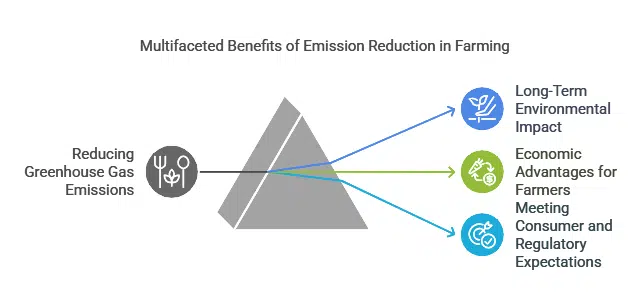
Benefits of Reducing Greenhouse Gas Emissions in Farming
1. Long-Term Environmental Impact
Reducing emissions from agriculture contributes to global climate goals, including carbon neutrality and environmental preservation. It also helps restore ecosystems and protect biodiversity. These benefits highlight the importance of the 10 ways Kiwi farmers are reducing greenhouse gas emissions.
2. Economic Advantages for Farmers
Sustainable practices often lead to cost savings through efficient resource use and improved productivity. Additionally, eco-friendly products attract premium pricing in the market, boosting profitability.
3. Meeting Consumer and Regulatory Expectations
Consumers increasingly prefer products from sustainable sources, and regulatory bodies require compliance with emissions standards, giving farmers a competitive edge. The 10 ways Kiwi farmers are reducing greenhouse gas emissions ensure they stay ahead of these trends.
Challenges in Implementing Sustainable Practices
1. Financial Barriers
The upfront cost of adopting new technologies and practices can be prohibitive for some farmers, despite long-term savings. Government incentives play a crucial role in easing this burden.
2. Knowledge Gaps
Farmers may lack access to the latest research and training, limiting the adoption of innovative methods. Increased collaboration with research institutions can address this issue.
3. Adapting to Changing Climate Conditions
Unpredictable weather patterns and shifting seasons present additional challenges in maintaining sustainable farming systems. Resilient practices like agroforestry and rotational grazing can mitigate these effects.
Wrap Up
Kiwi farmers are setting an example for the world by integrating innovative practices to reduce greenhouse gas emissions. Their commitment to sustainability ensures a brighter future for agriculture and the planet.
The 10 ways Kiwi farmers are reducing greenhouse gas emissions showcase the agricultural sector’s capacity for impactful change.
By continuing to adopt these 10 ways Kiwi farmers are reducing greenhouse gas emissions, the agricultural sector can become a global leader in combating climate change. Ongoing collaboration, investment, and education will be key to achieving this vision.