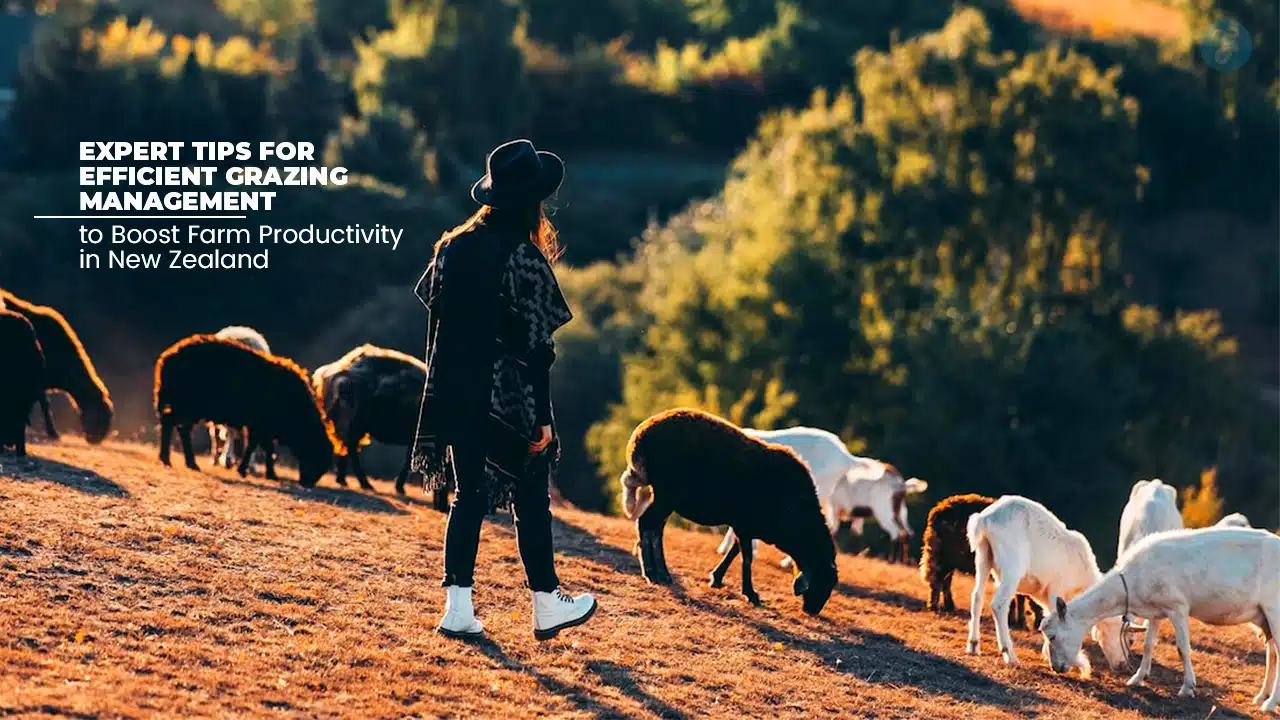
New Zealand’s unique landscape and climate make it an ideal location for grazing livestock. However, managing pastures efficiently is crucial for maintaining sustainable agricultural practices, ensuring livestock health, and maximizing profitability.
Efficient grazing management in New Zealand involves understanding the interplay between livestock, pasture growth, and environmental factors to achieve a delicate balance that benefits both farmers and the land.
This comprehensive guide delves into 10 actionable tips that can help farmers optimize their grazing strategies and boost productivity.
1. Assess Your Pasture Condition
Efficient grazing begins with a thorough understanding of your pasture’s current state. Regular assessment allows you to identify areas for improvement and maximize productivity.
Knowing your pasture’s health helps in making informed decisions about stocking rates, fertilization, and rotation schedules.
Understanding Pasture Growth Cycles
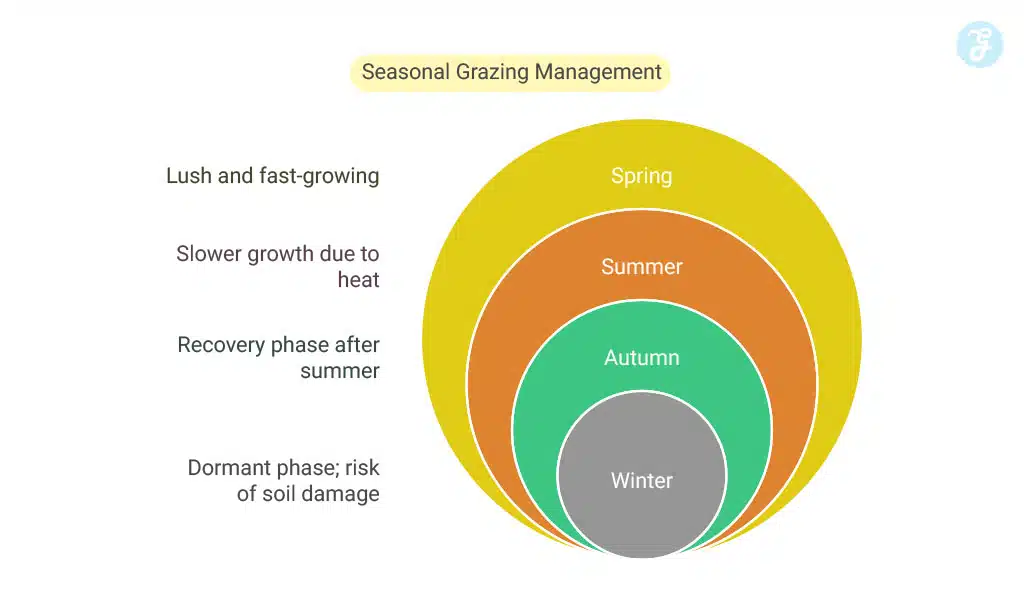
New Zealand’s temperate climate supports diverse grass species, each with its unique growth patterns. Seasonal variations greatly influence pasture productivity:
- Spring: Rapid growth phase; focus on maximizing grazing opportunities.
- Summer: Growth slows due to drier conditions; prioritize irrigation if necessary.
- Autumn: Recovery phase; prepare pastures for winter.
- Winter: Dormant phase; minimize overgrazing to protect soil structure.
| Season | Pasture Characteristics | Grazing Approach |
| Spring | Lush and fast-growing. | Maximize grazing while avoiding waste. |
| Summer | Slower growth due to heat. | Introduce irrigation or reduce stocking density. |
| Autumn | Recovery phase after summer. | Rotate livestock for pasture recovery. |
| Winter | Dormant; risk of soil damage. | Provide supplemental feed and rest pastures. |
Tools for Assessing Pasture Health
Farmers can use the following tools to evaluate pasture conditions effectively:
- Soil Testing Kits: Analyze nutrient levels and pH.
- Pasture Meters: Measure biomass and determine grazing availability.
- Visual Assessments: Identify areas with weed infestations or poor growth.
- Satellite Imaging: Advanced monitoring for larger farms.
2. Optimize Stocking Rates
Balancing livestock numbers with available pasture ensures sustainable grazing without depleting resources.
This balance prevents overgrazing, promotes pasture regrowth, and maintains soil health.
Calculating Stocking Rates
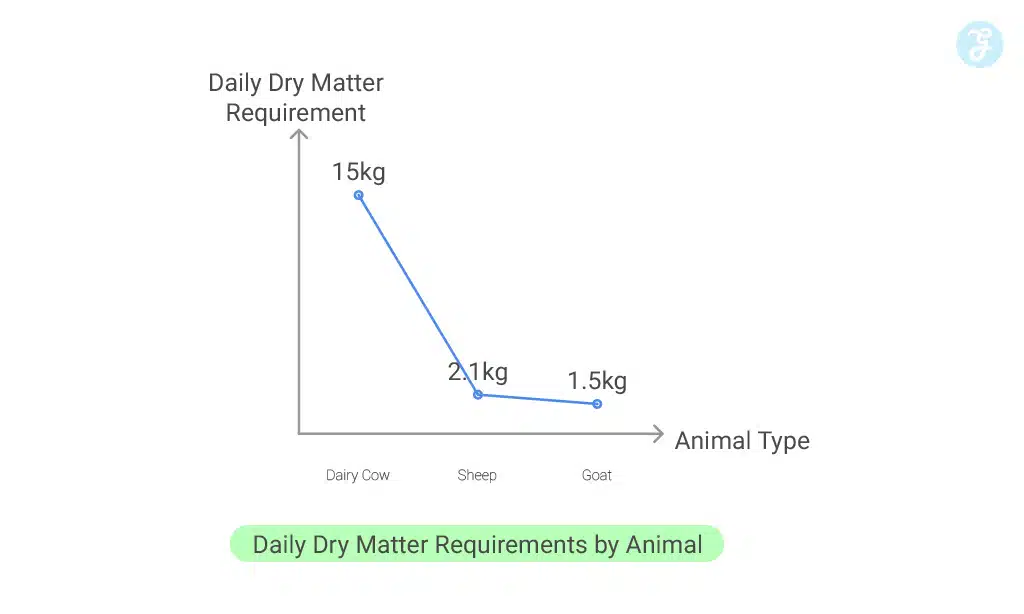
Optimal stocking rates depend on factors such as pasture productivity, livestock type, and farm size. Use the Dry Matter Intake (DMI) formula to estimate livestock requirements:
- DMI Formula: Weight of animal (kg) × 0.03 = daily dry matter requirement.
| Animal | Average Weight (kg) | Daily Dry Matter Requirement (kg) |
| Dairy Cow | 500 | 15 |
| Sheep | 70 | 2.1 |
| Goat | 50 | 1.5 |
Avoiding Overgrazing and Undergrazing
- Overgrazing: Reduces pasture regrowth and exposes soil to erosion.
- Undergrazing: Allows weeds to dominate and decreases pasture quality.
Adopt flexible stocking strategies to match seasonal variations and pasture availability. For instance, reduce stocking rates during dry summers and increase them during spring.
3. Implement Rotational Grazing
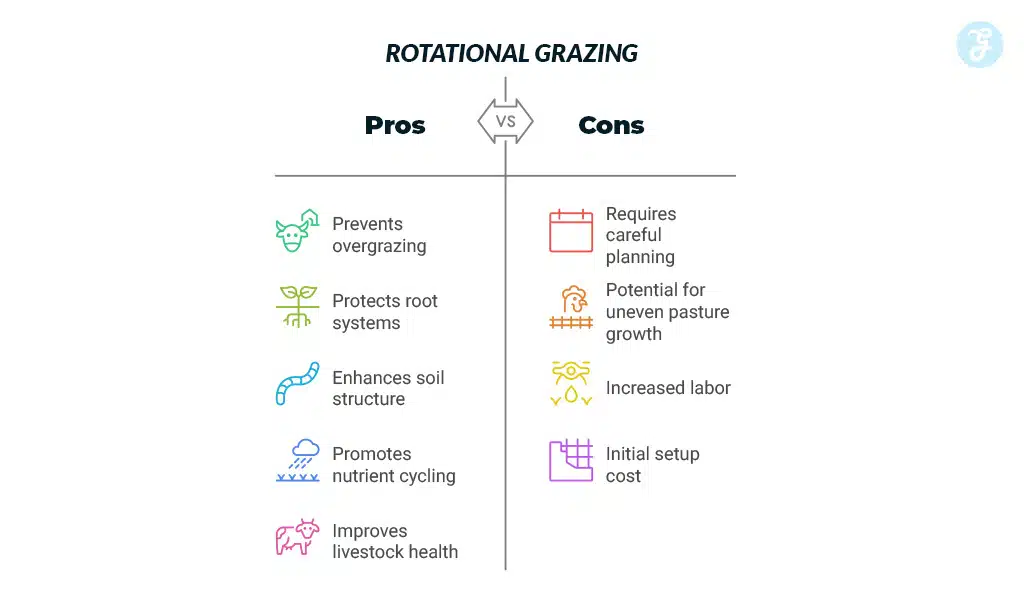
Rotational grazing is a cornerstone of efficient grazing management in New Zealand, allowing pastures to recover and regenerate between grazing periods.
It is a practical way to boost pasture quality, enhance soil health, and improve overall productivity.
Benefits of Rotational Grazing
- Improves pasture productivity by preventing overgrazing.
- Enhances soil health through even manure distribution.
- Supports biodiversity by providing rest periods for vegetation.
| Benefit | Impact |
| Prevents overgrazing | Protects root systems and regrowth. |
| Enhances soil structure | Promotes nutrient cycling and aeration. |
| Improves livestock health | Access to high-quality forage regularly. |
Designing a Grazing Rotation Plan
- Divide Paddocks: Segment your farm into multiple grazing areas.
- Rotation Schedule: Rotate livestock every 3-7 days, depending on pasture regrowth.
- Recovery Periods: Allow 20-30 days for pasture recovery before reintroducing livestock.
Case Study: A Canterbury sheep farm reported a 25% increase in wool quality after adopting rotational grazing, which improved pasture utilization and reduced soil compaction.
4. Leverage Technology in Grazing Management
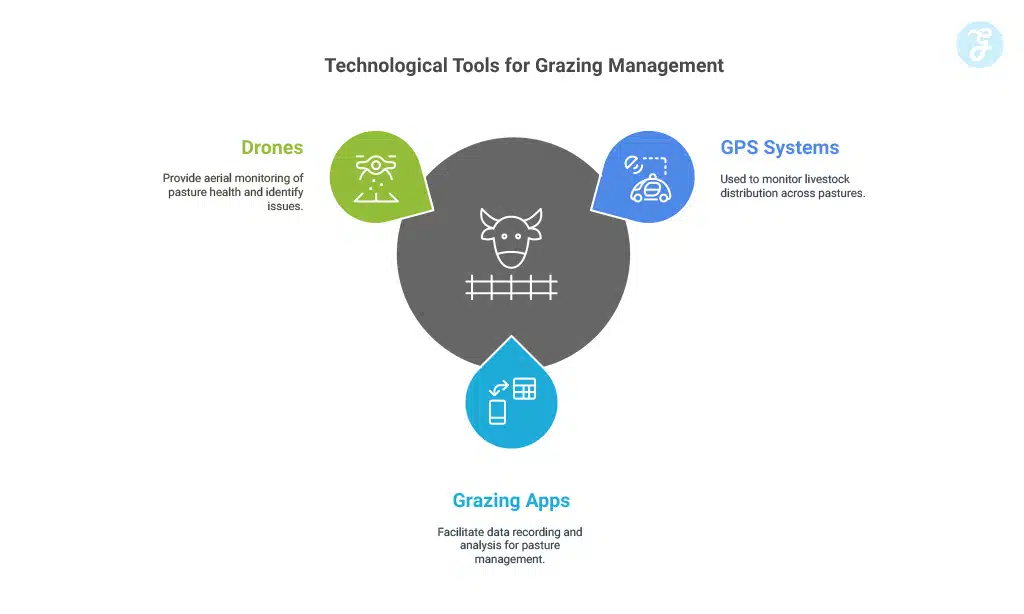
Modern tools and technologies can streamline grazing management, making it easier to monitor and optimize pastures.
Smart farming solutions have become an integral part of efficient grazing management in New Zealand, helping farmers achieve greater precision and efficiency.
Smart Tools for Monitoring Pastures
- GPS Systems: Track livestock movement and grazing patterns.
- Grazing Apps: Record data on pasture growth, stocking rates, and weather conditions.
- Drones: Survey large areas to identify issues like weed infestations or soil erosion.
| Tool | Purpose | Example |
| GPS Systems | Monitor livestock distribution. | AgriSense GPS Trackers. |
| Grazing Apps | Data recording and analysis. | Farmax or Pasture.io. |
| Drones | Aerial monitoring of pasture health. | DJI Agras T20 for weed spotting. |
Case Studies: Farmers Using Technology in New Zealand
- A Waikato dairy farm increased milk production by 15% using GPS-enabled grazing systems.
- Northland sheep farmers reduced overgrazing by implementing drone-assisted pasture monitoring.
5. Manage Water Supply Effectively
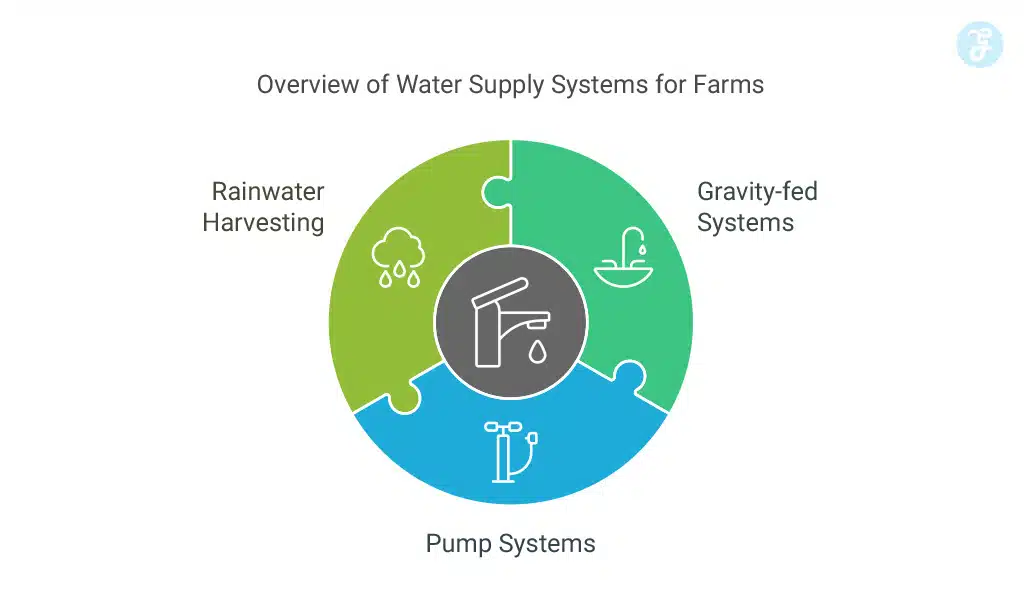
Water availability is critical for livestock health and pasture growth, especially during dry periods.
Efficient water management ensures livestock welfare and supports sustainable grazing systems.
Designing a Water Distribution System
- Install troughs in each paddock to ensure easy access.
- Use gravity-fed systems or pumps for efficient water distribution.
- Ensure water quality by testing for contaminants regularly.
| Method | Advantages | Considerations |
| Gravity-fed systems | Low-cost, sustainable. | Suitable for farms with elevation. |
| Pump systems | Reliable for flat areas. | Requires electricity. |
| Rainwater harvesting | Reduces reliance on mains supply. | Needs storage infrastructure. |
Solutions for Drought-Prone Areas
- Rainwater Harvesting: Collect and store rainwater for dry seasons.
- Irrigation Systems: Invest in efficient systems to maintain pasture growth during prolonged droughts.
6. Match Livestock to Pasture Type
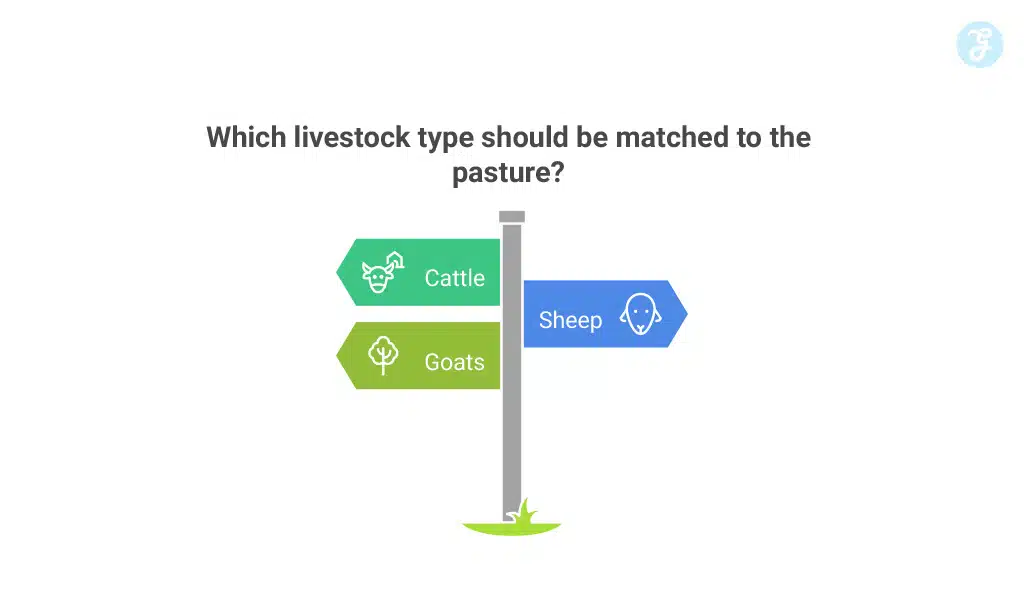
Choosing the right livestock for your pastures can enhance productivity and reduce stress on resources.
Tailoring grazing systems to animal preferences improves forage utilization and overall farm efficiency.
Understanding Livestock Grazing Preferences
Different livestock species have specific grazing habits:
- Cattle: Prefer tall, dense pastures.
- Sheep: Thrive on shorter grasses and browse selectively.
- Goats: Favor shrubs and broad-leafed plants.
| Livestock Type | Preferred Forage | Optimal Conditions |
| Cattle | Tall grasses, clover. | Rotational grazing for uniform use. |
| Sheep | Short grasses, legumes. | Ideal for hilly terrains. |
| Goats | Broadleaf plants, shrubs. | Effective for weed control. |
Breeds Best Suited for New Zealand Pastures
- Friesian Cattle: Ideal for dairy production.
- Romney Sheep: Adaptable to various climates and terrains.
- Boer Goats: Excellent for controlling invasive species.
7. Control Weeds and Invasive Species
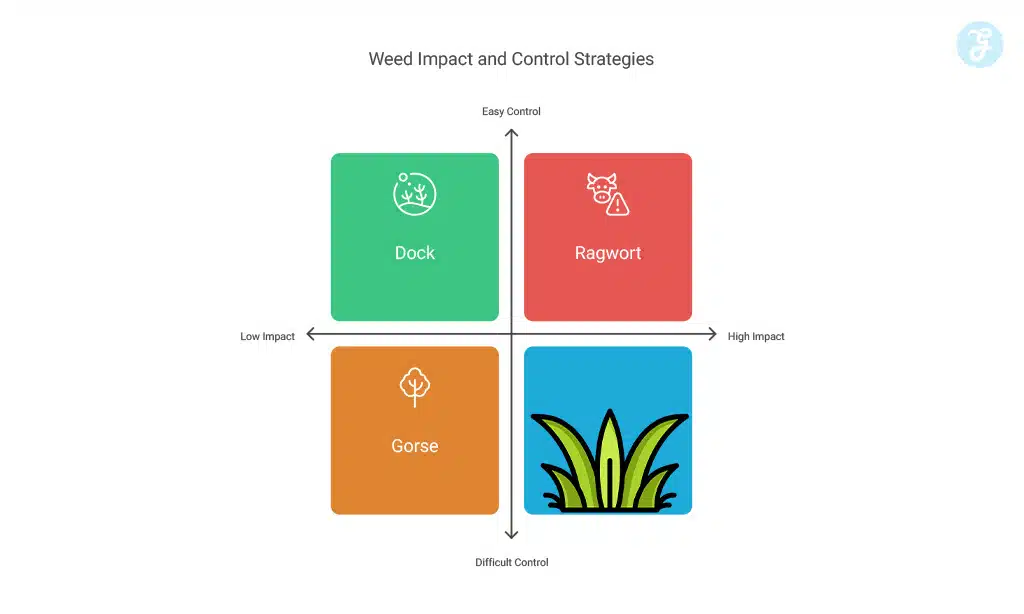
Effective weed management is essential for maintaining high-quality pastures. Controlling invasive species ensures that desired forage plants dominate.
Common Weeds in New Zealand Pastures
- Ragwort: Toxic to livestock.
- Gorse: Outcompetes native vegetation.
- Dock: Reduces pasture palatability.
| Weed | Impact | Control Method |
| Ragwort | Poisonous to livestock. | Herbicides, biological controls. |
| Gorse | Spreads rapidly. | Mechanical removal, grazing. |
| Dock | Competes with grasses. | Mulching, selective herbicides. |
Best Practices for Weed Management
- Chemical Control: Apply herbicides selectively to target weeds.
- Mechanical Control: Use mowers and mulchers to remove weeds manually.
- Biological Control: Introduce insects or grazing animals to suppress invasive species.
8. Enhance Soil Fertility
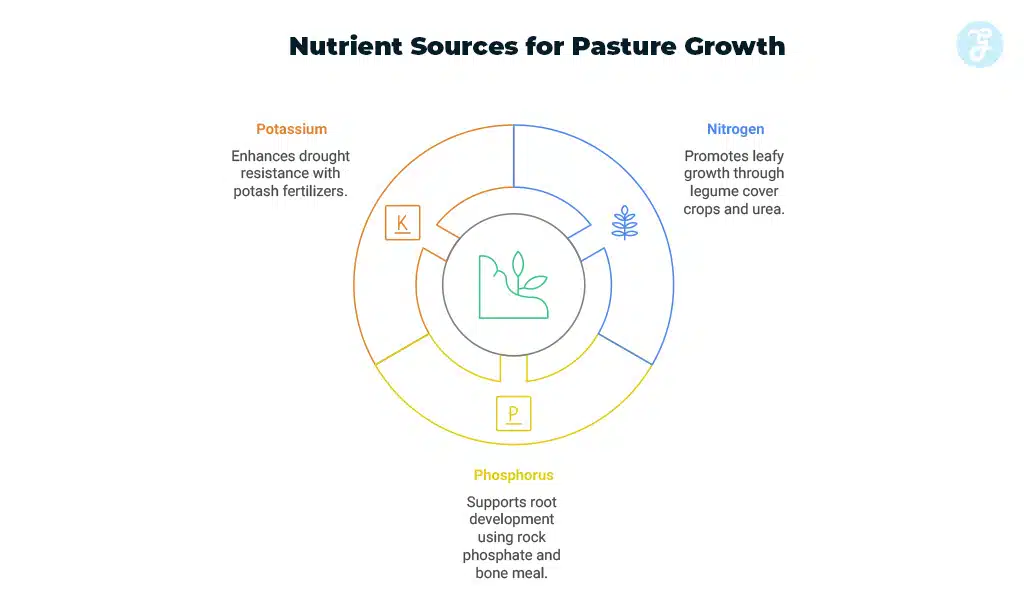
Healthy soil is the foundation of efficient grazing management in New Zealand. Boosting soil fertility ensures robust pasture growth and sustainable grazing practices.
Importance of Balanced Soil Nutrition
Essential nutrients like nitrogen, phosphorus, and potassium support robust pasture growth. Regular soil testing can help identify deficiencies.
| Nutrient | Role in Pasture Growth | Sources |
| Nitrogen | Promotes leafy growth. | Legume cover crops, urea. |
| Phosphorus | Supports root development. | Rock phosphate, bone meal. |
| Potassium | Enhances drought resistance. | Potash fertilizers. |
Using Natural Fertilizers and Soil Conditioners
- Compost: Enriches soil with organic matter.
- Lime: Balances soil pH and improves nutrient availability.
- Legume Cover Crops: Fix nitrogen naturally, reducing the need for synthetic fertilizers.
9. Monitor Livestock Health
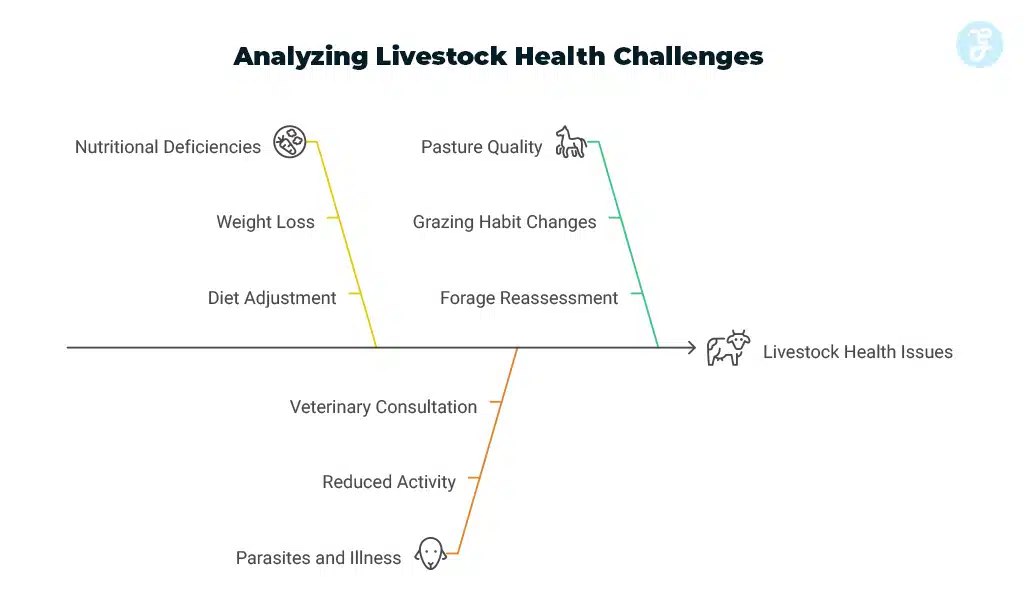
Healthy livestock ensures optimal grazing efficiency and productivity. Proactive health management reduces disease risks and ensures consistent performance.
Early Detection of Grazing-Related Issues
Watch for signs of malnutrition, parasites, or diseases in your herd. Addressing issues early minimizes long-term impacts.
| Sign | Possible Issue | Action |
| Weight loss | Nutritional deficiencies. | Adjust diet or provide supplements. |
| Reduced activity | Parasites or illness. | Consult a veterinarian. |
| Changes in grazing habits | Pasture quality issues. | Rotate pastures or reassess forage. |
Partnering with Veterinarians for Preventive Care
Schedule regular check-ups and vaccinations to maintain livestock health. Work with vets to develop tailored nutrition and health plans.
10. Plan for Seasonal Challenges
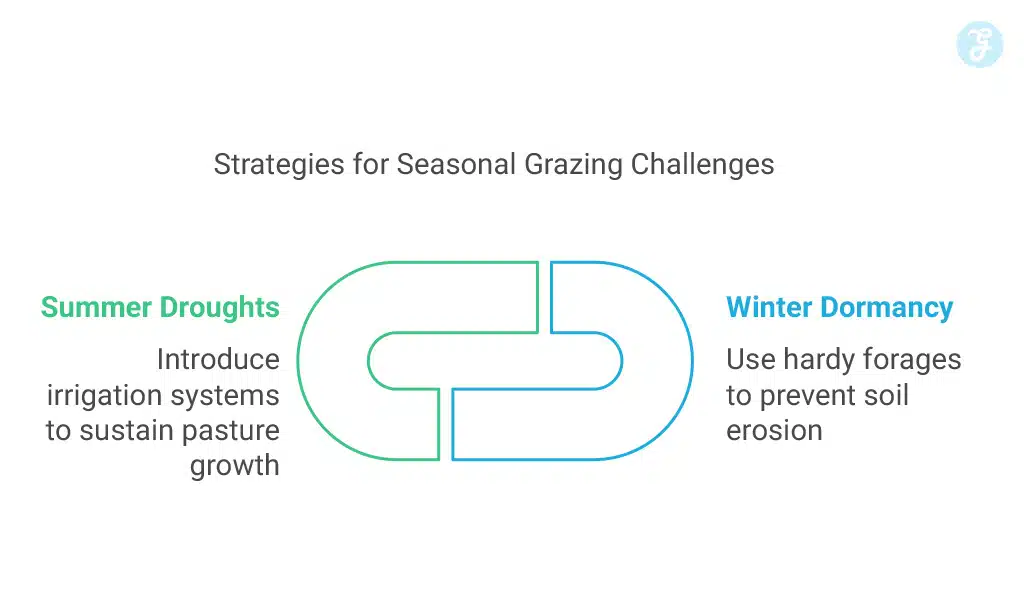
Adapt your grazing strategies to account for seasonal and climatic variability. Planning ahead ensures consistent productivity throughout the year.
Strategies for Winter Grazing
- Use winter-hardy forage crops like kale or swedes.
- Provide supplemental feed to maintain livestock condition.
| Seasonal Challenge | Strategy | Outcome |
| Winter dormancy | Use hardy forages. | Prevents soil erosion. |
| Summer droughts | Introduce irrigation systems. | Sustains pasture growth. |
Preparing for Droughts and Climate Variability
- Develop a drought management plan that includes emergency feed reserves.
- Invest in irrigation and shade structures to protect pastures and livestock.
Takeaways
Efficient grazing management in New Zealand is essential for sustainable farming practices, ensuring optimal pasture utilization, livestock health, and environmental preservation.
By implementing these 10 tips, farmers can enhance productivity, reduce costs, and contribute to the long-term sustainability of New Zealand’s agricultural sector.
Start small, track your progress, and make adjustments as needed to achieve grazing efficiency on your farm.
Share your experiences or additional tips in the comments below!