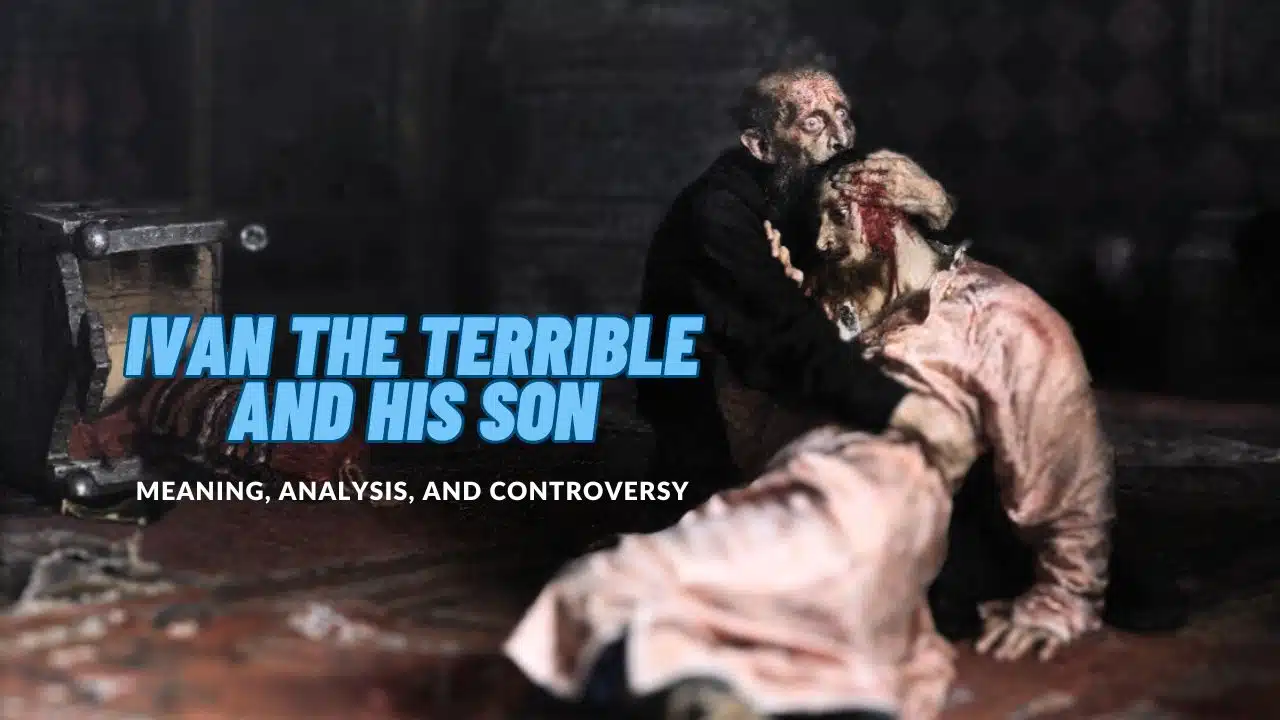
Many people want to understand famous art. They find it hard. The painting “Ivan the Terrible and His Son” is one such artwork. It shows a sad story from Russian history. This piece was made by Ilya Repin between 1883 and 1885.
We will look at what makes this painting important in art and history. You will learn about Ivan the Terrible, his reign, and why he is with his son in this picture. This blog will give you clear facts.
Keep reading for an interesting story!
The Painting by Ilya Repin
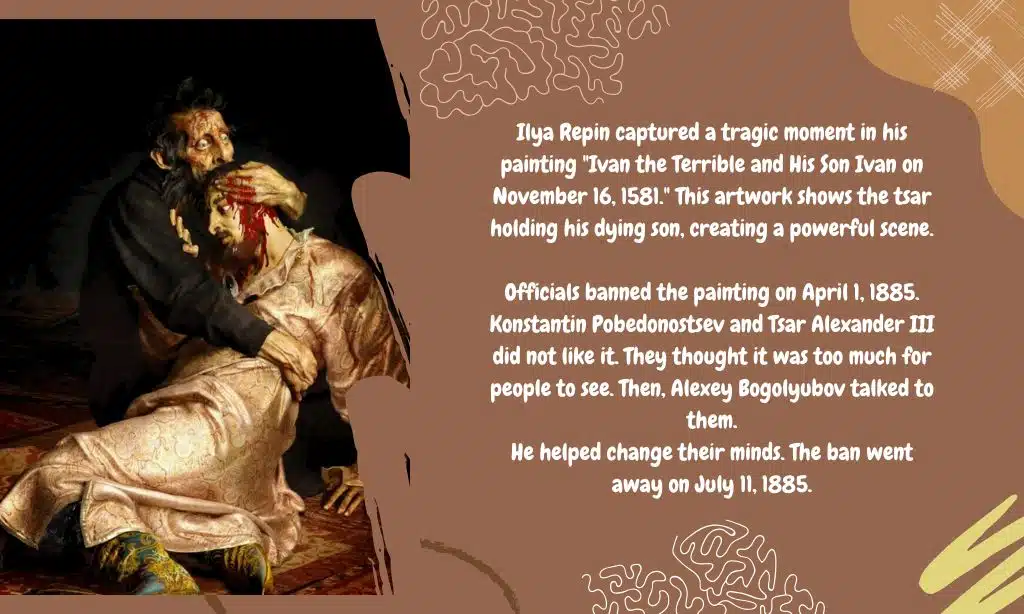
Ilya Repin captured a tragic moment in his painting “Ivan the Terrible and His Son Ivan on November 16, 1581.” This artwork shows the tsar holding his dying son, creating a powerful scene.
Title and year of creation
The painting “Ivan the Terrible and His Son Ivan on 16 November 1581” was made by Ilya Repin between 1883 and 1885. Repin started this artwork in 1883. Before he began, he made an initial sketch of Ivan in 1882.
This historical picture shows a strong story from Russia’s past.
Repin worked for two years to bring this tragic moment to life. The scene captures a powerful event between father and son in the late 1500s. It took place long ago but still touches people today through Repin’s art.
Depicted moment: Ivan the Terrible and his son Ivan on November 16, 1581
Ilya Repin captured a tragic moment in Russian history. His painting shows Tsar Ivan the Terrible right after he hurt his son, Tsarevich Ivan, on November 16, 1581. The artwork makes you feel the sadness of the ruler who realized too late that his anger led to losing his beloved son.
This scene is not just sad; it’s a powerful reminder of how quick anger can turn into regret. Repin used colors and faces to show deep emotions like grief and shock. Everyone looking at this piece can almost feel the heavy silence between father and dying son.
It teaches a lesson about love and loss that stays true even today.
The Historical Context
Ivan the Terrible changed Russia forever. He ruled with fear, and his son’s death is a dark tale.
Ivan the Terrible’s reign
Ivan the Terrible took the throne in 1547 and ruled until 1584. His time as ruler was full of big changes for Russia. He was known for making strong moves in politics and war. This made him a key figure in Russian history.
His son, Feodor I, became ruler after Ivan died. Many people look back on Ivan’s rule as a major period that shaped Russia. It had ups and downs but left a lasting mark on the country’s path.
The death of Tsarevich Ivan
Tsarevich Ivan died in November 1581. His father, Ivan the Terrible, hit him. This act led to a big problem in Russia called the “Time of Troubles.” Some stories say different things about how he died.
But one story tells that his father hurt his son after attacking his pregnant wife.
This death made things very bad for Russia. It caused a lot of confusion and fights for power. Without Tsarevich Ivan, there was no clear next ruler. This time was very hard for everyone living there.
Artistic Elements of the Painting
In the painting, colors and textures play a big role. They help show feelings and set the scene.
Composition and focal points
The painting shows two people close together in a dark room. It looks like nighttime. The artist, Repin, got ideas from Rembrandt, especially from “The Return of the Prodigal Son”.
This means he used light and shadow to make the scene look real and deep. He put Ivan the Terrible and his son in the center to grab your attention right away.
Repin added details from old Russian rooms and armor to make everything look more true to life. These things came from places like the Kremlin Armoury and 17th-century Romanov houses.
This helps us feel like we’re stepping back in time to see what happened on that sad day in November 1581.
Use of colors and textures
Ilya Repin picked deep reds and dark tones for his painting. These colors make the drama feel strong. The red shows how tense the scene is. He also used true-to-life textures for clothes and backgrounds.
This makes everything look real.
Repin’s choices in color and texture bring the story to life. Every piece of clothing looks like you could touch it because of its texture. And the dark colors help us feel the sad mood of Ivan the Terrible’s story.
Symbolism within the artwork
The painting shows more than a sad story. It digs into deep themes like forgiveness and how regrets can haunt us. At first, Repin thought of adding a scepter and bloodstain to show power and violence.
But he changed his mind for the final piece. This choice makes us think about political violence without showing it directly.
Repin’s work is like a quiet talk against using force in politics. It uses symbols instead of words to share its message. The loss of the scepter suggests losing control or regret over harsh actions taken in anger.
By focusing on emotions rather than graphic details, the artwork speaks loudly about harms done by those in power, urging viewers to look beyond the surface and think deeply about leadership and mercy.
The Controversies Surrounding the Painting
The painting faced tough times from the start, with many not liking its bold take on history. Over years, people have even attacked it, showing how strong art can stir emotions.
Initial reception and censorship
Officials banned the painting on April 1, 1885. Konstantin Pobedonostsev and Tsar Alexander III did not like it. They thought it was too much for people to see. Then, Alexey Bogolyubov talked to them.
He helped change their minds. The ban went away on July 11, 1885. People could see the painting again at the Tretyakov Gallery.
This story shows how powerful art can be. Sometimes, leaders try to control what we see and think about history. But art finds a way through bans and rules to reach us again.
Vandalism incidents over the years
The painting of Ivan the Terrible and his son has faced harm more than once. People have attacked this important artwork.
- In 1913, a man who was 29 years old damaged the painting. He did not like what it stood for.
- Then in May 2018, someone who had too much to drink broke the glass protecting it. This act caused three tears in the canvas.
- Also, in 2013, a group who follow Orthodox beliefs said the painting should leave the Tretyakov Gallery. They thought it did not show good values.
Each event shows how strong feelings about art can lead to actions that hurt culture and history.
Legacy of the Painting
The painting left a big mark on Russian art and how people see Ivan the Terrible. It also makes us think in new ways about history and stories from long ago.
Influence on Russian art and culture
Ilya Repin’s work, especially “Filicide” from 1909, shook Russian art and culture. It showed deep emotions and historical moments in a way no one had before. This painting grabbed people’s attention with its raw display of political violence.
Many artists and cultural figures began to think more about how power is used in society.
This piece also sparked debates on the role of artists in talking about politics and history through their art. Repin influenced other big names like Ivan the Terrible by bringing out discussions on emotional expression in artworks.
Museums across Russia now show Repin’s paintings as key examples of how art can tell important stories from the past.
Modern interpretations and significance
This painting has a big impact today. It makes people think about the power of leaders. Some compare Ivan the Terrible to current Russian leaders. They see similarities in how both use their power.
This is important for understanding politics and leadership.
The artwork also showed up in the 2019 HBO miniseries “Chernobyl.” This shows how it connects with today’s stories about power and control. People still talk about tyranny because this painting helps us see its effects.
It keeps the discussion going on important topics like leadership and history.
Takeaways
Ivan the Terrible and His Son” is a powerful painting by Ilya Repin. It shows deep emotions and tells a historical story. The painting has caused much talk over the years. People see it in many ways, but all agree it’s important.
It makes us think about history, art, and how they mix.