

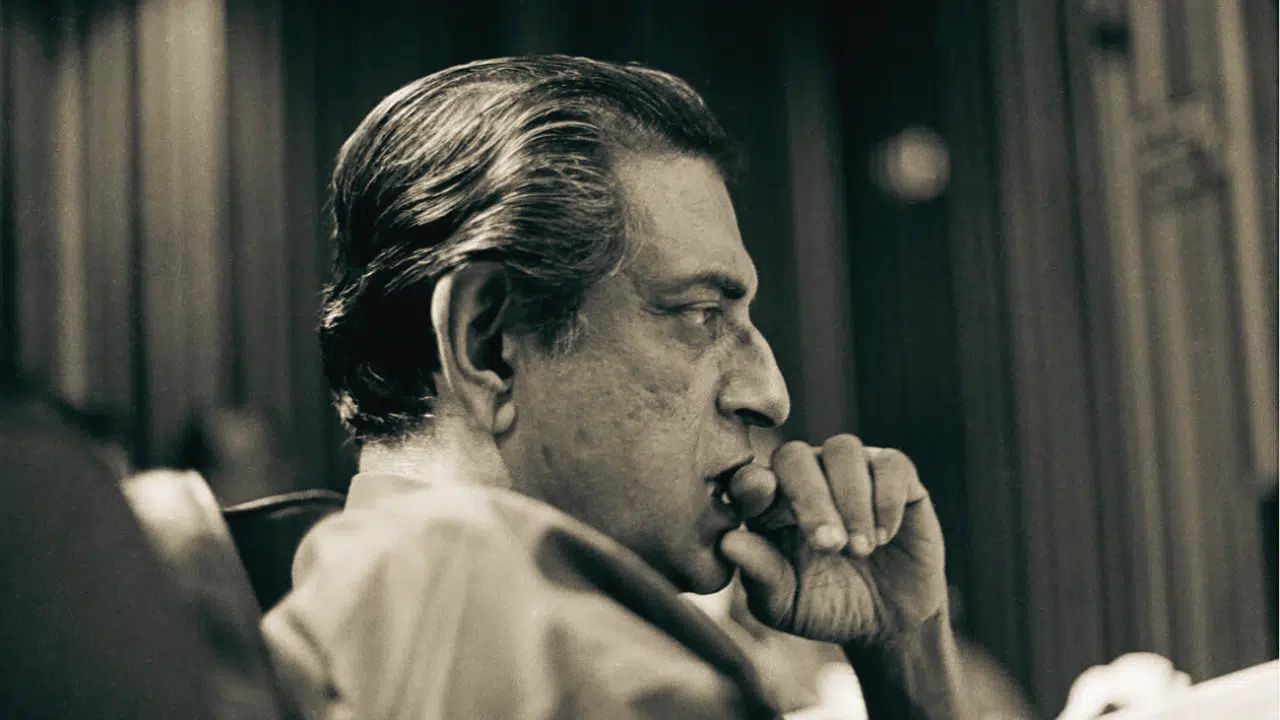
Satyajit Ray was an Indian filmmaker who is widely regarded as one of the greatest directors of the 20th century. His movies are known for their realistic portrayal of life in India and their deep understanding of human emotions. Ray’s contributions to cinema have inspired filmmakers all over the world.
He is still the only person from India to receive an honorary Oscar award. He is considered one of the best movie directors in the world. During his long career, he made many excellent films, such as:
- Pather Panchali (Song of the Little Road)
- Charulata (The Lonely Wife)
- Mahanagar (The Big City)
- Sonar Kella (The Golden Fortress)
- Shatranj Ke Khilari (The Chess Players)
People all over the world adore these movies, which are evidence of Satyajit Ray’s skill as a director.As we celebrate his 103rd birthday on May 2, 2024, let us take a closer look at his life, work, and legacy.
In Memory of Satyajit Ray on His 103rd Birthday
Satyajit Ray was born on May 2, 1921, in Calcutta (now Kolkata), India. He grew up in a family that loved art and literature. His grandfather, Upendrakishore Ray Chowdhury, was a famous writer and illustrator. His father, Sukumar Ray, was also a renowned writer and illustrator who passed away when Satyajit was just three years old.

As a child, Satyajit Ray was interested in art and music. He went to school in Calcutta at Ballygunge Government High School and got his BA in Economics at the Presidency College. He studied at Visva-Bharati University in Santiniketan, where he learned about Western classical music and painting. After graduating with a degree in economics, Ray went to work as a graphic designer at a British-run advertising agency in Calcutta.
| Full Name | Satyajit Ray |
| Nick Name | Manik, God |
| Gender | Male |
| Birth Date | 2 May 1921 |
| Birth Place | Calcutta, Bengal Presidency, British India (Now India) |
| Date of Death | 23 April 1992 |
| Died Place | Calcutta, West Bengal, India |
| Marital Status | Married |
| Wife | Bijoya Ray |
| Children | Sandip Ray |
| Nationality | Indian |
| Religion | Hinduism |
| Profession | Writer, Composer, Director |
During this time, Ray became interested in filmmaking. He joined the Calcutta Film Society, where he watched many foreign films and discussed them with other members. The films of European filmmakers like Jean Renoir and Vittorio De Sica, as well as Hollywood directors like John Ford and Billy Wilder had a significant influence on Ray.
His Entry into the Film Industry
In 1943, Ray started working as a junior visualizer at the advertising agency D.J. Keymer. He designed book covers and illustrated books for the agency’s clients. During this time, he also started writing film reviews for a local magazine called Desher Katha.
Ray’s first film project was a documentary called The Inner Eye, which he made for the Government of West Bengal in 1948. The film was about the famous Indian artist Binod Bihari Mukherjee, who was blind. Although the project was ultimately shelved, it gave Ray valuable experience in filmmaking.
In the early 1950s, Ray became involved with the Calcutta Film Society, which screened foreign films and discussed them. Through the society, Ray met several people who would later work with him on his films, including the cinematographer Subrata Mitra and the art director Bansi Chandragupta.
Ray’s first feature film was Pather Panchali (Song of the Little Road), which he started working on in 1952. The film was based on a novel by Bibhutibhushan Bandopadhyay and told the story of a poor family in rural Bengal. Ray faced many challenges while making the film, including a lack of funding and equipment. He even had to sell his life insurance policy to finance the project.
Despite these challenges, Pather Panchali was a critical and commercial success when it was released in 1955. The film won several awards at international film festivals, including the Best Human Document award at the 1956 Cannes Film Festival. It also established Ray as a major talent in world cinema.
The Apu Trilogy
A Milestone in Indian Cinema After the success of Pather Panchali, Ray went on to make two more films that followed the life of the main character, Apu. Together, these three films—Pather Panchali (1955), Aparajito (The Unvanquished) (1956), and Apur Sansar (The World of Apu) (1959)—are known as the Apu Trilogy.
The Apu Trilogy is considered a milestone in Indian cinema and a masterpiece of world cinema. The films tell the story of Apu, a young boy from a poor family in rural Bengal, as he grows up and faces the challenges of life. The trilogy is known for its realistic portrayal of poverty, family relationships, and the human condition.
Ray’s use of non-professional actors and location shooting gave the film a sense of authenticity and realism. He also used innovative camera techniques and editing to tell the story in a visually compelling way. The music in the films, composed by Ravi Shankar, added to their emotional impact.
The Apu Trilogy established Ray as a major force in world cinema and inspired filmmakers all over the world. The Academy Film Archive and the Criterion Collection have preserved the movies, which frequently appear on lists of the best movies of all time.
Exploring Various Genres and Themes
Throughout his career, Ray made films in a variety of genres and explored many different themes. He was particularly interested in social and political issues, and many of his films dealt with the problems faced by ordinary people in India.
One of Ray’s most famous films is Charulata (The Lonely Wife) (1964), which is based on a novella by Rabindranath Tagore. The film tells the story of a lonely housewife in 19th-century Bengal who falls in love with her husband’s cousin. Ray’s sensitive portrayal of the characters and his use of symbolism and imagery made the film a classic of Indian cinema.
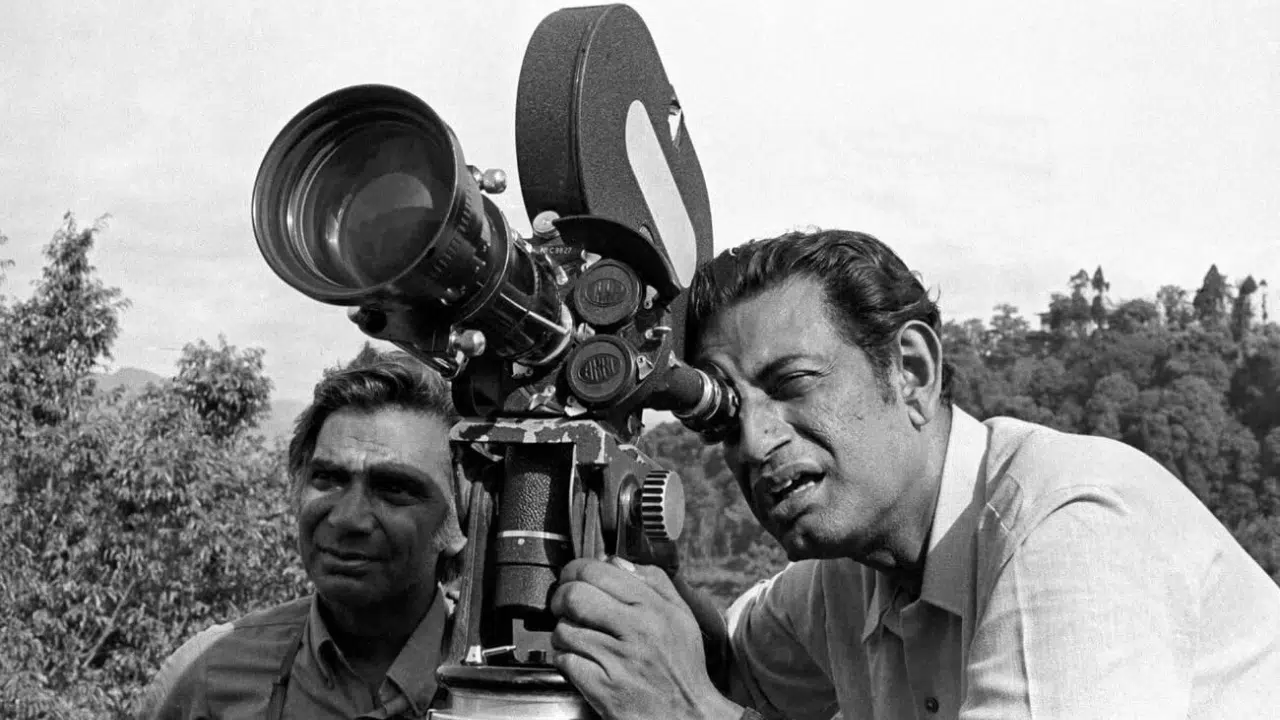
Another notable film by Ray is Mahanagar (The Big City) (1963), which deals with the challenges faced by a middle-class family in Calcutta. The film explores issues of gender roles, economic inequality, and the changing nature of Indian society.
Ray also produced a number of historical and biographical movies, such as Shatranj Ke Khilari (The Chess Players), which takes place in 19th-century India and tells the tale of two aristocrats who become obsessed with playing chess as the British annex their kingdom. Another example is Agantuk (The Stranger) (1991), which was Ray’s last film and tells the story of a man who returns to India after living abroad for many years.
Ray’s Distinctive Filmmaking Style
Ray’s films are known for their realism, humanism, and attention to detail. He often used non-professional actors and shot on location to give his films a sense of authenticity. He also had a keen eye for composition and used innovative camera techniques to tell his stories visually.
The Italian Neorealist movement, which emphasized social realism and the use of amateur actors, had a significant influence on Ray. He also drew inspiration from the works of European filmmakers like Jean Renoir and Vittorio De Sica, as well as Japanese directors like Akira Kurosawa.
One of the most distinctive aspects of Ray’s filmmaking style was his use of music. He often composed the music for his films himself and used it to enhance the emotional impact of the story. He also used silence and natural sounds to create a sense of atmosphere and mood.
Ray was known for his ability to elicit powerful performances from his actors, even those who had little or no acting experience. He often worked with the same group of actors and crew members, creating a sense of family and collaboration on his sets.
Contributions to Other Artistic Fields
In addition to his work as a filmmaker, Ray was also a talented writer, illustrator, and composer. He wrote several short stories and novels, including the popular Feluda detective series, which he later adapted into films.
Ray was also an accomplished graphic designer and created many of the posters and title sequences for his films. He had a keen eye for typography and used his designs to enhance the visual style of his films.
As a composer, Ray created the scores for many of his films, as well as for films by other directors. His music was known for its simplicity and emotional depth, and he often used traditional Indian instruments and themes in his compositions.
10 Books by Satyajit Ray Everyone Should Read
- The Complete Adventures of Feluda
- The Incredible Adventures of Professor Shonku
- My Years with Apu: A Memoir
- Childhood Days
- Indigo
- Our Films, Their Films
- Twenty Stories
- Deep Focus
- Speaking of Films
- Feluda Samagra
International Recognition and Awards
Throughout his career, Ray received numerous awards and honors for his contributions to cinema. He won the National Film Award for Best Director a record six times and was awarded the Dadasaheb Phalke Award, India’s highest award in cinema, in 1984.
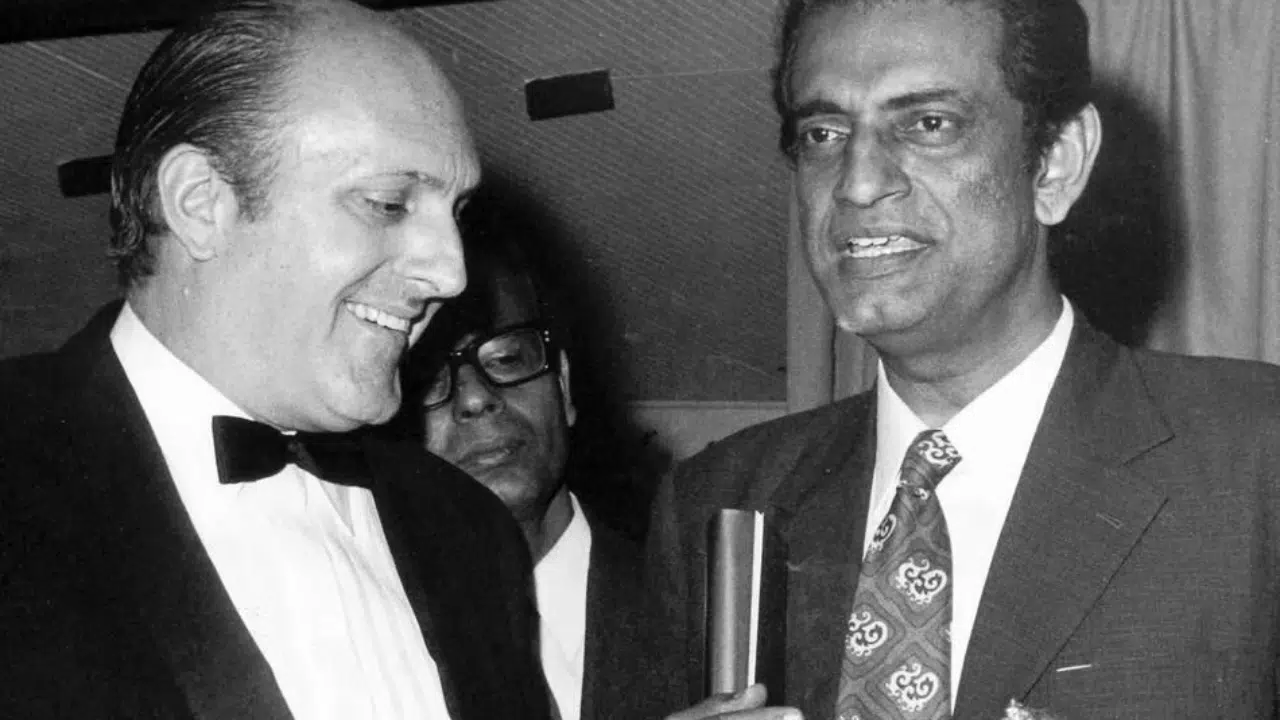
Ray’s films were also widely acclaimed at international film festivals. Pather Panchali won the Best Human Document award at the 1956 Cannes Film Festival, and Aparajito won the Golden Lion at the 1957 Venice Film Festival. Ray was also awarded the Golden Bear at the 1973 Berlin International Film Festival for his film Ashani Sanket (Distant Thunder).
In 1992, Ray was awarded an Honorary Academy Award for his lifetime achievement in cinema. He was the first Indian to receive this honor and was recognized for his “rare mastery of the art of motion pictures, and for his profound humanitarian outlook, which has had an indelible influence on filmmakers and audiences throughout the world.”
- He won 32 National Film Awards and many foreign awards, such as the Silver Bear, Golden Lion, and Golden Bear, over the course of his life.
- He was given the Golden Lion Honorary Award in 1982. At the Cannes Film Festival that same year, he was given the “Hommage to Satyajit Ray” Award.
- He is the second movie star, after Charlie Chaplin, to get an honours doctorate from Oxford.
- In 1985, he won the prestigious Dadasaheb Phalke Award. Two years later, he won the Legion of Honor, which is France’s most important award.
- In 1992, the Indian government gave him the “Bharat Ratna,” which is the highest civilian award. The Academy of Motion Picture Arts and Sciences gave him an Honorary Oscar for Lifetime Achievement in the same year he died, just days before he died.
Awards for Films
- Pather Panchali (Song of the Little Road), 1955
- President’s Gold & Silver Medals, New Delhi, 1955
- Best Human Document, Cannes 1956
- Diploma Of Merit, Edinbugh, 1956
- Vatican Award, Rome, 1956
- Golden Carbao, Manila, 1956
- Best Film and Direction, San Francisco, 1957
- Selznik Golden Laurel, Berlin, 1957
- Best Film, Vancouver, 1958
- Critics’ Award for Best Film, Stratford, (Canada), 1958
- Best Foreign Film, New York, 1959
- Kinema Jumpo Award: Best Foreign Film, Tokyo, 1966
- Bodil Award: Best Non-European Film of the Year, Denmark, 1966 and more
National Awards
- Best Director Chiriyakhana, 1967
- Best Director Jana Aranya, 1975
- Best Music Direction Ashani Sanket 1973
- Best Music Direction Heerak Rajar Deshe, 1980
- Best Feature Film in Bengali, Ashani Sanket 1973
- Best Feature Film in Bengali, Heerak Rajar Deshe, 1980
- All India Certificate of Merit for the Second Best Feature Film
- Abhijan 1962
- All India Certificate of Merit for the Third Best Feature Film
- Mahanagar 1963
- Special Jury Award Sadgati 1981
Filmfare Awards
- Critics Award Best Film Shatranj Ke Khilari 1978
Personal Awards
- Padmashree, India, 1958
- Padmabhushan, India, 1965
- Magasaysay Award, Manila, 1967
- Star of Yugoslavia, 1971
- Doctor of Letters, Delhi University, 1973
- D. Litt., Royal College of Arts, London, 1974
- Padmabibhushan, India, 1976
- D. Litt., Oxford University, 1978
- Special Award, Berlin Film Festival, 1978
- Deshikottam, Visva-Bharati University, India, 1978
- Special Award, Moscow Film Festival, 1979
- D. Litt., Burdwan University, India, 1980
- D. Litt., Jadavpur University, India, 1980
- Doctorate, Benaras Hindu University, India, 1981
- D. Litt. , North Bengal University, India, 1981
- Hommage à Satyajit Ray, Canes Film Festival, 1982
- Special Golden Lion of St. Mark, Venice Film Festival, 1982
- Vidyasagar Award, Govt. of West Bengal, 1982
- Fellowship, The British Film Institute, 1983
- D. Litt., Calcutta University, India, 1985
- Dadasaheb Phalke Award, India, 1985
- Soviet Land Nehru Award, 1985
- Fellowship, Sangeet Natak Academy, India, 1986
- Légion d’Honneur, France, 1987
- D. Litt., Rabindra Bharati University, India, 1987
- Oscar for Lifetime Achievement, USA, 1992
- Bharatratna, India, 1992
Legacy and Influence
Satyajit Ray’s contributions to cinema have had a profound impact on filmmakers and audiences around the world. His films are widely regarded as masterpieces of world cinema and continue to inspire new generations of filmmakers.
In India, Ray’s legacy is particularly significant. He helped to establish a new kind of cinema that was distinct from the popular Bollywood films of the time. His films dealt with serious social and political issues and explored the complexities of human relationships in a way that was unprecedented in Indian cinema.
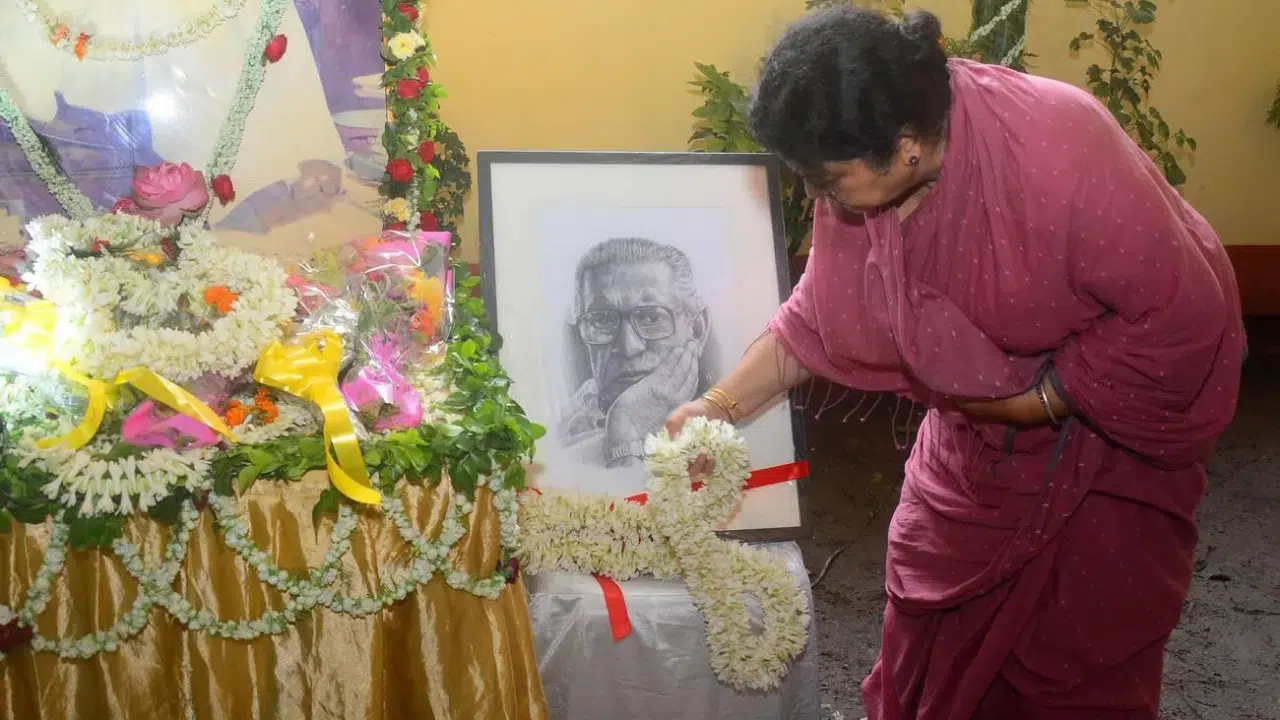
Ray’s influence can be seen in the works of many contemporary filmmakers, both in India and around the world. Directors like Martin Scorsese, Francis Ford Coppola, and Wes Anderson have all cited Ray as an influence on their work.
In recent years, there have been efforts to restore and preserve Ray’s films for future generations. Both the Academy Film Archive and the Criterion Collection have undertaken initiatives to digitize and restore Ray’s films, ensuring that audiences will be able to view and appreciate them for years to come.
Satyajit Ray’s Best Quotes
- Cinema’s characteristic forte is its ability to capture and communicate the intimacies of the human mind. ~Satyajit Ray
- The conception of background music is changing. You use less and less of it these days. ~Satyajit Ray
- My films play only in Bengal, and my audience is the educated middle class in the cities and small towns. They also play in Bombay, Madras and Delhi where there is a Bengali population. ~Satyajit Ray
- The only solutions that are ever worth anything are the ones that people find themselves. ~Satyajit Ray
- When I write an original story, I write about people I know first-hand and situations I’m familiar with. I don’t write stories about the nineteenth century. ~Satyajit Ray
Takeaways
Satyajit Ray was a true master of cinema, whose contributions to the art form have had a lasting impact on filmmakers and audiences around the world. His films are known for their realism, humanism, and deep understanding of the human condition.
As we celebrate Ray’s 103rd birth anniversary, it is important to remember his legacy and the impact he had on cinema. His films continue to inspire and influence new generations of filmmakers, and his contributions to the art form will never be forgotten.
Through his work as a filmmaker, writer, illustrator, and composer, Ray showed us the power of cinema to tell stories that resonate with audiences on a deep emotional level. He will always be remembered as one of the greatest filmmakers of all time, and his legacy will continue to inspire and influence artists for generations to come.
References:
- Ray, S. (1976). Our Films, Their Films. Orient Longman.
- Robinson, A. (2004). Satyajit Ray: A Vision of Cinema. I.B. Tauris.
- Seton, M. (2003). Portrait of a Director: Satyajit Ray. Penguin Books.
- Nandy, A. (1995). The Savage Freud and Other Essays on Possible and Retrievable Selves. Princeton University Press.
- Nyce, B. (1988). Satyajit Ray: A Study of His Films. Praeger.
- “Satyajit Ray: The Genius of Cinema.” UNESCO. https://en.unesco.org/news/satyajit-ray-genius-cinema
- “Satyajit Ray: A Master of World Cinema.” The Criterion Collection. https://www.criterion.com/current/posts/6325-satyajit-ray-a-master-of-world-cinema
- “Satyajit Ray: Biography, Movies, & Facts.” Encyclopaedia Britannica. https://www.britannica.com/biography/Satyajit-Ray
- “Satyajit Ray: A Vision of Cinema.” The Academy of Motion Picture Arts and Sciences. https://www.oscars.org/events/satyajit-ray-vision-cinema
- “Satyajit Ray: The Music Room.” The Guardian. https://www.theguardian.com/film/2013/may/01/satyajit-ray-music-room-review
























