

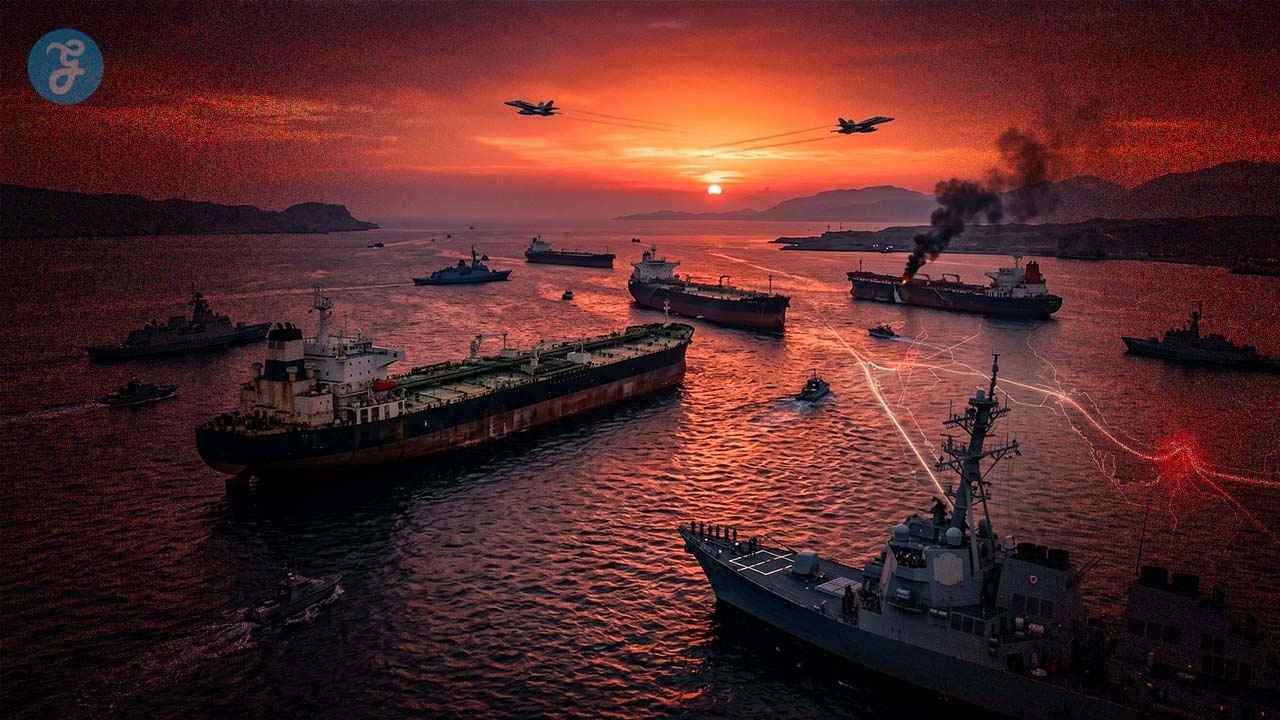
The Strait of Hormuz blockade 2026 represents a catastrophic fracture in the global logistics network, an economic earthquake whose tremors are currently destabilizing markets from Wall Street to the manufacturing hubs of Shenzhen. When a strategic waterway that facilitates the transit of roughly one-fifth of the world’s daily petroleum consumption is choked off overnight, the resulting shockwaves do not merely disrupt trade; they completely rewrite the modern rules of global security.
The rapid deterioration of the geopolitical landscape in the Middle East has laid bare the extreme fragility of an international economy heavily reliant on a single, highly volatile maritime chokepoint. What began as a diplomatic stalemate has rapidly escalated into a multi-domain conflict, weaponising both the physical sea lanes and the digital navigational systems that guide commercial fleets.
To understand the gravity of this crisis, we must look beyond the immediate spike in energy prices and analyse the profound shifts occurring in military strategy, economic policy, and the accelerated drive toward energy independence.
The April Mirage and the Diplomatic Breakdown
The rapid unravelling of diplomatic efforts over the weekend of April 18, 2026, serves as the critical anchor for understanding the current crisis in the Gulf. Moving from a fleeting moment of hope to absolute maritime lockdown requires a careful deconstruction of the political manoeuvring and miscalculations between Washington, Tel Aviv, and Tehran.
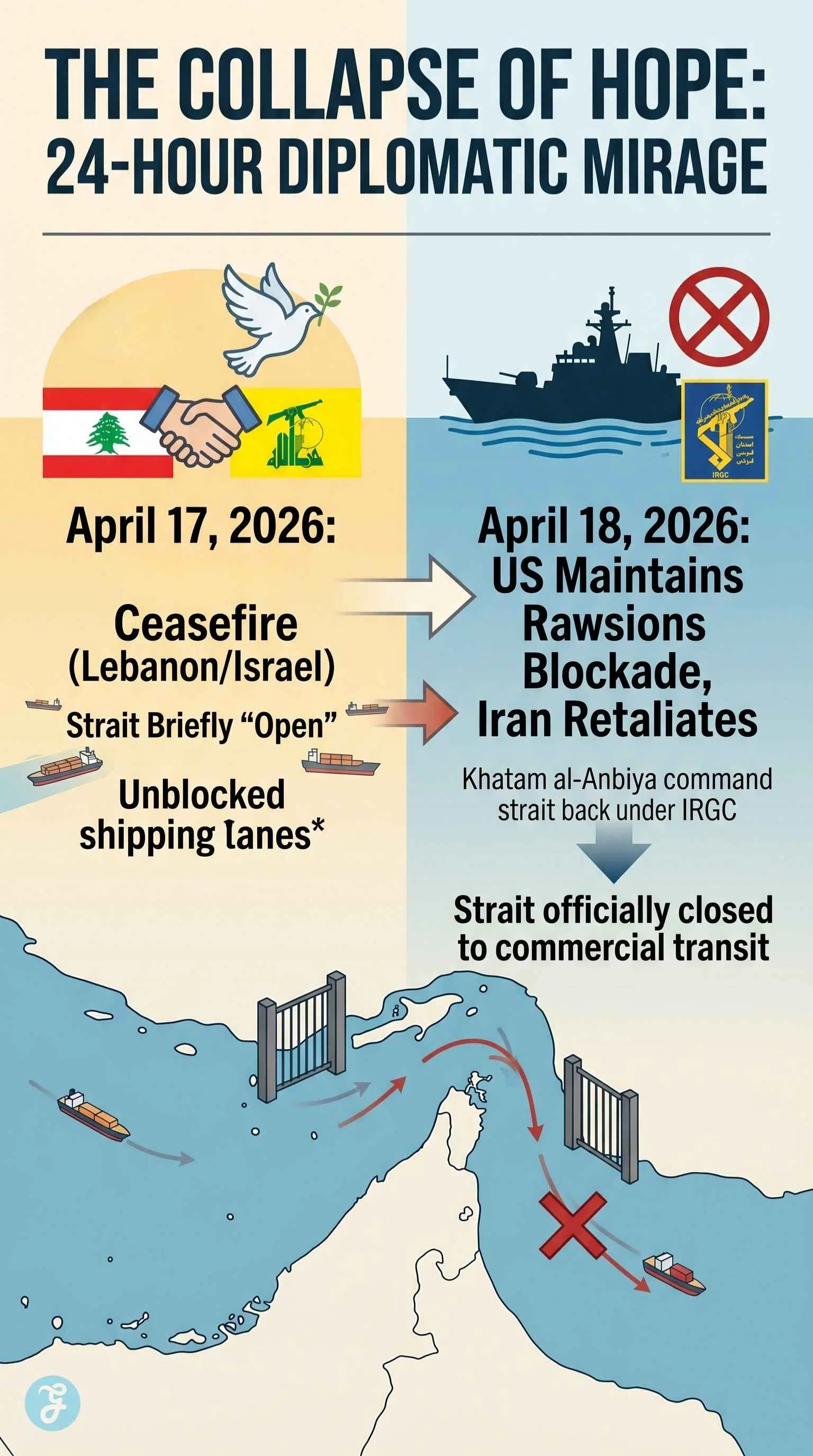
The international community was briefly lulled into a false sense of security following the successful negotiation of a 10-day ceasefire between Israel and Hezbollah in Lebanon. In what appeared to be a significant de-escalation, Iranian officials signalled that the Strait of Hormuz was open to commercial shipping, temporarily easing the anxiety that had gripped global markets for weeks.
However, this diplomatic mirage evaporated almost as quickly as it appeared, exposing the deep-seated structural vulnerabilities of Middle Eastern geopolitics.
The 24-Hour Reversal Timeline
The catalyst for the immediate blockade can be traced directly to a hardline stance taken by the United States. Following Iran’s announcement of open waters, Washington countered aggressively, declaring that the U.S. naval blockade of Iranian ports would remain in full effect. This “maximum pressure” tactic, designed to force a broader, more comprehensive nuclear and security deal, backfired spectacularly.
In direct and immediate retaliation, Iran’s Khatam al-Anbiya joint military command reversed its Friday decision. By Saturday, April 18, the Strait was officially placed back under the strict, hostile management of the Islamic Revolutionary Guard Corps (IRGC). Tehran drew a definitive red line: the waterway will remain impassable for Western-aligned commercial transit until the U.S. lifts its sanctions and guarantees freedom of navigation for Iranian vessels.
This 24-hour reversal not only shattered the Hezbollah ceasefire momentum but also demonstrated how easily regional diplomacy can collapse when core national security interests clash in a zero-sum game.
The New Maritime Battlespace: Electronic Warfare and the Dark Fleet
Modern naval blockades are no longer defined solely by physical warships, naval mines, and anti-ship ballistic missiles. The 2026 conflict has introduced a chilling new reality: the battlespace is now heavily reliant on digital disruption and asymmetric technological warfare, complicating the transit of commercial vessels far beyond traditional kinetic threats.
Less than a day after the brief reopening, the IRGC fired upon at least two commercial vessels attempting to navigate the strait. According to urgent bulletins from the UK Maritime Trade Operations (UKMTO), projectiles struck vessels, including an Indian-bound container ship, just 20 to 25 nautical miles northeast of Oman.
Yet, the physical strikes are only a fraction of the danger. The true hazard lies in the invisible, electronic warfare currently blanketing the Gulf.
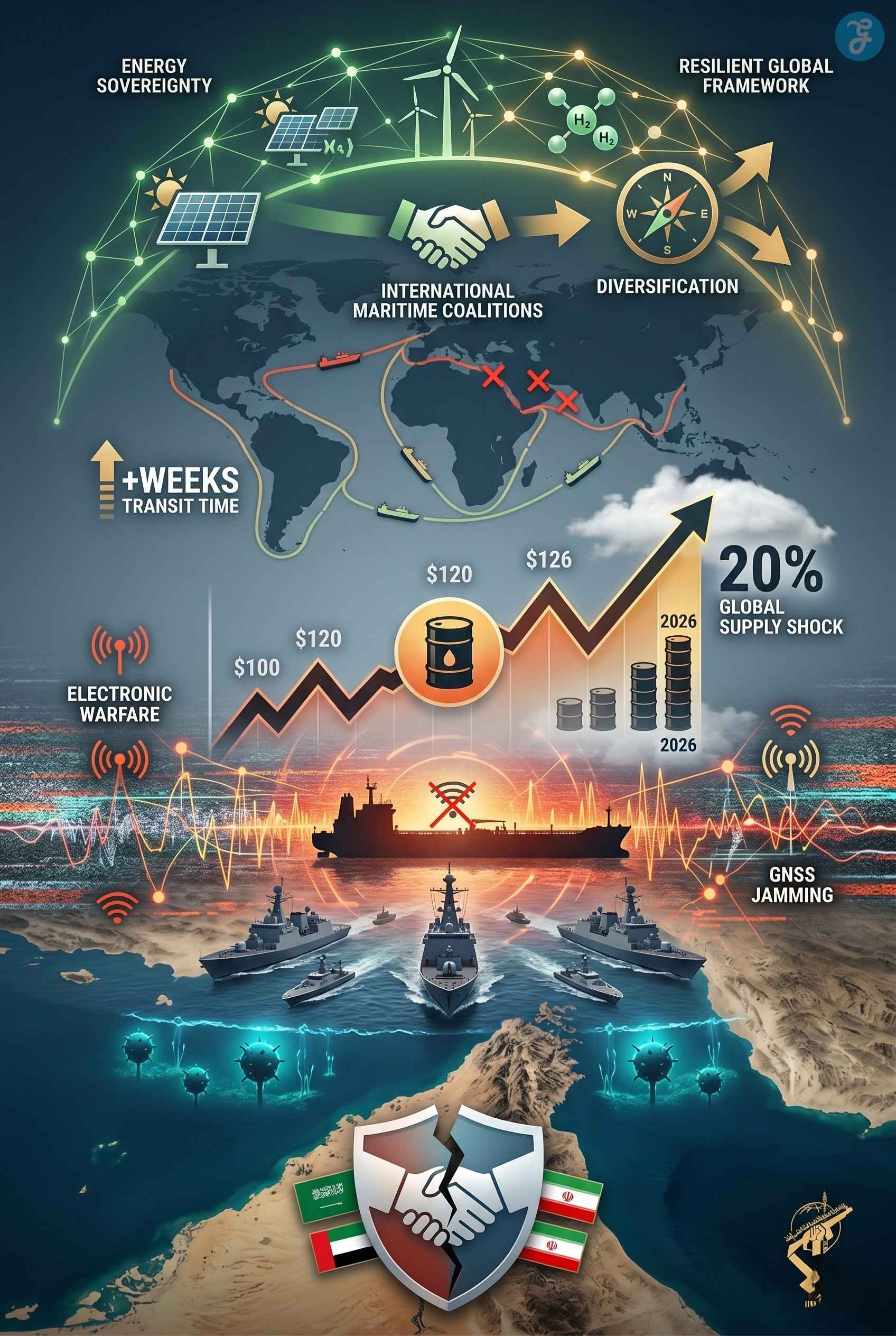
GNSS Jamming and AIS Spoofing
Military actors deployed in the region are actively utilising Global Navigation Satellite System (GNSS) jamming and sophisticated satellite spoofing to thwart guided munitions. While intended for military defence, this electronic interference completely scrambles the Automatic Identification System (AIS) signals of civilian ships.
Captains are finding their navigation screens hijacked, significantly raising the risk of catastrophic maritime collisions in one of the world’s narrowest shipping lanes.
In response to this digital chaos, a vast “Dark Fleet” has emerged. Over 40 commercial vessels have intentionally disabled their AIS transponders to navigate the Strait unseen, essentially sailing blind to avoid becoming targets.
Others are employing desperate survival tactics, spoofing their destination and ownership signals, broadcasting identifiers such as “CHINA OWNER” across public frequencies, in hopes of evading Iranian targeting. This weaponisation of navigational technology highlights a dangerous era where AI-adjacent tech and electronic warfare can paralyse global logistics just as effectively as a fleet of destroyers.
The Diplomatic Chessboard: What Happens Next?
The immediate future of the global economy now rests on highly fragile negotiations happening far from the Gulf itself. With the temporary ceasefire set to expire within days, the international community is watching a high-stakes diplomatic standoff where neither side is willing to blink.
The Islamabad Talks and the U.S.-Iran Stalemate
Mediators in Pakistan are currently scrambling to salvage a second round of direct peace talks, but the ideological gap between Washington and Tehran remains vast. The core friction lies in competing ultimata. U.S. President Donald Trump has maintained a “maximalist” position, demanding that Iran permanently dismantle its nuclear ambitions and hand over its stockpiles of enriched uranium.
To enforce this, the U.S. naval blockade of Iranian ports remains in full force, with U.S. Vice President JD Vance dispatched to Pakistan to signal that Washington expects total compliance.
On the other hand, Iran’s top negotiator, Mohammad Bagher Ghalibaf, alongside Deputy Foreign Minister Saeed Khatibzadeh, has publicly declared the surrender of uranium a “nonstarter.” Tehran’s counter-demand is absolute: the Strait of Hormuz will remain entirely under the strict military control of the Islamic Revolutionary Guard Corps (IRGC) until the U.S. blockade is lifted.
If these Islamabad talks collapse this week, maritime intelligence suggests the U.S. may escalate by actively boarding and seizing Iran-linked ships in international waters, effectively turning the blockade into a hot naval conflict.
The 20% Supply Shock and Global Market Paralysis
With roughly one-fifth of the world’s energy supply currently caught in the crosshairs, the economic ramifications extend far beyond the immediate borders of the Middle East. The sudden, enforced halt of tanker traffic has initiated a profound restructuring of global logistics, triggering inflationary pressures that central banks are poorly equipped to handle.
To fully grasp the magnitude of the current supply disruption, it is essential to contextualise the Strait of Hormuz blockade of 2026 against previous historical energy crises that have shaped modern economics.
| Historical Energy Crisis | Catalyst | Estimated Global Supply Disrupted | Market Impact |
| 1973 Oil Crisis | OAPEC Embargo | ~5% | Quadrupled prices, severe global inflation, systemic recession |
| 1979 Energy Crisis | Iranian Revolution | ~4% | Doubled prices, long-term supply chain shifts, and fuel rationing |
| 1990 Gulf War Shock | Iraqi Invasion of Kuwait | ~6% | Short-term price spike, rapid strategic reserve utilisation |
| 2026 Hormuz Blockade | U.S.-Iran Standoff / IRGC Closure | ~20% | Sustained Brent crude volatility, total transit rerouting, and logistics paralysis |
The staggering difference in disrupted supply volume underscores why traditional economic countermeasures, such as tapping into strategic petroleum reserves, are currently failing to stabilise the market. The sheer scale of the 2026 blockade dwarfs the shocks of the 1970s.
Inflationary Pressure and Logistical Nightmares
The immediate financial reaction was violent, with Brent crude surging past the $126 per barrel mark. While prices experienced a fleeting dip upon Friday’s brief reopening announcement, the renewed closure guarantees sustained, punishing market volatility.
However, the crisis is no longer confined to the energy sector. Tanker and container traffic has effectively dropped to zero in the immediate danger zones, forcing ships into massive, costly reroutes.
Vessels are abandoning the Suez Canal entirely, opting instead for the arduous journey around the Cape of Good Hope across the Indian Ocean. This diversion balloons transit times by weeks, exponentially increasing fuel consumption and exposing fleets to heightened piracy risks off the African coast.
The cascading delays are resulting in sky-high maritime insurance premiums, the costs of which are being rapidly passed down to the consumer, practically guaranteeing a new wave of global inflation.
Accelerating the Green Transition as a Defence Strategy
The crippling vulnerability exposed by the blockade fundamentally redefines the global narrative surrounding renewable energy. For decades, the shift away from fossil fuels was framed primarily as a vital environmental goal, a slow, methodical transition to combat climate change. Today, it is an urgent, undeniable national security imperative.
Nations heavily dependent on seaborne energy imports, particularly in Europe and East Asia, are realising that their economic lifeblood can be severed by a single geopolitical miscalculation halfway across the globe. This realisation is forcefully shifting capital allocation. Governments are no longer debating if they should transition; they are scrambling to determine how quickly they can achieve complete energy sovereignty.
Renewables as Geopolitical Armour
The argument for green energy has permanently transitioned from ecological preservation to geopolitical armour. The systemic shock of 2026 is acting as a brutal catalyst, accelerating massive global investments into next-generation energy infrastructure.
Technologies that were previously considered long-term goals, such as high-efficiency perovskite solar cells, scalable clean hydrogen production facilities, and advanced solid-state energy storage, are now receiving wartime levels of funding and fast-tracked regulatory approval.
Furthermore, urban planners and policymakers are radically rethinking domestic power distribution. The development of resilient, decentralised urban energy grids is now viewed as a critical defence mechanism against foreign supply shocks.
While building this infrastructure takes time and vast capital deployment, the Strait of Hormuz blockade has unequivocally proven that the cost of inaction, remaining tethered to volatile fossil fuel chokepoints, is far higher than the price of an accelerated green transition. Energising domestic industries with local, renewable power is now synonymous with national survival.
The Greatest Casualties: Who Suffers Most?
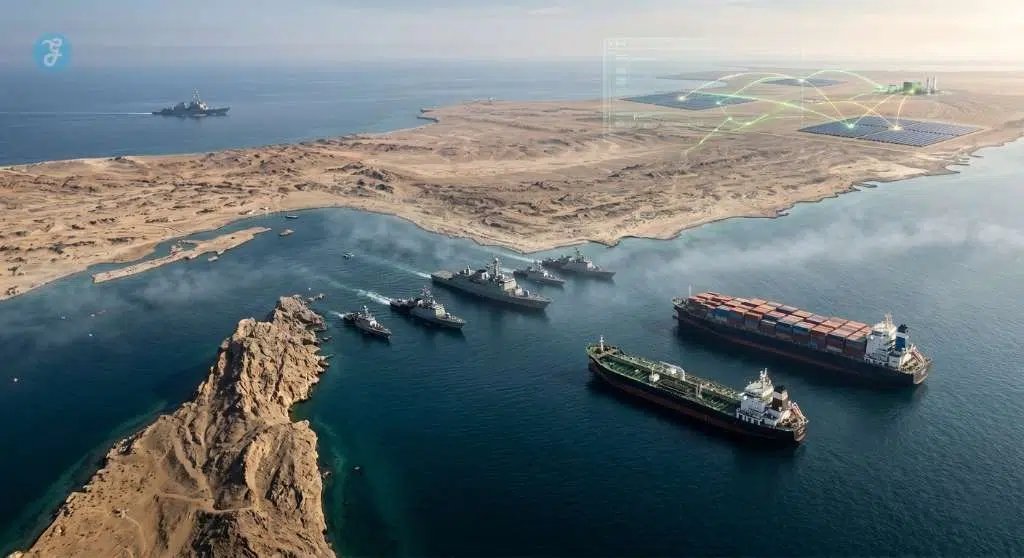
While the geopolitical standoff is largely dictated by Washington and Tehran, the most severe economic pain is being inflicted on nations that are entirely peripheral to the conflict. If the Strait of Hormuz remains locked down, the collateral damage will permanently scar global development.
The Immediate Economic Victims
The United States is partially insulated from the immediate energy shock due to its own massive domestic oil production and strategic reserves. The true victims are the major economies of Asia and Europe.
Nations like India, Japan, and China rely heavily on the Gulf for their daily energy survival. This vulnerability was highlighted sharply over the weekend when the Indian External Affairs Ministry had to urgently summon the Iranian ambassador after an Indian-flagged crude oil vessel was fired upon in the Strait.
For these Asian powers, a sustained blockade means immediate energy rationing, crippled manufacturing sectors, and soaring domestic inflation. Similarly, the European Union, still reeling from the energy crises of the early 2020s, views the closure as an absolute catastrophe.
European leaders, alongside officials in Egypt who are watching Suez Canal traffic vanish, have publicly warned that the “whole world is suffering.” The EU finds itself geopolitically marginalized, desperate for a diplomatic resolution but lacking the hard naval power to force either Washington or Tehran to back down.
The Fragility of Transitional Governance in the Middle East
The inability of regional powers to maintain the Friday ceasefire highlights deep, systemic structural weaknesses in the Gulf’s diplomatic architecture. This breakdown exposes how domestic vulnerabilities across the Middle East are heavily amplified when critical international waterways are weaponised for political leverage.
Countries sharing the Gulf coastline, such as Oman, the United Arab Emirates, and Saudi Arabia, find themselves trapped in a precarious balancing act. They must navigate their strategic alliances with the West while managing proximity to an increasingly aggressive Iranian military posture.
The crisis has exposed the severe limits of transitional governance and regional diplomacy in containing macroeconomic fallout.
Diplomatic Architecture Under Fire
The failure of the Lebanon ceasefire to hold broader regional peace demonstrates that the current diplomatic frameworks are fundamentally obsolete. The Gulf’s security architecture is struggling to mediate the hardline demands of Washington and the uncompromising retaliatory measures of Tehran.
For nations dependent on the Gulf for their own export economies, the blockade is a slow-moving domestic disaster. It limits their ability to fund internal diversification projects and threatens to destabilise their own transitional governance models.
When international shipping is held hostage, the resulting economic pain points trickle down to the local populations, heightening the risk of civil unrest and political instability across the broader Middle East.
Aggression and Alliances: The Strategic Motivations
To understand why the crisis reached this breaking point, one must dissect the underlying strategies and fears of the primary actors involved. The decisions being made are not impulsive; they are calculated moves in a brutal war of attrition.
The Logic Behind the U.S. “Maximalist” Stance
Why is the U.S. taking such relentlessly aggressive decisions, risking a global economic meltdown? Under the current administration, the strategy is rooted in absolute containment. The U.S. views the ongoing conflict, now entering its eighth week following the initial February strikes, as a singular opportunity to permanently dismantle Iran’s military infrastructure and nuclear capabilities.
Washington believes that yielding to Iran’s closure of the Strait would be submitting to “blackmail.” The naval blockade is viewed as the ultimate leverage to force a permanent, total peace deal, operating under the assumption that the U.S. can outlast the global economic pain longer than the Iranian government can survive total economic isolation.
The Perspectives of Israel and the Arab States
Israel views the situation with severe apprehension. While a fragile 10-day truce was recently reached with Hezbollah in Lebanon, the Israeli defense apparatus remains on high alert. Israeli leadership is actively preparing for the Islamabad talks to fail, bracing for the likelihood that the maritime blockade will trigger renewed, broader regional missile exchanges. From Tel Aviv’s perspective, any compromise that leaves Iran’s nuclear program intact is an existential threat, justifying the aggressive U.S. posture.
Meanwhile, Arab nations, particularly Gulf states like Oman, the UAE, and Saudi Arabia, are trapped in a geopolitical nightmare. They share the waters being mined and blockaded. These nations rely on the Strait for their own economic lifeblood and fear becoming direct collateral damage.
Their perspective is one of pure survival; they are quietly pushing for de-escalation, knowing their domestic stability cannot survive a prolonged, multi-year closure of their primary export route.
A Fractured Future: The World Order in the Next Decade
The 2026 Strait of Hormuz crisis is not just a temporary disruption; it is the death knell of post-Cold War globalization. The events of this April will dictate the geopolitical and economic architecture of the entire 2030s.
The End of Globalized Interdependence
If this blockade proves anything, it is that relying on a single, volatile chokepoint for global prosperity is an unacceptable national security risk. The world order over the next decade will be defined by severe fragmentation and hyper-regionalization.
We will see the end of truly globalized energy markets. Instead, the next ten years will feature a frantic, highly militarized race for resource independence. Nations will aggressively decouple their supply chains from the Middle East, pouring trillions into local renewable grids, domestic mining, and near-shoring manufacturing.
By 2035, the global order will likely be divided into isolated, self-sustaining economic blocs. The Strait of Hormuz will eventually lose its status as the world’s most critical economic artery, transforming instead into a monument to the dangers of global interdependence, forcing the world to realize that in the 21st century, true security requires total self-reliance.
The Aftermath: The Death of Globalization and The Dawn of Self-Reliance
The 2026 Strait of Hormuz blockade has evolved from a regional maritime dispute into the final, undeniable catalyst for a fractured world order. The events of this April have shattered the illusion that an interconnected global economy can reliably function under the shadow of persistent geopolitical hostility.
As Washington and Tehran remain deadlocked in maximalist standoffs, and as the vulnerable economies of Europe and Asia bear the brutal brunt of the fallout, the lesson for the international community is harsh but clear: traditional diplomatic frameworks are no longer sufficient to guarantee national survival.
The coming decade will not be defined by which superpower controls the Gulf, but by which nations can fastest decouple their economies from it. Moving forward, surviving the aftermath of this crisis demands a radical shift. It requires abandoning the precarious model of globalized supply chains and rapidly pivoting toward absolute, uncompromising self-reliance.
From aggressively funding localized, renewable energy grids to near-shoring critical manufacturing, nations must secure their own futures. The Strait of Hormuz crisis has unequivocally proven that in the geopolitical landscape of the 21st century, true security belongs only to the self-sufficient.
























