

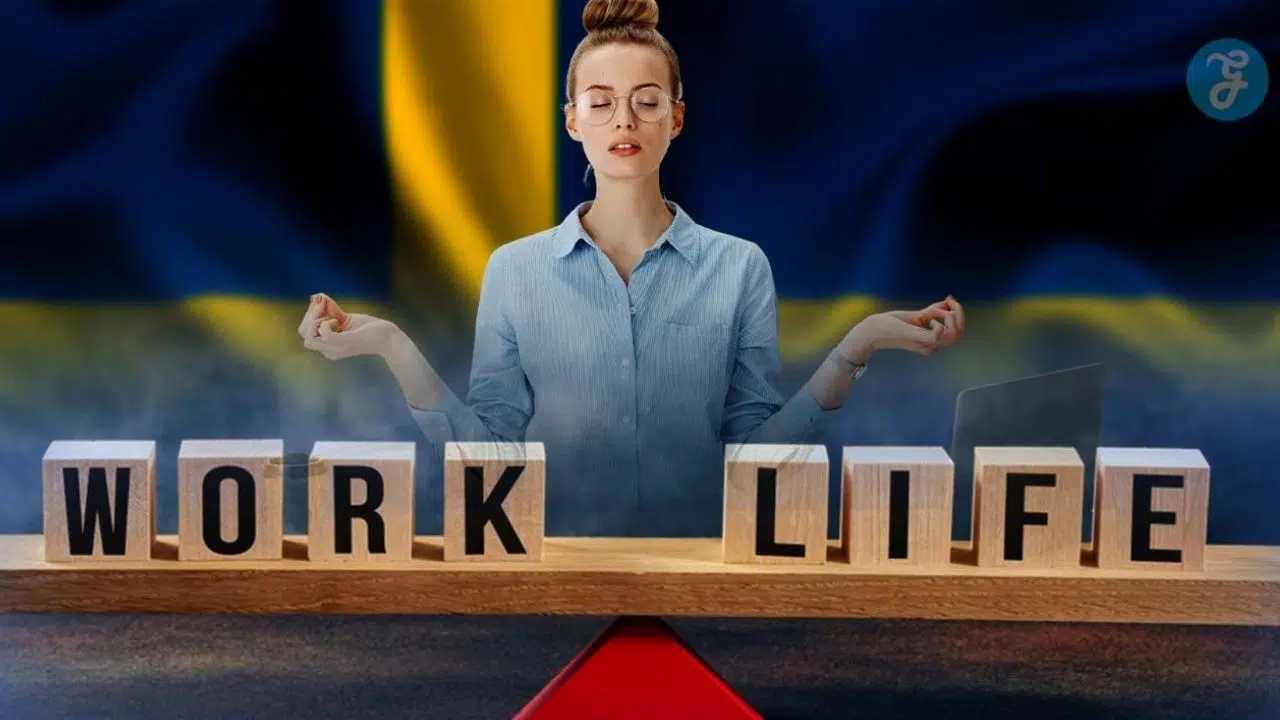
Around the world, hustle culture has convinced people that extreme exhaustion equals massive success. Working late into the night, skipping your lunch break, and answering frantic emails on weekends are often viewed as badges of honor in the modern corporate world. But this relentless mindset is driving a massive global burnout epidemic. People feel stressed, overwhelmed, and completely desperate for a better way to live and work. If you look closely at the Scandinavian workplace, you will find a completely different approach to productivity and employee well-being.
Sweden consistently ranks among the happiest, healthiest, and most productive countries on Earth, yet their entire work culture actively discourages overworking. They have woven mental health protection right into their daily routines, national laws, and basic social expectations. In fact, statistics show Swedish employees work around 1,441 hours per year on average, which is significantly less than the global average. Let us explore ten surprising facts about how the Sweden work-life balance model is fundamentally reshaping modern mental health norms and providing a highly effective blueprint for the rest of the world.
1: Fika Is Mandatory Mental Rest, Not Just a Coffee Break
If you spend even a single day inside a Swedish office building, you will immediately hear about fika. To an outsider, it just looks like a simple coffee break paired with a sweet pastry like a cinnamon bun. Culturally, however, fika is a scheduled, highly communal pause that happens once or twice every single day. Companies treat it as an essential part of the daily schedule rather than an optional perk for those who have spare time. It is a deeply ingrained social institution designed to force employees away from their screens.
Why Fika Rapidly Lowers Cortisol Levels?
Fika is absolutely not about grabbing a quick espresso and drinking it at your desk while staring at a complex spreadsheet. It requires you to physically step away from your workstation and sit down with your colleagues to talk about things completely unrelated to work. This daily practice breaks down strict social barriers and prevents the deep psychological isolation that remote or cubicle workers often feel. By forcing the human brain to exit intense problem-solving mode for twenty to thirty minutes, fika naturally lowers stress hormones. Managers and interns sit together, creating a relaxed atmosphere that humanizes the workplace and resets a person’s cognitive focus for the remainder of the afternoon.
| Feature | Regular Coffee Break | Swedish Fika |
| Location | Usually at the desk | Communal area |
| Activity | Working while drinking | Socializing and resting |
| Frequency | Whenever needed | Scheduled 1-2 times daily |
| Mental Impact | Keeps stress high | Lowers cortisol levels |
2: The Philosophy of Lagom Destroys Toxic Hustle Culture
Lagom is a famous Swedish concept that translates roughly to not too much, not too little, but just the right amount. While modern hustle culture tells you to give absolutely everything you have every single day until you collapse, lagom tells you that doing enough is perfectly fine. The entire culture actively rejects extreme behavior, including extreme overworking and unnecessary corporate martyrdom. It applies to everything from daily home decor to massive international business goals.
The End of Guilt-Driven Productivity
In many Western countries, leaving the office exactly at five o’clock comes with a heavy dose of guilt and side-eyes from management. Employees constantly worry their bosses will view them as uncommitted, lazy, or easily replaceable. Under the lagom philosophy, staying late actually looks like poor time management rather than impressive dedication. If you constantly work overtime, the Swedish mindset assumes the workload is poorly balanced or you are highly inefficient at doing your actual job. This mindset entirely removes the intense psychological pressure to constantly prove your human worth by suffering through unnecessarily long shifts.
| Hustle Culture | Lagom Philosophy |
| Work as many hours as possible | Work only the required hours |
| Overtime equals dedication | Overtime equals inefficiency |
| Constant burnout risk | High focus on sustainability |
| Competition is fierce | Collaboration is encouraged |
3: Generous Parental Leave Reduces Burnout for Both Parents

The arrival of a new child is incredibly stressful, especially when financial worries and long-term job security are on the line. Sweden tackles this massive life transition directly by offering up to 480 days of paid parental leave per child. The state heavily subsidizes this time off so young parents do not face sudden financial ruin when expanding their families. This deeply compassionate policy applies equally to birth, adoption, and even surrogate situations, ensuring no family is left behind.
What makes the Swedish system highly unique is that a significant portion of these paid days is allocated specifically to each parent. It operates on a use-it-or-lose-it system that strongly encourages fathers to take several months off work to care for their babies alone. By normalizing extended leave for both men and women, Sweden drastically reduces maternal postpartum depression rates and balances out career interruptions. Parents return to the workplace feeling deeply secure and genuinely rested rather than panicked, sleep-deprived, and chronically exhausted from juggling an infant with full-time work.
| Parental Leave Aspect | Swedish Model | Global Standard |
| Total Paid Leave | 480 days | Varies greatly (often under 12 weeks) |
| Father’s Quota | 90 days minimum reserved | Rarely mandated |
| Job Security | Fully protected | Often precarious |
| Mental Health Outcome | Lower anxiety and depression | High postpartum stress |
4: The 6-Hour Workday Experiments Show Real Mental Health Benefits
While the standard legal workweek in Sweden remains around 40 hours, the country is internationally famous for aggressively experimenting with the six-hour workday. Several progressive companies, massive hospitals, and public sector nursing homes across Sweden have tested paying employees their full eight-hour salary for only six hours of daily work. These trials have drawn massive global attention because they directly challenge the outdated industrial idea that time spent sitting at a desk directly equals actual value created.
Prioritizing Quality Output Over Quantity of Hours
The documented results from these national trials have been consistently and overwhelmingly positive across various industries. Employees reported feeling significantly happier, profoundly less stressed, and much more energetic when dealing with their families at home. Sick leave dropped dramatically, saving organizations massive amounts of money in lost time and temporary cover. Interestingly, actual business productivity did not decline during these reduced hours. Many organizations found that their staff got just as much done in six hours because they eliminated useless meetings and were highly motivated to finish tasks efficiently so they could leave early.
| Workday Model | Productivity Focus | Mental Health Impact |
| 8-Hour Day | Time spent at desk | Higher fatigue and distraction |
| 6-Hour Day | Tasks completed | Increased focus and energy |
| Overtime Heavy | Appearing busy | High burnout rate |
5: Five Weeks of Mandated Vacation Recharges the Brain
By strict national law, every full-time employee in Sweden is legally entitled to a minimum of 25 days of paid vacation per year regardless of their industry. But the true magic of the Sweden work-life balance is not just the sheer amount of time off provided; it is exactly how employees actually use it. Unlike in America or Japan, where workers often leave vacation days completely unused out of fear, Swedes actually take every single day they earn. Companies expect and mandate that you take your leave to prevent chronic fatigue.
The Sacred Summer Disconnect
There is a highly respected widespread tradition in Sweden widely known as the industrial holiday where millions of workers take four consecutive weeks off during July. During this warm month, entire office buildings practically power down and run on skeleton crews. You will constantly get automated out-of-office replies stating the person is simply gone and will return in August without checking messages. Taking a solid, uninterrupted month off allows the human nervous system to completely exit fight-or-flight mode and deeply recover from a full year of chronic stress accumulation.
| Vacation Element | Swedish Practice | Common Global Practice |
| Minimum Paid Days | 25 days | 10 to 14 days |
| Usage Rate | Almost 100% | Highly underutilized |
| Summer Break | 4 weeks consecutive | Fragmented 1-week blocks |
| Company Attitude | Encouraged by leadership | Often discouraged subtly |
6: Right to Disconnect Is a Cultural Norm
Long before other progressive European nations started passing complex legal frameworks giving employees the absolute right to ignore after-hours emails, Sweden was already practicing it naturally. It did not require a harsh government law because it was already built on basic human social respect and boundary setting. The lines between professional corporate life and private family life are deeply respected by upper management and peers alike. You are not expected to be a corporate servant off the clock under any circumstances.
Setting Clear Digital Boundaries
In the Swedish corporate world, sending a work-related email or text to a colleague on a Saturday or late in the evening is considered highly intrusive, disrespectful, and frankly rude. Managers do not expect their direct teams to be on standby unless they are explicitly scheduled and heavily paid for on-call emergency hours. This high level of digital predictability heavily reduces the low-grade, constant anxiety that comes from anxiously waiting for a stressful text message to pop up on your phone during a family dinner.
| Communication Norm | Impact on Employee | Respect Level |
| Weekend Emails | Causes anxiety and dread | Considered rude in Sweden |
| After-Hours Slack | Blurs home and work life | Avoided entirely |
| Clear Off-Hours | Creates psychological safety | High cultural priority |
7: Flexible Working Arrangements Were Normal Long Before the Pandemic
While much of the corporate world scrambled in pure panic to figure out remote work setups during the recent global health crisis, Sweden had already completely normalized highly flexible working arrangements. Deep mutual trust is a massive foundational component of the entire Swedish employment model. Employers hire adults and intentionally treat them as fully capable adults rather than children who need monitoring. They recognize that real life, doctor appointments, and family emergencies happen during normal business hours.
Trust-Based Working Hours
Many modern Swedish companies operate on a highly successful system called trust-based hours. As long as the specific project work gets done well and you are fully present for essential team meetings, managers do not micromanage where or exactly when you do your daily tasks. If a busy parent needs to leave the office at three in the afternoon to pick up their child from school, they just pack up and go without asking for written permission. The ultimate freedom to arrange the day entirely eliminates the massive background stress of juggling rigid corporate office hours with heavy personal responsibilities.
| Working Style | Management Focus | Stress Level |
| Trust-Based Flex | Outcomes and results | Very low |
| Rigid 9-to-5 | Clock-watching | Moderate to High |
| Micromanaged | Constant updates | Extremely High |
8: Flat Corporate Hierarchies Lower Workplace Anxiety

Corporate structures in Sweden are internationally famous for being incredibly flat and lacking unnecessary middle management layers. The physical and social distance between an entry-level new employee and the company CEO is very short. Everyone typically uses first names casually, and wealthy executives sit in the exact same open-plan areas as the summer interns. There are usually no massive, intimidating corner offices exclusively reserved for the corporate elite, which breeds a massive amount of mutual respect across all pay grades.
Empowering the Individual Voice
Strict top-down corporate hierarchies often breed intense fear, extreme micromanagement, and silent anxiety among the lower ranks. Employees trapped in rigid systems spend immense mental energy constantly worrying about toxic office politics and pleasing their specific bosses to survive. In Sweden, reaching a calm consensus and promoting open collaboration are valued heavily over aggressively barking orders. Because employees genuinely know they can speak up with a bad idea without facing harsh discipline, the workplace feels deeply psychologically safe.
| Corporate Structure | Decision Making | Employee Emotion |
| Flat Hierarchy (Sweden) | Consensus and discussion | Valued and safe |
| Top-Down Hierarchy | Orders from above | Anxious and silenced |
| Highly Bureaucratic | Slow and rigid | Frustrated |
9: Subsidized Wellness Allowances Encourage Active Stress Relief
The Swedish government specifically allows and encourages companies to offer their employees a generous tax-free wellness allowance known locally as friskvårdsbidrag. This is a yearly, dedicated financial budget that employees can spend entirely on personal activities that promote their physical and mental health outside of the office. The allowance easily covers a massive variety of healthy hobbies, gym memberships, and recovery tools. It clearly shows that employers genuinely care about what happens to your physical body and mental state outside the office walls.
Funding Personal Well-being and Burnout Prevention
Employers essentially hand their hardworking staff free money to go to a local gym, get a deep tissue massage, take weekly yoga classes, or even use expensive smoking cessation apps. By actively subsidizing stress-relieving activities, companies send a very clear, tangible message that employee health is a shared priority rather than just an individual burden. It completely removes the financial barrier to expensive self-care routines and strongly encourages people to actively maintain their well-being long before they hit a dangerous breaking point.
| Wellness Benefit | Purpose | Benefit to Company |
| Friskvårdsbidrag | Funds physical/mental activities | Healthier workforce |
| Friskvårdstimme | Paid hour per week for exercise | Higher daily energy |
| Preventative Care | Stops burnout early | Lower sick leave costs |
10: Mental Health Days Are Treated With the Same Respect as Physical Illness
In many highly toxic global work cultures, calling in sick simply because you are experiencing severe anxiety, deep depression, or intense burnout is heavily frowned upon. Employees often feel backed into a corner and forced to outright lie and say they have severe food poisoning just to get a single day of mental rest. Mental health struggles are tragically often viewed as a personal weakness or lack of grit rather than a highly legitimate medical issue requiring serious intervention.
De-stigmatizing Severe Burnout and Exhaustion
In Sweden, severe mental health struggles are viewed by society as entirely valid, biological medical conditions that require actual rest. If a dedicated employee is suffering from chronic stress, they can easily take sick leave without an ounce of workplace shame or fear of termination. In documented cases of severe clinical exhaustion, Swedish doctors can literally prescribe paid sick leave for several weeks or even months to allow the broken nervous system to fully recover. The robust state insurance system supports them financially during this entire healing process, ensuring they do not lose their homes while recovering.
| Sick Leave Type | Cultural View in Sweden | Global Stigma Level |
| Physical Illness | Valid reason to rest | Low |
| Mental Health/Burnout | Valid medical condition | High in many regions |
| Long-term Exhaustion | Supported by medical doctors | Often leads to job loss |
Implementing the Sweden Work-Life Balance Globally
You absolutely do not have to relocate your entire family across the world to Stockholm to experience dramatically better mental health at work. Companies worldwide can easily and cheaply learn from these highly practical, proven policies. The massive cultural shift starts heavily with leadership setting the exact correct tone from the very top down. Managers must actively encourage daily breaks, firmly refuse to send weekend emails, and measure their team’s ultimate success by the actual output rather than the arbitrary hours logged at a desk.
Adopting a simple lagom mindset on a deeply personal level can also help individuals set strict boundaries with their employers. Employees must eventually learn to stop tying their human worth entirely to their economic output. When corporate leaders truly respect personal time, long-term productivity organically rises because people are actually well-rested, highly focused, and deeply loyal to the company.
Final Thoughts
The remarkable Sweden work-life balance is absolutely not a result of workers being naturally lazy or lacking high ambition. Sweden is home to massive global tech innovators and retail giants like Spotify, Volvo, and IKEA. They simply understand a highly fundamental human truth that escapes many other nations: people do their absolute best, most creative work when they are rested, respected, and treated like highly responsible adults.
By actively normalizing deep physical rest, financially supporting young parents, and valuing daily mental health just as highly as physical health, Sweden consistently proves that a compassionate, human-first work culture is actually the most profitable one. As more individuals rapidly demand better working conditions around the globe, the Swedish system easily provides a practical, thoroughly tested blueprint for a much healthier, highly sustainable future.
Frequently Asked Questions (FAQs) About Sweden Work-Life Balance
1. What is the friskvårdstimme in Swedish work culture?
Aside from the annual financial wellness allowance, some highly progressive Swedish employers offer a friskvårdstimme. This directly translates to a wellness hour. It generously gives employees one fully paid hour per week during normal business hours to exercise, meditate, or engage in any health-boosting activity away from their desks.
2. How does the Swedish government support long-term burnout recovery?
If a worker sadly suffers from clinical burnout, the Swedish healthcare system and the Social Insurance Agency immediately step in. After the first two weeks of employer-paid sick leave, the government directly provides ongoing financial compensation so the worker can take several months off to attend professional rehabilitation, undergo therapy, and gradually return to work without losing their entire livelihood.
3. Are there any downsides to the lagom work philosophy?
While highly beneficial for overall mental health, some intensely competitive individuals find the lagom concept quite frustrating. Because it heavily promotes group consensus, moderation, and equality, rapid executive decision-making or highly aggressive solo career climbing can sometimes be viewed negatively or slowed down by the heavily group-focused culture.
4. Is the 6-hour workday officially mandated by Swedish law?
No, it is not legally mandated yet. The standard legal workweek remains securely at 40 hours. The 6-hour workday is simply an experimental operational model adopted completely voluntarily by specific progressive companies, tech startups, and certain public healthcare facilities to massively boost employee retention and crush daily stress levels.
5. Do Swedish schools teach work-life balance concepts to children?
Yes, the foundational cultural concepts of lagom, deep equality, and pure mental well-being are heavily embedded early in the entire Swedish education system. Young students are purposely given ample time for unstructured outdoor play and are not typically overwhelmed with massive amounts of after-school homework, perfectly setting the stage for healthy adult boundaries later in life.
6. Why is the Swedish flat hierarchy sometimes difficult for foreigners?
Expats coming from highly rigid, top-down corporate cultures like the US or Japan often struggle initially with the Swedish flat hierarchy. They usually expect clear, direct orders from a boss. Instead, they are met with long group discussions and a heavy expectation to voice their own opinions, which can feel deeply confusing until they adapt to the high-trust environment.
























