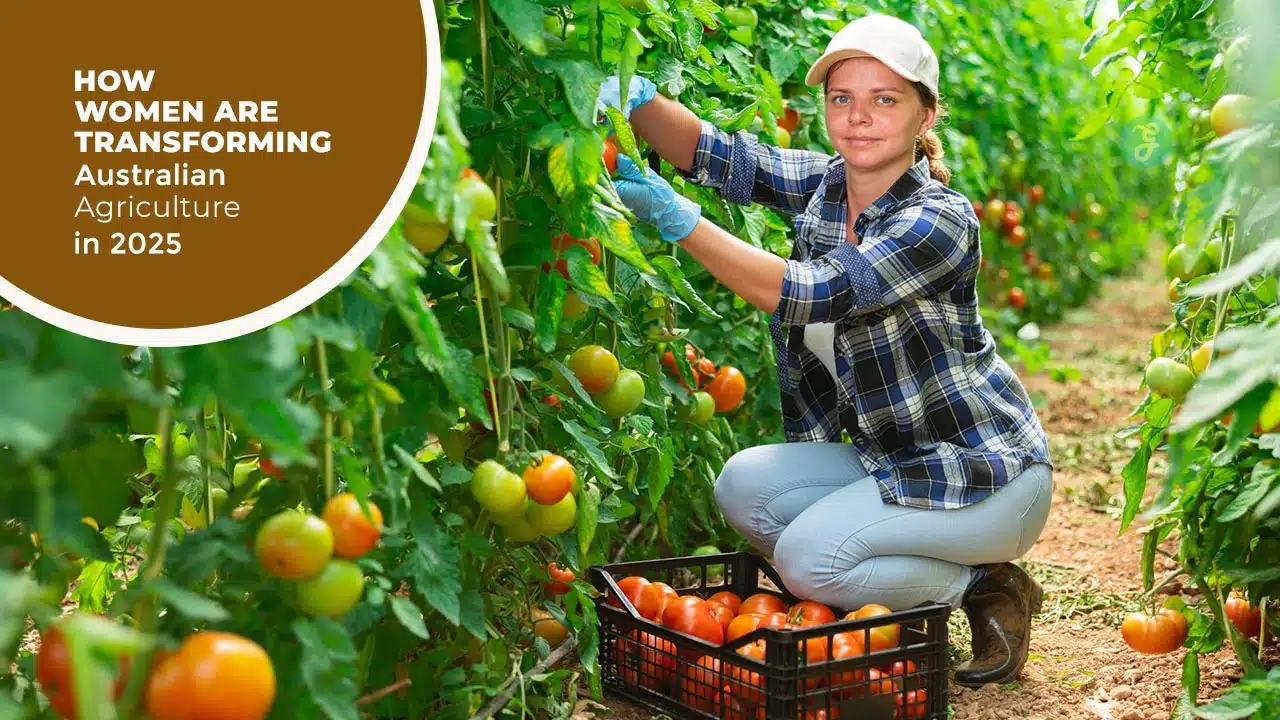
In 2025, Australian agriculture is undergoing a remarkable transformation, and at the heart of this revolution are trailblazing women. From breaking barriers in leadership to driving sustainability and technological innovations, women are reshaping the agricultural landscape of the country.
With a blend of traditional wisdom and modern ingenuity, their contributions are creating a more inclusive, resilient, and forward-thinking industry.
In this article, we delve into how women are transforming Australian agriculture in 2025, highlighting their influence across various domains.
1. Breaking Barriers: Women in Leadership Roles
For decades, agriculture in Australia was predominantly male-dominated. However, the narrative is changing. Women are now taking center stage in leadership roles, influencing decisions at both grassroots and policy levels.
Key Statistics
- In 2025, 38% of leadership positions in agricultural organizations are held by women, compared to just 20% a decade ago.
- Female representation on agricultural boards has increased by 25% over the last five years.
Inspiring Stories
One notable example is Sarah Johnson, the CEO of a leading agribusiness firm in New South Wales. Under her leadership, the company adopted inclusive policies and achieved a 40% reduction in operational costs by implementing sustainable practices.
Table: Women in Leadership Roles
| Role | Percentage of Women (2025) | Growth Since 2015 |
| CEOs of Agribusiness Firms | 18% | 60% |
| Board Members | 38% | 25% |
| Agricultural Ministers | 22% | 50% |
2. Pioneering Sustainability Practices
Women are at the forefront of promoting sustainable agriculture, which is crucial in combating climate change and ensuring long-term food security.
Innovations in Sustainable Farming
- Adoption of regenerative farming practices to restore soil health.
- Implementation of water-saving technologies, such as drip irrigation.
- Utilization of natural fertilizers to reduce environmental impact.
Case Study: Emma Brown’s Farm
Emma Brown, a farmer in Victoria, has successfully transitioned her farm to a fully organic model. By integrating crop rotation and cover cropping, she’s improved soil fertility and reduced greenhouse gas emissions by 30%.
Table: Key Sustainability Practices Led by Women
| Practice | Impact |
| Regenerative Farming | Improved soil health and biodiversity |
| Water-Saving Technologies | Reduced water consumption by 25% |
| Organic Farming | Lowered carbon footprint |
3. Driving Technological Innovations

Technology is revolutionizing agriculture, and women are leading the charge by integrating advanced tools and techniques into farming operations.
Technologies Transforming Agriculture
- Drones: Used for crop monitoring and pest control.
- Artificial Intelligence (AI): Predicts weather patterns and optimizes resource usage.
- Data Analytics: Helps in precision farming by analyzing soil and crop data.
Highlight: AgriTech Startups
Sophia Green’s startup in Queensland has developed an AI-powered app that helps farmers monitor crop health in real-time. This innovation has increased yields by 15% for over 500 farms.
Table: Technology Adoption by Women
| Technology | Benefits |
| Drones | Enhanced crop management |
| AI Tools | Accurate weather and pest predictions |
| Data Analytics Platforms | Optimized use of fertilizers and water |
4. Empowering Rural Communities
Women are playing a vital role in uplifting rural communities, ensuring that families thrive in agricultural regions.
Key Contributions
- Establishing cooperatives for collective farming and fair pricing.
- Organizing training programs for rural women to enhance skills.
- Improving access to education and healthcare in farming areas.
Example: Community Programs
In South Australia, Lisa Carter’s initiative has provided financial literacy workshops to over 1,000 rural women, helping them manage farm budgets effectively.
Table: Community Empowerment Initiatives
| Initiative | Impact |
| Financial Literacy Workshops | Improved economic independence |
| Skill Development Programs | Enhanced employability of rural women |
| Health and Education Access | Better quality of life in farming regions |
5. Overcoming Challenges
Despite their achievements, women in agriculture face significant challenges. Gender bias, limited access to resources, and societal expectations often hinder progress.
Common Challenges
- Difficulty in securing funding for agricultural projects.
- Balancing farm responsibilities with family roles.
- Lack of representation in policy-making.
Strategies to Overcome Barriers
- Establishing mentorship programs for women in agriculture.
- Advocating for gender-neutral funding policies.
- Promoting awareness campaigns to challenge stereotypes.
Table: Challenges and Solutions
| Challenge | Proposed Solution |
| Gender Bias | Awareness campaigns |
| Limited Funding Access | Gender-neutral funding policies |
| Societal Expectations | Mentorship and support networks |
6. Future Prospects: Women Shaping the Next Decade
The contributions of women today are setting the stage for a brighter future in Australian agriculture. Here’s what the next decade could look like:
Predictions for the Future
- Increased adoption of climate-smart agriculture.
- Greater representation of women in agricultural policymaking.
- Growth in women-led AgriTech innovations.
Encouraging the Next Generation
Mentorship programs and scholarships are inspiring young girls to pursue careers in agriculture, ensuring a steady influx of talented women in the industry.
Table: Vision for the Next Decade
| Aspect | Future Outlook |
| Climate-Smart Agriculture | Higher adoption rates |
| Women in Policy | 50% representation by 2030 |
| AgriTech Startups | Doubling of women-led startups |
Takeaways
In 2025, women are undeniably transforming Australian agriculture. Through leadership, sustainability practices, technological innovations, and community empowerment, they are shaping an inclusive and resilient industry.
By addressing challenges and inspiring future generations, women are creating a legacy that will drive Australian agriculture forward for years to come. As we celebrate their achievements, it is crucial to support and invest in initiatives that enable more women to contribute to this vital sector.