
As today is Valentine’s Day, many of us ponder its importance. This holiday brings people together, creating a sense of love and connection. It’s not just for romantic love; it’s about human connection. Understanding its value helps us see how it impacts our relationships and well-being.
Why Valentine’s Day matters? Valentine’s Day celebrates love and connection. It’s often seen as just for couples, but it’s much more. By looking into the psychology of love, we can see why this day is so special. It shows us how it touches people’s lives.
The Importance of Valentine’s Day
Let’s dive into Valentine’s Day and its significance. We’ll look at its history and how it’s celebrated today. This will help us see why it’s a key part of our culture. By understanding its importance, we can value it more in our lives.
Key Takeaways
- Valentine’s Day is a celebration of love and human connection.
- The importance of Valentine’s Day lies in its ability to bring people together.
- Understanding why Valentine’s Day matters can help us appreciate the true value of this celebration.
- Valentine’s Day plays a significant role in shaping our relationships and experiences.
- The holiday has a profound impact on our mental health and well-being.
- By exploring the psychology behind love, we can gain a deeper understanding of what makes Valentine’s Day so special.
The Historical Evolution of Valentine’s Day Celebrations
Valentine’s Day has a rich history, starting with ancient Roman and medieval European traditions. The Valentine’s Day history is complex, spanning centuries. It celebrates love, friendship, and devotion.
The holiday has changed a lot over time. From the ancient Roman festival of Lupercalia to medieval courtly love, each era has shaped it. Today’s Valentine’s Day traditions come from these influences.
Some key moments in Valentine’s Day’s evolution include:
- Ancient Roman festivals, like Lupercalia, which honored fertility and love
- Medieval courtly love traditions, focusing on chivalry and romance
- The Victorian era, which made exchanging love letters and gifts popular
By exploring the Valentine’s Day history and Valentine’s Day traditions, we see the holiday’s importance. It’s a time to celebrate love and connection with everyone around us.
Why Valentines Day Matters in Modern Society
Valentine’s Day is now a big part of our lives, not just for couples. It’s about love, appreciation, and thinking about ourselves. In our busy world, it’s a chance to slow down and connect with those we care about.
This holiday brings people together, creating a sense of community. It’s about sharing moments, like a romantic dinner or a small gift. It shows us the value of kindness and love, beyond just romantic love.
Valentine’s Day touches many areas of our lives, including:
- Promoting emotional well-being and self-reflection
- Fostering social connections and community building
- Encouraging acts of kindness and generosity
- Supporting local businesses and economies through gift-giving and celebrations
In summary, Valentine’s Day has a big impact on our society. It goes beyond romantic love, bringing people together and promoting kindness. It’s a time for self-reflection and growth.
| Aspect of Society | Valentine’s Day Impact |
|---|---|
| Emotional Well-being | Promotes self-reflection and emotional connection |
| Social Connections | Fosters community building and social bonding |
| Economy | Supports local businesses through gift-giving and celebrations |
The Neuroscience Behind Love and Celebration

Exploring the world of Valentine’s Day, we find the science of love and relationships fascinating. The celebration affects our brain chemistry, releasing hormones that make us feel attached and affectionate. Oxytocin, known as the “love hormone,” is key in emotional bonding.
When we share romantic moments, like giving gifts or being intimate, oxytocin levels rise. This strengthens the connection between partners. Valentine’s Day activities, like these, release oxytocin, helping couples feel closer. Expressing love has many psychological benefits, and Valentine’s Day is a special time to experience them.
Key Aspects of Love and Celebration
- Release of oxytocin during romantic rituals
- Strengthening of emotional bonds between partners
- Psychological benefits of expressing love and affection
By embracing Valentine’s Day, we can use neuroscience to make our relationships stronger. It’s important to see the value of Valentine’s Day in our lives. It positively affects our mental and emotional health.
Cultural Impact of Valentine’s Day Across America
Valentine’s Day is a big part of American culture. Its Valentine’s Day history shapes how we show love and care. We see this in how people celebrate, from cozy dinners to new ways to show love.
In America, Valentine’s Day mixes old and new traditions. People give gifts like flowers and chocolates. Others show love with special moments and thoughtful acts. Here are some ways to celebrate:
- Going on a romantic dinner date
- Watching a movie or play together
- Taking a weekend getaway to a cozy bed and breakfast
- Exchanging heartfelt letters or love notes
Recent surveys show over 60% of Americans celebrate Valentine’s Day. They spend about $140 on gifts and fun. The holiday also boosts the US economy, with over $20 billion spent each year.
Valentine’s Day is a cherished tradition in America. Its culture keeps growing. They help shape how we celebrate love and care for each other.
The Social Psychology of Gift-Giving and Romance
Valentine’s Day traditions shape how we see love and relationships. Gift-giving is a way to share feelings and grow closer to others. It’s not just about the gift itself, but the emotions it carries.
The impact of Valentine’s Day on our relationships is huge. It makes us think more about our loved ones. By giving gifts, we show our love and care, making our bond stronger.
Some ways to show love include:
- Writing love letters or making handmade cards
- Preparing a special meal or dessert
- Giving personalized gifts that reflect the person’s interests or hobbies
These small acts can mean a lot in our relationships. They show we’re willing to go the extra mile for someone we care about. By embracing Valentine’s Day traditions, we can make our connections deeper and create lasting memories.
Valentine’s Day’s Role in Relationship Development
Valentine’s Day is important because it helps couples grow closer. It gives them a chance to reconnect and understand each other better. A Valentine’s Day celebration can boost communication, intimacy, and self-awareness.
Here are some ways Valentine’s Day can help relationships:
- Encouraging open and honest communication
- Fostering a sense of intimacy and emotional connection
- Providing an opportunity for self-reflection and personal growth
- Strengthening the bond between partners through shared experiences
In today’s busy world, it’s easy to forget about our relationships. Valentine’s Day reminds us to focus on our loved ones. By celebrating in the true spirit of Valentine’s Day celebration, we can build stronger, happier relationships. Let’s celebrate this holiday and work on strengthening our bonds with others.
The Impact of Valentine’s Day on Mental Health and Well-being
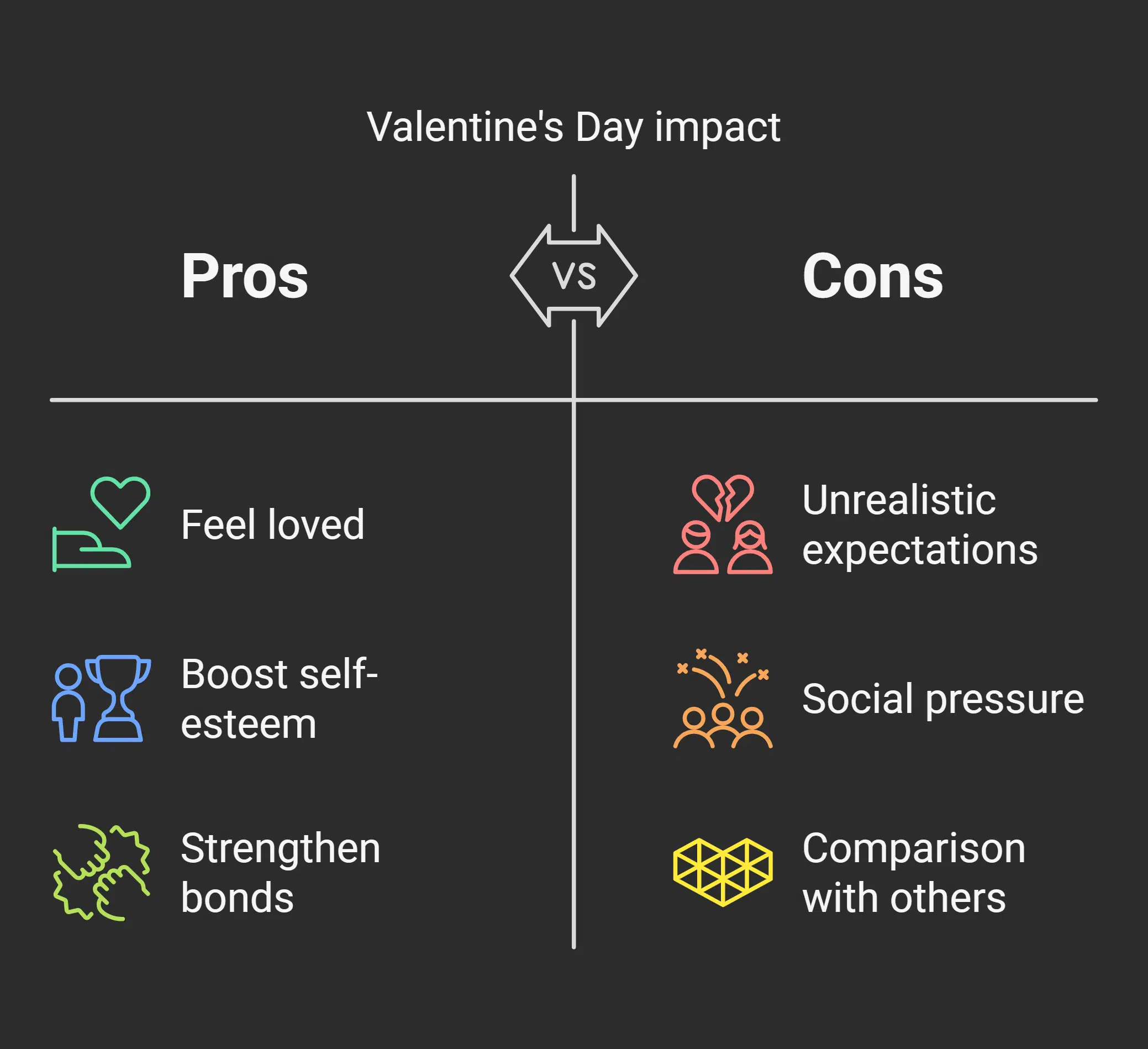
As Valentine’s Day gets closer, it’s key to think about its impact on our mental health. This holiday can change us in big ways, both good and bad. On the bright side, it can make us feel loved and connected, which is great for our minds.
Valentine’s Day can boost our self-esteem and emotional health. Feeling loved and valued can make us feel better about ourselves. It also gives us a chance to share our feelings and bond with others, which is good for our emotional health.
Managing Expectations and Social Pressure
To avoid the downsides of Valentine’s Day, we need to handle our expectations and the pressure from others. We can do this by setting realistic goals and not comparing ourselves to others. By focusing on the holiday’s true meaning, we can have a healthier view of it.
Creating Healthy Relationship Habits
Valentine’s Day can also help us build better relationships. By talking openly, being empathetic, and respecting each other, we can strengthen our bonds. This can positively affect our mental health and well-being, as strong relationships are key to feeling good.
In the end, Valentine’s Day’s culture can greatly impact our mental health and well-being. By understanding its effects and working on healthy relationships, we can enjoy the holiday in a way that’s good for our minds.
Modern Expressions of Love in the Digital Age
Technology has changed how we show love and appreciation. Now, Valentine’s Day celebrations go beyond traditional gifts and dinners. Social media lets us share our love and special moments easily.
Online gift-giving is now a big trend. It lets us send thoughtful gifts with just a few clicks. This makes it easier to connect with loved ones, no matter where they are. So, Valentine’s Day traditions have grown to include new ways to celebrate love.
Here are some ways people celebrate Valentine’s Day today:
- Sharing romantic messages and photos on social media
- Sending online gifts, such as e-cards and digital flowers
- Participating in online couples’ challenges and games
- Watching romantic movies and TV shows together via streaming services
The digital age has brought new ways to show love. It makes Valentine’s Day celebrations more special and meaningful. By using these modern ways, we can make our Valentine’s Day celebration even more memorable.
Takeaways
As we wrap up our look at the significance of Valentine’s Day, it’s clear this holiday is more than just cards and flowers. It’s a celebration of love, connection, and appreciation for those we care about most.
We’ve explored the holiday’s history, cultural impact, and the psychology behind it. From ancient Rome to today, Valentine’s Day is about the power of relationships. It shows how these bonds can change us and help us grow.
By understanding the true meaning of Valentine’s Day, we can value the people we love more. It’s about showing love, saying thanks, and spending time together. The heart of Valentine’s Day is about meeting our emotional and psychological needs.
Think about this special day in a deeper way. Look past the commercial stuff and focus on real feelings and connections. Doing this will strengthen your relationships and help make the world a kinder place.
FAQs
1. What is the significance of Valentine’s Day?
Valentine’s Day celebrates love, appreciation, and connection. It has ancient Roman roots. Today, it’s a time for people to come together, bond emotionally, and reflect on personal growth.
2. How has the celebration of Valentine’s Day changed over time?
Valentine’s Day has changed a lot. It began with the Feast of Lupercalia in ancient Rome. Then, it evolved with courtly love in the Middle Ages. Now, it’s more commercial but remains deeply meaningful to many.
3. Why does Valentine’s Day matter in modern society?
Valentine’s Day matters because it brings people together. It promotes love and appreciation. It also offers a chance for self-reflection and growth, impacting lives and relationships.
4. What is the neuroscience behind love and celebration?
Neuroscience shows love’s impact on our brains. Oxytocin, the “love hormone,” is key in bonding. Romantic rituals affect brain chemistry, boosting the holiday’s psychological benefits.
5. How does Valentine’s Day impact the culture across America?
Valentine’s Day influences American culture deeply. It’s celebrated in many ways, from dinners to modern expressions of love. It shows the diverse ways Americans celebrate love and connection.
6. What is the psychology behind gift-giving and romance?
Gift-giving and romance are deeply emotional and social. Gifts show love and appreciation. Romantic gestures strengthen bonds and create shared experiences, highlighting Valentine’s Day’s importance.
7. How does Valentine’s Day affect relationship development?
Valentine’s Day is key for relationships. It brings couples closer, promotes communication, and offers growth opportunities. Celebrating can strengthen relationships and deepen connections.
8. What is the impact of Valentine’s Day on mental health and well-being?
Valentine’s Day affects mental health differently. It can boost self-esteem but also create pressure. Managing these effects and celebrating healthily is vital for mental well-being.
9. How has the digital age influenced modern expressions of love?
The digital age has changed how we show love. Technology offers new ways to celebrate, like social media and online gifts. Yet, it also brings challenges that need to be addressed.