Ever ask, Why Does My Hair Get Tangled So Easily? You hope for smooth strands, but you end up with knots that chew up your brush. Curly or fine tresses, low moisture, and rough cuticles all add to the mess.
This post shows how a mild cleanser, a softening balm, and a detangle spray can tame your mane. It gives tips on a wide-tooth comb, a silk night wrap, and regular trims to cut knot risk.
Stop tugging on your locks. Keep reading.
Key Takeaways
- Hair tangles form when dry strands lift cuticle scales, damaged cuticles chip, or wind (gusts above 15 mph) and high humidity (dew point over 60 %) make strands swell and knot.
- Heat styling without protectant raises tangle risk by 50 %; use a protein conditioner, hair elixir, and a heat‐protectant spray before any flat iron or curling wand.
- Long, fine, or curly hair snarls fastest; detangle gently on damp hair with a wide‐tooth comb or knot‐free brush, working from ends up to roots.
- Sleep on silk or satin pillowcases or in a loose braid to cut friction, and pat hair dry with a microfiber towel to protect smooth cuticles.
- Trim split ends every 6–8 weeks (or micro‐trim at home) to remove rough tips, reduce breakage, and help brushes glide through your hair.
Common Causes of Hair Tangles

Bone-dry scales on the hair cuticle snag against each other and rough up the medulla. Blustery wind and a high dew point tug at stray strands and spark tiny knots.
Dryness and lack of moisture
Dry strands lift cuticle scales on the hair shaft, so fibers hook together, forming knots. Hair gets tangled faster if it lacks natural oils and moisture.
Use a hair pack or a coconut oil soak to fill gaps in each strand, then smooth scales. Rub argan oil serum into ends right after shampoo and conditioner to lock moisture. This helps prevent tangles.
Damaged hair cuticles
Cracked hair cuticles act like a tattered fence on each hair strand. They let moisture escape, and friction digs in, ugh. That rough outer layer leads to split ends and knots. Damaged hair feels fragile at a touch.
Hair gets tangled so easily when cuticle walls chip. Regular flat iron use without a heat protectant spray raises tangling odds by fifty percent.
Skip a deep conditioning treatment, and your hair care routine drops its guard. A protein-based conditioner and a hair elixir can smooth the cuticle back down. Use a paddle brush or a detangling brush on damp locks.
Pat dry with a microfiber towel. Cover your mane at night with a satin bonnet to reduce friction. These small moves cut breakage and make hair less prone to tangling.
Long, fine, or curly hair types
Long hair can turn into a traffic jam of knots when you comb too fast. Fine hair cuticles lift easily, they slip past each other like loose threads. This hair type sheds strands that snag at the ends, and it is more prone to hair knots.
You might detangle hair each morning, just to free your mane.
Curly hair loops and corkscrews into tight coils that catch on themselves in wind or humidity. Thick, curly hair textures tangle faster than straight locks. A gap-toothed comb or a knot brush guides each strand, it works from ends to roots without tugging.
These tools help prevent hair tangles every day.
Environmental factors like wind and humidity
High humidity makes hair strands swell and puff. That extra bulk raises frizz and triggers tangles. A humidity gauge may show moisture above 60% on muggy days, so your hair is prone to tangles.
Strong wind tosses strands, whipping loose hair into knots. A wind meter reads gusts above 15 mph, and air moves hair in loops you can’t control. Wild motion triggers tangled hair fast.
Tips to Prevent Hair Tangles

Wash with a gentle shampoo, smooth in a leave-in detangler, sleep on satin, comb with a wide-tooth tool, and trim split ends to dodge knots—keep reading for more.
Use a hydrating shampoo and conditioner
Use a hydrating hair cleanser like Goldie Locks Signature Shampoo for cleansing. It restores moisture and smooths cuticles. Product fights dryness that leads to knots. Scalp stays balanced and strands slip free.
Apply a hydrating hair treatment such as Goldie Locks Signature Conditioner after shampoo. It adds slip to strands, so you can detangle your hair with ease. This simple step prevents your hair from tangling by keeping strands soft and smooth.
Incorporate leave-in conditioners or serums
Leave-in conditioners add moisture to each fiber. These hair care products seal scales on strands, cutting friction. Dry hair is more prone to knots, and this step can help prevent tangles.
Goldie Locks Signature Hair Serum seals water in each strand. It cuts knots, for smooth, tangle-free hair all day. A quick run from roots to tips will protect your hair.
Protect hair while sleeping with silk or satin materials
Swap a cotton pillowcase for a silk or satin one and guard your tresses overnight. Soft fabric lets strands glide, so you curb friction that strips hair of its natural oils. This little trick keeps hair less tangled and locks in shine by sunrise.
Loosely braid your hair into a protective hairstyle before lights out. This simple move cuts friction that leads to knots and makes hair less likely to tangle. You wake up with smoother locks, no morning battles near the pillow.
Avoid harsh heat styling tools
Hot flat irons and blow dryers strip moisture and roughen the cuticle. Damaged cuticles catch on knots, making strands prone to tangles and breakage.
Limit curling wand or flat iron use to two passes per section. Always use a heat protectant like Goldie Locks Blow Dry Spray. This spray helps keep your hair smooth and prevent your hair from damage during styling.
Trim split ends regularly
Nip split ends in the bud by trimming every 6 to 8 weeks. Salon stylists wield cutting shears to zap broken tips. That quick chop stops knots and tangles. It keeps hair from getting rough and halts damage to the hair.
You dodge hair breakage with a tiny snip. Fine or curly hair types love this trick. Stylists clip edges as a chef slices carrots. The fresh ends let you comb your hair without a tug-of-war.
Grab home hair scissors for a micro trim after a weekly hair mask. Clip off ragged bits at the bottom of your hair for a smooth the hair feel. The action shrinks breakage and makes brush your hair time calmer.
Your mane stays sleek, and your scrunchie bun looks bouncy.
Proper Brushing Techniques
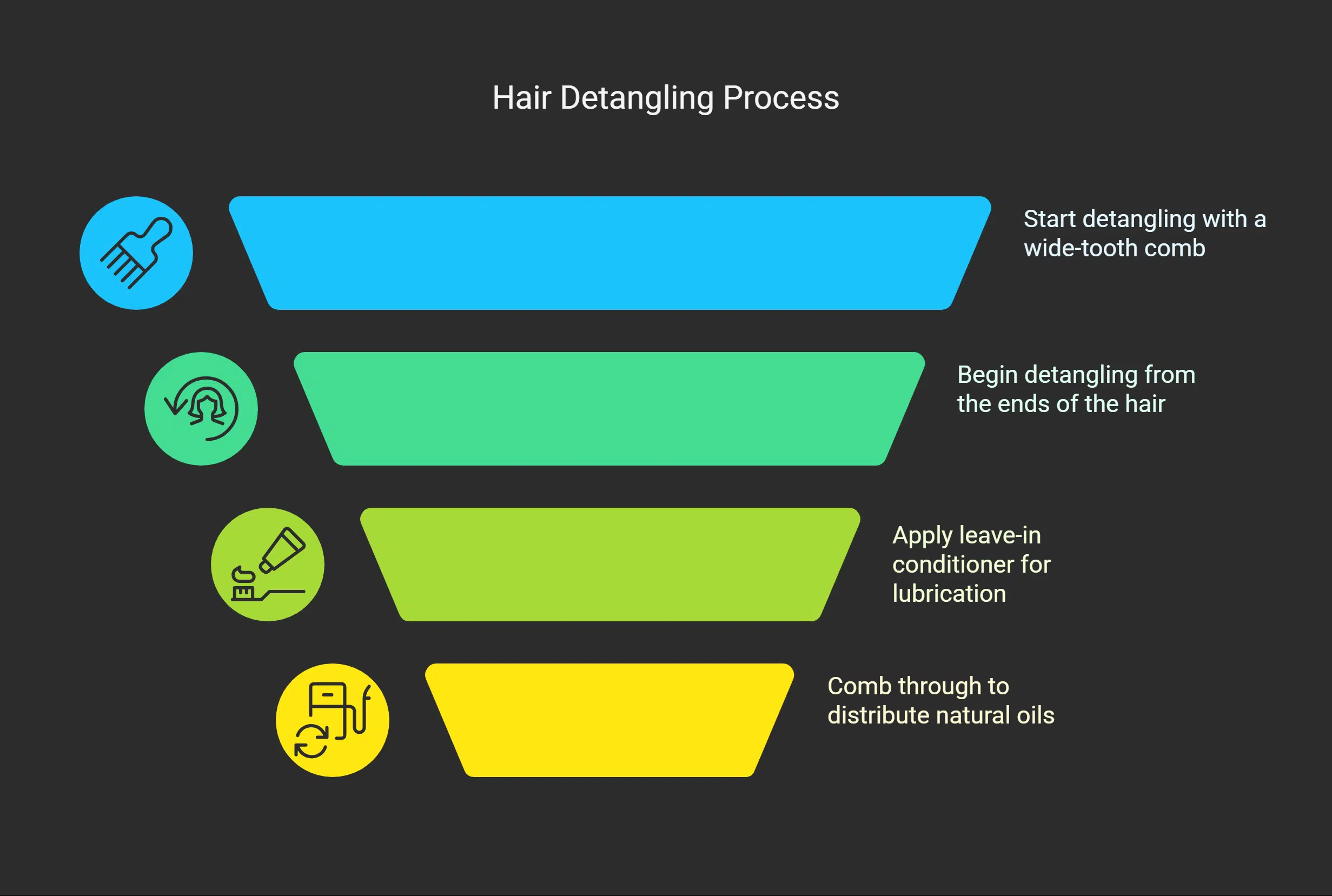
Grab a comb for your wet hair, start at the ends, and watch knots melt like butter—read on to learn more.
Use a wide-tooth comb or detangling brush
Give wet hair a fighting chance with a comb with wide teeth or a tangle-taming brush. Slide teeth through ends of your hair, then climb up to roots. This method stops hair from getting so tangled and reduces breakage.
Fine hair tangles fast. A detangling brush helps deal with knots and tangles on damp hair and cuts down tugging on the hair. It fits all hair types and textures and makes brushing painless.
Start detangling from the ends, working upward
Fingers act as a gentle tool to loosen knots. They cut breakage at the ends before the comb ever touches hair. Slide a comb with wide teeth through damp hair with conditioner. Lift each section from the tips to the mid-lengths, then move to the roots.
This trick helps when your hair gets so tangled after a windy day or a tight ponytail.
After untwisting knots with fingers, pick a brush. Work in small strands, easing tangles upward as you detangle your hair. Drop a bit of leave-in conditioner on wet strands. This step stops split ends and rough cuticles.
It works for fine, curly, or textured hair, and cuts stress when you brush my hair in the morning.
Detangle gently on damp or conditioned hair
Dampen strands after your shower. Spread a leave-in detangler or hair conditioner along your strands. It helps condition your hair without heavy buildup. These products act as lubrication during combing.
Grab a wide-tooth comb or detangling brush. Swipe slowly from ends toward roots for smooth strokes. These tools glide through damp hair with ease.
Comb through each section to redistribute natural oils. This step tames fresh knots and fights frizz. A detangling brush tames strands when your hair keeps getting snarled. You’ll find your mane stays soft and smooth.
Takeaways
Tangles can frustrate anyone, but you can tame them with smart care. A wide-tooth comb and a soft detangling brush glide through knots, protecting each strand. Sleep on a silk pillowcase, and use light hair serum to lock in moisture and shield cuticles.
Trim split ends, skip harsh heat tools, and sail through windy, humid days with smooth hair.
FAQs
1. Why does my hair get tangled so easily?
Ever wondered why your hair fights you? Here’s why your hair snags. The outer layer of your hair is made of tiny scales. They lift up, grab other strands. Then hair becomes a nest of knots. Your mane, like a horse’s, adds more knots when you run your fingers through.
2. Do hair extensions or artificial hair integrations cause more tangles?
Yes, extensions add weight and extra strands. Artificial hair integrations can rub on your own hair. This makes tangles worse, especially if your hair is long. Making your hair neat takes extra care with added fibers.
3. Why do hair products like hair mousse, hair spray or other hairstyling product cause hair to tangle?
These hair products leave a sticky layer. Mousse and spray build up over time. Pollution and dust stick too. All that gunk contributes to tangling. It’s best to wash well and use a light conditioner.
4. Can braiding your hair or tying your hair help reduce tangles while I sleep in my bed?
Yes, tie your hair in a loose bun or braid before bed. This cuts down on rubbing your hair on the sheets. It helps keep your hair neat all night. You wake up with fewer knots.
5. How do I detangle my hair before rinsing or after washing my hair?
Apply a conditioner and let it sit. Detangling your hair while hair is still damp is key. Use your fingers through your hair to ease knots. Then try gentle brushing techniques. Always start at the ends and work up.
6. How do I care for different types of hair to keep it smooth?
Hair in different types, like thin or thick, needs special steps. Tailored to your hair type, pick a serum or oil. Give your hair a slip that helps keep hair flowing. Even blond locks will thank you. Making small changes can cut knots.