


Thinking about getting a Christina piercing but unsure what it looks like? You’re not alone. Many people wonder how this unique surface piercing sits on the pubic mound and what to expect before taking the plunge.
A Christina piercing is purely decorative, placed at the top of the vulva where the outer labia meet. It doesn’t boost sexual sensation but can add confidence and style.
This guide will show you exactly “what does a Christina piercing look like,” explain how it’s done, and teach you how to care for it properly. Stay tuned!
Key Takeaways
- A Christina piercing is a surface piercing at the top of the vulva where the outer labia meet. It may use jewelry like a curved barbell or J-bar.
- The process includes cleaning, marking, and using a sterilized needle. Pain is rated 3-4 out of 10, and it takes just minutes to finish.
- Aftercare needs daily saline cleaning, avoiding tight clothes, no swimming, and staying away from sexual activity until healed.
- Healing requires soft tissue in the pubic area for proper placement; not everyone’s anatomy allows for this piercing.
- Always choose a trained piercer to avoid risks like infection or rejection signs such as redness or swelling.
What Does a Christina Piercing Look Like?
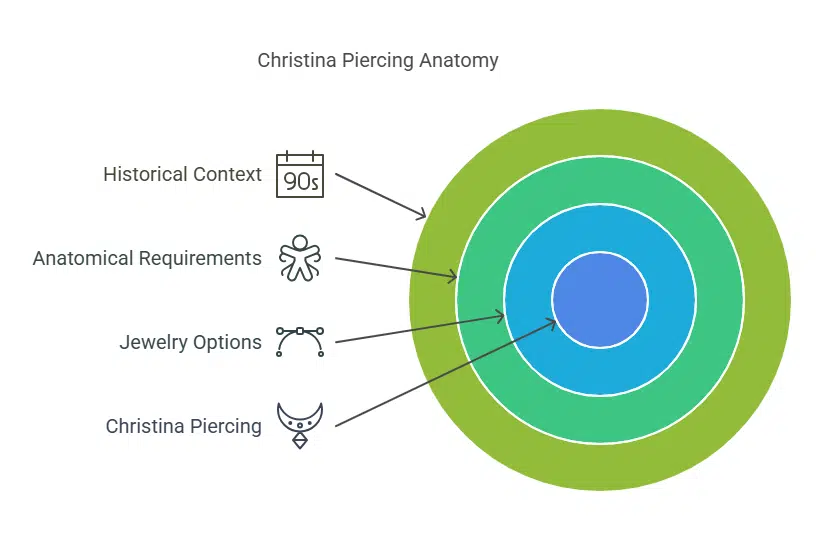
A Christina piercing sits at the top of the vulva, near the pubic mound. It runs from where the outer labia meet to just above the clitoral hood. This female genital piercing does not go through deep tissue but lies on the surface.
Jewelry options include a curved barbell, J-bar, or surface bar, giving it an elegant look. The area must have enough soft tissue and a natural dip for proper placement. Without this anatomy, getting one might not be possible.
Introduced in the 1990s and named after Christina—its first wearer—the design has remained unique yet subtle over time.
The Piercing Process and Pain Level
The Christina piercing process is simple but requires care. Professionals follow a safe and clean procedure to ensure comfort.
- The piercer first checks if you have suitable anatomy. This step is key for a successful piercing on the mons venus area.
- They clean and disinfect the pubic mound to prevent infections. This ensures the skin is ready for the needle.
- Next, they mark where the surface piercing will go. This helps guide them during the process.
- After marking, they ask you to take deep breaths to relax. It helps reduce tension and pain.
- A sterilized needle creates the hole for the jewelry insertion quickly. Most people rate the pain between 3-4 out of 10.
- Finally, they insert your chosen jewelry securely in place. Jewelry costs usually range from $40-$80 depending on material and style.
- The entire process takes only a few minutes but requires focus from both you and the piercer.
Aftercare for a Christina Piercing
Taking care of a Christina piercing helps it heal. Follow these steps for proper aftercare.
- Clean the area twice daily using sterile saline spray, like NeilMed or H2Ocean. This keeps bacteria away.
- Shower every day to keep the piercing site clean and fresh. Avoid scrubbing or harsh soaps near it.
- Wear a sanitary pad or panty liner to reduce friction from clothing or movement. This helps protect the outer labia area.
- Avoid tight clothes that might press on the piercing. Soft, loose-fitting materials work best during healing.
- Skip sexual activity until fully healed to avoid irritation and infection risks.
- Stay out of swimming pools, hot tubs, and oceans during healing time to prevent exposure to germs.
- Check the jewelry daily for loose beads caused by movement. Tighten them gently if needed.
- Watch for signs of rejection, like redness or swelling that doesn’t improve, as improper depth may cause issues.
Takeaways
A Christina piercing is unique and stylish. It adds charm to the pubic mound area. Proper care helps it heal well and stay beautiful. Follow aftercare steps closely for the best results.
Always choose a skilled piercer for safety and comfort.
FAQs on What Does a Christina Piercing Look Like
1. What is a Christina piercing?
A Christina piercing is a surface piercing located on the pubic mound, above the clitoral hood and between the outer labia.
2. How does a Christina piercing look?
It sits vertically at the top of the vulva, with jewelry visible on the surface of the pubic mound. It does not pass through inner labia or clitoris tissue.
3. Is a Christina piercing different from a clitoral hood piercing?
Yes, it is different. A Christina piercing goes through skin on the pubic area, while a clitoral hood piercing involves tissue around or over the clitoris.
4. What should I know about aftercare for this type of piercing?
Clean it gently with saline solution and avoid touching it unnecessarily. Be careful with clothing to prevent irritation near your outer labia and pubic mound during healing time.