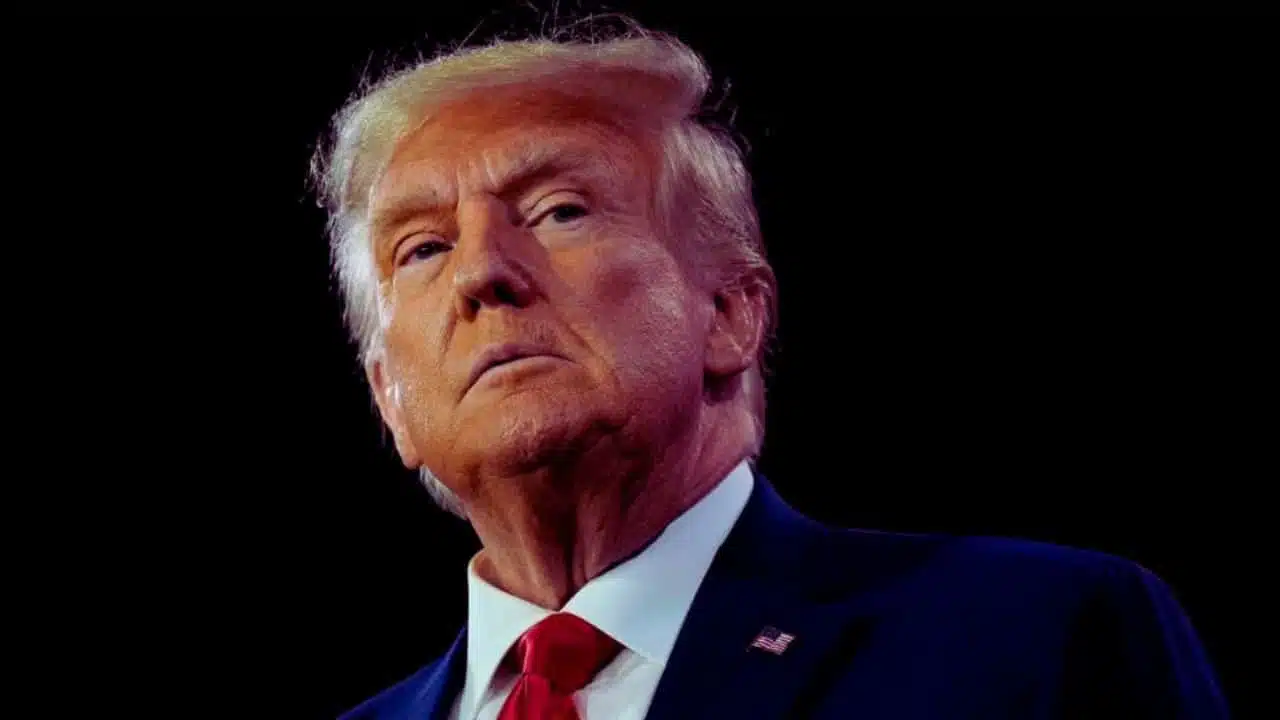
In a rare move, the U.S. Supreme Court has agreed to hear arguments in November 2025 on whether President Donald Trump exceeded his authority when he imposed sweeping tariffs on imports under emergency powers. The justices accepted an accelerated timetable, far faster than their typical review process, underscoring the urgency and significance of the dispute.
The case has major implications for U.S. trade, constitutional separation of powers, and the global economy. Small businesses, states, and industry groups challenging the tariffs argued that prolonged uncertainty is crippling their operations, while the administration insisted a delay would undermine the country’s negotiating position abroad. Both sides urged the Court to take the matter up immediately, and the justices agreed.
What Sparked the Case: Emergency Tariffs Under IEEPA
The tariffs at issue were imposed earlier this year under the 1977 International Emergency Economic Powers Act (IEEPA), a law designed to give presidents temporary authority to regulate commerce during national emergencies. Trump declared such an emergency and used the law to levy duties on a wide array of goods, covering imports from countries as varied as China, Canada, Mexico, and members of the European Union.
Unlike more traditional tariff measures—which require Congressional approval or are tied to anti-dumping or national security reviews—these emergency tariffs were sweeping and immediate. Critics say Trump effectively bypassed Congress, which the Constitution explicitly gives the power to set tariffs and regulate trade. Supporters counter that Congress has gradually delegated much of its tariff authority to the executive branch in recent decades, and Trump simply took full advantage of that shift.
Who Is Challenging the Tariffs
The legal challenges have come from multiple fronts:
-
Small Businesses: Many importers argue that sudden tariffs nearly pushed them into bankruptcy by raising costs overnight and cutting off suppliers. A family-owned toy company, Learning Resources, became one of the lead plaintiffs, claiming its business model was nearly destroyed.
-
State Governments: Twelve Democratic-led states joined lawsuits, contending that Trump’s broad emergency declarations are unconstitutional and harmful to state economies.
-
Trade Groups: Industry coalitions representing retailers, manufacturers, and logistics firms say the tariffs disrupted supply chains and drove up consumer prices.
Together, these groups argue that IEEPA was never meant to give presidents blanket authority to impose tariffs for economic leverage. They stress that if Trump’s interpretation stands, future presidents could use the same law to fundamentally reshape trade policy without Congressional oversight.
Lower Court Decisions and Legal Limbo
Two lower federal courts already reviewed the matter and concluded that most of Trump’s tariffs were unlawfully imposed. Judges held that IEEPA did not give the president unlimited power to rewrite tariff schedules. However, when the case reached the U.S. Court of Appeals, a divided panel voted 7-4 to let the tariffs remain in effect while appeals continue.
This left the tariffs in legal limbo: businesses and consumers are still paying them, while their legality is under review. For small companies and importers, the wait for a final answer has been devastating.
The Economic Stakes: Billions in Tariff Revenue
Since Trump re-entered the White House in January 2025, tariffs have become a central pillar of his foreign and economic policy. According to U.S. Treasury data, tariff revenue reached $159 billion by late August 2025, more than double the amount collected during the same period a year earlier.
These funds are filling federal coffers, but they are also reshaping trade flows, souring relations with allies, and fueling volatility in global markets. Economists warn that if the Supreme Court invalidates the tariffs, the Treasury might be forced to issue massive refunds to businesses, potentially totaling tens of billions of dollars.
Constitutional Questions at the Core
At its heart, the case is about executive power versus Congressional authority. The U.S. Constitution clearly assigns Congress the responsibility to set tariffs and taxes on imports. But Congress has, over decades, gradually ceded more leeway to presidents through laws like IEEPA and the Trade Expansion Act.
The Supreme Court will now decide whether Trump’s sweeping use of emergency powers to impose tariffs crosses a constitutional line. The outcome could either rein in presidential power or set a precedent that future leaders can unilaterally impose wide-ranging tariffs by declaring emergencies.
Adding further complexity, three of the current justices were appointed by Trump himself, and the Court has in recent years generally upheld broad interpretations of presidential power. Analysts say this makes the case both unpredictable and historic.
Administration’s Arguments
The Trump administration has urged the Court to uphold the tariffs, warning that blocking them could trigger economic turmoil. Officials argue:
-
Tariffs are essential for ongoing negotiations with trade partners.
-
The Treasury would face severe financial strain if forced to refund collected duties.
-
Curtailing tariff authority could weaken U.S. efforts to pressure adversaries, including China, Russia, and Mexico.
-
Emergency powers are necessary to respond swiftly to threats such as the flow of fentanyl into the United States.
The administration also insists that past Congressional decisions to grant emergency powers show clear intent to allow presidents broad flexibility in managing imports during crises.
Broader Impact on Trade Policy
The Supreme Court’s ruling will affect far more than just Trump’s current tariffs. It could redefine the scope of presidential authority in economic policymaking.
-
If upheld: Presidents—Republican or Democrat—would gain unprecedented power to impose tariffs without Congressional involvement, potentially altering the global trade system.
-
If struck down: The decision would reassert Congressional control over tariffs, limit future use of IEEPA for economic measures, and possibly force refunds of duties already collected.
The ruling could also influence how the U.S. manages global issues like supply chain security, international sanctions, and foreign policy leverage.
What Happens Next
Arguments are set for November 2025, with a decision likely by early 2026. Until then, the tariffs remain in place. Economists expect markets to remain volatile as traders, importers, and exporters await clarity. Businesses warn that uncertainty itself is as damaging as the tariffs, making long-term planning nearly impossible.
The case is shaping up to be one of the most consequential tests of executive power in decades. It is not only about trade but also about whether emergency statutes can be stretched to justify sweeping policies that bypass the legislative branch.
The Supreme Court’s decision to fast-track the case on Trump’s emergency tariffs highlights the extraordinary weight of the dispute. On one side are businesses, states, and economists who say the president overreached, destabilizing both the economy and the Constitution. On the other is the administration, insisting that tariffs are a vital tool for protecting American interests and must remain within the president’s unilateral control.
Whatever the outcome, the ruling will set a precedent for how much power future presidents can wield over global trade and economic policy. For now, small businesses, international partners, and financial markets remain in suspense, waiting for the highest court to decide the boundaries of presidential authority.