

Ultradian rhythms are natural biological cycles shorter than 24 hours that regulate energy levels, cognitive performance, and alertness. While circadian rhythms manage your overall sleep-wake cycle over 24 hours, ultradian rhythms run in smaller oscillations throughout the day, typically lasting between 90 and 120 minutes.
Aligning daily work habits with these natural ultradian rhythms allows you to maximize deep focus, avoid mid-afternoon crashes, and maintain steady energy without over-relying on caffeine or sugar.
| Metric | Circadian Rhythms | Ultradian Rhythms |
| Cycle Duration | Approximately 24 hours | 90 to 120 minutes |
| Primary Function | Sleep-wake regulation, body temperature control | Cognitive alertness, focus cycles, metabolic recovery |
| Biological Driver | Suprachiasmatic nucleus, light exposure | Basic Rest-Activity Cycle (BRAC), autonomic nervous system |
| Key Output | Melatonin and cortisol shifts | Adenosine accumulation, brainwave frequency changes |
| Workplace Impact | Determines peak alertness windows across the day | Dictates length of uninterrupted deep focus blocks |
The Physiology Behind Ultradian Rhythms
Sleep researcher Nathaniel Kleitman pioneered the study of ultradian cycles while investigating Rapid Eye Movement (REM) sleep. Kleitman discovered that the human brain moves through recurring 90-minute sleep stages. He later established that this same timing mechanism operates during waking hours, naming it the Basic Rest-Activity Cycle (BRAC).
Throughout the workday, your body shifts between active exertion and natural recovery through several connected internal systems.
Neurological Brainwave Shifts
During the initial high-energy phase of an ultradian cycle, your brain operates primarily in fast beta and gamma wave frequencies. These brainwaves drive analytical thinking, rapid processing, and intense concentration.
As you approach the end of a 90-minute block, brainwave activity slows into alpha states (relaxed alertness) and theta states (deep rest). This natural slowing down lowers processing speed, signaling that your brain needs a brief mental break.
Autonomic Nervous System Regulation
Ultradian cycles reflect ongoing adjustments between two branches of your autonomic nervous system:
-
Sympathetic Nervous System (SNS): Powers the active phase of the cycle by increasing heart rate, channeling blood flow to muscles, and sharpening mental focus.
-
Parasympathetic Nervous System (PNS): Takes over during the recovery phase to lower heart rate, slow breathing, and redirect bodily resources toward cell repair and energy restoration.
Key Biomarkers and Chemical Signals
-
Cortisol and Blood Glucose: At the start of an ultradian cycle, cortisol and blood glucose levels rise to fuel mental activity. Toward the end of the wave, available glucose drops, leading to shorter attention spans.
-
Adenosine Accumulation: The metabolic byproduct adenosine builds up in the brain during continuous mental exertion. Higher adenosine levels create natural feelings of fatigue, letting you know it is time to step away.
-
Heart Rate Variability (HRV): High HRV indicates a resilient, well-rested nervous system. When you work for extended periods without taking breaks, HRV drops, signaling elevated physiological stress.
The Anatomy of a 90-Minute Ultradian Wave
A standard ultradian cycle unfolds predictably across distinct physiological stages.
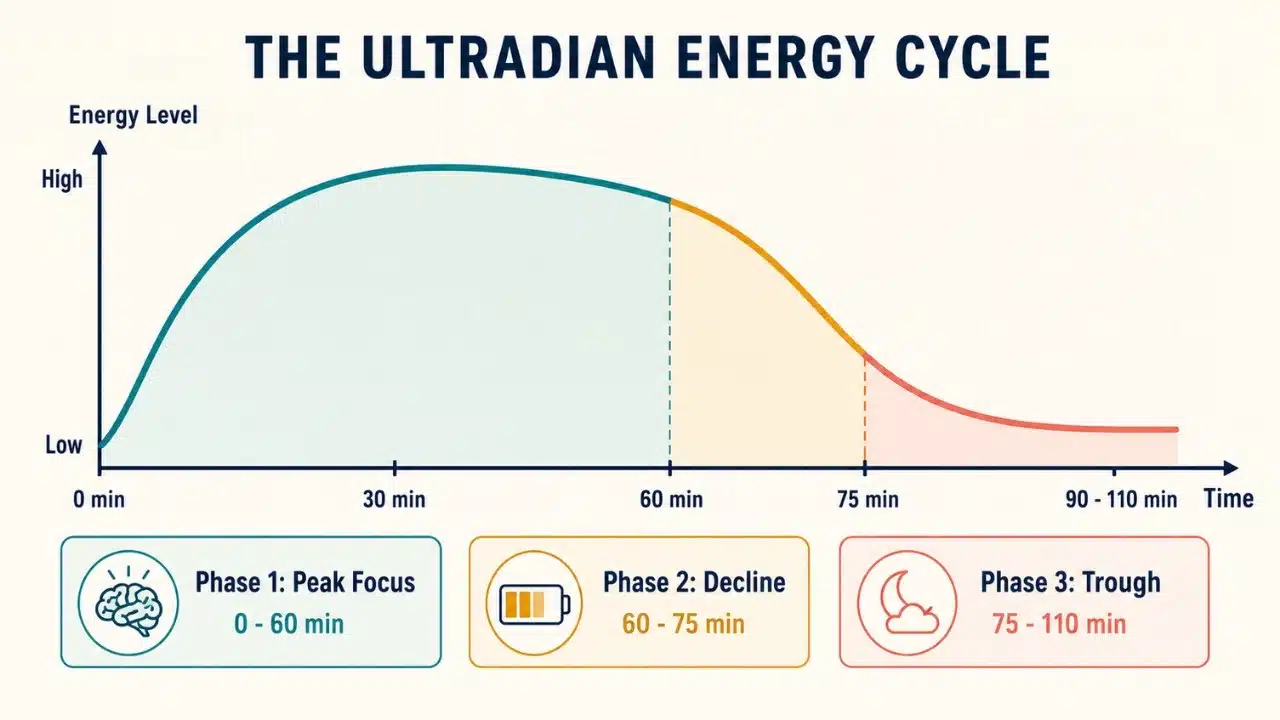
| Cycle Phase | Timeframe | Brain State | What Is Happening Biologically |
| Phase 1: Peak Alertness | 0 to 60 minutes | High Beta & Gamma waves | Peak cognitive bandwidth. The sympathetic nervous system is fully engaged, mental focus is sharp, and distraction resistance is highest. |
| Phase 2: Energy Decline | 60 to 75 minutes | Transition to Alpha waves | Cognitive reserves begin to drain. Subtle fatigue signs appear, including eye strain, mild physical restlessness, or subtle distraction. |
| Phase 3: Recovery Window | 75 to 90+ minutes | Alpha & Theta waves | Adenosine levels peak and parasympathetic activity takes over. The brain requires 15 to 20 minutes of true rest to clear metabolic waste and reset focus. |
Trying to push through the natural recovery phase forces your body to launch a stress response, pumping out extra cortisol and adrenaline. While this survival mechanism allows you to continue working short-term, it degrades overall work quality and causes deeper exhaustion later in the day.
Comparing Work-Rest Frameworks
Different productivity methods organize work sessions around varying time windows. Matching these frameworks to your specific physiological needs helps you pick the right schedule for your workload.
| Framework | Work Interval | Rest Interval | Physiological Alignment | Best Application |
| Classic 90/20 Ultradian Cycle | 90 minutes | 20 minutes | High: Matches natural BRAC biological oscillations | Deep work, complex problem solving, long-form writing |
| 52/17 Desktime Rule | 52 minutes | 17 minutes | Medium: Aligns with peak focus before fatigue begins | Administrative tasks, data entry, general office work |
| 25/5 Pomodoro Technique | 25 minutes | 5 minutes | Low: Intercepts natural focus before peak state is reached | Overcoming task inertia, rapid email sweeps, routine chores |
| Intuitive Energy Mapping | Variable (60 to 90 mins) | Variable (10 to 20 mins) | High: Adapts directly to real-time biological cues | Creative work, unpredictable schedules, unstructured tasks |
Practical Implementation in the Workplace
Setting up your workday around ultradian rhythms requires protecting your focus windows and taking real recovery breaks.
Structure Work into 90-Minute Focus Blocks
Schedule your hardest, most important tasks into uninterrupted 90-minute blocks. Silence phone notifications, close extra browser tabs, and block off your calendar to protect your mental energy from external interruptions.
Practice Genuine Recovery During Breaks
A real break must lower nervous system stress so your brain can reset. Checking social media, watching online videos, or reading news feeds keeps your brain in a high-frequency processing state, which prevents actual recovery.
Simple ways to rest effectively include:
-
Taking a 10 to 15 minute walk outside to get sunlight and movement.
-
Practicing box breathing or non-sleep deep rest (NSDR) to trigger parasympathetic recovery.
-
Drinking water and eating a light snack to rebuild blood glucose levels.
-
Stepping completely away from screens to give your eyes a break.
Match Work Blocks to Your Chronotype
Ultradian rhythms operate within your larger chronotype pattern:
-
Morning Types (Larks): Natural energy peaks hit early in the day. Schedule deep analytical tasks between 8:00 AM and 11:30 AM.
-
Evening Types (Owls): Cognitive alertness peaks later in the afternoon or evening. Reserve late afternoon for intensive focus sessions.
Track Your Daily Energy Patterns
For three to five days, record your focus levels on a scale from 1 to 10 every hour. Noting when you naturally feel sharp or sluggish helps you map your unique ultradian cycles and build a schedule tailored to your body.
Common Pitfalls in Energy Management
-
Masking Fatigue with Caffeine: Drinking coffee or energy drinks to force your way through an ultradian dip triggers a stress hormone release. This creates a temporary burst of fake energy followed by a severe crash.
-
Relying on Screen Breaks: Scrolling through apps or responding to personal texts during breaks keeps cognitive processing centers active, leaving you tired for your next work block.
-
Following Timers Too Rigidly: While focus timers provide helpful structure, ignoring physical signals like muscle tension, eye strain, or head tightness just to finish a clock countdown defeats the purpose of tracking natural energy.
-
Ignoring Environment Distractions: Trying to maintain a 90-minute focus window in an environment filled with noisy interruptions splits your attention, shortening your peak alertness phase.
Building a High-Performance Energy Routine
Working with your ultradian rhythms turns productivity into a balanced, natural routine. Organizing your workday around focused 90-minute work blocks followed by intentional rest helps you stay sharp, produce high-quality work, and avoid chronic fatigue. Start by identifying your strongest energy windows, listen to your body when it asks for rest, and design your daily habits around your natural internal rhythm.