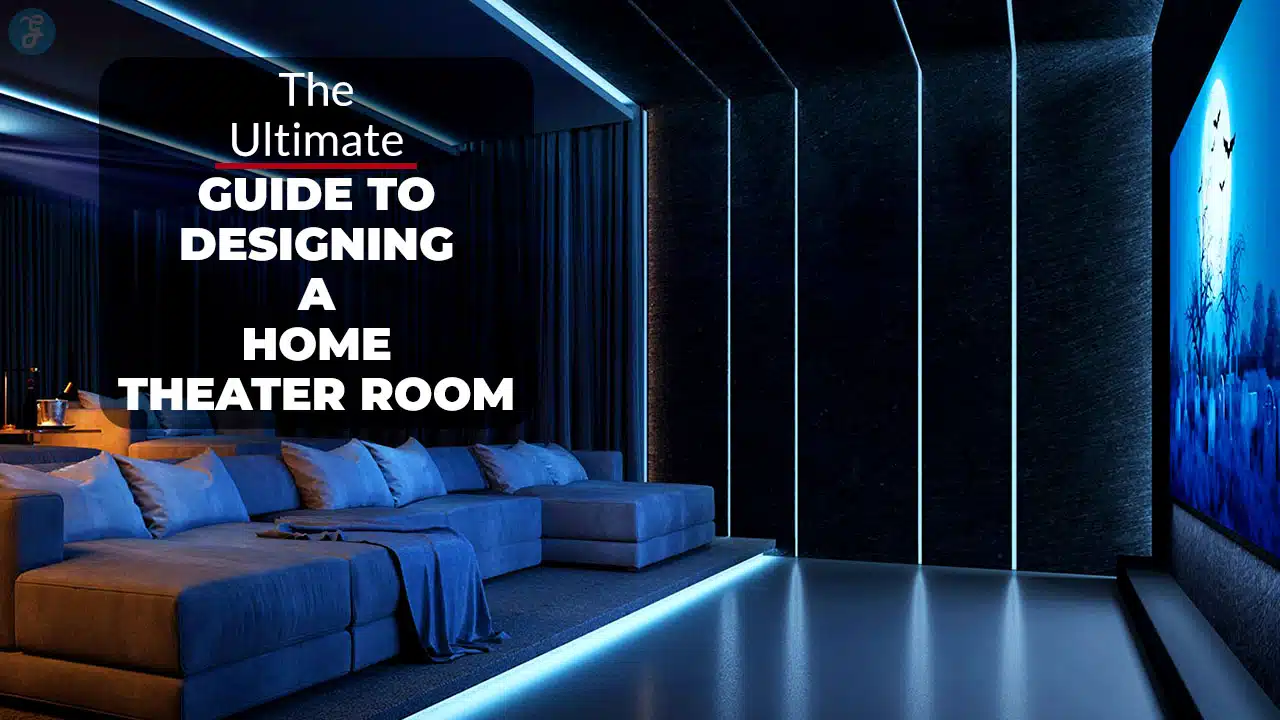
Creating your own home theater room is a dream for many people who appreciate cinematic experiences, and it’s more achievable than ever.
Whether you’re looking to upgrade your current media space or build a dedicated movie sanctuary from the ground up, this Ultimate Guide to Designing a Home Theater Room provides all the information you need to create the perfect setup.
From selecting the right equipment to fine-tuning acoustics, lighting, and design, every aspect of home theater design is covered. Let’s dive into this comprehensive guide and transform your home into a cinematic haven.
Introduction to Home Theater Room Design
A home theater room isn’t just a luxury—it’s an investment that can significantly enhance your home’s entertainment value. In today’s world, where we spend a lot of time indoors, having a space dedicated to entertainment can be a game-changer.
With advancements in technology, creating a cinematic experience at home is easier than ever. A home theater allows you to enjoy the latest movies, TV shows, and sports events in high definition with surround sound, all from the comfort of your own space.
Not only does a home theater improve your personal enjoyment, but it can also boost your home’s resale value. Potential buyers are often drawn to well-designed, tech-savvy homes that include entertainment rooms, which could increase the appeal of your property in the market.
What Makes a Great Home Theater Room Design?
A great home theater room combines several key elements to provide an immersive, enjoyable experience. While the most obvious components are the screen and sound system, the design and layout of the room also play a significant role. The following factors contribute to a high-quality home theater design:
- Optimal Viewing Experience: Ensuring a comfortable and clear view of the screen from every seat in the room.
- High-Quality Audio: A surround sound system that creates an immersive audio environment to accompany the visuals.
- Comfortable Seating: Adjustable and ergonomic seating that enhances the experience for long movie sessions.
- Aesthetic Design: An atmosphere that complements the visual experience, from the lighting to the décor.
Throughout this guide, we’ll delve into how to integrate these elements into your design, offering practical tips and professional advice.
Planning Your Home Theater Room
When designing your home theater, the first step is determining the available space. This is crucial because your room’s size and shape will dictate how you position everything—screen, speakers, and seating. If you’re transforming an existing room, take the time to measure and understand its limitations.
Room Size and Layout: Ideally, a rectangular room is best for a home theater, as it allows for better viewing angles and sound distribution. However, even square rooms can work with the right planning. If you have a small room, be aware that screen size and sound quality may be affected, requiring additional considerations for both.
Space Planning Tips:
- Screen Size: The screen should be large enough to be immersive but not so large that it overwhelms the room. A good guideline is to choose a screen that is one-third the distance of the seating area.
- Seating Capacity: Consider how many people you expect to be in the room. Ensure you have adequate space for comfortable seating without crowding.
Practical Considerations:
- If you’re working with a limited space, opt for a flat-screen TV instead of a projector. A projector needs more room for both the screen size and optimal throw distance.
- For smaller rooms, a 4K projector with a bright image will ensure crisp visuals even in less-than-ideal lighting conditions.
Key Factors to Consider Before You Start Designing
Now that you’ve chosen your space, it’s time to think about several other key factors: room dimensions, acoustics, lighting, and more. Let’s break them down.
Room Dimensions and Layout
Room size influences every aspect of your theater design. A larger room allows for a bigger screen, more flexible seating arrangements, and more powerful sound systems. A smaller room may require you to scale down your choices but can still be designed for a great experience.
| Room Size (sq ft) | Ideal Screen Size | Viewing Distance | Best Seating Arrangement |
| 150-200 | 65-75 inches | 8-10 feet | 2-3 rows of seats |
| 200-300 | 75-100 inches | 10-12 feet | 3-4 rows of seats |
| 300+ | 100+ inches | 12+ feet | Multiple seating tiers |
Acoustic Considerations
When designing a home theater room, the acoustics are just as important as the visuals. Poor acoustics can ruin the immersive experience, no matter how expensive your system is.
- Reflection & Absorption: Hard surfaces (like drywall, tiles, and glass) can cause sound to bounce around the room, resulting in echoes. Acoustic panels can help absorb sound and prevent reflection, creating a clearer, more precise audio experience.
- Bass Issues: Low-frequency sounds (like explosions or rumbling) can cause problems with sound clarity in small rooms. Bass traps can help control these low-end frequencies and ensure that the bass doesn’t overwhelm the rest of the sound.
Lighting and Ambience
Lighting is another crucial factor in creating the ideal home theater experience. The right lighting can set the mood and enhance the visuals without interfering with your screen. Here’s how to approach lighting:
| Type of Lighting | Purpose | Recommended Features |
| Ambient Lighting | General lighting in the room | Dimmer switches or smart lighting |
| Task Lighting | Functional lighting for seating or equipment | Recessed lighting or LED strips behind the screen |
| Accent Lighting | Adds aesthetic appeal | LED strips, sconces, or backlighting |
Opt for dimmable lighting, so you can adjust it to suit the situation. Ambient lighting should be soft and indirect, while accent lighting like LED strips can add a cinematic flair to the room.
Essential Equipment for a Home Theater Room
The screen is the centerpiece of your home theater room. Choosing the right screen is essential to creating an immersive experience.
Projector vs. Flat-Screen TV
The debate between projectors and flat-screen TVs is common when designing a home theater room. Here are the pros and cons of each:
- Projectors: Offer a cinematic experience with larger screen sizes (100-120 inches). However, they require more space, a dark room for optimal viewing, and careful setup.
- Flat-Screen TVs: Offer easy installation and generally require less space. However, the largest models (above 85 inches) are still much smaller than what projectors can offer.
Screen Size and Aspect Ratio
Screen size plays a significant role in the viewing experience. The ideal screen size is typically between 100-120 inches, but this can vary depending on your room’s dimensions. Aspect ratio refers to the width and height of the screen. Common ratios include:
- 16:9 (HD): Perfect for movies and TV shows.
- 2.35:1 (CinemaScope): Ideal for cinematic widescreen experiences.
Sound System Options
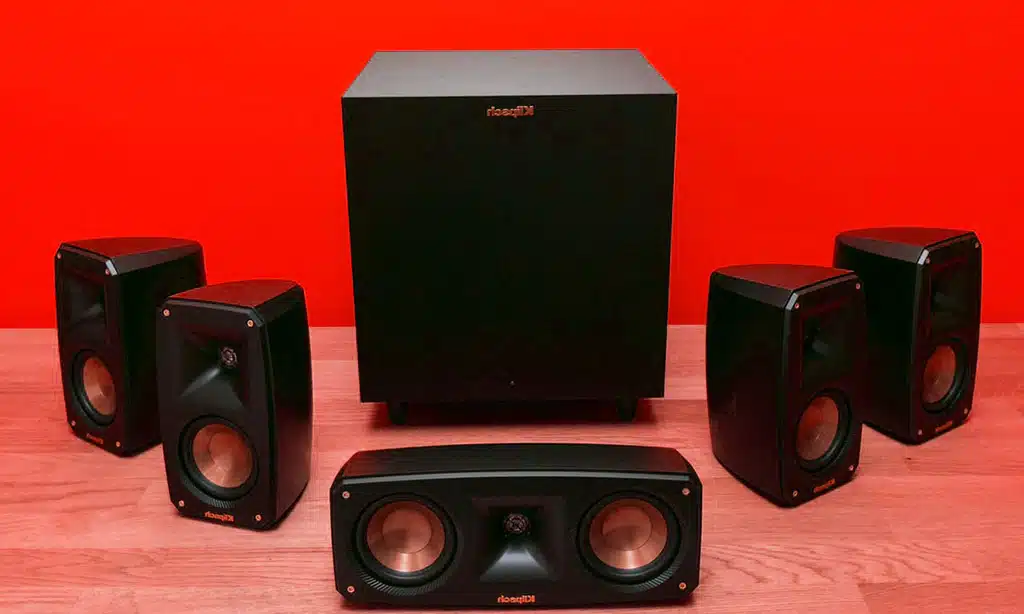
A key component of home theater design is the sound system. Sound is what immerses you in the action, so you need a setup that delivers high-quality audio.
| System Type | Pros | Cons |
| 5.1 Surround | Classic setup, immersive, affordable | Requires more speakers and setup |
| 7.1 Surround | Enhanced depth and dimension | Requires more space and setup |
| Soundbars | Compact, easy to set up, budget-friendly | Less immersive than surround sound |
Surround Sound vs. Soundbars
- Surround Sound: For a truly immersive experience, a 5.1 or 7.1 surround system is ideal. Surround systems consist of multiple speakers placed around the room to create a 360-degree audio experience.
- Soundbars: If you’re working with limited space or prefer a simpler setup, soundbars are an excellent option. Advanced models like Dolby Atmos-enabled soundbars simulate surround sound, providing an immersive experience without the need for multiple speakers.
Acoustic Treatment and Speaker Placement
When placing your speakers, consider the following:
- Front Speakers: Should be placed at ear level for clear sound.
- Surround Speakers: Ideally placed on the sides or behind the seating area for an enveloping experience.
- Subwoofer: Can be placed anywhere in the room, but avoid corners where bass frequencies may become too boomy.
Seating Arrangements
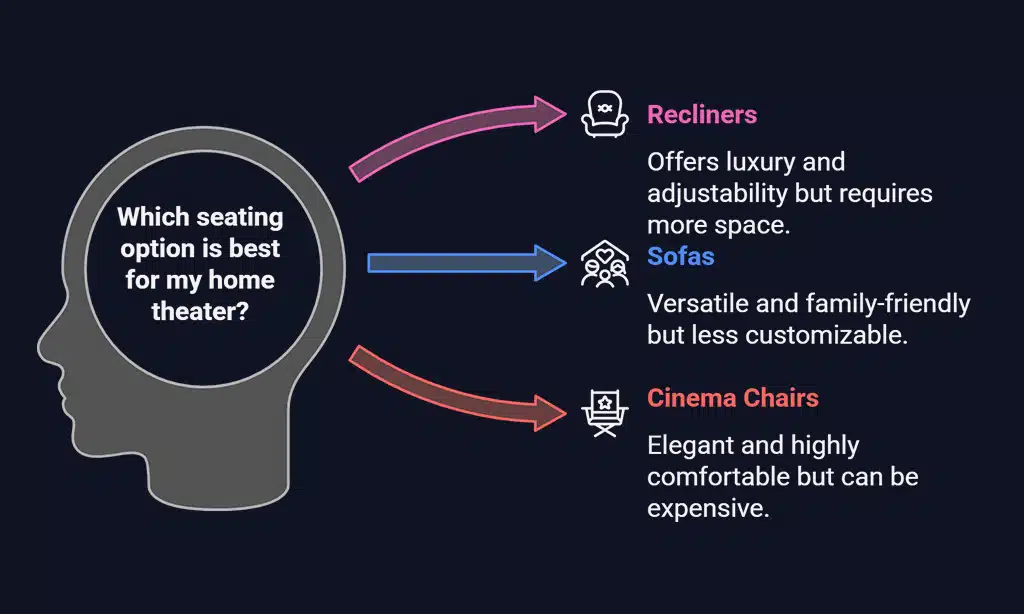
Comfortable seating is a crucial part of any home theater. You want seats that offer ample support for long viewing sessions while also being arranged in a way that allows everyone a perfect view of the screen.
| Seating Option | Pros | Cons |
| Recliners | Comfortable, adjustable, luxurious | Takes up more space |
| Sofas | Versatile, great for families | Less customizable |
| Cinema Chairs | Professional, elegant, highly comfortable | Can be expensive |
Make sure seating is arranged so that every viewer has a clear sightline to the screen. For larger rooms, consider tiered seating or adding risers to elevate the back row.
Designing the Perfect Home Theater Experience
Lighting is crucial to setting the right tone for your home theater room. Incorporating multiple types of lighting—ambient, task, and accent lighting—can elevate the space, making it feel like a true cinema.
Dimmable Lighting Options
Smart lighting options allow you to control the intensity of light and even adjust the color to suit the mood. Use dimmable fixtures to adjust the lighting as needed for different activities (e.g., watching movies, gaming, or socializing).
LED Lighting and Ambient Effects
Adding LED strip lights behind your screen, along the walls, or under your seating can give your home theater room a futuristic look. It also prevents your eyes from becoming strained during long movie nights, making the viewing experience more comfortable.
The Importance of Acoustic Design
A well-designed home theater room requires more than just good equipment; it needs to be acoustically optimized to provide the best sound quality.
Soundproofing Tips
Use thick carpets, heavy curtains, and foam panels to absorb sound and reduce external noise. Mass-loaded vinyl sheets and acoustical caulk can be used to seal gaps around windows and doors to prevent sound leakage.
Acoustic Panels and Bass Traps
Acoustic panels are a must for controlling sound reflections. Bass traps placed in the corners help manage low-frequency sounds, ensuring that your audio is clear and balanced across all ranges.
Optimizing Room Layout for the Best Viewing and Listening Experience
Arrange your seating and audio equipment so that every viewer enjoys an unobstructed view and optimal sound. A common layout is to have the screen as the focal point, with seating rows facing it directly.
Home Theater Room Decoration Ideas
Themed home theater rooms add a fun, personalized touch. From classic Hollywood cinema designs to modern minimalist styles, here are some ideas for creating a unique atmosphere:
- Retro Cinema: Vintage movie posters, classic cinema seating, and a popcorn machine can transport you to the golden age of film.
- Futuristic Design: Sleek, modern furniture and LED lighting can give your theater room a futuristic, sci-fi feel.
Integrating Furniture and Decor with the Room’s Theme
Your furniture should complement the overall theme of your home theater room. If you’re going for a classic cinema look, consider plush velvet chairs or vintage movie props. For a modern, minimalist design, focus on clean lines and neutral tones.
Budgeting and Cost Considerations
Costs for a home theater can range from as low as $2,000 for a basic setup to upwards of $10,000 for high-end systems with premium equipment. Here’s a breakdown of what you can expect to spend:
| Item | Estimated Cost Range |
| Screen | $300 – $4,000 |
| Projector | $500 – $3,500 |
| Sound System | $500 – $5,000 |
| Seating | $200 – $2,000 |
| Lighting & Decor | $200 – $1,000 |
Affordable Design Tips for a Budget-Friendly Home Theater
- Buy Refurbished: Consider purchasing refurbished projectors or speakers to save money.
- DIY Acoustic Panels: You can make your own acoustic panels with materials like foam, fabric, and wood.
- Use Existing Furniture: Instead of buying new furniture, repurpose pieces you already own, or buy second-hand items in good condition.
Wrap Up
Designing a home theater room can be an exciting and rewarding project. With careful planning, the right equipment, and attention to detail, you can create a cinema experience that rivals commercial theaters.
By following this Ultimate Guide to Designing a Home Theater Room, you’ll be equipped with all the information you need to turn your dream home theater into a reality.
Whether you’re building a space from scratch or upgrading an existing room, these tips will ensure your theater room offers an immersive and unforgettable experience.