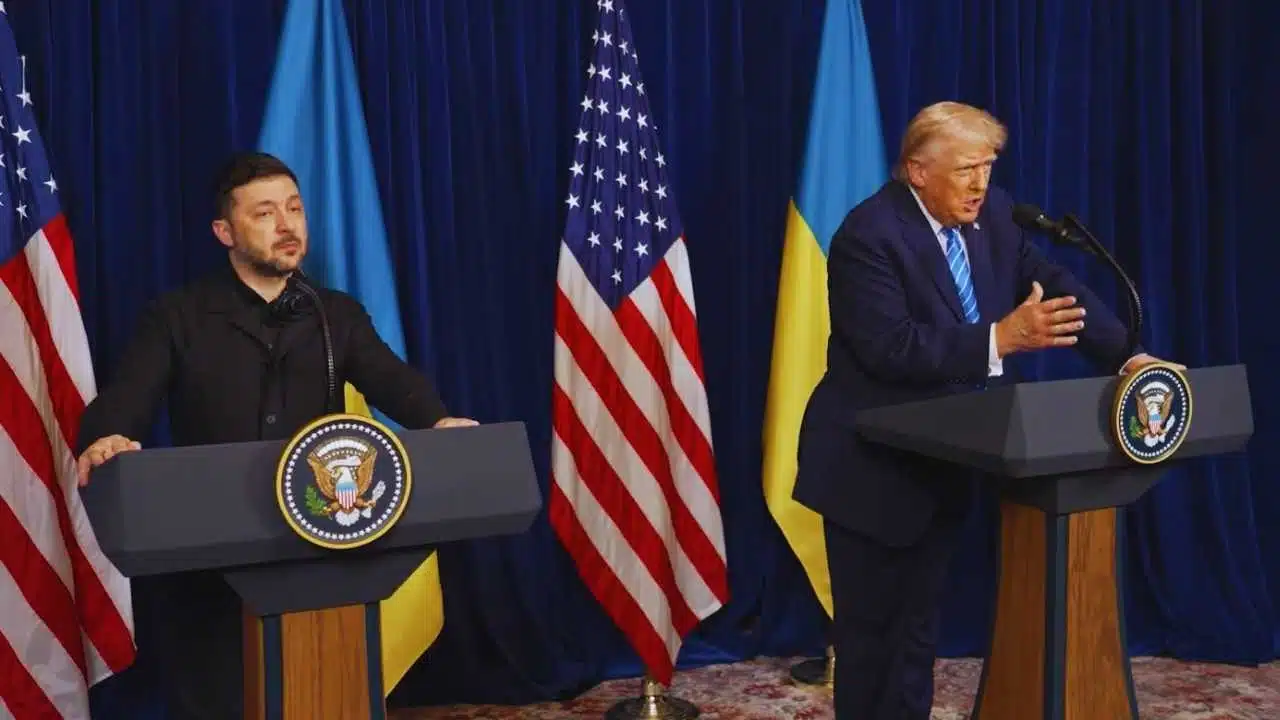
Ukraine will host Coalition of the Willing security-adviser talks on Jan. 3, ahead of a leaders’ meeting in France on Jan. 6, as Kyiv and partners seek a U.S.-backed path to peace and clearer long-term security guarantees.
The January Meetings: Who, What, When, Where, And Why?
Ukraine’s president said Kyiv will host a new round of Ukraine Coalition Of The Willing Talks on January 3, 2026, bringing together national security advisers from participating countries. The plan is to move quickly into a political-level meeting in France on January 6, 2026, where leaders are expected to review progress and decide next steps.
The timing matters. Early January is being framed as a moment to align positions among Ukraine’s partners as diplomatic activity increases around potential ceasefire and settlement ideas. Ukraine’s message has been consistent: any pause in fighting must not become a pause that simply allows Russia to regroup.
Kyiv is also trying to answer questions that often determine whether diplomacy holds or collapses. Who monitors a ceasefire if one is reached? What happens if Russia violates it? What security guarantees would prevent a return to full-scale war? Ukraine wants the January meetings to narrow differences and turn general promises into workable commitments.
The choice of venues also sends a signal. Hosting advisers in Ukraine highlights Kyiv’s insistence that Ukraine is not just a subject of talks, but a central decision-maker. Holding a leaders’ session in France underscores the role of major European powers in shaping what comes next, particularly as European governments weigh how much long-term responsibility they can carry.
Key Dates And Immediate Expectations
| Date | Meeting Type | Location | Stated Purpose | Why It’s Important |
| Jan. 3, 2026 | National security advisers | Ukraine | Coordinate positions on peace steps and security arrangements | Advisers often draft what leaders later approve |
| Jan. 6, 2026 | Leaders’ meeting | France | Political decisions on guarantees, support, and strategy | Leaders can announce funding, policy shifts, and joint commitments |
What The “Coalition Of The Willing” Is And How It Evolved?
The “Coalition of the Willing” is described by Ukrainian and European officials as a group of more than 30 countries that has been coordinating support for Ukraine while also exploring what a future security framework could look like. Public descriptions often point to Britain and France as leading organizers, with other European partners and allies involved in various working groups.
The coalition’s work has expanded over time. It began as a practical effort to align military and financial assistance while improving coordination between countries sending weapons, training troops, and funding Ukraine’s defense needs. As the war dragged on, conversations broadened to include longer-term deterrence and “day after” planning.
That shift is driven by hard experience. Ukraine and its partners have seen that promises without enforcement mechanisms can fail. They have also seen that battlefield momentum can change quickly, often shaped by air defenses, ammunition supply, and defense-industrial capacity. The coalition’s discussions increasingly focus on how to build resilience rather than only respond to emergencies.
In public statements from European institutions tied to coalition activity, leaders have emphasized the idea that Ukraine’s own armed forces should remain the primary security guarantee. In other words, the most credible deterrent is a strong Ukrainian military that can defend the country even if outside help slows or political winds change.
The coalition has also linked planning to measurable support goals, including large-scale military assistance commitments for 2025 and a focus on air defense and counter-drone capabilities. Those areas reflect realities on the ground, where long-range missiles and drones have played a major role in strikes on infrastructure and cities.
Security Guarantees Under Debate: From Air Defense To A Reassurance Force
The central question behind the Ukraine Coalition Of The Willing Talks is what security looks like if active fighting slows. Ukraine wants guarantees that do more than express solidarity. The coalition, meanwhile, must balance ambition with what member governments can approve domestically and implement militarily.
Several options are frequently discussed in public policy circles and official statements. None is simple, and each comes with trade-offs.
A long-term program to strengthen Ukraine’s forces is the most widely supported foundation. This includes steady deliveries of air defense systems, ammunition, artillery, drones, and the training and logistics to keep them running. It also includes rebuilding parts of Ukraine’s defense industry and expanding procurement pipelines so Ukraine is not dependent on last-minute political votes.
Air defense and counter-drone measures remain urgent. Ukraine faces repeated aerial attacks that strain interceptors and radar networks. Countries supporting Ukraine have increasingly discussed integrated air defense architecture, scaling production of interceptors, and improving detection and response to drone swarms. Even in a ceasefire scenario, Ukraine argues that air defense would still matter, because deterrence depends on denying an attacker the ability to strike cities and infrastructure without consequences.
Another idea referenced in European statements is a potential multinational “reassurance force” in the post-hostilities period. The concept, as publicly described, is not always defined the same way by different officials. Some discussions focus on a limited presence designed to signal commitment and provide support functions, while others imagine something closer to a tripwire force that could raise the cost of renewed aggression.
A major political question is whether the United States would be willing to be part of any security arrangement beyond financial and military aid. Ukraine has publicly indicated it has discussed with Washington the possibility of an American troop presence in Ukraine as part of security guarantees, presenting it as a significant deterrent. The United States has not publicly confirmed such an outcome, and the issue remains politically sensitive.
Russia’s position also shapes what is realistic. Moscow has repeatedly opposed the idea of foreign forces in Ukraine, and it is likely to treat any multinational presence as provocative. That is one reason coalition discussions often emphasize Ukraine’s own capabilities as the core guarantee, with external measures designed to support, not replace, Ukrainian defense.
Commonly Discussed Security Paths
| Security Path | What It Could Include | Potential Strength | Main Challenge |
| Strong Ukrainian Forces (baseline) | Multi-year funding, weapons, training, sustainment | Durable deterrence led by Ukraine | Requires steady budgets and industrial output |
| Air Defense And Counter-Drone Surge | Integrated systems, interceptors, radar, drone defenses | Protects cities and infrastructure | Interceptor shortages and high cost |
| Multinational “Reassurance Force” | Limited deployment, planning HQ, support roles | Signals commitment and raises deterrence | Political risk, escalation concerns, and legal mandates |
| U.S. Involvement Beyond Aid | Stronger guarantees, potential presence or formal commitments | High deterrent value | Domestic politics and Russia’s opposition |
Where The Peace Track Stands And The Major Obstacles?
The January meetings are happening alongside a broader peace track that remains uncertain. Public statements from coalition leaders emphasize that negotiations must include Ukraine and that the terms cannot be dictated by outside powers. They also stress that meaningful talks require at least a ceasefire or substantial reduction in hostilities.
But major obstacles remain.
One obstacle is sequencing. Ukraine and its partners want a clear plan that ties any ceasefire to monitoring, enforcement, and credible consequences for violations. Russia, by contrast, has often emphasized its own conditions and has resisted frameworks that would constrain its options later. The parties also differ sharply on territory and sovereignty, which are core issues that cannot be solved by technical meetings alone.
Another obstacle is trust. After years of war, Ukrainian officials argue that any settlement without strong guarantees could become a temporary pause before renewed aggression. From that perspective, the biggest risk is an agreement that looks calm on paper but lacks the tools to prevent another escalation.
There are also practical constraints. Even if countries agree politically on long-term support, they must ensure production capacity exists. Air defense interceptors, artillery shells, and advanced systems require time to build. Training pipelines take months and years, not weeks. A peace process that assumes immediate stability could fail if it does not address these realities.
The diplomatic environment has also been complicated by competing narratives and accusations. Russia has alleged that Ukraine attempted a large drone attack on a residence used by President Vladimir Putin. Ukraine has denied that claim and has described such allegations as attempts to justify further strikes and undermine diplomacy. In parallel, European officials have indicated there was no substantiated basis to confirm the claim. These disputes matter because they can harden positions, fuel escalation, and make compromise politically harder.
The coalition’s challenge is to keep the diplomacy focused on verifiable steps rather than drifting into accusation cycles that do not change realities on the ground. That means prioritizing clear deliverables: monitoring proposals, security assistance schedules, and political commitments that can be explained to citizens in coalition countries.
What To Watch Next: Outcomes From Jan. 3 And Jan. 6?
The Ukraine Coalition Of The Willing Talks in early January will be judged less by speeches and more by tangible outcomes. Several signals will show whether the process is gaining traction.
One signal is whether the advisers’ meeting produces a shared framework for what “security guarantees” mean. The phrase is often used broadly, but the difference between a political pledge and an enforceable guarantee can be the difference between deterrence and vulnerability. If the coalition can define the minimum package of commitments that would apply in a ceasefire scenario, it will reduce uncertainty and help prevent mixed messages.
A second signal is whether the leaders’ meeting in France produces concrete timelines and funding plans. Governments can agree in principle and still fail to deliver if budgets, procurement contracts, and production capacity are not aligned. A credible plan would outline what support continues immediately, what expands over the following months, and how Ukraine’s defenses are strengthened over years.
A third signal is how the coalition addresses the role of the United States. Ukraine has made clear it sees U.S. involvement as central to deterrence. European partners, meanwhile, are weighing how to build a Europe-led architecture that can endure even when Washington’s focus shifts. The balance struck in January will shape both Kyiv’s confidence and Moscow’s calculations.
A fourth signal is whether there is movement on verification and monitoring concepts. If coalition members begin to converge on how a ceasefire could be monitored, what constitutes a violation, and what responses would follow, then diplomacy may become more than a political message. If there is no clarity, the peace track may remain mostly rhetorical.
Finally, watch for signals about air defense and drones. Even if fighting slows, Ukraine is likely to argue that aerial threats remain a key vulnerability. Any January package that emphasizes integrated air defense, counter-drone production, and faster replenishment would indicate that partners are focusing on practical deterrence rather than symbolic gestures.
Early January will test whether the coalition can turn broad unity into a detailed plan that is credible militarily, sustainable financially, and clear politically. The meetings in Ukraine and France are being positioned as stepping stones toward a framework that supports peace without leaving Ukraine exposed.