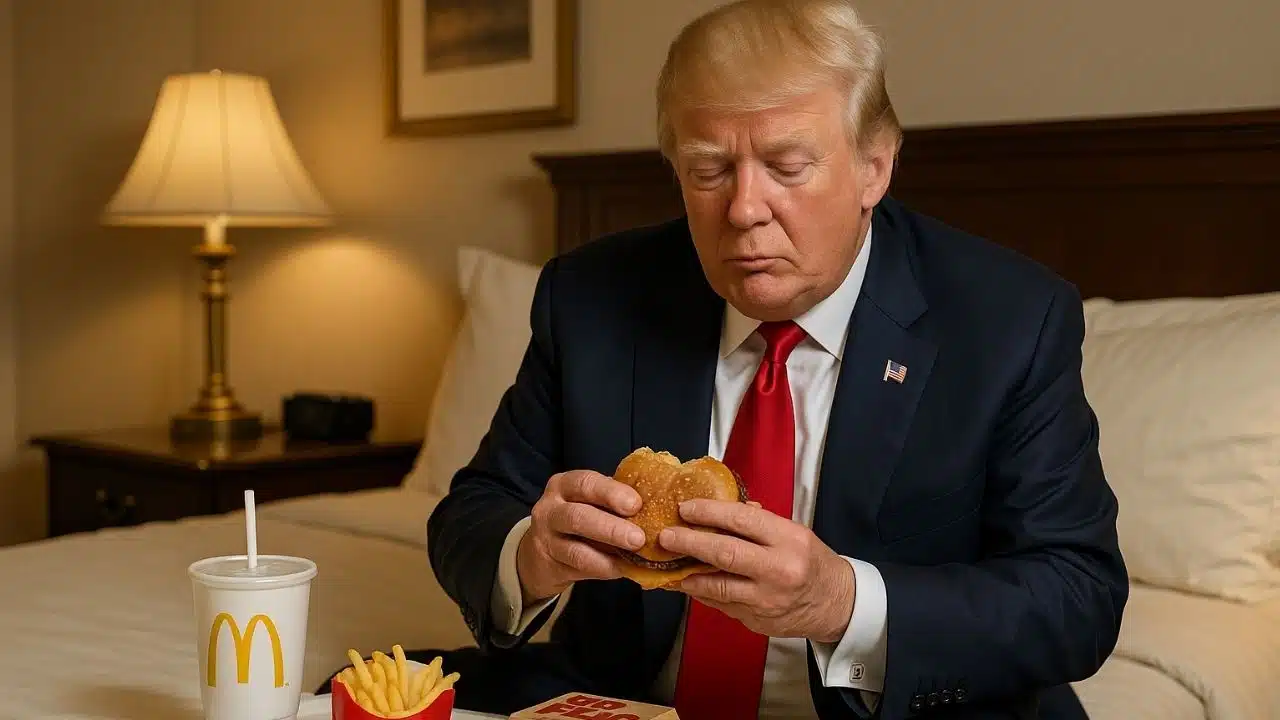
New insights into U.S. President Donald Trump’s unconventional lifestyle inside the White House have resurfaced after biographer Michael Wolff discussed previously unreported details on the podcast Inside Trump’s Head, released on the 28th. Wolff, who gained unusual access to the West Wing during Trump’s early months in office, claims that the atmosphere in the presidential residence was chaotic, confused, and at times visibly unsettled because of Trump’s strict personal routines — especially his insistence on eating his meals in the bedroom rather than in the formal dining room.
According to Wolff, Trump’s preference for bedroom dining was not a one-off quirk but a consistent pattern. He described scenes that struck him as jarring for a presidential setting: meals delivered directly to Trump’s private quarters, staff rushing in and out, and food often consumed while the president sat or reclined on his bed. Wolff said the impression created was almost childlike — a leader of the world’s most powerful country choosing habits that looked nothing like the customs of past presidents. His description of Trump appearing “like a child raised in the wild” was not meant literally, but as a way to emphasize just how far from traditional presidential decorum these behaviors were.
The staff, Wolff said, struggled to adapt. The White House is built around protocol and structure: chefs prepare meals for designated spaces, stewards coordinate dining arrangements, and official meals typically follow established procedures. Trump’s unpredictable, highly personal preferences disrupted those routines, reportedly creating confusion among employees who were trying to uphold long-standing traditions while also accommodating a president who preferred privacy, familiarity, and control over his surroundings.
These revelations reinforce earlier accounts from journalists, former aides, and administration insiders who have described Trump as someone who values comfort and personal routine over formalities. But Wolff’s latest comments offer a more intimate lens, describing habits observed directly, at close range, during a period when Trump was still adjusting to the realities of presidential life.
A Fast-Food Fixation: Burgers as the Centerpiece of Trump’s Diet
Wolff’s comments also highlight Trump’s extremely narrow dietary preferences — a topic that has been noted publicly over the years but is now described in greater detail. When asked about Trump’s “signature menu,” Wolff said the answer never changed: hamburgers. The president, he explained, relied on them almost daily and often requested that they be brought in from outside the White House rather than prepared by the in-house kitchen.
This preference was not simply about taste. Wolff explained that Trump had deep confidence in fast-food chains like McDonald’s because of their standardized, pre-packaged processes. Trump believed that this assembly-line approach reduced the possibility of tampering, especially when compared to food made specifically for him in a traditional kitchen. According to Wolff, “his real food tester was Mr. McDonald’s” — a remark meant to convey Trump’s belief that mass-produced meals were inherently safer.
Reports from Trump’s associates over the years support the idea that he viewed fast food as a reliable, predictable option. His son-in-law Jared Kushner has previously mentioned Trump’s go-to order: a Big Mac, fries, and a vanilla shake. Others have noted that Trump has always preferred familiar dishes and rarely experiments with new foods, even when attending high-profile events.
Wolff said Trump’s diet was so fixed that it was almost rigid. He described it as “incredibly narrow,” with most meals centered around beef — hamburgers being the primary choice, with occasional variations like steak. Vegetables, salads, or diverse cuisines reportedly appeared rarely on his plate. Instead, Trump favored what he considered reliable staples, consumed in a pattern that hardly changed throughout his presidency.
This lack of variety, Wolff noted, was not symbolic or political — it was simply how Trump chose to live. While previous presidents adapted to state dinners, diplomatic meals, and traditional holiday menus, Trump, by contrast, stuck almost exclusively to food he personally enjoyed and trusted.
Holiday Dining, Year-End Events, and Trump’s Reluctance to Deviate
One of the more striking details Wolff revealed was Trump’s resistance to changing his menu even during holidays or official ceremonies. According to him, special occasions such as Thanksgiving, Christmas, or year-end celebrations did little to influence Trump’s choices. Wolff said he could “easily imagine Trump eating a hamburger even on Thanksgiving,” adding that this was not an exaggeration but a reflection of how tightly Trump held to his daily routines.
During events that typically involve elaborate menus — state dinners, receptions, and seasonal gatherings — Trump often requested alternative dishes that aligned with his usual preferences. This forced chefs and planners to make adjustments, sometimes preparing separate meals exclusively for him. Wolff said that staff found it difficult to reconcile the expectations of a traditional presidential event with Trump’s insistence on simplicity and familiarity.
This consistency extended beyond the food itself. Trump often preferred to avoid long, formal meals and instead opted for quicker, more private dining. He valued the autonomy of controlling when, how, and where he ate — even if that meant bypassing ceremonial customs that previous presidents embraced for decades.
Such behavior, while unorthodox, aligned with Trump’s broader approach to the presidency: a prioritization of personal comfort and instinct over institutional norms. Wolff’s comments suggest that these habits were among the many ways Trump expressed his preference for independence within a highly structured environment.
A Portrait of an Unconventional Presidency
Michael Wolff’s recollections paint a wider picture of a president who was never fully aligned with the formalities of the office he occupied. From bedroom dining to near-exclusive reliance on fast food to holiday meals that remained unchanged from his everyday routine, these details reinforce a consistent theme: Trump held tightly to familiar habits regardless of setting or expectations.
Wolff emphasized that Trump’s lifestyle differed sharply from what Americans typically associate with presidential behavior. The White House traditionally represents ceremony, discipline, and symbolism, and presidents often adapt their habits to reflect the institution’s expectations. Trump, however, maintained patterns that preceded his presidency — routines shaped by decades of personal habits, preferences, and a sense of what he considered safe and comfortable.
The result, according to Wolff, was a White House that frequently felt out of rhythm. Staff struggled to adjust to a leader whose habits fell outside standard protocols, and advisers often found themselves navigating logistical challenges created by Trump’s choices. Yet these behaviors also reflected Trump’s distinctive leadership style: direct, personal, and resistant to change.
While some of Wolff’s claims have sparked debate in the past, his latest descriptions align with a broad range of publicly known details about Trump’s eating habits, personal routines, and preference for privacy. This renewed discussion offers a deeper understanding of how Trump’s personal lifestyle shaped the environment inside the White House — and how those close to him navigated a presidency unlike any before it.