

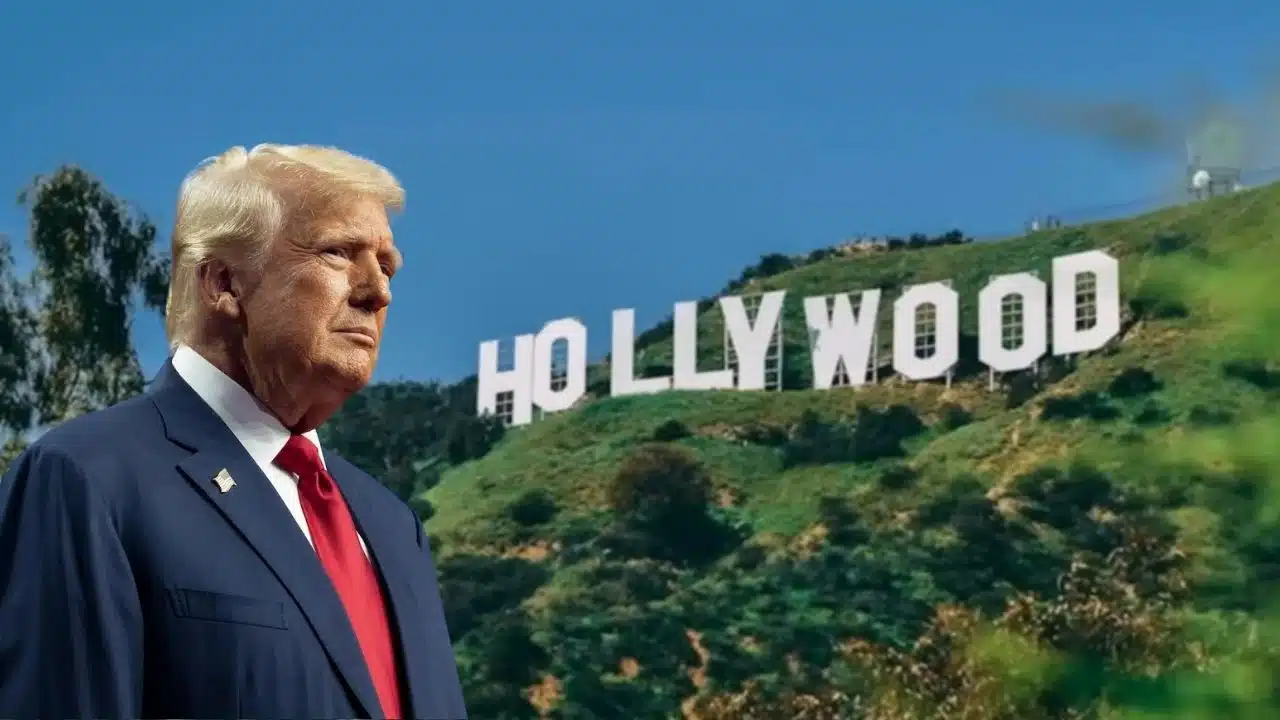
On Sunday, May 4, 2025, President Donald Trump made a striking announcement that has ignited a global debate across the film industry and political circles. Using his Truth Social platform, Trump declared that he has directed both the U.S. Department of Commerce and the U.S. Trade Representative (USTR) to impose a 100% tariff on all foreign-made films imported into the United States. This marks a significant and unprecedented move targeting the global entertainment and intellectual property sector.
Trump’s Statement: “Movies Made in America, Again”
In his Sunday evening post, Trump wrote:
“The Movie Industry in America is DYING a very fast death. Other Countries are offering all sorts of incentives to draw our filmmakers and studios away from the United States. Therefore, I am authorizing the Department of Commerce, and the United States Trade Representative, to immediately begin the process of instituting a 100% Tariff on any and all Movies coming into our Country that are produced in Foreign Lands. WE WANT MOVIES MADE IN AMERICA, AGAIN!”
He further elaborated that this exodus of film production away from U.S. soil constitutes a “National Security threat,” claiming that some countries are leveraging filmmaking for “messaging and propaganda.”
Background: Why Foreign Film Production Has Boomed
Trump’s announcement comes amidst years of shifting trends in global film production. Many nations have actively provided lucrative tax breaks, rebates, grants, and subsidies to lure international productions. For example:
- Canada, particularly cities like Toronto and Vancouver, has long been a hotspot for Hollywood productions due to favorable exchange rates and provincial tax incentives.
- Ireland, especially Dublin, has attracted studios with its Section 481 film tax credit.
- Australia and New Zealand have invested heavily in attracting major franchises through national film incentives.
- The UK, with Pinewood Studios and generous tax benefits, remains a major global production hub.
As a result, many U.S. studios—while still American-owned—opt to shoot abroad to reduce costs and maximize profit.
The State of the U.S. Film Industry: Is It Really “Dying”?
While Trump claims the U.S. film industry is in sharp decline, the reality is more nuanced:
- Box office revenue in the U.S. hit an all-time high of $11.9 billion in 2018. However, this sharply fell to just $2 billion in 2020 during the COVID-19 pandemic.
- Theaters began rebounding in 2022 and 2023, but ticket sales have not returned to pre-pandemic levels. According to Box Office Mojo, the 2024 domestic gross stood at $8.7 billion, still below the 2019 mark.
- A major factor in this decline has been the rise of streaming platforms like Netflix, Disney+, Prime Video, and Apple TV+, which have altered how people consume movies.
- Although most streamers are owned by U.S.-based companies, production frequently occurs outside the country due to cost advantages.
Economic & Legal Questions: Can You Tariff a Movie?
From a legal and economic standpoint, Trump’s proposed action raises several complexities:
- Movies are intellectual property, not physical goods.
- Tariffs are traditionally applied to imported physical products—cars, steel, electronics—not services or digital content.
- While the USTR can apply trade restrictions on certain services, films are often governed by global copyright law and trade agreements, not tariff schedules.
- Global streaming complicates enforcement.
- If a film is produced abroad but released digitally via Netflix or YouTube, will it be subject to tariffs?
- Many streaming platforms operate internationally. Imposing a tariff might involve taxing digital licenses or access—raising legal challenges under World Trade Organization (WTO) rules.
- Retaliation Risk.
- Trade experts warn that countries like Canada, the UK, or France might respond with their own restrictions or taxes on American media exports.
- The European Union, in particular, already has cultural quotas requiring a percentage of locally produced content on streaming platforms. A U.S. tariff could provoke reciprocal trade action.
Film Industry Reactions: Concern, Confusion, and Pushback
The announcement has sparked strong reactions across Hollywood and the global film community:
- Independent filmmakers and global studios are scrambling to understand the implications. “This could cripple small distributors and kill co-productions,” said one producer who frequently works across the U.S.-Canada border.
- The Motion Picture Association of America (MPA) has not yet released an official statement, but sources suggest industry lawyers are preparing to challenge the tariff if implemented.
- Foreign film commissions, particularly in Canada and Australia, expressed concern about the impact on international collaboration and job losses in their local film economies.
California’s Response: Fighting to Keep Hollywood Local
In response to the increasing migration of film production abroad, California Governor Gavin Newsom has proposed a major tax credit expansion aimed at bringing movie production back to Hollywood.
- Offer hundreds of millions of dollars in rebates to productions that base their filming in California.
- Prioritize job creation and long-term studio development in the state.
- Counterbalance foreign incentives with home-grown support to revive local film jobs.
Newsom has not directly commented on Trump’s tariff move but has stated that “California remains the cultural capital of the world.”
Trump’s Broader Tariff History: Goods vs Services
Trump’s proposal to tariff films marks a new and uncharted policy direction, as all previous Trump-era tariffs focused on physical imports:
- Imposed 25% tariffs on steel and aluminum (2018).
- Introduced tariffs on auto parts, solar panels, and washing machines.
- Started a trade war with China, leading to retaliatory tariffs on agriculture and tech.
- Enforced 10–145% duties on goods from Canada, Mexico, and the EU.
But never before has his administration—or any past U.S. president—attempted to place traditional tariffs on intellectual property-based imports like films, games, or digital content.
A Symbolic Move or a Real Policy Shift?
Whether the 100% movie tariff becomes enforceable policy remains to be seen. Implementation will require:
- Legal definitions of what constitutes a “foreign-produced” movie.
- Coordination between the Commerce Department, USTR, and likely the IRS for tax collection.
- Court challenges from industry stakeholders and possible WTO disputes.
While Trump frames this as a nationalist push to protect American jobs and culture, the complexity of modern filmmaking—where even “American” movies are international in scope—makes enforcement highly problematic.
Still, the rhetoric itself could influence policy debate, studio decisions, and public opinion, especially heading into the 2026 presidential election cycle.
The Information is Collected from CNN and Sky News.






















