

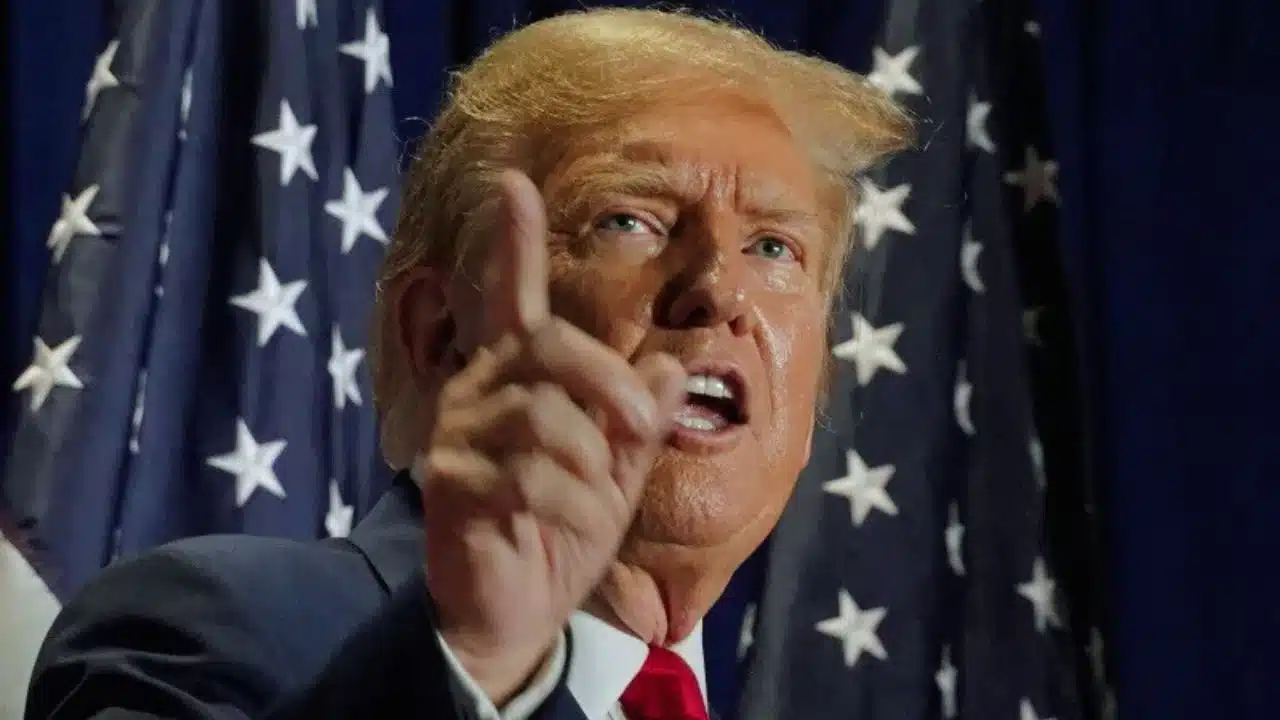
A sharper White House tone on trade, migration and values is testing European unity, as several capitals look for their own channels to President Donald Trump.
Lead
President Donald Trump has intensified public criticism of the European Union in recent days, portraying the bloc as weak on migration and trade while questioning Europe’s direction on governance and regulation. The rhetoric is landing as EU governments try to protect shared policies on trade and security—yet also compete for influence in Washington, with some leaders seeking direct access to Trump rather than relying on EU-level channels. The dispute comes as the EU faces a delicate set of talks spanning Ukraine diplomacy, NATO burden-sharing, and the aftershocks of a 2025 transatlantic tariff standoff that ended in a framework trade arrangement.
A new wave of White House criticism
Trump has recently renewed attacks on Europe’s immigration policies and broader political trajectory, arguing the continent is in decline and needs tougher controls. European coverage has described the latest messaging as among the sharpest political broadside yet from Washington toward EU institutions, widening doubts in Brussels about whether the United States still treats the EU as a central counterpart. The escalation has been linked in European reporting to the Trump administration’s 2025 National Security Strategy, which several analysts say frames Europe less as a strategic partner and more as a region whose internal politics should be corrected.
At the same time, political spillover is increasingly mixing with disputes over tech regulation and free-speech rules, issues that sit at the center of several EU enforcement cases involving large platforms. Euronews reported that Elon Musk—an influential Trump ally and owner of X—publicly attacked EU officials after a fine under the bloc’s digital rules and went as far as suggesting the EU should be abolished, amplifying pressure on Brussels from outside government. EU diplomats and officials quoted in European outlets have warned that the combination of US political messaging and pressure on regulatory policy is complicating Europe’s push to present a united front.
Why capitals are looking past Brussels
European officials have increasingly argued that decision-making in Trump’s second term is highly centralized, creating incentives for national leaders to seek direct contact with the president rather than depend on conventional diplomatic lanes. The New York Times reported earlier this year that European leaders were trying to establish a direct line to Trump amid skepticism that messages routed through aides would reliably reach him. The same report described how figures such as Italy’s Prime Minister Giorgia Meloni pursued personal access, as European governments weighed how to defend EU interests while maintaining workable ties with Washington.
The dynamic is most visible among right-leaning or nationalist-leaning governments that believe they have ideological affinity with parts of Trump’s coalition, even as Brussels tries to keep policy disciplined across 27 members. Deutsche Welle reported on concerns—linked to a leaked draft discussed in European debate—that Washington could seek influence in specific countries including Italy, Austria, Poland and Hungary in ways that weaken EU cohesion. In parallel, Bloomberg reported earlier this year that EU leaders sought to deter side deals on trade, warning that bilateral shortcuts would undermine the EU’s common commercial policy.
Where unity is fraying
National-level outreach does not automatically mean governments plan to break with EU policy, but it can shift incentives in high-stakes negotiations—especially when Trump signals that individual countries might get better terms. European reporting has described a growing tension between Brussels’ push for one negotiating position and the reality that only a handful of leaders may be able to win time with Trump. That gap is becoming more pronounced as Europe tries to keep the US engaged in Ukraine diplomacy while managing trade and defense disputes at the same time.
Trade pressure: tariffs and the 2025 framework
Economic pressure is a central part of the current transatlantic strain, after months of tariff threats and negotiations that culminated in a 2025 framework for EU–US trade. Euronews reported that the July 2025 deal introduced a 15% tariff for the vast majority of EU exports to the US, a major increase from the pre-disruption average tariff rate of 4.8% cited in its coverage. The EU–US framework agreement language published on 20 August 2025 states that the United States commits to apply the higher of the US MFN tariff rate or a 15% tariff rate (MFN plus a reciprocal tariff) on EU-originating goods, while carving out MFN-only treatment for certain categories effective 1 September 2025.
Reuters also reported during the summer negotiations that EU trade chief Maroš Šefčovič said progress had been made toward a framework agreement as Washington prepared new tariff notices. The trade dispute has reinforced Trump’s broader approach of using tariff leverage to reshape relationships, which EU officials fear can encourage member states to pursue bilateral understandings. Even after the framework was announced, analysts and policy watchers noted that many elements still required further work, leaving room for renewed friction.
Key trade terms (from published framework)
| Item | What was published | Why it matters |
| Baseline approach | US to apply the higher of MFN or 15% (MFN + reciprocal tariff) on EU-originating goods. | Sets a broad tariff floor that reshapes costs for EU exporters across sectors. |
| MFN-only carve-outs (from 1 Sept 2025) | MFN-only for categories including aircraft and parts, generic pharmaceuticals (and ingredients/precursors), and unavailable natural resources such as cork. | Creates sector-by-sector lobbying pressure inside Europe over who wins exemptions. |
| Sector risk signals | Framework text also references Section 232 context for sensitive sectors such as pharmaceuticals and semiconductors. | Connects trade terms to national-security tools that can be reactivated quickly. |
Security and Ukraine diplomacy raise the stakes
Trade is not the only lever. European reporting has emphasized that Ukraine diplomacy and the future US military posture in Europe are intertwined with the broader political confrontation, because EU leaders fear losing influence if Washington negotiates over Europe’s head. Euronews wrote this week that the EU entered a crucial week shaped by rival interests, with Ukraine peace efforts and Europe’s desire to get a say in talks involving Trump high on the agenda.
Chatham House argued that Trump’s new strategy prioritizes deals and commercial arrangements, and that a strong transatlantic relationship is no longer treated as critical in the same way—raising uncertainty about how Washington weighs Europe in crises. Those signals help explain why some European capitals see value in cultivating direct relationships with Trump to protect national security priorities, even if that approach risks diluting the EU’s collective leverage. In practice, the direct line strategy can reward countries that move fastest—or that are most politically aligned—leaving others feeling exposed.
Which countries are most exposed to the direct ties dynamic?
European debate has focused on countries seen as politically compatible with Trump’s worldview or strategically useful in internal EU disagreements. Deutsche Welle highlighted Italy, Austria, Poland and Hungary in its reporting on concerns about Washington concentrating influence efforts on specific member states. The New York Times separately pointed to Meloni’s role as a leader seeking access to Trump while balancing relations with Brussels.
Snapshot of the direct ties discussion
| Country | What has been reported or debated | EU-level concern |
| Italy | European leaders have pointed to Meloni’s efforts to secure direct engagement with Trump. | Risk that national diplomacy crowds out EU-wide coordination on trade, defense and Ukraine. |
| Hungary | Hungary is repeatedly cited in European analysis as a state where external influence can deepen EU divisions. | Could amplify EU splits on Russia/Ukraine and rule-of-law debates. |
| Poland | Poland is named in DW’s reporting on countries discussed in the influence debate. | Internal EU bargaining could shift if Washington signals preferential engagement. |
| Austria | Austria is also listed in DW’s reporting on countries in focus. | Adds pressure to EU unity at moments requiring consensus. |
What comes next for EU cohesion
In the near term, EU leaders face a three-track challenge: protect the integrity of the single market’s trade policy, sustain support for Ukraine, and manage political messaging that increasingly targets EU institutions rather than individual governments. European outlets have described Brussels as struggling to craft a single response that both defends EU legitimacy and keeps Washington engaged in Europe’s core security priorities. Meanwhile, the legacy of the 2025 tariff confrontation—and the published 15% framework—keeps economic anxiety high for export-dependent sectors and adds to pressure on national governments to secure exemptions or better terms.
Over the coming weeks, a key test will be whether EU capitals can agree that any sensitive negotiations—especially on trade—must run through EU institutions, even while leaders maintain bilateral political contact with Trump. If national outreach becomes a substitute for EU coordination, divisions could harden on everything from tech regulation to defense procurement and sanctions. If the EU can align its messaging, it may still be able to leverage the scale of the EU market—while limiting the incentives for side deals.
Trump’s latest attacks are intensifying an already difficult EU balancing act: projecting unity while several member states pursue direct ties with the White House to protect national interests. With tariffs, Ukraine diplomacy and political messaging now entangled, the bloc’s next decisions will likely determine whether Europe can negotiate with Washington as one—or increasingly as 27.





















