
The landscape of dating and relationships has undergone a seismic shift in the internet age. What was once limited to traditional venues like bars or set-ups by friends has exploded into a myriad of online platforms, apps, and alternative spaces that facilitate every type of connection. From casual sexual encounters to long-term committed partnerships, the modes of meeting, interacting, and relating have become incredibly diverse.
This article will explore emerging trends and patterns that define this new terrain of modern relationship building. Drawing on insights from niche communities, user data, and sociological research, we’ll examine how casual encounters, non-traditional arrangements, and digital spaces are redefining intimacy and reshaping interpersonal connections.
The Rise of Casual Encounters
A defining feature of modern dating is the normalization of casual sexual encounters and short-term relationships. Once taboo, these immediate and informal connections are now commonplace, especially among younger demographics. Driving this shift are a few key factors:
Greater social acceptance. Traditional norms and expectations around relationships have eased, allowing more space for casual dynamics. This stems from changing generational attitudes that are more open and permissive. Media, including couples erotic stories, has also played a role in reshaping perceptions of modern intimacy.
Online accessibility. The internet has enabled access to exponentially more potential partners while also providing anonymity that facilitates short-term arrangements. Geographic barriers are erased, and interactions can occur on a strictly no-strings-attached basis.
Changing priorities. With busy, mobile lifestyles, many singles now prefer the flexibility of informal connections over the constraints of conventional dating. Casual encounters allow for intimacy without commitment.
Market research indicates that up to 70% of singles have participated in some form of casual relationship. Of users on popular dating apps, 45-60% state that they are specifically seeking casual encounters as opposed to long-term partnerships. These statistics reveal just how normalized this relationship model has become for modern singles.
The Casual Community
Parallel to the growth of casual dating is the emergence of niche online spaces catering to this market. DoubleList is one such platform – a classified-style site solely focused on enabling casual connections between mutually interested users. The site’s crisp, minimalist interface allows for efficient connecting while its geographic search filters and area-specific listings drive local meetups.
But beyond just facilitating encounters, the site fosters a sense of community shared by its sexually progressive members. Features like DoubleList’s Stories page offer a voyeuristic glimpse into real-life, user-submitted tales of casual affairs, threesomes, swapping scenarios, and friendship with benefits arrangements. Part entertainment, part digital exhibitionism, these candid snapshots depict the spectrum of encounters happening via the platform. Their inclusion gives a human voice to the site while also building trust and transparency.
For marginalized groups like LGBTQ+ singles, kink/fetish participants, or non-monogamous couples, DoubleList provides a judgment-free space for intimate exploration. Sections dedicated to these interests enable targeted matching within niche circles. By catering to these specialized demographics, traditionally sidelined in conventional dating spheres, DoubleList promotes inclusivity through its centralization of these preferences.
The result is an adult-centric dating hub centered firmly on the pursuit of consensual pleasure. For its devotees, it’s an online sanctuary where casual connection isn’t a deviation from the norm but rather the status quo.
Non-Traditional Relationships
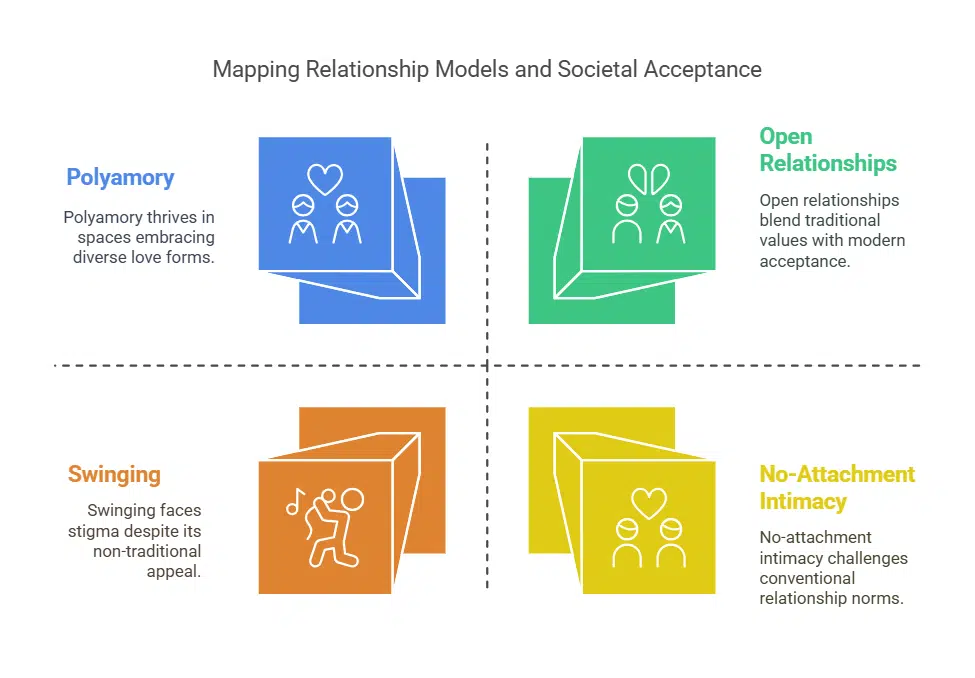
Another revelation in these digital relationship spaces is the volume of users seeking non-traditional arrangements like polyamory, open relationships, swinging, and no-attachment intimacy. Those engaging in these dynamics often face stigma on mainstream dating sites. However, niche platforms built around alternative preferences are seeing staggering engagement from non-monogamous demographics.
On sites like DoubleList, searches for key terms related to non-traditional relationships yield combined results – a telling indicator of interest in ethical non-monogamy. Listings from couples and married individuals hoping to open their relationships abound. And the site’s Stories page gives vivid, uncensored glimpses into polyamorous arrangements and swinger encounters.
These snapshots of ethical non-monogamy in action indicate shifting attitudes around fidelity and expectations. The sheer participation points to a willingness to explore relationship models outside society’s conventional, monogamous ideal. For those who choose it, non-traditional intimacy is just an alternative configuration of needs, boundaries, and connections.
Prioritizing Honest Communication
As casual dynamics and non-monogamous relationships gain traction, the need for honest communication around needs and consent is essential. Platforms oriented around these relationships, like DoubleList, underscore transparency in their guidelines and community policies. Users are encouraged to be upfront about their relationship status, interests, and intentions when interacting on the site. The goal is to create a culture of clear, ethical communication focused on mutual consent and pleasure.
This principle applies to the community’s IRL encounters as well. Successful casual connections and non-traditional relationships rely on partners frequently communicating desires, emotions, and changing boundaries. Assumptions have no place when intimacy exits the confines of societal norms. Openness, self-awareness, and mutually understood expectations are key.
The Future of Digital Intimacy
While niche sites like DoubleList currently cater to alternative dating interests, the trends they reveal give a glimpse into the future landscape of digital intimacy. Mainstream platforms are gradually embracing non-traditional relationships and casual encounters within their interfaces as well. With social views of fidelity and intimacy evolving, online spaces are adapting to serve a broader spectrum of partnership models.
Ultimately, the trajectory points to reduced stigma around casual connections and ethically non-monogamous dynamics. As digital spaces continue decentralizing traditional dating norms, acceptance and inclusivity around consensual intimacy in all its configurations will likely become the new norm. And with technology rapidly advancing virtual spaces, from AR to VR, the coming decades may realize intimacy and sexuality in digital realms once unimaginable.
Conclusion
In an age when the push of a button brings in access to the millions of possible partners, it seems the permutations of pairings are multiplying exponentially. The conventional dating script has been diversifying options for modern singles and partners to connect intimately. Once the fringe, these casual encounters, non-traditional bonds, and alternative lifestyle arrangements now are of the mainstream.
Inclusive ecosystems are developed by niche communities and specialized platforms where explorers of non-normative sex don’t have to pick their niche because there’s a platform for them. Based on prioritizing consent, communication, and mutually satisfying pleasure, they give a possible shadow of the future of digital dating and virtual relating.
The message here is simple: There are no rules or uniform expectations anymore regarding modern intimacy. There are infinite possibilities for those who are willing to engage in ethical off-the-beaten-path courtship. For the adventurous, connections abound. All one needs to do is to decide on the destination of your choice and chart a course.