Relying on massive textbook publishers for digital math instruction often leaves classrooms and independent learners dealing with bloated, slow-moving software that prioritizes broad state adoptions over actual user experience. Looking toward independent developers and specialized non-rofits reveals a highly agile sector of American edtech focusing entirely on numerical fluency. These smaller studios build software that adapts rapidly to student inputs, offering everything from purely visual spatial reasoning challenges to rigorous, distraction-free algebraic drilling.
How We Selected Our 10 Best SMEs for Math Practice Platforms in USA
Isolating the most effective digital math environments required a strict filtering process to separate genuine educational tools from poorly disguised arcade games. We evaluated independent American studios against core pedagogical requirements to ensure they deliver measurable results.
-
Geographic Baseline: Operated and headquartered strictly within the United States as independent organizations or registered non-profits.
-
Pedagogical Focus: Software rooted in proven mathematical instruction, emphasizing conceptual understanding, fact fluency, or rigorous problem-solving.
-
Data Privacy: Strict adherence to FERPA and COPPA guidelines, with zero reliance on third-party data monetization.
-
Scale Limit: Verified as independent SMEs, explicitly excluding subsidiaries of massive publishing conglomerates.
Understanding these criteria sets the stage for examining how each specific developer approaches mathematical intervention.
Evaluating the Top 10 Math Practice Platforms in USA
The following independent organizations are actively shifting how arithmetic and advanced mathematical concepts are delivered and practiced. Here is our curated breakdown of the standout studios driving mathematical fluency forward.
1. Boddle Learning
Operating out of Tulsa, Oklahoma, Boddle Learning transforms math practice into an immersive 3D gaming experience. Recognizing that standard flashcards fail to capture modern attention spans, they built a highly engaging platform where answering math questions correctly unlocks gameplay progress. The system utilizes an adaptive algorithm to seamlessly adjust question difficulty based on real-time student performance.
Best for:
-
Engaging highly reluctant students through immersive 3D gamification.
Why We Chose It:
-
Integrates directly with existing classroom rostering and state standards.
-
The adaptive algorithm pinpoints exact skill gaps without frustrating the user.
-
High-quality visual rewards keep daily motivation exceptionally high.
Things to consider:
-
The heavy gaming elements require active monitoring to ensure students are focusing on the math components rather than just the gameplay.
The 2026 Edge:
-
New augmented reality capabilities that allow students to project geometric puzzles directly onto their physical desks.
While gamified environments drive high engagement, achieving rapid, automatic recall of basic facts requires a completely different approach.
2. Vimme Learning
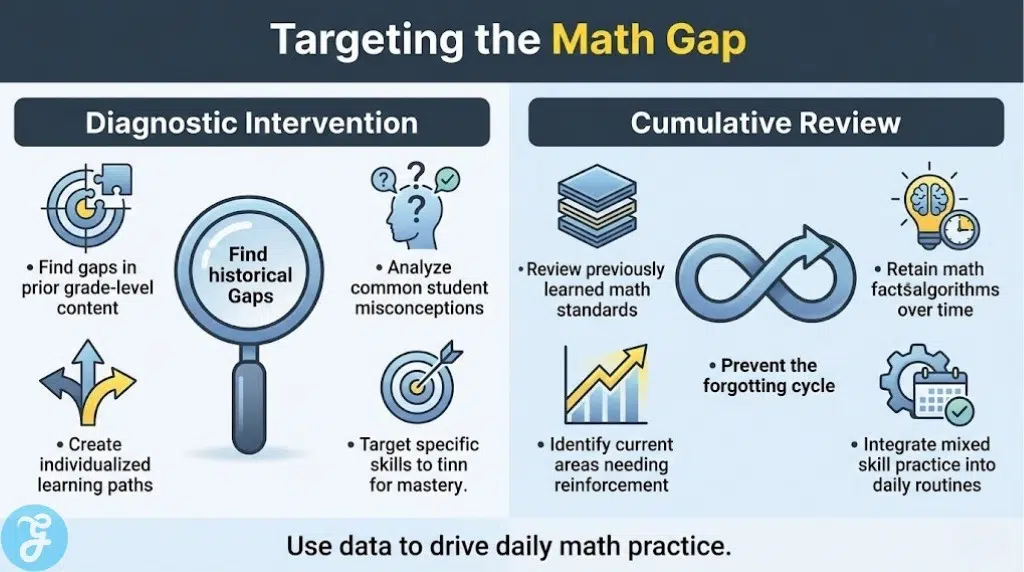
Headquartered in Indiana, Vimme Learning is an independent platform that focuses heavily on cumulative review and pacing. Rather than letting students practice randomly, the software provides highly structured, weekly cumulative assessments. This methodology ensures that a concept learned in September is still being tested and retained in April, preventing the classic “learn and forget” cycle.
Best for:
-
Ensuring long-term retention of math concepts through structured, cumulative weekly assessments.
Why We Chose It:
-
The pacing guides completely remove the guesswork for educators planning their academic year.
-
Cumulative testing ensures historical skills are constantly refreshed.
-
The analytics clearly highlight if an entire class missed a specific standard, allowing for immediate reteaching.
Things to consider:
-
The strict assessment-driven model requires complete buy-in from the educator to function effectively.
The 2026 Edge:
-
Automated reteaching modules that assign specific practice questions based on the results of the weekly cumulative quiz.
When a balanced approach between math and literacy is needed, dual-subject platforms provide excellent versatility.
3. MathChops
New York’s MathChops is an adaptive practice platform built by two former Google engineers in collaboration with veteran New York tutor Mike McGibbon, who has over 17 years of standardized test prep experience. It is specifically engineered to help students boost their scores on exams like the SAT, ACT, and ISEE by feeding them questions exactly at their current skill level. The algorithm identifies specific weaknesses and continuously reintroduces those concepts until mastery is achieved.
Best for:
-
Middle and high school students preparing for standardized math testing.
Why We Chose It:
-
The adaptive engine is incredibly fast, instantly shifting difficulty based on the last answered question.
-
Trims the fat from study sessions by entirely avoiding concepts the student already knows.
-
Excellent game mechanics, like beat-the-clock challenges, keep older students engaged.
Things to consider:
-
It is a dedicated practice and drilling tool, lacking instructional videos for teaching brand-new concepts.
The 2026 Edge:
-
Specialized algorithms that perfectly mimic the adaptive staging of the new digital SAT format.
When students fall significantly behind grade level, they require specialized intervention software to close historical gaps.
4. Ascend Math
Headquartered in Shreveport, Louisiana, Ascend Math is a specialized SME providing intensive math intervention. The platform begins with a highly detailed diagnostic assessment to find exactly where a student’s foundational knowledge stopped. It then builds a completely customized study plan featuring video instruction, interactive practice, and post-testing to rapidly close those specific gaps.
Best for:
-
Intensive remediation for students functioning one or more years below grade level.
Why We Chose It:
-
The diagnostic tool is exceptionally accurate, preventing students from relearning material they already know.
-
Instruction utilizes multiple learning modalities, including video, audio, and interactive digital manipulatives.
-
Highly effective in special education and Tier 3 intervention classrooms.
Things to consider:
-
The interface is highly functional and academic, prioritizing instruction over entertainment value.
The 2026 Edge:
-
Automated progress reports that translate complex intervention data into easily readable updates for parents and IEP teams.
Sometimes, targeted intervention requires a human touch alongside software for older, independent learners.
5. MathHelp.com
Operating from Houston, Texas, MathHelp.com functions as an interactive digital textbook and tutoring replacement. Founded by classroom math teacher Mike Maggart together with business partner Charlie Hermes, the independent platform provides highly focused video lessons featuring a real instructor, followed immediately by interactive practice problems and self-tests. It is highly structured, allowing students to select their exact textbook or target standardized test to receive perfectly aligned instruction.
Best for:
-
Independent learners needing custom video lessons aligned to their specific textbook or syllabus.
Why We Chose It:
-
The video instruction is incredibly clear, acting as an on-demand tutor for complex algebra and calculus concepts.
-
Provides immediate feedback and step-by-step written solutions for every practice problem.
-
Highly flexible, supporting everything from middle school math to college placement exams.
Things to consider:
-
The platform requires the student to be self-motivated, as there are no gamified rewards for completing lessons.
The 2026 Edge:
-
Interactive whiteboard integrations that allow students to draw their work digitally for the system to evaluate.
Building deep computational thinking requires practice that encourages students to manipulate numbers creatively.
6. First In Math
Based in Easton, Pennsylvania, First In Math is an independent platform that uses digital game modules to teach deep computational thinking and fact fluency. Rather than just asking for the answer to an equation, the software often provides the answer and requires the student to build the equation using available numbers and operators. It heavily promotes flexible thinking.
Best for:
-
Developing flexible computational thinking and advanced number sense.
Why We Chose It:
-
Forces students to think multi-directionally about how numbers relate to one another.
-
Highly effective at moving students away from relying on their fingers for basic arithmetic.
-
The competitive modules create high-energy, positive math environments in classrooms.
Things to consider:
-
The visual design of the digital modules is distinctively retro, which may contrast with modern app aesthetics.
The 2026 Edge:
-
New collaborative modules where entire classrooms must pool their computational resources to solve large-scale numeric puzzles.
Similar to computational thinking, visual math strategies offer powerful alternative methods for problem-solving.
7. Tang Math
Operating out of the Cambridge, Massachusetts area, Tang Math focuses heavily on visual strategies and number sense. Created by Greg Tang a prominent math educator and award-winning children’s book author the digital platform provides puzzle-based practice that teaches students to compose and decompose numbers efficiently. It focuses heavily on building a deep, intuitive understanding of quantity without relying on standard algorithms.
Best for:
-
Transitioning elementary students away from rote counting toward advanced visual number sense.
Why We Chose It:
-
The puzzle frameworks are highly unique, breaking traditional math anxiety.
-
Emphasizes the relationships between numbers, making mental math significantly easier.
-
Excellent digital tools that support the physical strategies used in modern math classrooms.
Things to consider:
-
The specific visual methodologies may require parents to re-learn how they approach basic math to help their children.
The 2026 Edge:
-
Adaptive difficulty within the visual puzzles that gently pushes students to calculate larger numeric values in their heads.
When visual strategies need to be physically manipulated, high-quality digital tools become crucial.
8. Brainingcamp
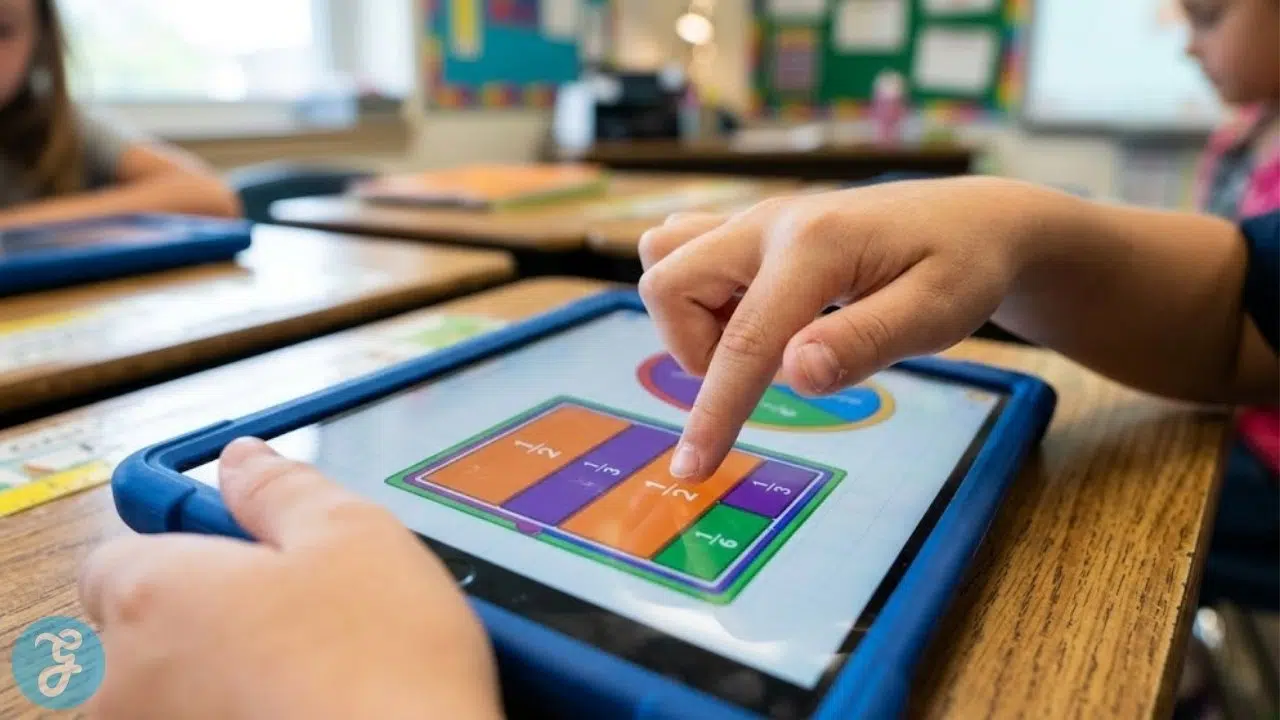
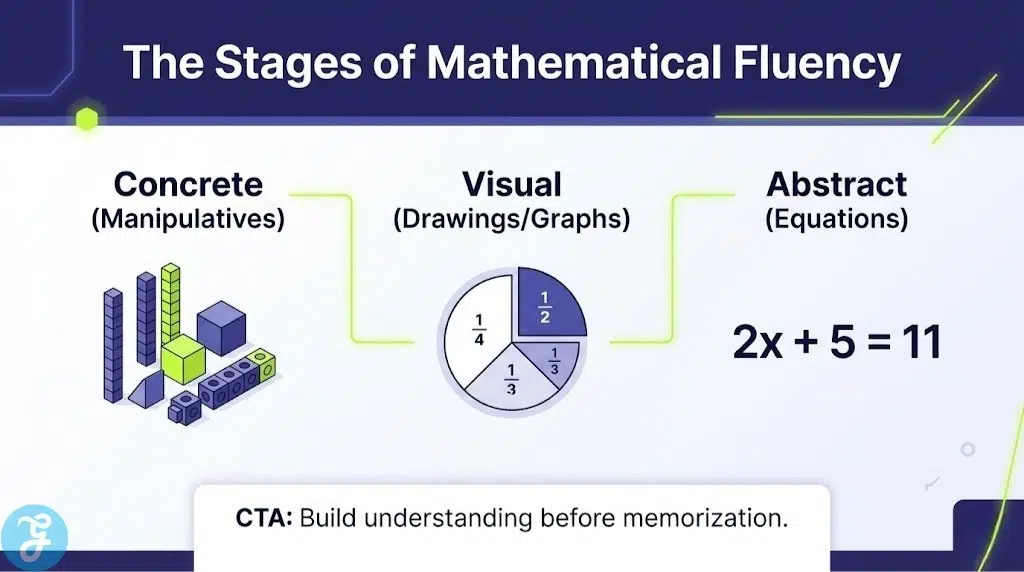
Austin, Texas-based Brainingcamp specializes entirely in digital math manipulatives. While they do offer guided practice, their core strength is providing perfectly engineered digital versions of base ten blocks, fraction tiles, Cuisenaire rods, and geoboards. Their platform allows students to visually build out and prove their math answers in a digital workspace.
Best for:
-
Providing high-quality digital manipulatives for conceptual math modeling.
Why We Chose It:
-
Flawlessly translates tactile classroom tools into highly responsive digital environments.
-
Allows teachers to push specific manipulative setups directly to student screens.
-
Prevents the logistical nightmare of managing thousands of physical plastic pieces in a classroom.
Things to consider:
-
It is a workspace tool designed to support instruction, not a standalone curriculum that teaches lessons automatically. Note that since 2023, Brainingcamp’s manipulatives have been embedded into Savvas Learning Company’s K-8 math programs through a content partnership, though Brainingcamp remains an independent Austin-based company.
The 2026 Edge:
-
Auto-grading features built directly into the manipulative space that instantly correct block placement errors.
Managing math instruction at the high school level requires platforms capable of handling complex symbolic logic.
9. Derivita
Located in Salt Lake City, Utah, Derivita is a specialized SME providing a comprehensive math homework and testing platform. Built specifically for high school and higher education, it integrates seamlessly into any Learning Management System (LMS). It excels at handling complex algebraic equations, graphing, and calculus inputs without frustrating students with rigid formatting rules.
Best for:
-
High school and college-level homework management requiring complex symbolic math inputs.
Why We Chose It:
-
The input mechanism is highly forgiving, understanding equivalent mathematical expressions effortlessly.
-
Instructors can easily build custom assignments from a massive library of peer-reviewed questions.
-
Seamless LMS integration means no extra passwords or external websites for students to navigate.
Things to consider:
-
The software is strictly an enterprise-level tool designed for schools, not individual parent purchase.
The 2026 Edge:
-
Enhanced AI assistance that provides real-time “hints” based on the specific error a student makes during a multi-step algebraic equation.
For educators who need complete control over pacing and cumulative review, specialized curriculum platforms offer an alternative.
10. eSpark Learning
Operating from Chicago, Illinois, eSpark Learning delivers differentiated instruction for both math and reading. The platform uses a baseline diagnostic to curate a highly personalized pathway of interactive math challenges. It relies heavily on play-based learning and short-form videos to keep early elementary students invested in their personal learning paths.
Best for:
-
Providing individualized, play-based mathematical pathways for early elementary students.
Why We Chose It:
-
Exceptional differentiation capabilities that serve highly diverse classroom skill levels.
-
Playful interface design that prevents academic fatigue during basic skill drills.
-
Robust dashboards that track specific standard acquisition effortlessly.
Things to consider:
-
The highly visual, gamified interface is best suited for younger learners and may not appeal to middle schoolers.
The 2026 Edge:
-
Voice-to-text features that allow young students to explain their math reasoning aloud for the software to evaluate.
Finally, providing teachers with the ultimate flexibility in assigning practice rounds out the top independent offerings.
An Overview Of Math Practice Platforms in USA
To simplify your decision-making process, reviewing these core metrics side-by-side provides a clear snapshot of the digital learning landscape.
Overview Comparison
Reviewing this breakdown clarifies the specific focus and delivery methods of each independent studio.
| SME Developer | Headquarter Location | Core Focus Area | Pricing Model |
| Boddle Learning | Tulsa, OK | Gamified Math | Freemium |
| MathChops | New York, NY | Adaptive Test Prep | Subscription |
| Ascend Math | Shreveport, LA | Intensive Intervention | Paid / District |
| MathHelp.com | Houston, TX | Custom Video Lessons | Subscription |
| First In Math | Easton, PA | Computational Thinking | Paid Subscription |
| Tang Math | Cambridge, MA | Visual Number Sense | Freemium |
| Brainingcamp | Austin, TX | Digital Manipulatives | Paid Subscription |
| Derivita | Salt Lake City, UT | Advanced Homework | Paid / District |
| Vimme Learning | Indianapolis, IN | Cumulative Assessment | Paid / District |
| eSpark Learning | Chicago, IL | Differentiated Pathways | Freemium |
Evaluating these distinct mathematical approaches naturally brings us to our primary recommendations for standard use cases.
How to Choose the Right Math Practice Platforms in USA by Yourself?
Selecting the right digital tools for your classroom or child requires matching the software to their specific mathematical needs and learning style. Reviewing these key factors will ensure a positive implementation.
The Selection Framework:
- Identify the Goal: Determine if you are trying to close historical gaps, drill basic fluency, or introduce highly complex, new conceptual models.
- Assess the Interface: Ensure the navigation matches the user’s learning style—visual learners need spatial puzzles, while high schoolers need clean, text-based algebraic inputs.
- Check the Feedback Loop: Look for software that explains exactly why a math answer is wrong through step-by-step breakdowns, rather than just marking it incorrect.
- Evaluate the Data: Ensure the teacher or parent dashboard provides actionable insights into specific math standards rather than just an overall percentage score.
Applying this framework directly to your specific needs allows you to match the right developer to your student using the metrics below.
Decision Matrix
Matching your specific priorities with the right developer ensures a successful digital learning environment.
Before implementing any new software in a primary classroom, it is crucial to run through a rapid safety and usability check.
The Final Checklist
Running through this quick verification process guarantees you are utilizing safe, effective software.
-
Verify the developer holds strict privacy certifications and does not monetize student performance data.
-
Ensure the interface is optimized for the specific hardware your students use, such as touchscreen tablets for younger learners.
-
Test the input mechanisms to ensure the software recognizes multiple acceptable formats for math answers (e.g., decimals vs. fractions).
-
Confirm that the digital lessons map directly to your required state or national math standards.
-
Check that visual or audio hints are available to prevent students from becoming completely stuck on a single problem.
Securing Mathematical Fluency for the Future
Choosing software from independent American developers ensures that your classroom tools are built to support mathematical pedagogy rather than satisfying corporate engagement metrics. These 10 SMEs demonstrate that educational technology, when built responsively and rigorously, serves as an incredibly powerful assistant for educators striving to turn every student into a confident, capable problem solver.
Frequently Asked Questions (FAQs) About Math Practice Platforms in USA
1. Can gamified math platforms genuinely teach complex concepts?
Gamification is highly effective for building automaticity and drilling review material because it encourages repetition. However, for teaching brand-new, highly complex concepts, structured instruction and conceptual modeling platforms (like Zearn or MathHelp.com) remain the necessary first steps before introducing game elements.
2. Why are digital manipulatives better than physical ones?
Digital manipulatives offer seamless scalability and eliminate the logistical issues of lost or broken classroom materials. Furthermore, high-quality platforms allow teachers to push specific manipulative configurations directly to a student’s screen and instantly verify if their physical modeling is mathematically accurate.
3. Are these independent platforms suitable for high school math?
Absolutely. While many gamified apps focus on elementary learners, SMEs like DeltaMath and Derivita are specifically engineered to handle complex symbolic logic, advanced algebra, and calculus, providing vital infrastructure for high school educators.
4. How do these platforms prevent cheating on homework?
Advanced practice platforms utilize dynamic problem generation algorithms. This means that while an entire class is assigned the same core concept, every single student receives a problem with unique numeric variables, effectively eliminating the ability to copy answers from peers.
5. How much time should a student spend on digital math practice?
Best practices suggest limiting targeted educational screen time to brief, highly focused sessions to prevent burnout. For specific skills like math fact fluency, 10 to 15 minutes a day is often enough to see significant academic growth without inducing digital fatigue.