
Self-awareness is the foundation of personal and professional growth. It helps professionals make informed decisions, improve communication, and build meaningful workplace relationships.
Developing self-awareness can enhance leadership skills, emotional intelligence, and overall career satisfaction.
In today’s fast-paced work environment, professionals often overlook the importance of self-awareness, leading to poor decision-making, communication breakdowns, and workplace conflicts.
This article provides five essential tips for developing self-awareness as a professional to help you unlock your full potential and thrive in your career.
1. Understand Your Strengths and Weaknesses

Every professional has unique strengths that contribute to their success and weaknesses that may hold them back. Recognizing these attributes is crucial for continuous improvement and career advancement.
Strengths may include technical expertise, problem-solving skills, or leadership capabilities, while weaknesses could involve procrastination, difficulty with delegation, or lack of confidence in certain areas. Understanding these aspects allows professionals to build on their strengths while addressing their limitations.
Methods to Identify Strengths and Weaknesses
- Self-Reflection: Journaling daily experiences and noting challenges can highlight patterns in strengths and weaknesses.
- Peer Feedback: Colleagues, mentors, and supervisors provide valuable insights into your professional capabilities.
- Professional Assessments: Tools like SWOT analysis (Strengths, Weaknesses, Opportunities, and Threats) or personality tests (MBTI, DISC) can give structured feedback on your attributes.
Actionable Steps
| Steps to Identify Strengths & Weaknesses | How to Implement |
| Conduct a self-evaluation exercise | Write down what you believe are your top strengths and weaknesses |
| Ask for 360-degree feedback | Request honest feedback from peers, mentors, and managers |
| Use professional assessment tools | Take a SWOT analysis or a personality test |
| Set SMART goals for improvement | Focus on developing weaker areas with specific, measurable targets |
2. Practice Mindfulness and Self-Reflection
Mindfulness is a powerful tool for cultivating self-awareness. It involves being fully present in the moment, observing your thoughts and emotions without judgment, and understanding how they impact your professional behavior.
Practicing mindfulness helps professionals regulate stress, improve focus, and enhance decision-making, all of which contribute to career success.
Effective Self-Reflection Techniques
- Daily Journaling: Write about workplace interactions, challenges, and emotions to track patterns over time.
- Mindfulness Meditation: Spend 5-10 minutes daily practicing focused breathing or guided meditation to clear mental clutter.
- End-of-Day Review: Reflect on the day’s events, your reactions, and any improvements needed for better decision-making.
Practical Exercise
| Mindfulness Technique | How to Implement |
| 5-Minute Meditation | Find a quiet space, focus on your breath, and observe your thoughts |
| Journaling | Write about work experiences and identify emotional triggers |
| Reflection Questioning | Ask yourself, “What could I have done better today?” |
3. Seek Constructive Feedback
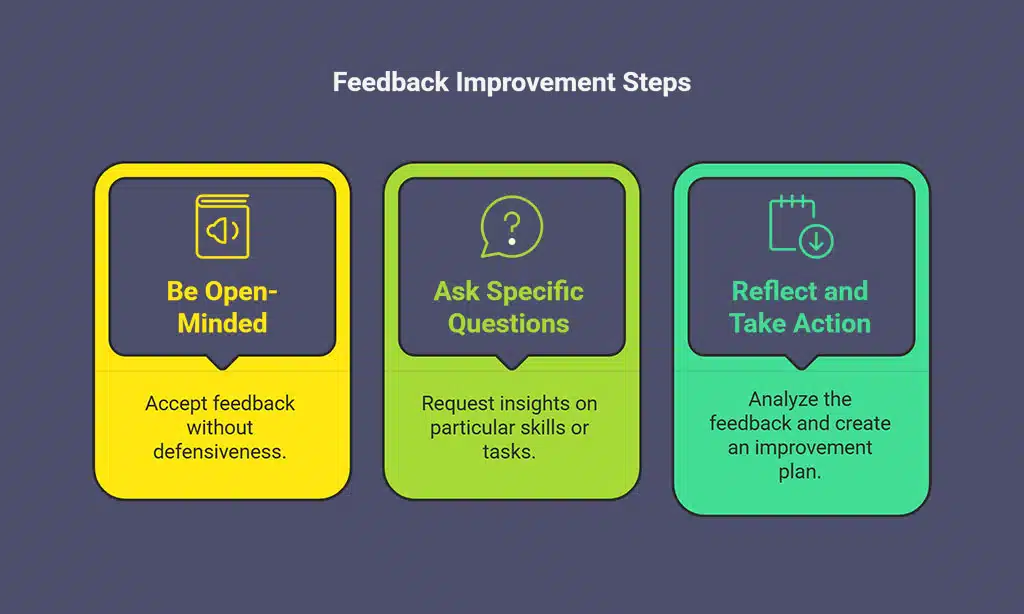
Constructive feedback helps professionals gain perspective on their work performance and interpersonal skills. It highlights blind spots and provides opportunities for improvement. Without feedback, professionals may continue habits that hinder growth. Positive feedback also reinforces good behaviors, fostering motivation and confidence.
How to Request and Process Feedback?
- Be Open-Minded: Accept feedback without defensiveness.
- Ask Specific Questions: Instead of general inquiries, request insights on particular skills or tasks.
- Reflect and Take Action: Analyze the feedback and create an improvement plan.
Feedback Implementation Strategy
| Step | Action |
| Identify key feedback areas | Review past performance evaluations and peer feedback |
| Set measurable goals | Develop a structured plan to improve weak areas |
| Track progress | Regularly assess changes and refine approaches |
| Seek follow-up feedback | Ask for periodic reviews to ensure growth |
4. Identify and Manage Emotional Triggers
Emotional triggers can disrupt workplace relationships and productivity. Recognizing them allows professionals to respond more effectively rather than react impulsively. Triggers may include receiving criticism, dealing with authority, or experiencing rejection. Managing these emotions improves professional relationships and career growth.
Steps to Recognize and Control Triggers
- Keep an Emotional Response Log: Record situations that trigger strong emotions and analyze patterns.
- Practice Deep Breathing Techniques: Use controlled breathing to calm emotional responses before reacting.
- Engage in Cognitive Reframing: Change negative thought patterns by focusing on positive interpretations.
Practical Application
| Emotional Trigger | Coping Strategy |
| Harsh Criticism | Reframe feedback as an opportunity for growth |
| Tight Deadlines | Prioritize tasks and practice time management |
| Conflict with Colleagues | Use active listening and empathetic communication |
5. Align Your Actions with Core Values
Personal and professional values shape career decisions. Aligning daily actions with core values enhances job satisfaction and professional integrity. Values like honesty, accountability, and collaboration influence workplace behavior and interactions.
Identifying Your Core Values
- Self-Assessment: Reflect on past career choices and what made them fulfilling or frustrating.
- Value Ranking Exercise: List values like integrity, creativity, and teamwork, ranking them by importance.
- Decision Alignment: Before making career choices, assess if they align with your top values.
Action Plan for Value-Based Decision-Making
| Step | Action |
| Identify core values | Write down the values most important to you |
| Compare with current work | Assess if your job aligns with these values |
| Adjust professional goals | Seek roles and projects that align with your values |
Wrap Up
Developing self-awareness as a professional is a lifelong journey. By understanding strengths and weaknesses, practicing mindfulness, seeking feedback, managing emotional triggers, and aligning actions with core values, professionals can enhance their career growth and personal fulfillment.
These tips for developing self-awareness as a professional will help you unlock greater career success, improve workplace relationships, and make informed decisions.
Start implementing these strategies today and witness the transformation in your professional journey.