


Stress has become a growing concern in workplaces worldwide. According to a 2023 survey by the American Institute of Stress, nearly 83% of U.S. workers experience work-related stress, with more than half reporting that it negatively impacts their productivity.
As colleagues, we are often the first to notice when someone is struggling. Learning how to support a colleague with stress fosters a healthier, more positive work environment and improves team dynamics.
In this article, we explore five practical ways to support a colleague with stress and help create a workplace culture where mental well-being thrives.
5 Effective Ways to Support a Colleague With Stress
1. Recognize the Signs of Stress in a Colleague
Before offering help, it’s crucial to recognize when someone might be struggling. Stress doesn’t always manifest in obvious ways, but there are telltale signs to watch for:
Common Indicators of Workplace Stress:
| Signs | Examples |
| Emotional Changes | Irritability, mood swings, withdrawal |
| Physical Symptoms | Fatigue, headaches, changes in appetite |
| Behavioral Shifts | Increased absenteeism, reduced productivity |
| Communication Changes | Avoidance of meetings, difficulty concentrating |
Detailed Tips for Observing Stress:
- Be Attentive: Pay attention to changes in tone, body language, or work patterns. These subtle shifts can signal stress.
- Track Changes Over Time: A one-time lapse in performance may not be concerning, but consistent signs over days or weeks might indicate deeper issues.
- Avoid Judgments: Do not label behavior as “lazy” or “unproductive” without understanding the context.
If you notice these patterns, approach your colleague with empathy. Avoid making assumptions or jumping to conclusions; instead, focus on observing and supporting.
2. Offer a Listening Ear

Sometimes, the best way to support a colleague is to simply listen. Active listening can provide immense relief to someone dealing with stress, helping them feel heard and validated.
How to Practice Active Listening:
| Tip | Explanation |
| Create a Safe Space | Find a private, quiet area to talk without interruptions. |
| Focus on the Speaker | Maintain eye contact and minimize distractions like your phone. |
| Show Empathy | Use phrases like, “That sounds challenging,” to validate feelings. |
| Avoid Interrupting | Let them finish their thoughts before offering input. |
| Ask Open-Ended Questions | Encourage them to elaborate by asking, “How can I help?” |
Examples of Supportive Phrases:
| What to Say | Why It Helps |
| “I’m here to listen if you need to talk.” | Shows availability and creates a non-judgmental environment. |
| “What’s been on your mind lately?” | Opens the door to deeper conversation without forcing the issue. |
| “I can see how that would be overwhelming.” | Validates their feelings and fosters trust. |
Starting the conversation can be as simple as saying, “I’ve noticed you seem stressed lately. Would you like to talk about it?” Small gestures like these can make a big difference.
3. Suggest Practical Solutions
Once your colleague opens up, offering practical solutions can help them better manage their stress. This doesn’t mean solving their problems but rather pointing them toward resources or strategies.
Practical Ways to Help:
| Solution | How It Helps |
| Encourage Regular Breaks | Suggest short walks or mindfulness exercises to recharge during work hours. |
| Recommend Mental Health Apps | Apps like Calm or Headspace offer guided meditations and stress management tools. |
| Offer to Help with Workload | Collaborate to prioritize tasks or redistribute responsibilities temporarily. |
| Share Workplace Resources | Point them to Employee Assistance Programs (EAPs) or HR support systems. |
Additional Strategies:
- Time Management Tools: Suggest apps like Trello or Asana to help them organize and prioritize tasks.
- Healthy Lifestyle Tips: Encourage regular exercise, proper hydration, and healthy eating habits as these can significantly impact stress levels.
- Buddy System: Offer to check in regularly to keep them feeling supported without being overbearing.
By showing initiative, you demonstrate your willingness to support their well-being.
4. Promote a Supportive Work Culture
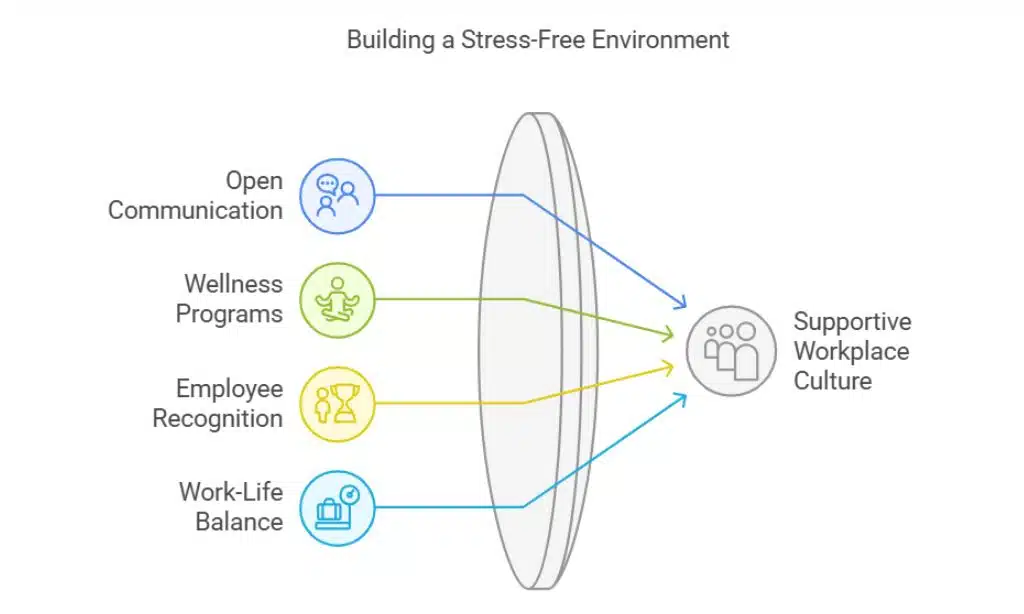
Stress isn’t just an individual issue—it’s often a symptom of workplace culture. By fostering a supportive environment, teams can prevent stress from becoming overwhelming.
How to Foster a Positive Culture:
| Action | Description |
| Open Communication Channels | Regular check-ins or team meetings to discuss concerns openly. |
| Implement Wellness Programs | Host stress management workshops or fitness activities. |
| Recognize Employee Efforts | Celebrate achievements to boost morale and reduce pressure. |
| Encourage Work-Life Balance | Set an example by not sending emails outside of work hours. |
Case Studies of Supportive Cultures:
- Google’s Approach: The tech giant offers wellness rooms, mental health days, and meditation sessions to employees.
- Salesforce: Introduced “Mindfulness Zones” in offices worldwide to encourage mental relaxation.
- Small Business Ideas: Create a simple gratitude wall where employees can post notes recognizing their colleagues’ efforts.
Managers play a critical role in shaping this culture. However, every team member can contribute by modeling supportive behaviors.
5. Know When to Encourage Professional Help
While offering support is important, some situations may require professional intervention. Knowing when and how to suggest this is crucial.
When to Recommend Professional Help:
| Signs | Recommended Action |
| Persistent Stress Symptoms | Gently suggest speaking to a mental health counselor or therapist. |
| Decline in Performance and Health | Encourage them to utilize company-provided mental health resources. |
| Crisis Situations | If they express thoughts of self-harm, involve HR or a crisis hotline immediately. |
How to Have This Conversation:
- Approach with Care: Use non-threatening language like, “Have you considered talking to someone who can help you navigate this?”
- Provide Resources: Offer details of company EAPs, local counselors, or hotlines like the National Suicide Prevention Lifeline (988 in the U.S.).
- Follow Up: Check in with them to ensure they have accessed support and are feeling better.
Approach this conversation with sensitivity. You might say, “Have you considered talking to a professional? They can provide tailored strategies to help manage stress.”
Takeaways
Knowing how to support a colleague with stress not only demonstrates empathy but also contributes to a healthier and more collaborative workplace. By recognizing signs of stress, offering practical help, and fostering a supportive culture, you can make a meaningful difference in someone’s professional and personal life.
Stress is a shared challenge, but with shared effort, it becomes manageable. Start today by implementing these steps and encouraging your team to do the same.
Call-to-Action: What have you found effective in supporting stressed colleagues? Share your tips in the comments or explore more of our resources on workplace wellness
























