Have you ever felt completely stuck with limited choices when trying to find great art? It used to be that you had to visit a physical museum or wait for a huge concert tour to come to your local US city. You might have lived far from major galleries, dealt with a tight budget, or simply lacked the free time to hunt down the art you love.
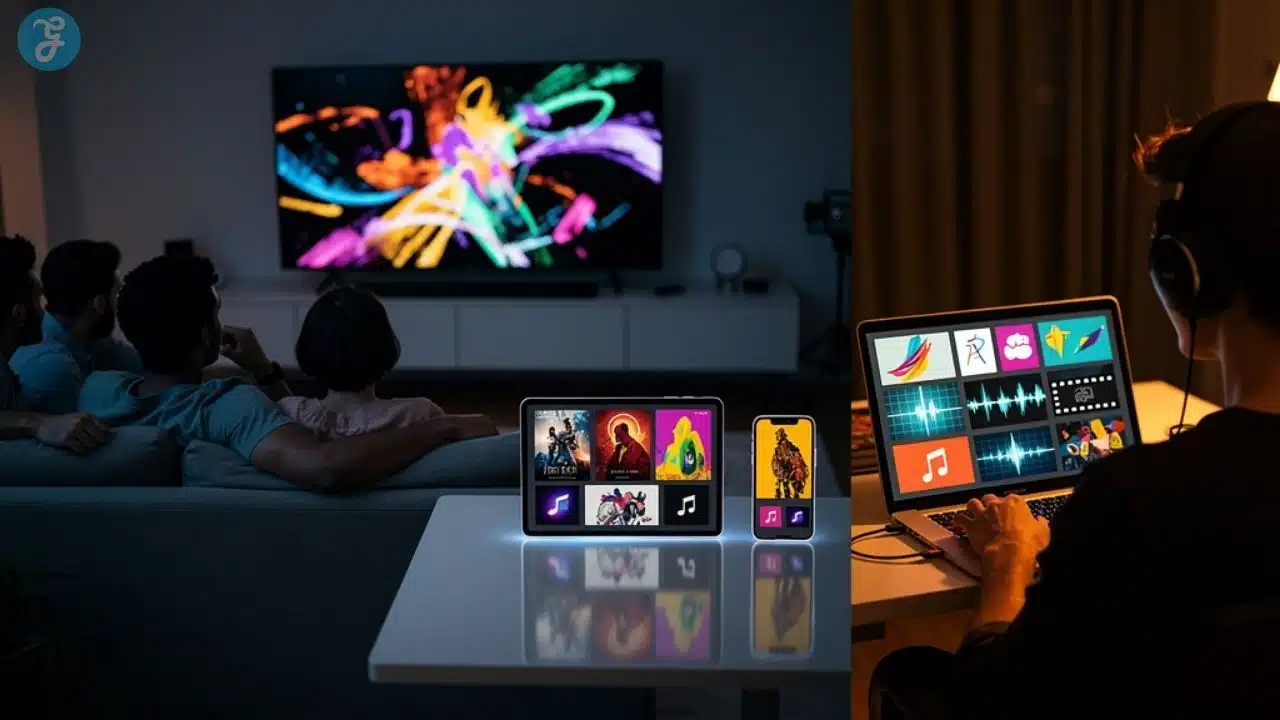
Streaming platforms have completely flipped the script. Today, you can watch a live concert right from your couch, explore classic paintings, or discover amazing new music from artists across the globe. It happens in seconds. Here is a striking fact to consider. Streaming services now reach well over 1.5 billion people worldwide, and in 2025, global streaming revenue hit a staggering $157 billion, with the US driving half of that total.
This massive shift has transformed how creators share their work and how eager audiences find it. I am going to walk you through the streaming impact on art. You will learn exactly how artists benefit, what specific challenges they face, and what exciting changes are coming next for creative culture.
How Streaming Has Changed The Way We Consume Art Globally
Streaming platforms broke down the heavy walls that kept art locked behind gallery doors and museum gates. Artists now reach millions of people from their home studios. Audiences discover work they never knew existed.
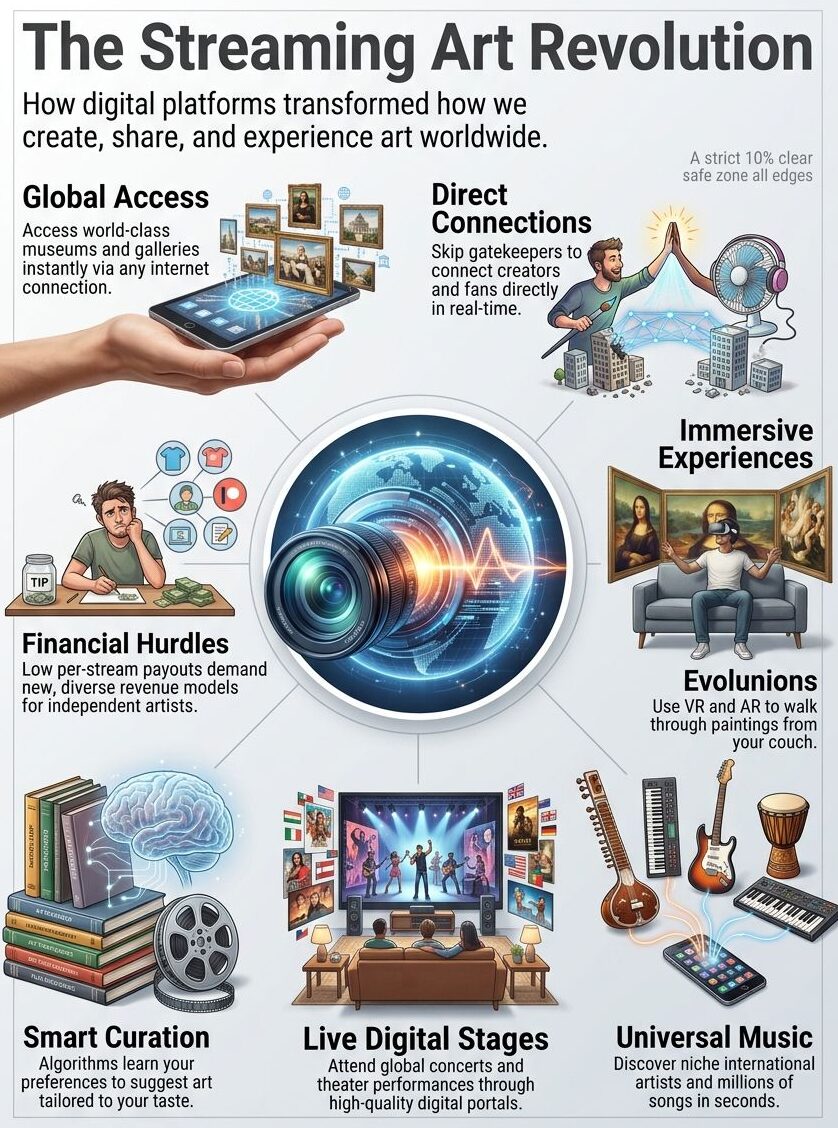
How streaming democratized access to art
Art used to live strictly behind velvet ropes and expensive ticket booths. Museums charged hefty admission fees, concert halls sat far from rural towns, and exclusive galleries existed mostly in major cities. Streaming platforms smashed these physical barriers to pieces.
Now, anyone with a basic internet connection can explore the Louvre or listen to independent musicians from their living room. This shift transformed art from something exclusive into something incredibly accessible.
People in small towns, individuals with limited mobility, and families without spare cash suddenly gained easy entry to cultural treasures. Online galleries opened their digital doors to millions.
Virtual exhibitions brought stunning masterpieces directly into homes. A 2026 market report shows that over 430 museums and cultural institutions in the US alone now offer digital walkthroughs.
Audience engagement exploded because art consumption no longer required travel, big money, or VIP connections. Artists found new pathways to reach fans across the globe, skipping the traditional gatekeepers entirely.
“Art should not be a luxury; it should be a necessity available to all.”
The democratization of art through streaming also shifted power dynamics in the creative space. Independent artists no longer needed giant record labels, snooty gallery owners, or huge film studios to share their work.
A musician could upload a new song and reach millions overnight. A visual artist could easily launch an online gallery right from their bedroom. Peer-to-peer sales models emerged, allowing creators to connect directly with their most loyal supporters.
Direct connections between artists and audiences
Streaming platforms have torn down the walls between creators and fans. Making direct connections is the new normal. Artists now skip the middleman entirely. They post their work, talk to supporters in real time, and build active communities around their creative vision. A musician can release a song on Spotify and chat with listeners on social media within minutes.
A painter can host a live studio session on Instagram and sell beautiful prints straight to collectors. This direct link changes everything about how art gets made and shared.
- Fans feel much closer to the real people behind the work.
- Artists gain instant feedback on exciting new projects.
- Creators learn exactly what their audience truly wants to see.
- Emerging talents build loyal followings without waiting for permission.
The old gatekeepers no longer hold all the power. Streaming services have handed that incredible power directly to creators themselves.
This massive shift transforms the entire art distribution system. Independent artists easily control their message, their pricing, and their ultimate creative freedom. Peer-to-peer sales happen constantly through these platforms.
Streaming and Visual Art
Streaming platforms have totally transformed how we see paintings, sculptures, and vivid photographs from our couches. Museums now broadcast major exhibitions live. This makes priceless masterpieces accessible to millions who never set foot inside their doors.
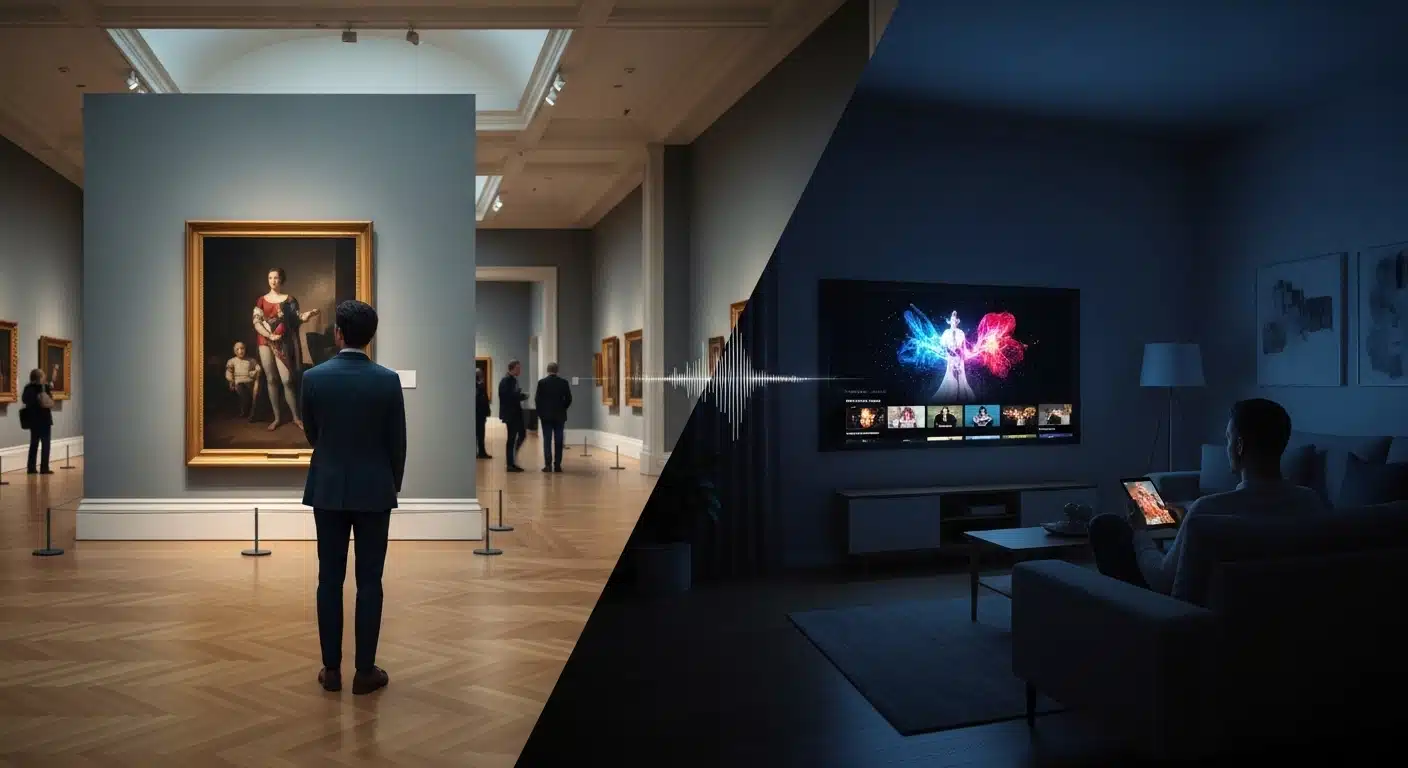
The impact on digital galleries and exhibitions
Digital galleries have revolutionized how people experience fine art without leaving home. Museums and local galleries now offer immersive virtual exhibitions that reach millions of people across the globe.
“The Smithsonian’s virtual museum offerings recorded over 4 million global visits in a single recent year, proving the massive demand for digital access.”
Artists eagerly display their work on sleek online platforms, making art consumption more accessible than ever before. Virtual exhibitions break down harsh geographic barriers, so someone in rural Kansas can view masterpieces from the Louvre just as easily as a wealthy New York resident.
Digital art distribution has opened wide doors for emerging creators. They showcase their talent without needing expensive physical gallery space.
Online galleries operate twenty-four hours a day, seven days a week. This gives audiences complete control over exactly when they explore beautiful art. The user experience on these platforms continues to improve rapidly. You get high-resolution images, fun interactive features, and detailed artist information, enriching each visit.
Virtual reality (VR) and augmented reality (AR) experiences
Virtual reality and augmented reality are entirely reshaping how we experience art in modern galleries and museums. VR headsets literally transport viewers into immersive worlds.
You can walk through famous paintings, stand inside massive sculptures, or explore messy artist studios straight from your couch. AR technology seamlessly overlays digital art onto your real spaces.
The popular Google Arts & Culture app uses AR features so you can project classic paintings directly onto your living room wall before you buy a print. These technologies absolutely break down walls between artists and enthusiastic audiences. Museums happily offer VR tours of their extensive collections. They easily reach people who simply cannot travel to physical locations.
VR platforms eagerly host virtual exhibitions where thousands of people gather simultaneously. They view artwork, discuss complex pieces, and connect directly with creators.
How Streaming Has Transformed Music Consumption
Streaming services put millions of songs right at your fingertips. They broke down the heavy walls that once kept music locked behind high price tags and strict geography. Artists now reach new fans across the globe instantly.
Accessibility of music across the globe
Music streaming services have completely knocked down barriers that once kept songs hidden. Artists from Nigeria, India, South Korea, and Peru now reach US listeners in seconds, not months.
A teenager in rural Montana can easily discover a folk singer from Vietnam at midnight. They can then share that cool song with friends across three continents by breakfast. This incredible global reach transforms how people find fresh music. It breaks the old gatekeeping system where giant record labels decided exactly what you heard.
Challenges for independent artists and revenue models
Independent artists still face a very tough road on major streaming platforms. Earning a living wage from digital plays is a massive challenge. To understand the financial reality, let’s look at the average payouts per stream in 2026.
| Streaming Platform | Average Payout Per Stream | The Reality for Artists |
|---|---|---|
| Spotify | $0.003 to $0.005 | An artist needs roughly 200,000 streams just to earn $1,000. |
| Apple Music | $0.006 to $0.01 | Higher payout rate because there is no free, ad-supported tier. |
| YouTube Music | $0.001 to $0.003 | Lowest effective rate, highly dependent on running video ads. |
Most independent musicians simply struggle to reach those massive numbers. They absolutely cannot rely on streaming alone. They constantly compete against millions of other eager creators for limited listener attention. Spotify paid over $11 billion to the music industry in 2025, but a huge chunk of that went to massive stars and giant labels.
The algorithm heavily favors established artists with large, active fanbases. This often leaves talented newcomers buried deep in the digital noise. Artists must spend precious time aggressively promoting their work instead of just creating it. This quickly drains their energy and tight resources.
Streaming and the Film Industry
Streaming services boldly shattered the old gatekeeping system. They let brilliant filmmakers reach millions without waiting for strict studio approval. Directors now tell unique stories from every corner of the globe.
Redefining art-house cinema
Art-house theaters once proudly stood as sacred spaces for serious film lovers. These intimate local venues showed independent films, foreign movies, and experimental work that mainstream multiplexes completely ignored.
Streaming services have absolutely flipped this gatekeeping model. Now, filmmakers directly upload their creative work to niche platforms like Criterion Channel, MUBI, and Kanopy. These specific platforms focus heavily on preserving and sharing important arthouse cinema. Audiences easily discover challenging cinema from their cozy couches.
They are no longer dependent on what their small local theater decides to show. This massive shift democratizes access to beautiful art films. Independent directors gain huge global audiences almost overnight. Niche audiences quickly find their exact people across vast continents.
The rise of international storytelling through streaming
Streaming platforms have shattered old geographic borders. They bring diverse stories from every corner of the world right into our cozy living rooms. A talented filmmaker in South Korea can easily reach millions of eager viewers in the US, Brazil, and Canada on the exact same day.
- Audiences discover fresh stories they never would have found in traditional local theaters.
- The art distribution model has fundamentally changed for the better.
- Creative freedom sits directly in the hands of amazing storytellers worldwide.
- Viewers actively seek out completely diverse perspectives and narratives.
International storytelling has totally exploded. Huge streaming services invest heavily in original content from different countries, languages, and rich cultures.
Hit series from Japan, Spain, Turkey, and India successfully compete for intense attention alongside huge American productions. This incredible audience engagement encourages more artists to tell their authentic stories.
Performance Arts in the Streaming Era
Streaming platforms have turned classic theaters and grand concert halls inside out. They let eager audiences watch live performances right from their comfy couches. Artists now reach millions of people instantly.
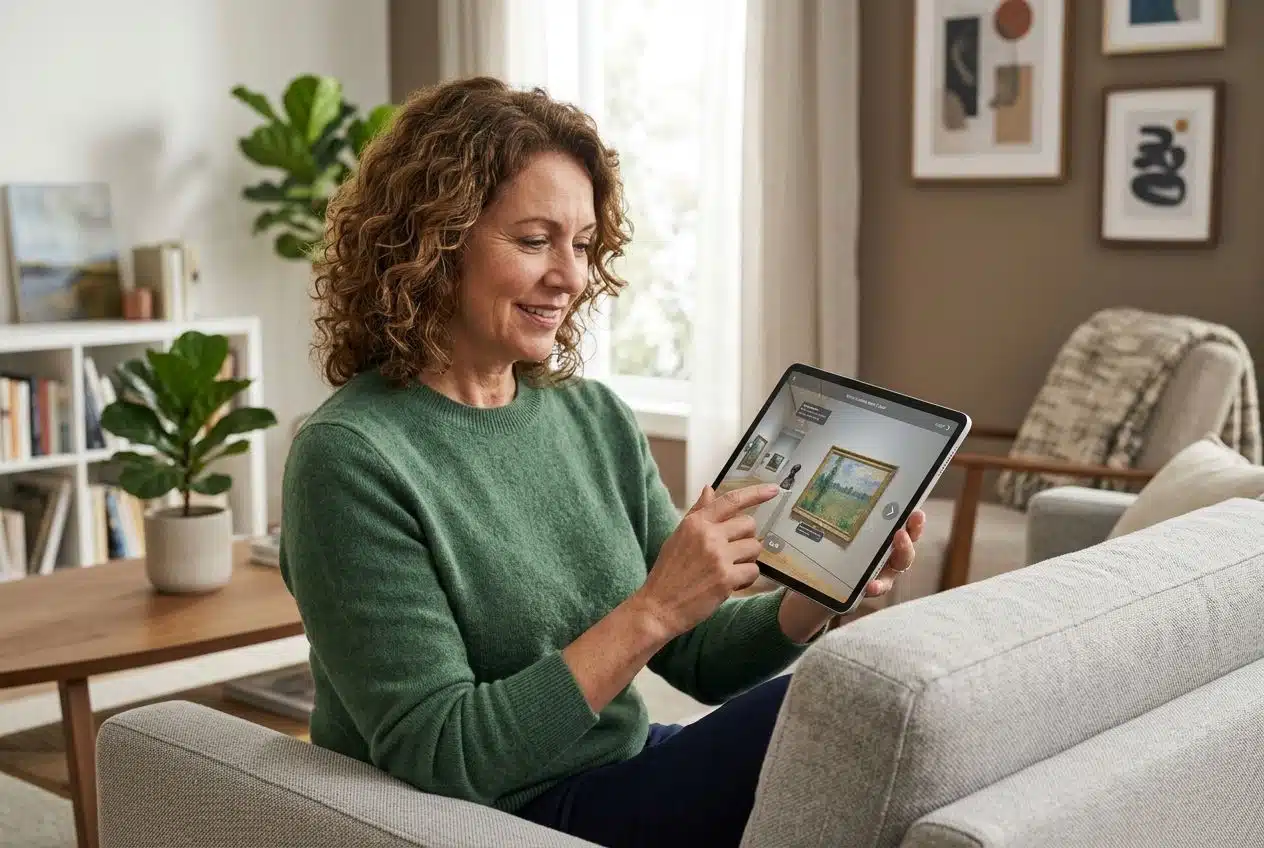
Live streaming of theater and concerts
Live theaters and concert halls now broadcast stunning performances directly to eager audiences worldwide. This shift has shattered geographical barriers. It makes live cultural experiences completely accessible to millions who simply cannot attend in person.
- BroadwayHD celebrated its 10th anniversary in 2025, proving that streaming hundreds of full-length theatrical productions is a highly successful model.
- Concert performances streamed live beautifully capture the raw energy of live music, letting fans watch their favorite artists perform from home.
- Virtual performances generate awesome new revenue streams for hardworking artists and struggling venues.
- Independent performers and smaller theater groups access huge distribution channels that were previously impossible to reach.
High-quality audio and video production standards have improved significantly. This makes online performances feel highly professional and incredibly polished.
Accessibility features like accurate closed captions, helpful audio descriptions, and multiple language options make performances beautifully inclusive. People with disabilities and non-English speakers can finally join the fun.
The shift to virtual cultural festivals
Streaming platforms have transformed massive cultural festivals from physical events into engaging digital experiences. Museums, grand theaters, and legendary music venues now broadcast their best performances online. This makes amazing art highly accessible to audiences who simply cannot attend in person. Virtual cultural festivals break down tough geographical barriers.
A curious person in rural Montana can watch a stunning ballet performance from New York City at the exact same time as someone in Tokyo. Streaming services carefully capture performances in stunning high quality.
This allows viewers to feel the raw energy and deep emotion of live shows straight from their homes. People can now proudly participate in cultural events without heavy travel costs or annoying scheduling conflicts.
The Benefits of Streaming for Consumers
Streaming platforms hand you highly personalized recommendations that learn what you actually like. You easily skip past the junk and find art that truly speaks to you. You get instant access to amazing niche and experimental art forms.
Personalized recommendations and curated content
Platforms like Netflix, Spotify, and Apple Music use incredibly smart computer systems to learn exactly what you like. These advanced systems watch what you play, pause, and quickly skip. They carefully track how long you listen to specific songs or watch certain shows. Over time, these platforms get much better at guessing what you will genuinely enjoy next.
Your personal recommendations become incredibly accurate because the smart software actually learns your taste. The Spotify “Discover Weekly” algorithm acts exactly like a knowledgeable friend who knows your exact music preferences.
Curated content takes this brilliant idea one step further. Real human experts carefully pick out art for you. Music experts lovingly create perfect playlists for different moods, fun activities, and obscure genres. Film critics enthusiastically highlight amazing hidden gems you might totally miss otherwise.
Accessibility to niche and experimental art forms
Streaming services have fully thrown open the heavy doors to art forms that once lived completely in the shadows. Experimental noise music, avant-garde theater, and wild performance art now reach massive audiences. These creators would never find these massive crowds in traditional local galleries or standard concert halls.
- Artists easily upload their work and quickly build supportive communities.
- A musician making ambient soundscapes in her bedroom can find thousands of listeners overnight.
- A brilliant filmmaker pushing narrative boundaries reaches hardcore film enthusiasts across the globe.
- Experimental art forms that once strictly required deep insider knowledge now sit right in your daily feed.
This massive shift means that incredibly niche audiences finally have a welcoming home. Artists have a reliable platform to proudly share their uncompromised vision.
Independent creators smartly bypass traditional art distribution channels entirely. They firmly control their creative process, comfortably set their own terms, and proudly keep more of what they earn.
Challenges Posed by Streaming for Artists
Streaming platforms absolutely flood the market with so much content that artists deeply struggle to stand out. Grabbing a listener’s fleeting attention is harder than ever. Artists also face severely shrinking paychecks.
Content oversaturation and competition
Artists face completely intense competition on multimedia platforms today. Millions of eager creators upload content every single day, making standing out incredibly hard.
Your absolute favorite independent musician competes against thousands of other talented musicians for very limited listener attention. To put it in perspective, industry reports show that over 100,000 new music tracks are uploaded to streaming services every single day.
Visual artists constantly battle for digital gallery space on crowded online platforms. This massive flood of content means that incredibly high-quality work often gets buried under very mediocre offerings.
Independent creators deeply struggle to gain real traction when so much art consumption happens on the exact same few services. The sheer volume of digital media makes it extremely tough for fresh emerging talents to build a real audience.
Financial sustainability and evolving revenue structures
With so many desperate artists fighting for listener attention, the huge money question looms very large. How do hardworking creators actually get paid when their beautiful work streams millions of times?
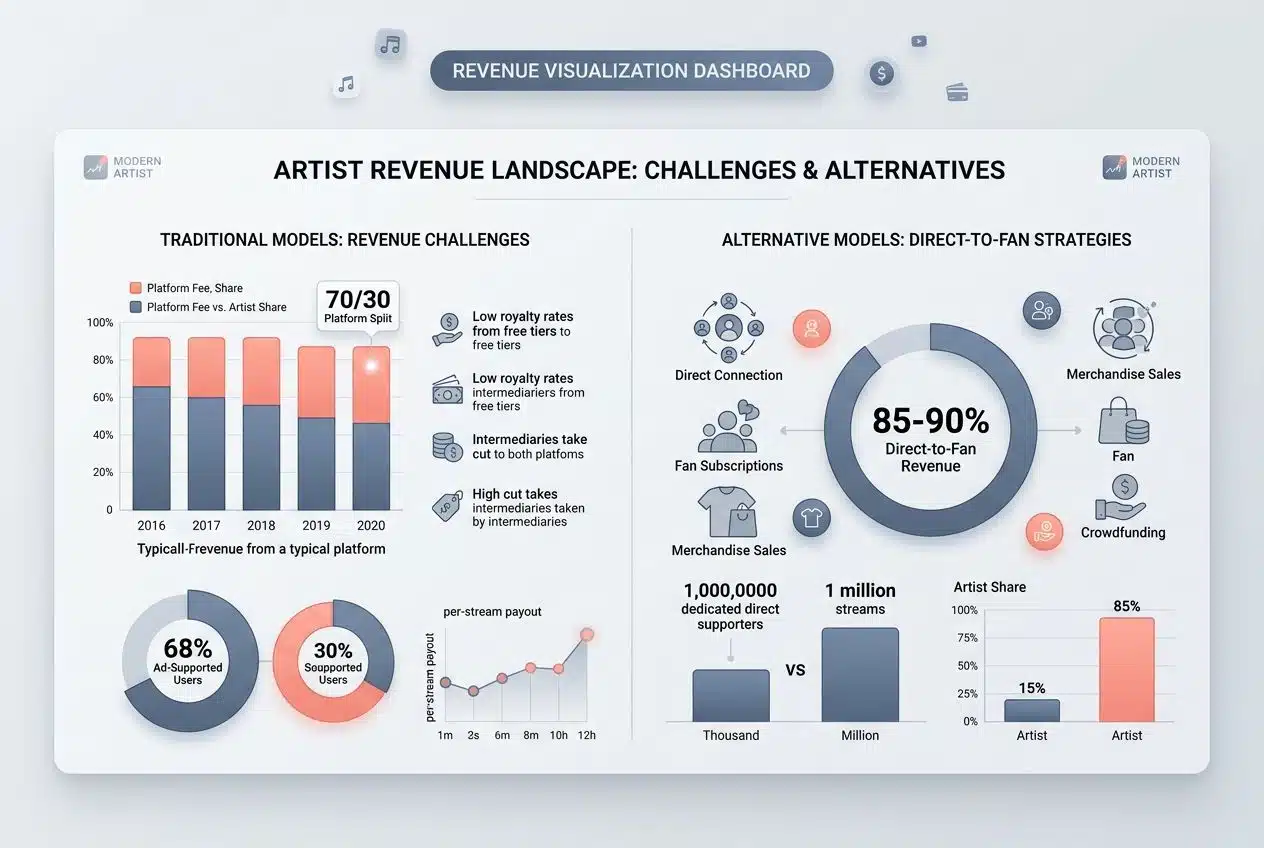
| Revenue Challenge | What’s Happening | Real Impact |
|---|---|---|
| Streaming Payouts Per Play | Spotify pays an average of $0.003 to $0.005 per stream in 2026. | A song needs about 200,000 streams on Spotify to earn a mere $1,000. |
| The 70/30 Split Problem | Platforms generally keep 30 percent of total revenue. Record labels and rich distributors take their huge cuts next. | An artist earning $10,000 in raw streams might take home just $2,000 after all those harsh deductions. |
| Subscription Model Limits | Nearly 68% of US streaming subscribers now use ad-supported tiers. | This “pie-slicing” means far less money available for each individual creator. |
| Direct-to-Fan Alternatives | Platforms like Patreon and Bandcamp let smart creators completely bypass traditional streaming platforms. | Creators keep roughly 85 to 90 percent of their cash through these direct, fan-supported channels. |
Streaming platforms clearly generate billions annually, yet most of that huge money never reaches individual creators. The harsh math simply does not work for fresh emerging talent relying solely on streams.
Many smart musicians now treat regular streaming simply as a helpful marketing tool rather than a primary income. They smartly use it to heavily drive live concert ticket sales and physical merchandise orders instead.
The Future of Art in the Streaming Age
Artificial intelligence and totally new technologies will deeply shape how we experience beautiful art on screens. Highly personalized content will soon feel like it was carefully made just for you.
Integration of artificial intelligence and emerging technologies
AI tools now heavily power modern streaming platforms in incredible ways that completely shape what art we see. Advanced machine learning algorithms deeply study our daily viewing habits. They then suggest cool new content that perfectly matches our specific interests. Netflix uses these massive systems to recommend brilliant films and fun shows.
Spotify does the exact same cool trick with its music tracks. These smart technologies learn directly from millions of real users, easily spotting tiny patterns that normal humans might completely miss.
- Virtual reality lets excited viewers literally step inside classic paintings or safely explore three-dimensional sculptures from home.
- Augmented reality overlays cool digital artworks onto your real living spaces.
- Live streaming technology captures massive concerts and intimate theater shows with crystal-clear visual quality.
- Blockchain technology happily introduces fresh, exciting revenue models for completely independent artists.
The global art market completely transforms as these incredible innovations massively lower traditional barriers to entry. They give hardworking creators amazing direct connections with their loyal fans.
The balance between physical and virtual art experiences
Art galleries and huge museums face a very real choice today. They absolutely cannot ignore massive streaming services and sleek online platforms. Yet they also cannot abandon their beautiful physical spaces. Smart institutions beautifully blend both approaches into their core strategy. A curious visitor might happily watch a cool virtual exhibition online, then visit the actual local gallery to see the real, textured paintings.
In fact, 2026 market data shows that over 52% of US travelers now interact with virtual tourism platforms before ever booking physical travel. This perfectly proves that virtual previews actually boost real-world visits. The physical art market itself is totally shifting because of this brilliant balance. Artists now smartly distribute their amazing work through multiple digital channels at once.
Wrapping Up
Streaming services have fundamentally shifted how we interact with art across every single medium. We see this massive change in everything from catchy music and cool films to stunning visual galleries. Artists now connect directly with eager audiences worldwide. They easily bypass those old traditional gatekeepers, and this incredible shift clearly continues to completely reshape our cultural landscape.
Consumers absolutely enjoy unprecedented access to sleek multimedia platforms, highly personalized recommendations, and amazing niche art forms. This pure democratization of art distribution means absolutely anyone with basic internet access can discover incredible experimental work.
How streaming has changed the way we consume art is truly a story of breaking down walls. Audiences will soon demand much more from their daily user experience. Creators will aggressively seek far better revenue structures, and general cultural consumption patterns will quickly adapt to awesome new technologies. The amazing future absolutely belongs to those who totally embrace creative freedom. We must simply stay grounded in the real, human connections that beautiful art creates between us all.
Streaming certainly didn’t kill traditional art; it simply expanded the massive stage where beautiful art happens.
Frequently Asked Questions (FAQs) on Streaming Impact on Art
1. How has streaming changed the way people view art?
Streaming platforms like Google Arts & Culture let you explore collections from over 2,000 museums worldwide, right from your couch. You can zoom into a Van Gogh or watch a live performance without ever leaving home.
2. Does streaming make it easier to discover new artists?
Yes, it really does. Algorithms on platforms like Spotify suggest new creators based on what you already enjoy, leading you to artists you’d never discover through traditional channels.
Absolutely. Artists now upload directly to platforms like Patreon, building audiences worldwide without needing gallery representation or agents between them and their fans.
4. Has streaming changed how we talk about art?
It sure has! People discuss pieces in real-time through comments and social media, making art conversations more immediate and inclusive than ever. A 2023 National Endowment for the Arts survey found that 45% of U.S. adults now engage with the arts through electronic media. Everyone gets to join the discussion now.