


Getting injured in a public place can be stressful and confusing. Even minor injuries might lead to medical bills or other issues later. Knowing the steps to take can protect your health and any potential personal injury claim.
Here are 9 important steps you should follow right away!
Assess the Situation and Your Injuries
Check your body for any pain or injuries. Look for cuts, bruises, swelling, or broken bones. If blood is visible or you feel dizzy, stop moving and stay calm.
Decide if medical attention is urgent. Call 911 for serious injuries like head injuries or spinal cord damage. Even minor pain could mean internal bleeding—don’t ignore it! Your health comes first.
Move to a Safe Location if Possible
Get yourself to a safe spot if it won’t make your injuries worse. Stay away from hazardous conditions like wet floors, construction hazards, or inadequate lighting. Protect yourself from further harm before doing anything else.
Keep an eye out for dangerous areas or moving hazards. For example, step aside from busy roads or slippery surfaces caused by spills and puddles. Be cautious around areas where people might trip over objects like potholes or broken steps.
Only move if you feel steady enough; don’t take risks that could worsen personal injuries like head injuries or spinal cord issues.
Seek Immediate Medical Attention
See a doctor right away, even for small injuries. Pain or problems may not appear until hours or days later. A medical professional can check you properly and catch hidden issues like head injuries or spinal cord injuries.
Getting care quickly ensures records are created about your injury. These medical records support personal injury claims if legal action is needed later. It also helps to avoid worsening your condition while saving time on future treatments and complications.
Document the Scene of the Incident
Take clear photos of the accident area. Focus on hazardous conditions like wet floors, obstacles, or poor lighting. Capture multiple angles to show the full scene. Record details such as time, date, and exact location.
Write a detailed account of what happened. Include facts about how you got injured and describe dangerous conditions. Save all photos as evidence for your personal injury claim or lawsuit later.
Gather Contact Information from Witnesses
Speak to anyone who saw the accident. Ask for their names, phone numbers, and emails. Write down what they saw in detail. Witnesses can help prove your case if needed later.
Report the Incident to the Property Owner or Manager
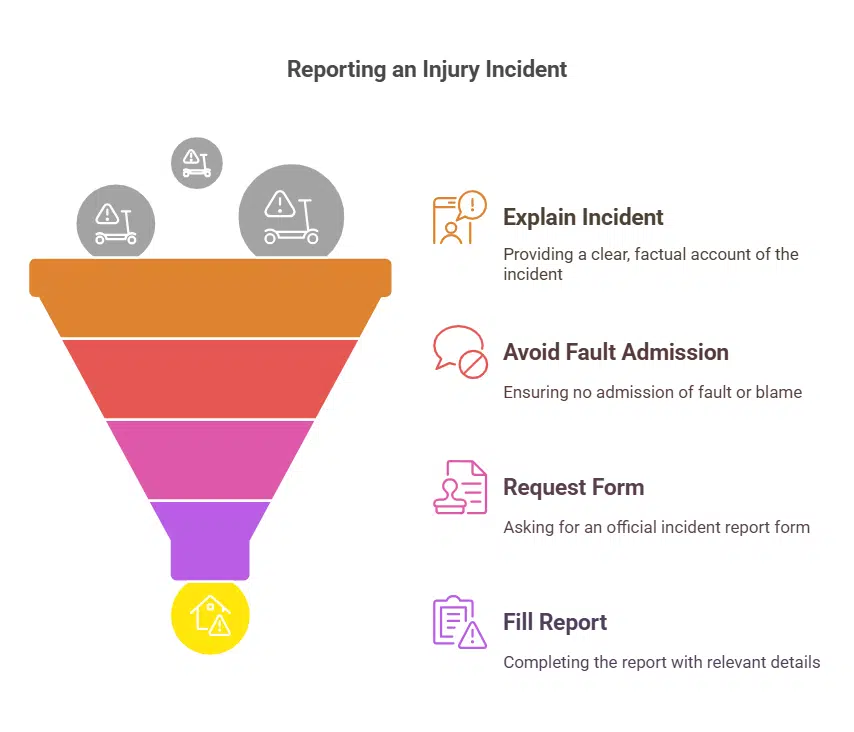
Notify the property owner or manager about your injury as soon as possible. Explain what happened clearly but stick to the facts. Do not admit fault or blame anyone during this conversation.
Ask if they have an official incident report form. Fill it out carefully, including details like wet floors, construction hazards, or inadequate lighting that caused the accident. Keep a copy for your records.
This step helps establish premises liability and strengthens your personal injury claim later on.
File an Official Incident Report if Applicable
Report the incident to local police or security. Filing an official report ensures there is a record. This can serve as key evidence later if you file a personal injury claim. Include details like the time, date, and location of the accident.
Attach photographic evidence of dangerous conditions, such as wet floors or construction hazards. Reports from officers often strengthen premises liability cases. They can help prove someone was legally responsible for your injuries due to negligence.
Preserve All Evidence Related to the Accident
Take pictures of the accident scene right away. Capture hazardous conditions like wet floors, construction hazards, or inadequate lighting. Use your phone to photograph injuries, damaged property, or anything unusual.
These photos can serve as strong evidence later.
Save physical items connected to the incident. This includes torn clothing or broken personal items. Ask nearby stores or buildings for security footage quickly—most recordings get erased after a few days.
Collect witness statements early while memories are fresh. Strong evidence helps hold the responsible party accountable under premises liability laws.
Keep Track of Medical and Other Related Expenses
Injuries can lead to many medical bills and extra costs. Keeping good records can help with a personal injury claim.
- Save all receipts from doctor visits, treatments, and medicines.
- Keep records of ambulance rides or ER visits.
- Write down every medical appointment date and what happened there.
- Track any physical therapy sessions or follow-ups with specialists.
- Note how much you pay for transportation to get medical care.
- Document lost wages if the injury keeps you from working.
- Record any home care, like hiring help for chores or child care.
- Use a journal to log pain levels and how the injury affects daily life.
- Save emails or letters about your case from insurance companies or lawyers.
- Take photos of wounds over time as proof of healing—or lack of it.
Contact a Personal Injury Attorney for Legal Guidance
If you are hurt in a public place, contact a personal injury lawyer. They can help you understand your rights and guide you through the legal process. Many offer free consultations, so don’t wait too long—deadlines might affect your claim! Protect yourself and get the support you deserve.
Takeaways
Getting hurt in a public place can be scary. Taking the right steps is key to protecting yourself and your rights. Act quickly—get help, report the accident, and keep evidence. These actions can make a big difference later.
Don’t hesitate to seek legal advice from a personal injury lawyer for support. You deserve to focus on healing while experts handle the rest!
FAQs on Steps To Take If You’re Injured In A Public Place
1. What should I do first if I’m injured in a public place?
Seek medical attention immediately. Your health is the top priority, and medical professionals can document your injuries for future use.
2. Who can be held liable for my injury in a public place?
The responsible party could be the property owner or anyone who failed their duty of care to keep the area safe from hazardous conditions like wet floors or inadequate lighting.
3. Do I need to file an incident report after being hurt?
Yes, filing an incident report helps document what happened. Include details about dangerous conditions and gather security footage or photographic evidence if possible.
4. Can hiring a personal injury lawyer help with my claim?
A personal injury attorney can guide you through premises liability laws, deal with insurance companies, and ensure you meet deadlines like the statute of limitations.
5. What damages can I seek compensation for in a personal injury lawsuit?
You may recover damages such as lost wages, medical bills, pain and suffering, and even special damages related to your case.
6. How long do I have to take legal action after getting hurt?
The statute of limitations varies by state but sets strict time limits on when you can file a personal injury claim—consulting an attorney quickly is essential!






















