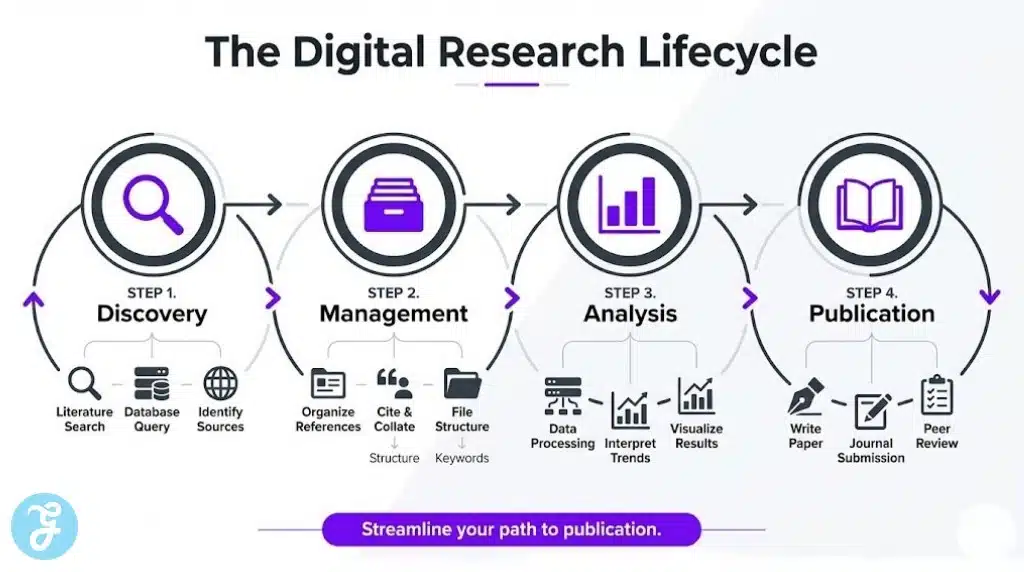
The transition from theoretical research to published scholarship requires educational software that can bridge the gap between raw data collection and peer-reviewed analysis. Academic publishing and academic research have long been controlled by a few massive corporate entities that lock data behind expensive paywalls. Shifting away from these legacy conglomerates reveals a vibrant ecosystem of independent developers and non-profit organisations building highly effective alternatives. These independent American studios provide the necessary infrastructure for data analysis and literature review without harvesting institutional budgets.
How We Selected Our 15 Best SMEs for research and scholarly tools in USA
Identifying the most effective digital management and discovery platforms required strict filtering criteria. We avoided large publishing conglomerates to highlight independent American studios that respect open science principles and adapt quickly to academic feedback.
-
Geographic Baseline: Operated and headquartered strictly within the United States as independent entities.
-
Scale Limit: Verified as independent SMEs or registered non-profits to ensure transparent data policies.
-
Functional Utility: Tools that demonstrably reduce administrative fatigue or deliver high-quality data processing.
-
Academic Integrity: Proven track records of protecting sensitive research data without relying on third-party advertising revenue.
Understanding these foundational criteria establishes why these specific digital tools stand out in the academic market.
Whom This is for
This breakdown serves independent researchers, university librarians, and academic lab directors seeking secure digital infrastructure for daily research operations and literature discovery.
Evaluating the Top 15 SMEs for research and scholarly tools in USA
Examining the independent software market reveals a strong division between literature discovery tools and raw data processing platforms. Here is our curated breakdown of the standout studios empowering modern research.
Starting with foundational literature management ensures researchers can properly organise their citations.
1. Zotero
Operating out of Virginia through the Corporation for Digital Scholarship, Zotero functions as a comprehensive, open-source citation manager. It allows academics to save references directly from their web browser and instantly generate bibliographies in thousands of different formatting styles. The platform integrates seamlessly with popular word processors to auto-populate citations during the writing process.
Best for: Managing large libraries of academic references and generating automated citations.
Why We Chose It: It remains completely free and open-source while outperforming expensive corporate alternatives.
Things to consider: The free tier has limited cloud storage for PDF attachments, meaning heavy users may need to upgrade or link their own cloud storage.
Once citations are organised, researchers need platforms to host their actual project files and collaborate securely.
2. Center for Open Science
Based in Virginia, the Center for Open Science provides the Open Science Framework to support rigorous research practices. This platform allows research teams to register their hypotheses before conducting experiments, host their raw data securely, and collaborate across different universities. It is a critical tool for combating the replication crisis in modern science.
Best for: Pre-registering studies and managing collaborative open science projects.
Why We Chose It: It actively promotes transparency and reproducibility in scientific publishing.
Things to consider: The interface is highly utilitarian and requires researchers to embrace new open data workflows.
While hosting data is important, discovering new literature requires advanced artificial intelligence.
3. Semantic Scholar
Headquartered in Washington, Semantic Scholar is an AI-driven search engine developed by the Allen Institute for AI. The platform uses natural language processing to read millions of scientific papers and extract key findings, methodologies, and highly influential citations. It helps researchers cut through the noise of traditional keyword searches to find highly relevant papers quickly.
Best for: Discovering highly influential research papers through artificial intelligence and natural language processing.
Why We Chose It: The engine highlights exactly which citations are meaningful rather than just listing every paper that mentions a specific word.
Things to consider: The database is incredibly strong in computer science and biomedicine but continues to grow its coverage in the humanities.
Accessing those discovered papers often requires bypassing traditional paywalls legally.
4. OurResearch
Also operating out of Washington, OurResearch is a non-profit organisation that builds open-source tools for bibliometrics and open access discovery. They maintain Unpaywall, a database that links researchers to free, legal versions of paywalled academic papers. They also operate OpenAlex, a massive open catalogue of global research metadata.
Best for: Locating legal open-access versions of academic papers and analysing global research trends.
Why We Chose It: It democratises access to scientific knowledge by breaking down traditional publishing paywalls.
Things to consider: It relies on universities properly indexing their open-access repositories to find the free documents.
When reading those accessible documents, researchers need tools to annotate texts collaboratively.
5. Hypothesis
Based in California, Hypothesis builds open-source software that allows researchers to annotate the internet. The tool overlays a digital transparency layer across any webpage or PDF, enabling academics to leave notes, highlight text, and reply to colleagues directly in the margins. It turns solitary reading into a highly collaborative academic exercise.
Best for: Collaborative digital annotation and peer-to-peer discussion directly on academic texts.
Why We Chose It: It integrates perfectly into existing learning management systems and public web browsers.
Things to consider: Researchers must ensure they are saving their notes to private groups if discussing sensitive, unpublished ideas.
Beyond linear reading, mapping how different papers connect requires spatial visualisations.
6. Research Rabbit
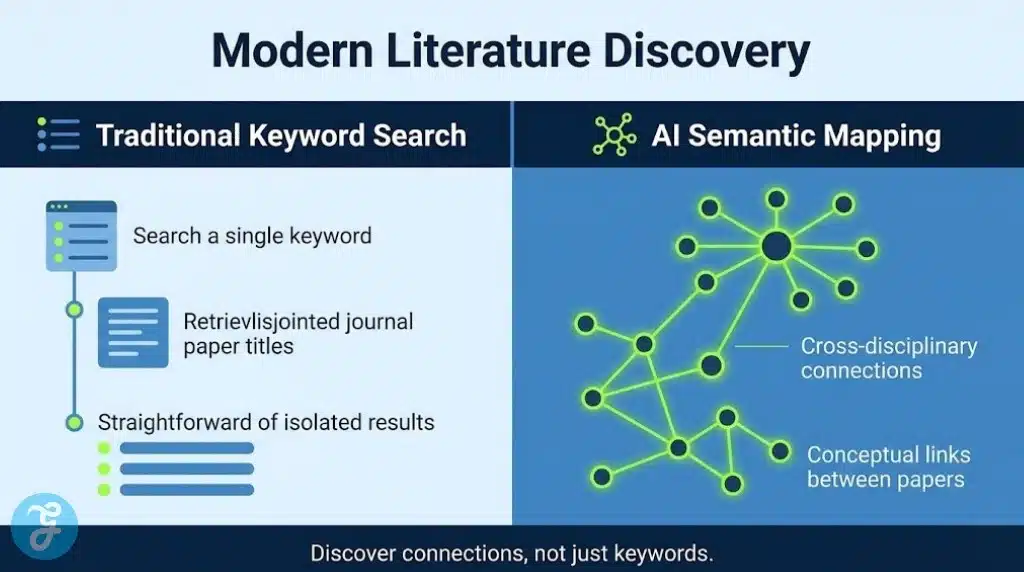
Research Rabbit is an independent startup based in Washington that reimagines literature discovery as a visual network. Users add a single foundational paper to their collection, and the software generates an interactive map showing all connected prior and future research. It allows academics to visually track how specific scientific concepts evolve over time.
Best for: Visually mapping citation networks and discovering connected research outside a standard keyword search.
Why We Chose It: The interactive graphs reveal obscure but highly relevant papers that standard search engines miss.
Things to consider: The highly visual interface can become cluttered if a researcher inputs too many foundational papers at once.
When a researcher needs direct answers from the literature, specialised AI assistants streamline the review process.
7. Elicit
Operating out of California, Elicit functions as an AI research assistant designed specifically to automate systematic reviews. A researcher asks a direct question, and the software finds relevant papers, extracts the specific data points, and synthesises the findings into a clean table. It drastically reduces the time spent screening abstracts for relevant methodologies.
Best for: Automating systematic literature reviews and extracting specific data points from dozens of papers simultaneously.
Why We Chose It: It actively mitigates AI hallucinations by grounding every generated answer in a direct, verifiable citation.
Things to consider: The algorithms are highly tuned for empirical research and may struggle with highly theoretical philosophy texts.
Similar to automated reviews, answering specific scientific queries requires targeted search engines.
8. Consensus
Headquartered in Massachusetts, Consensus is an AI search engine that extracts claims directly from peer-reviewed research. When a user asks a yes or no question, the engine scans millions of papers to provide a synthesised meter showing the general scientific consensus. It is an excellent tool for rapidly fact-checking scientific claims against rigorous literature.
Best for: Rapidly checking the general scientific consensus on specific, measurable questions.
Why We Chose It: It strips away marketing jargon to provide answers backed entirely by peer-reviewed evidence.
Things to consider: It is designed to answer specific questions rather than facilitating broad, exploratory literature reading.
After the research is written, managing the peer review process requires independent publishing tools.
9. Scholastica
Based in Illinois, Scholastica provides a modern software platform for independent academic journal management. It handles the entire publishing lifecycle from manuscript submission to peer review tracking and final open-access publishing. It empowers university departments and academic societies to publish rigorous journals without relying on massive corporate publishers.
Best for: Independent academic societies and university departments managing their own peer-reviewed journals.
Why We Chose It: It provides a highly professional publishing infrastructure at a fraction of the cost of legacy conglomerates.
Things to consider: It is a tool for journal editors and peer reviewers rather than a daily tool for individual students.
Analysing the actual data collected during a study requires robust, independent software.
10. Dedoose
Operating from California, Dedoose is a cloud-based application specifically designed for qualitative and mixed-methods research. Built by academics, it allows researchers to securely code interview transcripts, analyse survey data, and cross-reference qualitative text with quantitative metrics. It is highly collaborative, allowing multiple researchers to code the same document simultaneously.
Best for: Coding qualitative interview transcripts and managing mixed-methods research projects securely in the cloud.
Why We Chose It: It operates seamlessly across both Mac and PC platforms without requiring heavy local software installations.
Things to consider: The interface requires a slight learning curve for researchers used to legacy desktop applications.
For purely quantitative data analysis, open-source coding environments are the absolute standard.
11. Posit
Headquartered in Massachusetts, Posit operates as a Public Benefit Corporation providing essential tools for the R and Python data science communities. Their software provides the definitive integrated development environment for statistical computing and data visualisation. It is the backbone of reproducible quantitative research across global universities.
Best for: Advanced statistical computing, data visualisation, and reproducible quantitative research.
Why We Chose It: It actively supports the open-source community while providing enterprise-grade tools for serious academic labs.
Things to consider: Utilising the software requires researchers to possess genuine coding skills in R or Python.
When combining data analysis with narrative text, interactive notebooks become essential.
12. Project Jupyter
Sponsored by the NumFOCUS non-profit based in Texas, Project Jupyter develops open-source software for interactive computing. Their notebooks allow researchers to combine live software code, mathematical equations, and narrative text into a single, shareable document. This format has become the gold standard for publishing reproducible computational research.
Best for: Creating reproducible computational narratives that blend live code with academic explanations.
Why We Chose It: It allows peer reviewers to actually run a researcher’s code to verify their data analysis independently.
Things to consider: Setting up the local environments requires basic familiarity with command-line interfaces.
Moving away from computational data, humanities researchers require specialised tools for historical archives.
13. Tropy
Developed by the Virginia-based Corporation for Digital Scholarship, Tropy is a free software tool designed to bring order to archival research photos. Humanities researchers often leave archives with thousands of photos of historical documents. This software allows them to combine photos of multi-page documents, add custom metadata, and transcribe the text in a highly organised workspace.
Best for: Historians and humanities researchers organising thousands of archival document photographs.
Why We Chose It: It solves a highly specific, massive pain point for archival researchers that generic photo apps ignore.
Things to consider: It functions as a local desktop application, meaning researchers must manage their own file backups.
Managing sensitive clinical data requires absolute security and strict regulatory compliance.
14. REDCap
Developed at Vanderbilt University in Tennessee, REDCap is a secure web application for building and managing online surveys and medical databases. It is specifically engineered to support translational research operations while maintaining strict compliance with HIPAA privacy regulations. It is the definitive tool for academic hospitals tracking sensitive patient data.
Best for: Building secure clinical databases and managing sensitive patient surveys in medical research.
Why We Chose It: It provides institutional-grade security protocols for academic labs running human trials.
Things to consider: It typically requires institutional IT support to install and host on university servers securely.
Finally, ensuring that complex algorithms can be executed by anyone requires specialised cloud environments.
15. Code Ocean
Based in New York, Code Ocean is a cloud-based computational reproducibility platform. It allows researchers to package their code, data, and computing environment into a single executable capsule. When a paper is published, readers can launch the capsule in their browser to reproduce the exact scientific results without needing to install any software locally.
Best for: Ensuring absolute computational reproducibility for published scientific algorithms and data models.
Why We Chose It: It removes the technical barriers that often prevent scientists from verifying their colleagues’ computational work.
Things to consider: Heavy computational tasks may require researchers to purchase additional cloud computing time.
An Overview of Research and Scholarly Tools in USA
To quickly compare these administrative and analytical platforms, reviewing their core functions side-by-side clarifies the best approach for your academic workflow.
Overview Comparison Table
Reviewing these metrics provides a clear snapshot of the digital options available to independent academics.
| SME Developer | Headquarter Location | Core Focus Area | Pricing Model |
| Zotero | Virginia | Citation Management | Free / Open Source |
| Center for Open Science | Virginia | Research Hosting | Free (Non-Profit) |
| Semantic Scholar | Washington | AI Literature Search | Free (Non-Profit) |
| OurResearch | Washington | Open Access Discovery | Free (Non-Profit) |
| Hypothesis | California | Digital Annotation | Free / Open Source |
| Research Rabbit | Washington | Literature Mapping | Free |
| Elicit | California | AI Systematic Reviews | Freemium |
| Consensus | Massachusetts | AI Scientific Search | Freemium |
| Scholastica | Illinois | Journal Management | Paid Platform |
| Dedoose | California | Qualitative Analysis | Subscription |
| Posit | Massachusetts | Statistical Computing | Free / Enterprise |
| Project Jupyter | Texas | Interactive Computing | Free / Open Source |
| Tropy | Virginia | Archival Photo Org | Free / Open Source |
| REDCap | Tennessee | Clinical Data Capture | Institutional License |
| Code Ocean | New York | Code Reproducibility | Freemium / Enterprise |
Evaluating these administrative and analytical tools brings us to our primary recommendations.
Our Top 3 Picks and Why
Narrowing down the field, three developers stand out for their exceptional utility in the research environment. Zotero is the absolute standard for managing citations and formatting bibliographies without relying on corporate software. Semantic Scholar provides unparalleled, AI-driven discovery capabilities that drastically speed up the literature review process. Finally, Project Jupyter ensures that computational research remains fully reproducible and transparent across global academic communities.
How to Choose the Right Research and Scholarly Tools in USA by Yourself
Selecting the right digital infrastructure requires an honest assessment of your lab’s data needs and your discipline’s publishing standards. Reviewing these factors will ensure a smooth technological implementation.
The Selection Framework:
- Identify the Primary Pain Point: Determine if your biggest struggle is finding relevant literature, organising interview transcripts, or managing clinical data securely.
- Assess Your Technical Literacy: If you thrive on code, tools like Posit and Jupyter are ideal, whereas visual researchers might prefer Tropy or Research Rabbit.
- Check Compliance Requirements: Ensure the software can meet strict privacy protocols like HIPAA if you are managing human trial data.
- Evaluate Open Science Alignment: Look for tools that allow you to easily export your data and publish your methodologies openly.
- Applying this framework directly to your specific needs allows you to match the right developer to your daily routine using the metrics below.
Decision Matrix
Matching your specific priorities with the right developer ensures a successful digital learning environment.
| Choose This SME… | If You Prioritize… |
| Zotero or Hypothesis | Organising foundational literature and tracking textual notes efficiently. |
| Elicit or Consensus | Speeding up literature reviews by extracting specific claims using artificial intelligence. |
| REDCap or Dedoose | Managing highly sensitive qualitative interviews or clinical patient data securely. |
| Posit or Code Ocean | Ensuring your statistical models and code are entirely reproducible by peer reviewers. |
Before setting up your digital laboratory, running through a rapid verification process is essential.
The Final Checklist
Running through this quick verification process guarantees you are utilising safe, effective software.
-
Verify the platform allows you to completely export your data into standard, non-proprietary formats if you leave academia.
-
Ensure the developer provides strict security documentation if you are working with embargoed or sensitive data.
-
Test the user interface during a free trial to ensure it matches your natural organisational style.
-
Confirm that any AI tools used provide direct links back to the original source material to prevent accidental plagiarism.
-
Check the privacy policy to guarantee the developer does not sell your research data to third-party marketing agencies.
Establishing a Secure Academic Foundation
The commercialization of academic publishing has created an artificial scarcity of knowledge. Taxpayers fund the research, academics review it for free, and legacy publishers lock the final data behind astronomical paywalls. The adoption of independent research and scholarly tools in USA acts as a direct countermeasure to this exploitative cycle.
However, a significant doubt remains regarding the rapid integration of artificial intelligence into literature discovery. While these tools save hundreds of hours, outsourcing the synthesis of complex scientific thought to an automated algorithm risks flattening the nuance of rigorous academic debate. The future of science depends on researchers maintaining a critical distance from the very technology designed to assist them. True scholarly breakthroughs require the slow and unoptimized friction of deep reading, which is a process that no software should fully replace.
Frequently Asked Questions (FAQs) About Research and Scholarly Tools in USA
1. Why should researchers use independent platforms over traditional corporate publishing tools?
Massive corporate publishers often lock data behind expensive paywalls and utilize closed digital ecosystems. Independent research and scholarly tools in USA prioritize open science principles. They allow researchers to maintain absolute ownership of their data, promote transparent collaboration, and ensure work can be easily exported to any future platform without restrictive licensing agreements.
2. Are open-source citation managers as reliable as expensive commercial software?
Absolutely. Open-source citation managers are actively maintained by dedicated global communities of academic developers. They frequently update their formatting styles faster than commercial software and offer seamless integration with modern web browsers without requiring costly institutional subscriptions.
3. How do AI-driven literature discovery tools prevent hallucinated citations?
Specialized academic AI platforms extract information directly from verified scientific databases rather than relying on generalized language models. Modern tools ground every generated answer in a direct link to a peer-reviewed paper, which guarantees researchers can instantly verify the original source material and completely avoid fake citations.
4. Can independent platforms securely handle sensitive clinical or human trial data?
Yes. Platforms built specifically for clinical research utilize enterprise-grade encryption and comply strictly with HIPAA regulations. These systems are typically designed to be hosted directly on secure university servers, which ensures that sensitive patient data never leaves the institutional firewall during the data collection process.
5. Will using non-traditional research software impact my ability to publish in major journals?
Not at all. The academic publishing landscape is shifting, and most major journals now actively encourage researchers to use platforms that promote reproducible science. Exporting data from independent tools into standard journal submission formats is a seamless process. In fact, utilizing transparent computational notebooks and open-source data hosting often accelerates the peer review process by allowing reviewers to verify your methodologies instantly.