
Have you ever set a big goal, created a solid plan, and then watched progress suddenly stall out? It can be incredibly frustrating to feel stuck. At times, it may seem like a massive wall stands between your dreams and your real results. A reliable system of self-discipline is often the key factor that changes everything. Self-Discipline:
The Bridge Between Goals and Accomplishment is more than just a catchy phrase—it is a practical approach that turns ideas into consistent daily action.
The following guide explains clear steps for building habits that truly stick and help maintain steady progress toward meaningful goals. Grab a cup of coffee and take a closer look at how stronger self-discipline can transform plans into real achievements.
What is Self-Discipline?

Defining self-discipline
Self-discipline means making yourself do what needs to be done, even when you do not feel like it. It stands strong on tough days.
You are making choices that line up with your goals. Every small decision takes your dreams from “maybe someday” to real results.
Did you know that the American Psychological Association found that self-discipline actually outperforms IQ when predicting academic success? That data point changed how I view my daily habits.
Motivation provides a quick spark. Discipline provides a steady hand that steers your actions after that initial motivation fades.
The difference between motivation and discipline
Motivation acts like a morning breeze that stirs your sails but dies down after sunrise. It gives you a fun push to start.
Discipline stands apart because it shows up every single day.
To make the choice easier, look at how these two forces compare side by side.
| Feature | Motivation | Self-Discipline |
|---|---|---|
| Trigger | Emotions and sudden inspiration | Commitment and planned routines |
| Duration | Fades quickly within hours or days | Lasts for months and years |
| Result | Helps you start a new project | Helps you finish what you started |
Success demands structure and action. Author James Clear explains in his book Atomic Habits that motivation is just an initial dopamine spike, while true discipline relies on building automated routines.
Why Self-Discipline is Essential for Success
Turning goals into actionable steps
Clear goals need real actions. A solid plan makes your path to achievement much easier.
I highly recommend using a digital task manager like Todoist or Asana to organize your thoughts.
Here is a practical way to break things down.
- Break each big goal into small, simple tasks to make tough projects less scary.
- Set deadlines for each task to keep yourself on track.
- List your tasks in order of importance so you work on what matters most first.
- Write every step down and check them off after finishing.
- Review what worked well or failed each week so you can adapt next time.
Writing things down is incredibly powerful. A famous study by Dr. Gail Matthews at Dominican University found that simply writing your goals down makes you 42% more likely to achieve them. That is a massive advantage for a very small effort.
Overcoming procrastination and distractions
Self-discipline is your secret weapon against procrastination. Distractions will try to pull you away, but discipline pulls you back.
A 2024 Talker Research survey revealed that 71% of Americans struggle with procrastination. This is a very common challenge. The average US adult wastes about 2.5 hours every single day scrolling on social media.
Here are a few insider tips to beat those distractions.
- Use the Pomodoro Technique by working for 25 focused minutes and taking a short break.
- Place your phone in another room. App blockers like Freedom are popular on productivity forums for a good reason.
- Start tasks even when you feel tired. Every choice strengthens your self-control over time.
- Say no to unnecessary tasks to guard your focus.
- Reward yourself after reaching milestones to add positive energy.
The Role of Self-Discipline in Goal Achievement
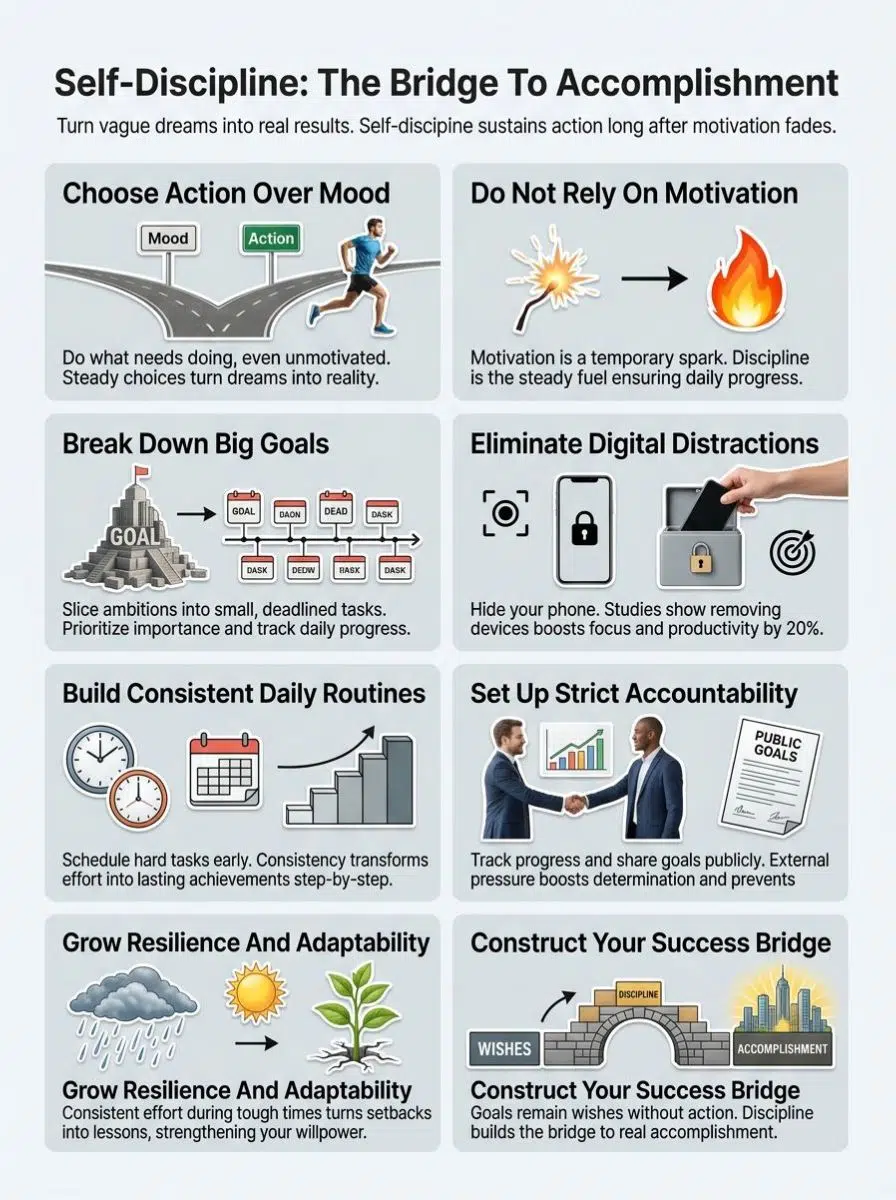
Consistency as the key to progress
Progress comes from small actions repeated daily. Missing a day or two happens, but sticking to your routine is what matters most.
“Discipline is the fuel that keeps you moving, even when motivation disappears.”
Consistency turns your effort into real results. You stack one good decision on top of another. Without this steady push, your goals remain just wishes.
Big wins happen through all those tiny steps taken over time. Step by step, your commitment leads to success.
Building habits that align with your goals
Turning goals into real habits takes action, accountability, and a bit of clever planning. Each habit should help you cross the bridge from wishful thinking to actual achievement.
Many productivity experts suggest using dedicated habit trackers like Streaks or Habitify. These tools give you a visual streak that you will not want to break.
- Prioritize one goal at a time for sharper focus.
- Assign clear steps for each day to avoid vague intentions.
- Start with easy wins to build your confidence early on.
- Set a fixed routine for key actions, like exercising at the exact same time daily.
- Treat misses as learning moments rather than failures.
Practical Strategies to Cultivate Self-Discipline
Setting clear and realistic goals
Goals act like road signs on a long journey. Without them, you might end up lost or going in circles.
A 2023 workforce insight report from Gartner showed that individuals who set SMART goals are 35% more effective at tracking and achieving their objectives. That data proves that clarity wins every time.
- Set goals that match your real-life abilities and available resources.
- Make every goal measurable so you know exactly when you cross the finish line.
- Mark deadlines on your calendar to transform plans into true commitments.
- Choose one main aim at a time so your willpower stays strong.
- Keep a written list nearby to improve your daily productivity.
Creating a structured routine
Building a structured routine acts as the backbone of self-discipline. Each day gets easier to manage. Your energy goes into action rather than decision-making.
A great tip from seasoned professionals is to use Time Blocking in Google Calendar. You dedicate specific colored blocks of time to specific tasks.
- Set clear start and end times for main activities to train your mind for focus.
- Schedule your most important goals early in the day when your willpower is highest.
- Place breaks between tasks to stay resilient and prevent burnout.
- Keep distractions like social media or TV out of your dedicated work blocks.
- End each day by reviewing what you did well.
Developing accountability mechanisms
Self-discipline needs serious support to keep you on track. Accountability pushes you to act.
This is where the data gets really exciting. A landmark study by the American Society of Training and Development found that committing to someone else gives you a 65% chance of success. If you establish a specific accountability appointment with that person, your success rate skyrockets to 95%.
- Set up regular check-ins with a friend or mentor who cares about your progress.
- Use a virtual accountability partner platform like Focusmate to work quietly alongside someone else online.
- Share your goals out loud with others to add a healthy layer of social pressure.
- Create simple rewards for steady progress to feed your willpower.
- Partner with someone chasing their own goals so you can share the energy.
Benefits of Self-Discipline

Increased productivity and focus
Self-discipline sharpens your focus like a magnifying glass. It helps you cut out the distractions that try to steal your time.
Consistent structure builds habits that chain actions together with much less effort. Your time management improves because you stick to your main priorities.
In his famous book Deep Work, author Cal Newport explains that focused, uninterrupted work is the key to thriving in today’s economy. Discipline provides the exact framework you need to reach that deep level of focus. Tasks finish on schedule instead of piling up.
Improved resilience and adaptability
Self-discipline absolutely boosts your resilience. It helps you keep moving forward when obstacles block your path.
A 2023 State of Organizations report from McKinsey and Company found that resilient companies generated 20% more total shareholder return than their less adaptable peers. The same concept applies to you personally. When you practice discipline, you bounce back from setbacks much faster.
Life changes fast, and challenges will pop up without warning. A committed routine gives you something steady to lean on every day, no matter what chaos surrounds you.
Building self-confidence and inner strength
Each small act of self-control builds your inner strength. Goals become stepping stones to achievement.
Here are the core benefits you will notice:
- Failures will not break you. They become useful data points.
- Consistency keeps your initial motivation alive over the long haul.
- Daily effort creates a genuine sense of pride and self-worth.
Setting clear routines helps increase productivity while sharpening your focus over time. Each day of effort boosts your self-confidence in a very real way.
Inspirational Quotes on Self-Discipline
“Discipline is the bridge between goals and accomplishment.” – Jim Rohn
Jim Rohn made it very clear with his words. Goals stay dreams without discipline.
Commitment and self-control help turn your intentions into daily actions. Imagine building a bridge from your wish directly to your achievement.
Every act of willpower or consistency lays another stone on that bridge. Success needs steady effort and perseverance.
Without this steady construction, goals remain only hopes written in a notebook.
Motivation vs. discipline: A balanced perspective
Motivation feels quick and exciting. It makes starting very easy, but it fades fast.
Discipline is the slow-burning fuel that keeps you moving long after your excitement drops.
To keep these two concepts clear, here is a quick summary.
- Motivation: Sets the stage for action and feels good for a moment.
- Discipline: Carries you across the finish line, decision by decision.
Walking the path needs willpower every day, not just on the good days.
Final Thoughts
Self-discipline is what turns dreams into real results, step by steady step. Simple routines, clear goals, and honest self-checks make the path easier to follow each day. Staying on track takes more than motivation. It requires commitment and determination, even on tough mornings or slow afternoons. Self-Discipline: The Bridge Between Goals and Accomplishment is a lifelong practice, where every small step plays an important role.
Cross that bridge today, one choice at a time. There may be occasional stumbles along the way, but getting back up and continuing forward is always possible—and every step brings you closer to your goals.