


Have you ever felt completely alone in a crowded room? You scroll through social media or sit at a family dinner, yet a hollow ache in your chest tells you something is wrong. I want you to know right now that you are not broken. Many people experience this profound disconnect. Your brain and body are simply reacting to a very real problem that millions of American adults face every single day.
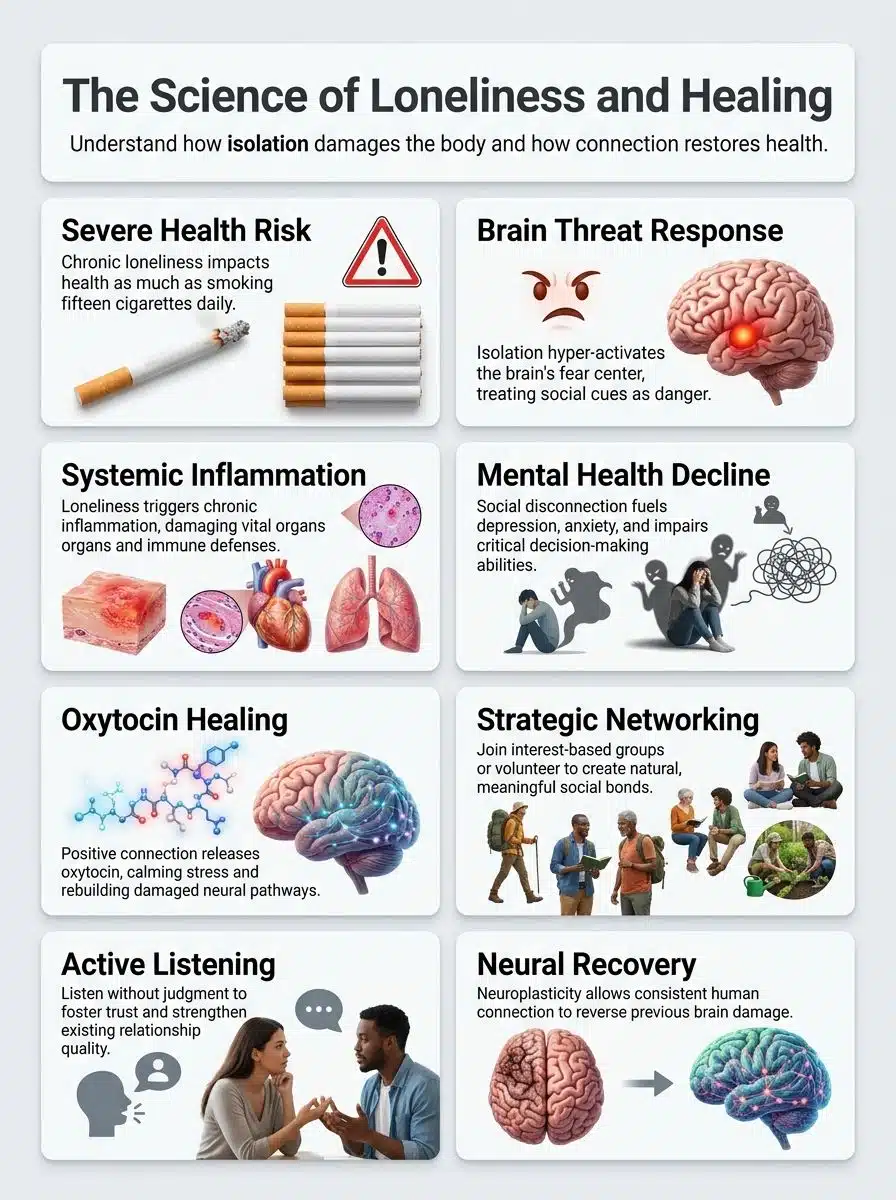
A recent 2025 Gallup poll revealed that one in four Americans feels lonely for a significant portion of their day. This isolation affects your health just as much as smoking fifteen cigarettes a day, according to a landmark advisory from the US Surgeon General.
The science of loneliness and how connection heals is a fascinating topic that proves this is a physical issue, not just an emotional one. Your body treats social rejection exactly like a physical threat.
I am going to walk you through what happens inside your brain and body when you feel isolated. We will explore practical strategies to build meaningful relationships. Let’s look at how you can reverse this damage and feel whole again.
Understanding The Science of Loneliness
Loneliness cuts deep. It affects both your mind and body in ways science is only beginning to map out. It is not just sadness. It is a biological signal your brain sends when it senses a gap between the connections you have and the connections you need.
The True Definition of Loneliness
Loneliness is not simply about being by yourself. It is the painful gap between the social connection you currently have and the connection you actually want. You can spend time by yourself and feel perfectly content. This happens because loneliness stems from a mismatch in your expectations.
Doctors often use the UCLA Loneliness Scale to measure this feeling. This widely respected clinical tool asks simple questions about how often you feel left out to determine your level of social isolation.
Your brain registers this subjective disconnection as a literal threat. This triggers stress responses that ripple through your entire body.
The worst loneliness is not to be comfortable with yourself. – Mark Twain
Emotional and Physical Impact
Your body responds to loneliness the exact same way it responds to physical danger. Your heart rate climbs, your blood pressure rises, and stress hormones flood your system. You might feel anxious or depressed when you lack meaningful relationships. Your mental health suffers because your brain craves connection the way your body craves water.
The physical toll shows up in real, measurable ways. A 2024 report from the American Heart Association noted that chronic social isolation increases your risk of a heart attack or stroke by nearly 30 percent.
Your immune system weakens, making you more prone to catching colds. Relationships act like medicine for your body, and you absolutely have the power to stop the damage.
The Science Behind Loneliness
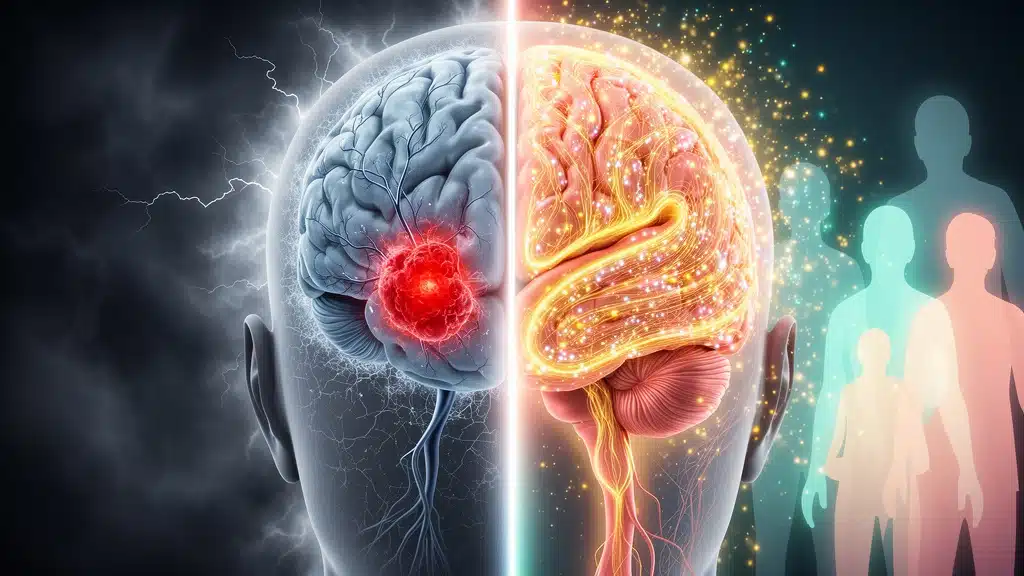
Your brain physically changes when you lack social support. Scientists using advanced fMRI technology have found that isolation actually rewires your neural pathways.
How Loneliness Reshapes the Brain
Isolated people show completely different brain activity patterns compared to those with strong communities. The default mode network in your brain, which controls how you think about others, shifts its communication style.
Your prefrontal cortex handles decision-making and emotional control. This critical area shows noticeably reduced activity in lonely individuals.
This explains why you might struggle to think clearly when you feel left out. Connection works like a powerful medicine for this damaged brain architecture.
Meaningful relationships trigger the release of oxytocin, a chemical that calms your nervous system. Social support activates your brain’s reward centers, flooding your mind with dopamine and serotonin.
The Social Threat Response and Amygdala Activation
Your brain treats isolation like a literal predator. It activates your amygdala, the tiny part of your brain that handles fear and threat detection. Social rejection triggers the exact same pain centers as a physical injury does. Your nervous system shifts into high alert.
This constant state of worry exhausts your body and mind. Over time, your brain rewires itself to expect rejection everywhere.
Loneliness is a signal that something important is missing from our social world, and our brains respond to that signal with alarm.
The amazing news is that your brain possesses remarkable flexibility. Building a strong support system reverses these hyperactive fear patterns.
Physical Health Effects of Loneliness
Loneliness damages your body from the inside out. When you spend too much time isolated, your body starts working against you.
The Danger of Chronic Inflammation
Your body treats loneliness like an invading virus. Isolation causes your immune system to go into overdrive, releasing inflammatory molecules that spread everywhere.
Studies consistently show that lonely people have high levels of C-reactive protein. Doctors check this specific blood marker to look for dangerous inflammation. This chronic inflammation acts like a slow-burning fire inside your tissues. Your body stays stuck in a state of high alert.
Here are a few ways this hidden inflammation affects you:
- It stiffens your blood vessels, forcing your heart to work much harder.
- It slows down your body’s natural ability to heal from minor scrapes.
- It disrupts your sleep cycle, leaving you exhausted every morning.
- It irritates your joints, mimicking the early aches of arthritis.
Community support successfully turns down this inflammatory fire.
Impaired Immunity and Disease Risk
Loneliness attacks your immune system quietly. Your body stops fighting off infections efficiently, leaving you open to the flu and common colds. Chronic stress from isolation floods your body with cortisol. This specific hormone actively suppresses your immune function when it stays elevated for too long.
The National Institute on Aging recently warned that prolonged social isolation increases the risk of developing dementia by 50 percent. This is a staggering statistic that shows how much we physically need each other. Building strong social bonds becomes essential medicine for protecting your physical health over the long term.
Mental Health Impacts of Loneliness
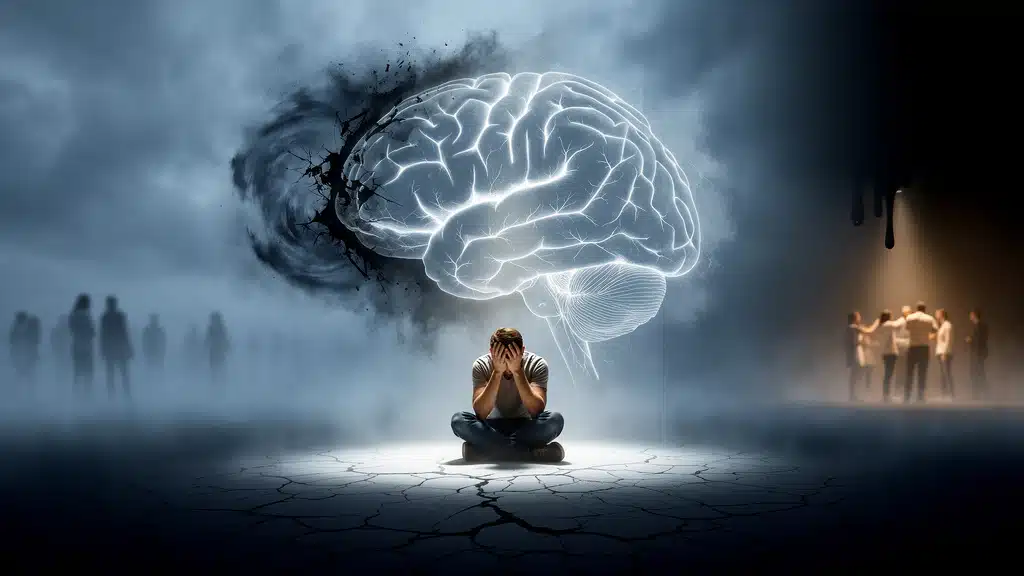
Loneliness eats away at your mental health, triggering anxiety and a foggy brain. When you feel cut off from others, your thoughts get tangled very quickly.
Links to Depression and Anxiety
Isolation feeds depression like fuel on a fire. Your brain chemistry shifts dramatically when you lack social connection. Data from the 2025 State of Mental Health in America report shows an alarming trend. Individuals lacking strong friendships report severe anxiety at twice the rate of those with active social lives.
Your amygdala stays on high alert, interpreting every social distance as a personal rejection. Depression whispers lies about your worth and your place in the world.
Connection heals your mental state in ways that medicine alone cannot match. Empathy from friends creates a powerful buffer against emotional pain.
Cognitive Decline and Mental Fog
Loneliness actively attacks your thinking power. Your brain struggles to focus and solve simple problems when you feel isolated. Your mental sharpness fades like a car running on an empty tank of gas. The connections between your brain cells weaken over time.
This makes it harder to learn new information at work or recall old memories. Loneliness clouds your judgment, and you might choose short-term comfort over long-term well-being. Social support systems act as a critical safety net here. A good conversation actually sharpens your mental clarity and restores your ability to think straight.
The Importance of Social Connection
Meaningful relationships form the true foundation of our well-being. Connection fosters trust and transforms how we see ourselves.
The Role of Meaningful Relationships
Meaningful relationships act as anchors when life gets chaotic. Real connection with others literally shapes how your brain develops. The famous Harvard Study of Adult Development has tracked people for over 80 years. Their researchers found a clear, undeniable pattern regarding human happiness.
Good relationships keep us happier and healthier. Period. They protect our bodies and they protect our brains.
Your brain changes for the better when you invest in genuine friendships. Strong social support systems lower your risk of chronic diseases. Friends who listen without judgment actually heal us. The bonds we form with others create new neural pathways that strengthen our psychological resilience.
Fostering Trust and Emotional Well-being
Trust grows when people show up for each other consistently. Your brain releases oxytocin, the famous bonding hormone, when you feel safe with a friend.
Positive social interactions actively improve your physical state:
- They stimulate your vagus nerve, which helps your nervous system relax.
- They lower your resting heart rate during stressful situations.
- They reduce the amount of muscle tension you carry in your neck and shoulders.
- They improve your breathing patterns, moving you out of shallow chest breathing.
Community creates the soil where trust flourishes into real healing. Belonging to a group gives you purpose, and connection heals because it proves you matter to someone else.
Strategies to Combat Loneliness
You can fight loneliness by taking a few real actions right now. Small steps matter much more than you might think.
Building Supportive Social Networks
Building strong social networks takes effort, but the payoff is immense. Your connections form the foundation of your emotional health.
- Start small by reaching out to someone you already know, like a friendly coworker or a neighbor. A simple text opens the door to rekindling a relationship.
- Use modern tools to your advantage. Apps like Meetup or Bumble BFF are incredibly popular in the US for finding local people with similar hobbies.
- Volunteer for a cause you truly care about in your local neighborhood. Service work naturally connects you with people who share your core values.
- Take a low-pressure class at a community center. Educational settings bring together people with natural curiosity.
Practicing Empathy and Active Listening
Once you start meeting people, you need to nurture those bonds. Empathy forms the foundation of true belonging.
- Listen without planning your response while someone shares their struggles. Your full attention proves that their feelings matter.
- Ask clarifying questions about what they are experiencing. This shows you care about understanding their unique perspective.
- Put your phone completely away during conversations. This sends a clear message that the person in front of you is important.
- Resist the urge to immediately offer solutions. Sometimes people just need to feel heard before they need a specific fix.
How Connection Heals the Brain
Your brain rewires itself when you spend time with people who matter to you. Social connection flips a switch in your mind.
Neuroplasticity and Brain Recovery
Your brain is never permanently stuck. It changes and grows throughout your entire life through a process called neuroplasticity. Social connection acts like a powerful tool that reshapes your brain. Positive interactions stimulate the production of Brain-Derived Neurotrophic Factor.
This critical protein acts like a miracle fertilizer for your brain cells, helping them grow and connect. Meaningful relationships activate your prefrontal cortex.
People with strong social support systems experience measurable, positive changes in their brain structure. Each conversation sends signals that you are safe.
Reversing the Effects of Loneliness
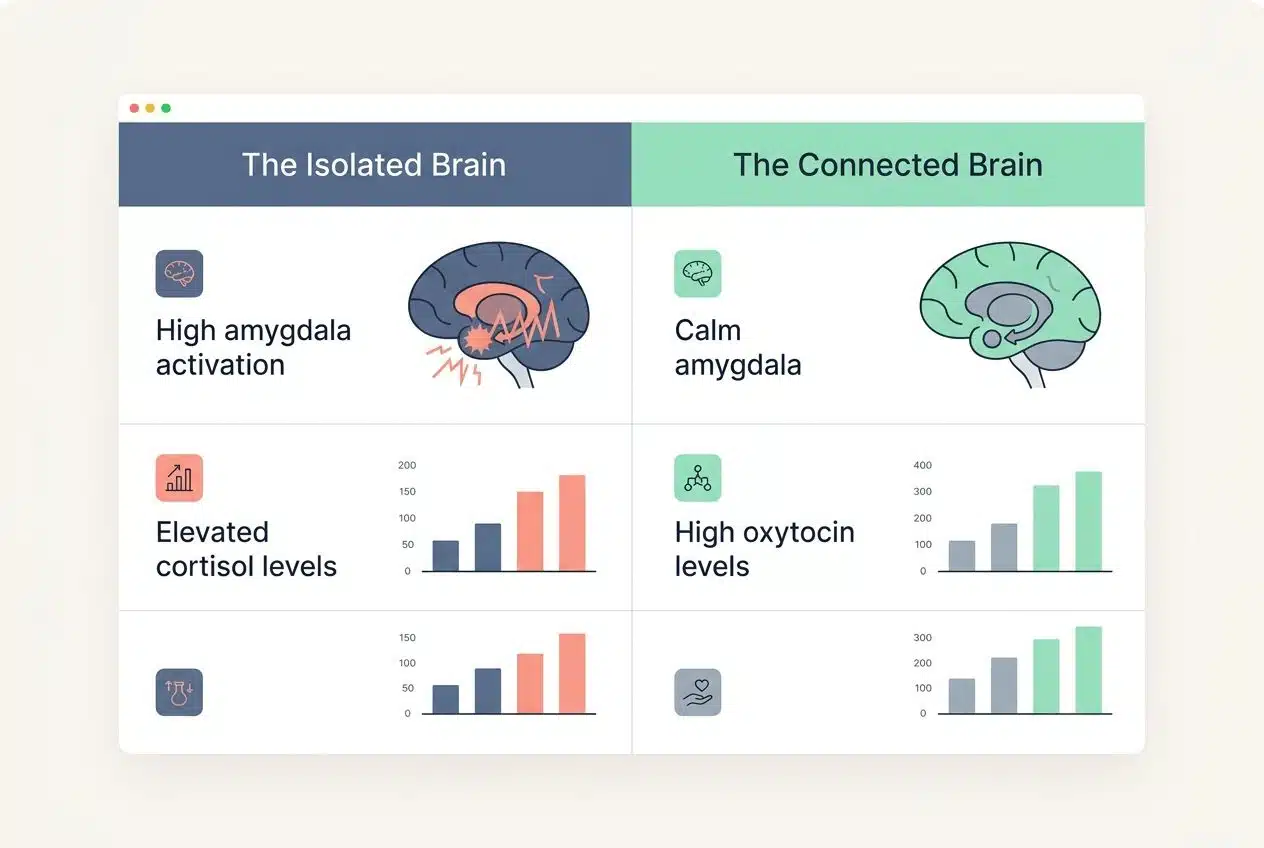
Community acts like a powerful medicine for lonely brains. Joining clubs or attending group activities gives you regular chances to interact. Let’s look at how a connected brain compares to an isolated one.
| The Isolated Brain | The Connected Brain |
|---|---|
| High amygdala activation (constant fear state) | Calm amygdala (feeling of safety) |
| Elevated cortisol levels suppress immunity | High oxytocin levels promote trust |
| Reduced prefrontal cortex activity (brain fog) | Increased neuroplasticity and clear thinking |
Friendships offer more than just company. They provide the solid foundation for true psychological resilience. People thrive when they feel valued by their community. Connection consistently proves itself as the absolute best antidote to loneliness.
Final Words
You now know how loneliness reshapes your brain, damages your body, and clouds your mind. You have also discovered that connection heals all three. The science of loneliness and how connection heals is a story of hope and biology working together.
Building relationships takes effort and courage. The payoff rewards you with much better health, sharper thinking, and genuine happiness. Start small by reaching out to one person today or joining a local group. These simple actions lower your inflammation and pull you back from isolation.
Your brain possesses incredible power to transform. Take that first step toward belonging today, because loneliness loses its hold the exact moment you reach out.
Frequently Asked Questions (FAQs) on The Science of Loneliness
1. What is loneliness, and why does it hurt so much?
Loneliness feels like standing in a crowded room but still feeling invisible. It hurts because research from UCLA shows that loneliness activates the same brain regions as physical pain. When we lack real connection, our bodies respond with actual stress signals.
2. How does human connection help heal loneliness?
Real connection works like medicine for your mind. When you share a laugh or a story with someone, your brain releases oxytocin (the bonding hormone) and lowers cortisol, your main stress hormone.
3. Can science explain how friendship affects health?
Yes, the Harvard Study of Adult Development, which followed people for over 80 years, found that strong relationships predict health and longevity better than wealth or fame. People with close friendships have stronger immune systems and recover from illness faster.
4. What simple steps can I take to feel less lonely today?
Start by reaching out to just one person, whether it’s texting an old friend or saying hello to your neighbor. Even a five-minute chat can help you feel more connected and seen.





















