

A SaaS product needs to charge the same customer every month without asking permission each time. That one requirement is where most South Asian checkout options quietly fall apart. They were built for a shopper buying a shirt once, not for a card that gets billed on the 4th of every month for the next two years.
Then there is the second problem. Stripe, the default answer everywhere else in the world, does not accept businesses registered in Bangladesh, Pakistan, Nepal or Sri Lanka. So the advice you find on English-language SaaS blogs is often useless the moment you try to apply it from Dhaka, Lahore or Colombo.
I spent a while going through the current rate cards, developer docs and central bank rules to sort out which payment gateways for SaaS startups in South Asia actually work in this region and which ones only look like they do. Here is what I found.
The Three Things that Break Subscriptions Here
Recurring charges are regulated, not just technical
In India, the Reserve Bank issued the Digital Payments – E-mandate Framework, 2026, on 21 April 2026, pulling eight older circulars into one rulebook. Recurring debits up to ₹15,000 can go through without an OTP once the customer registers the mandate. Above that, every single charge needs the customer to approve it again. There is also a mandatory notification at least 24 hours before each debit and a confirmation after. If your plan costs ₹18,000 a month, your churn is now partly a compliance problem.
Money from abroad has to come in through an approved channel
You cannot just wire USD into a local current account and call it revenue. Bangladesh Bank has told authorized dealer banks to let ICT and service exporters bring in earnings through payment gateway providers, aggregators and digital wallets, and eligible exporters can hold 30–35% of those earnings in foreign currency through an ERQ account. India has its own rules under FEMA. Ignore this and your bank will hold the money until the paperwork exists.
Your customers may not own a card
In Nepal and Bangladesh, a large share of digital payments happen through wallets and QR, not cards. A wallet cannot be stored and charged later. That single fact reshapes how you price and package your product.
How I Picked These
I weighted four things: whether the gateway can charge a stored payment method on a schedule, what it costs once the add-ons are stacked, whether a founder in that country can actually open an account, and how much of the tax and compliance work lands back on your desk.
I did not weight brand recognition at all. Some well-known names on this list are the wrong choice for a small SaaS, and I have said so where that is the case.
1. Razorpay
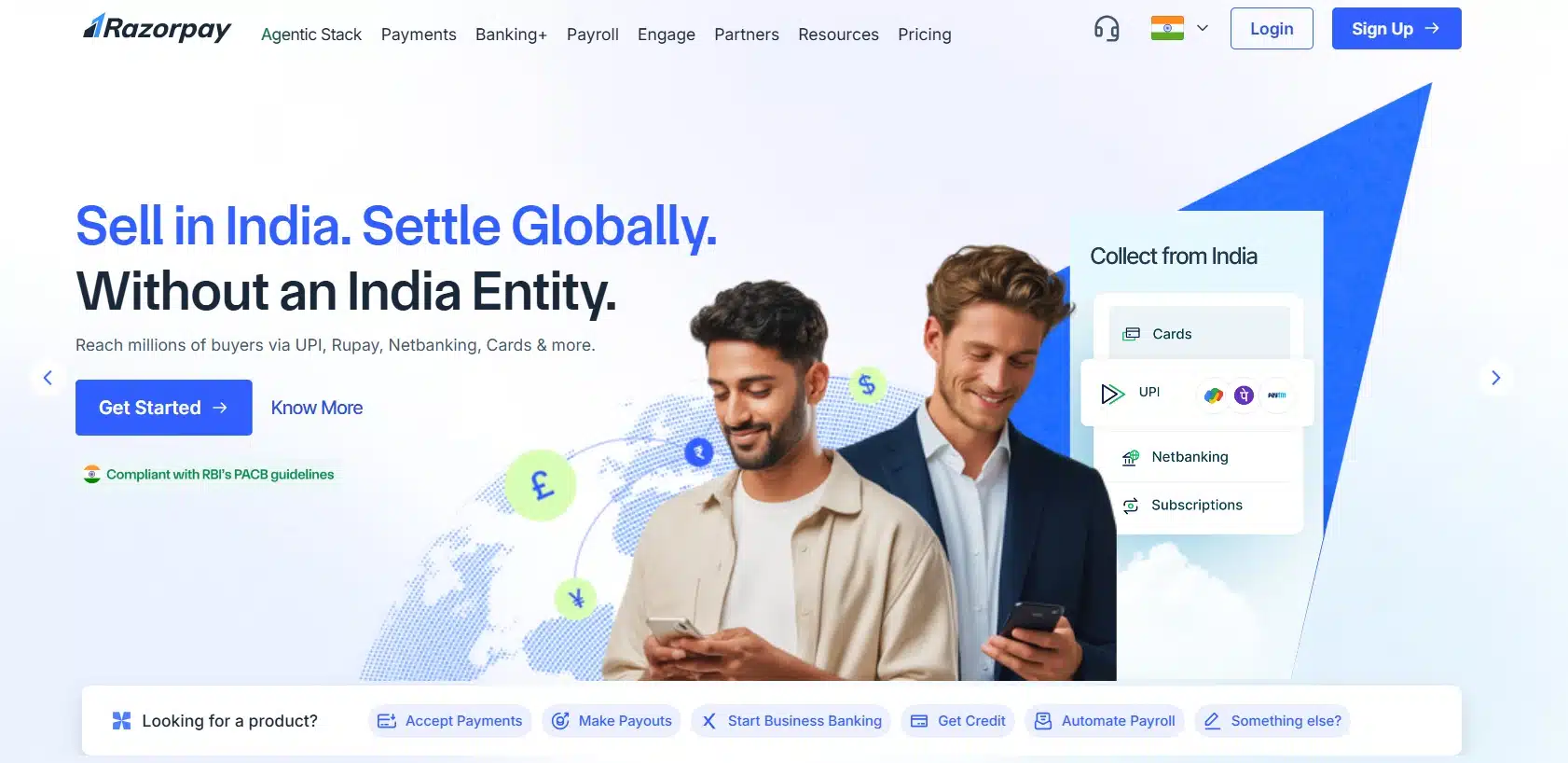
If your customers are in India and your plans are priced in rupees, this is where most SaaS teams end up, and for good reason. Razorpay Subscriptions sits on top of the gateway and handles plan management, retries and mandate registration, including UPI AutoPay, which is the only approved route for recurring UPI debits.
The pricing is easy to model. Most domestic methods run at 2% of the transaction, plus 18% GST on that fee, so your real cost is about 2.36%. Subscriptions add roughly 0.99% on top, which puts a recurring card charge near 3% before tax. International cards are 3%. There is no setup fee and no annual maintenance charge, which matters more than founders expect—a ₹4,999 yearly fee wipes out a lower headline rate at small volumes.
Two things worth knowing before you commit. Domestic settlement is typically T+2, and international settlement is around T+7, so if you are running tight on cash, that week of float is real. And Razorpay has a well-documented pattern of sudden account reviews and rolling reserves for accounts flagged during compliance checks. Its own developer experience gets praised consistently; its support during a freeze does not. Keep a second gateway integrated but dormant.
For a purely India-facing SaaS, I would still start here.
2. Cashfree Payments
Cashfree is the one I would compare against Razorpay on price, because at the moment it is genuinely cheaper and settles faster. Its published rates sit at 1.6% plus a 0.25% platform fee on domestic transactions and 2.69% plus the platform fee on international cards. T+1 settlement is the default rather than a paid upgrade, which is unusual.
New merchants who signed up on or after 21 July 2026 get 0% platform fees on domestic gateway transactions up to ₹20 lakh in cumulative volume, running until 31 March 2027 or until the cap is hit. If you are launching in the next few months, that is worth reading properly rather than skimming.
The Subscriptions product is newer and less battle-tested than Razorpay’s. UPI AutoPay and e-mandate are both supported, and the API documentation is solid. Where I would hesitate is complex billing—proration, seat changes mid-cycle, and usage-based add-ons. Check it against your actual billing logic before you migrate anything.
3. PayU India
PayU is old, stable, and widely accepted by banks. Standard pricing is around 2% per transaction with no setup fee, and it tends to convert well on international cards.
I am putting it third rather than dismissing it, but the honest position is that its developer experience lags noticeably behind Razorpay and Cashfree. If your team is small and your engineering time is your scarcest resource, that gap costs you more than the fee difference saves. PayU makes the most sense if you are already inside its ecosystem, or you need its EMI and pay-later integrations for higher-priced annual plans.
4. Dodo Payments
This is the one I think most South Asian SaaS founders should look at seriously, and most have not heard of.
Dodo is a merchant of record built in Bengaluru. When someone in Germany buys your product, Dodo is legally the seller. It collects the VAT, files it, absorbs the chargeback, and then pays you. For an Indian company, that payout arrives as an inward remittance against export of services, which is the shape your accountant and your bank both want to see.
Pricing is 4% plus $0.40 per transaction, with 1.5% added for international cards and 0.5% added for subscriptions. Stack those and an international monthly subscription lands closer to 6%. On a $9 plan the fixed $0.40 hurts badly—the effective rate climbs past 10%. On a $79 plan it barely registers. Where your plan sits on that curve should shape how you price your SaaS product more than most founders realize.
Onboarding is open to founders in emerging markets rather than restricted to US and EU entities, and it covers UPI alongside global methods. Payouts under $1,000 carry a $5 fee. Some merchants have reported extended holds during risk review after funds were already collected, so do not treat the first payout as guaranteed working capital.
5. Paddle
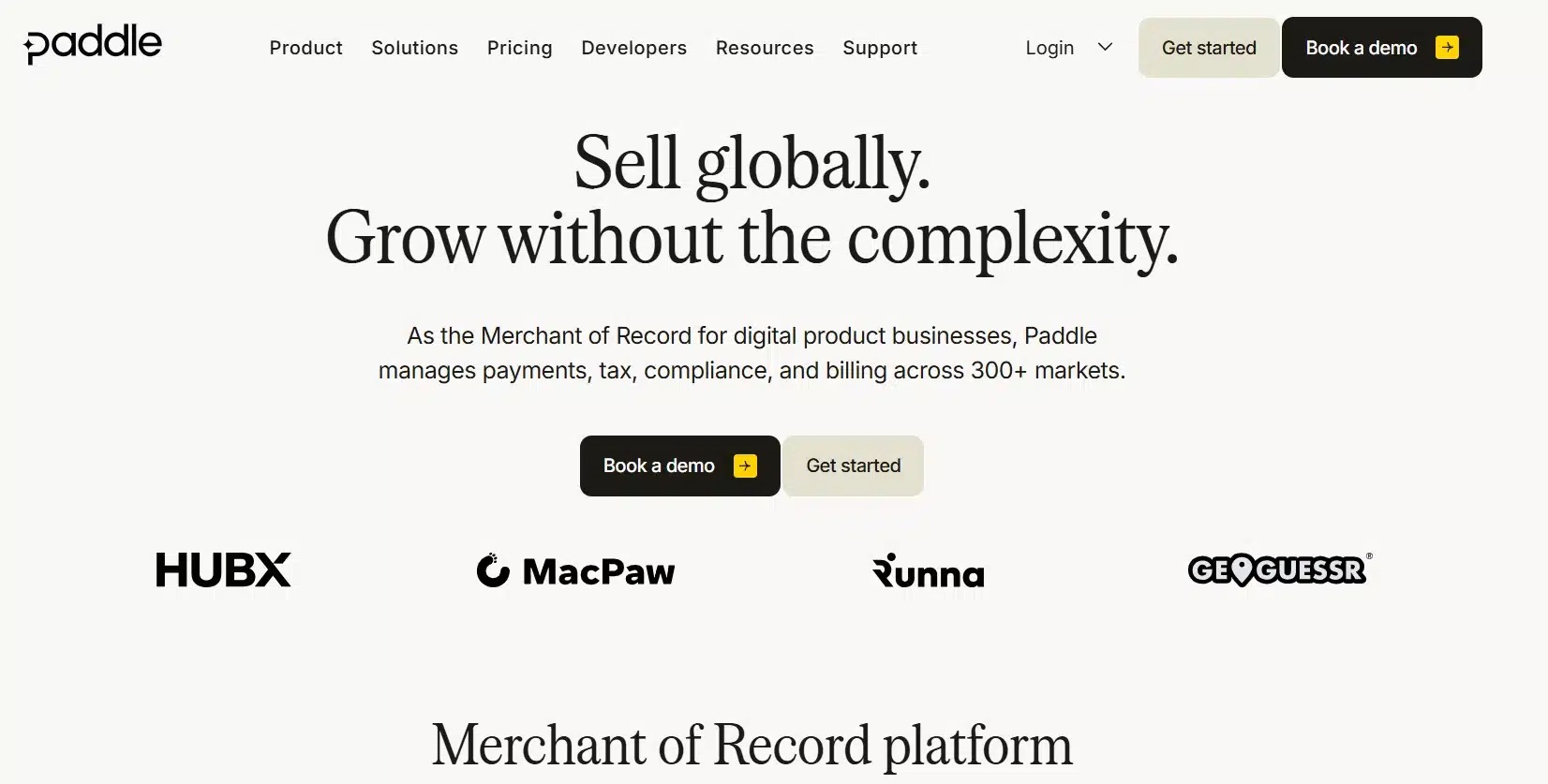
Paddle is the established merchant of record and the safe institutional choice. One flat rate of 5% plus $0.50 covers processing, global sales tax and VAT, fraud handling, disputes, and end-customer billing support. Refund emails go to Paddle, not to you.
That rate looks expensive next to a 2% gateway until you price the alternative: registering for VAT in a dozen jurisdictions, tracking rate changes, and paying an accountant to file it all. For a team of three, offloading is usually worth the spread.
The catch is small tickets. Products priced under about $10 do not fit the standard rate and get pushed to custom terms. And you give up control of the checkout and the customer relationship in exchange for the compliance relief. If your product is enterprise-priced and sold globally, Paddle is a fair trade. If you sell a $6/month tool, look at the cheaper merchant-of-record options first.
6. Lemon Squeezy
I have mixed feelings about recommending this one in 2026.
The product works and signups are open. Fees are commonly quoted as 5% plus $0.50, but the fee documentation adds 1.5% for international transactions, 1.5% for PayPal, and 0.5% for subscriptions, and the percentage applies to the order total including tax. So the headline understates it.
The real issue is direction. Stripe acquired Lemon Squeezy in 2024, and the same team is now building Stripe Managed Payments, Stripe’s own merchant-of-record product, which the Lemon Squeezy CEO has publicly described as the future. No shutdown has been announced and existing accounts are fine. But the product is being maintained, not pushed forward, and support response times have slipped by the team’s own admission.
If you are already on it, stay and watch. If you are choosing today, I would not start a new business on a platform whose parent company is building its replacement. Note that Stripe Managed Payments currently supports merchants in a limited set of countries, so it may not be available to you anyway.
7. Stripe
Worth being blunt about this. Stripe supports roughly 46 countries. India is one of them. Bangladesh, Pakistan, Nepal and Sri Lanka are not.
If you are registered in India, Stripe gives you the best multi-currency billing and developer experience available, and it is the right call when more than half your customers are outside the country. Confirm current India rates directly, since they differ from the US card and differ again by method.
If you are outside India, the common workaround is incorporating a US LLC, getting an EIN, opening a US business bank account, and applying as that entity. It works, and plenty of founders in Dhaka and Karachi have done it. But understand what you are signing up for: a foreign company, a US tax filing obligation, a W-8BEN-E, and the job of legally moving money back home. That is a real cost in money and attention, not a quick registration. Do it when your international revenue justifies it, not before.
8. SSLCommerz
For a SaaS selling to Bangladeshi businesses in taka, SSLCommerz is the default. It holds one of the few PSO licenses issued by Bangladesh Bank, it is PCI DSS Level 1, and it covers cards, internet banking and the wallets your customers actually use—bKash, Nagad and Rocket.
Card rates sit around 2.5% for Visa and Mastercard, with mobile wallets roughly in the 1.85% to 2.1% range, and there has historically been a setup fee. Rates are negotiated per merchant rather than published, so treat any number you read online, including mine, as a starting point for the conversation.
Here is the part nobody tells you early enough: local Bangladeshi gateways do not offer card-on-file recurring billing the way Stripe does. Most SaaS teams here end up generating an invoice and emailing a fresh payment link every cycle or selling annual prepaid licenses to sidestep the problem entirely. Build that into your product roadmap and your cash flow model from day one.
If setup cost is the blocker, AamarPay onboards faster and cheaper, and ShurjoPay is worth a look if recurring collection matters to you. None of them removes the underlying limitation.
9. Safepay
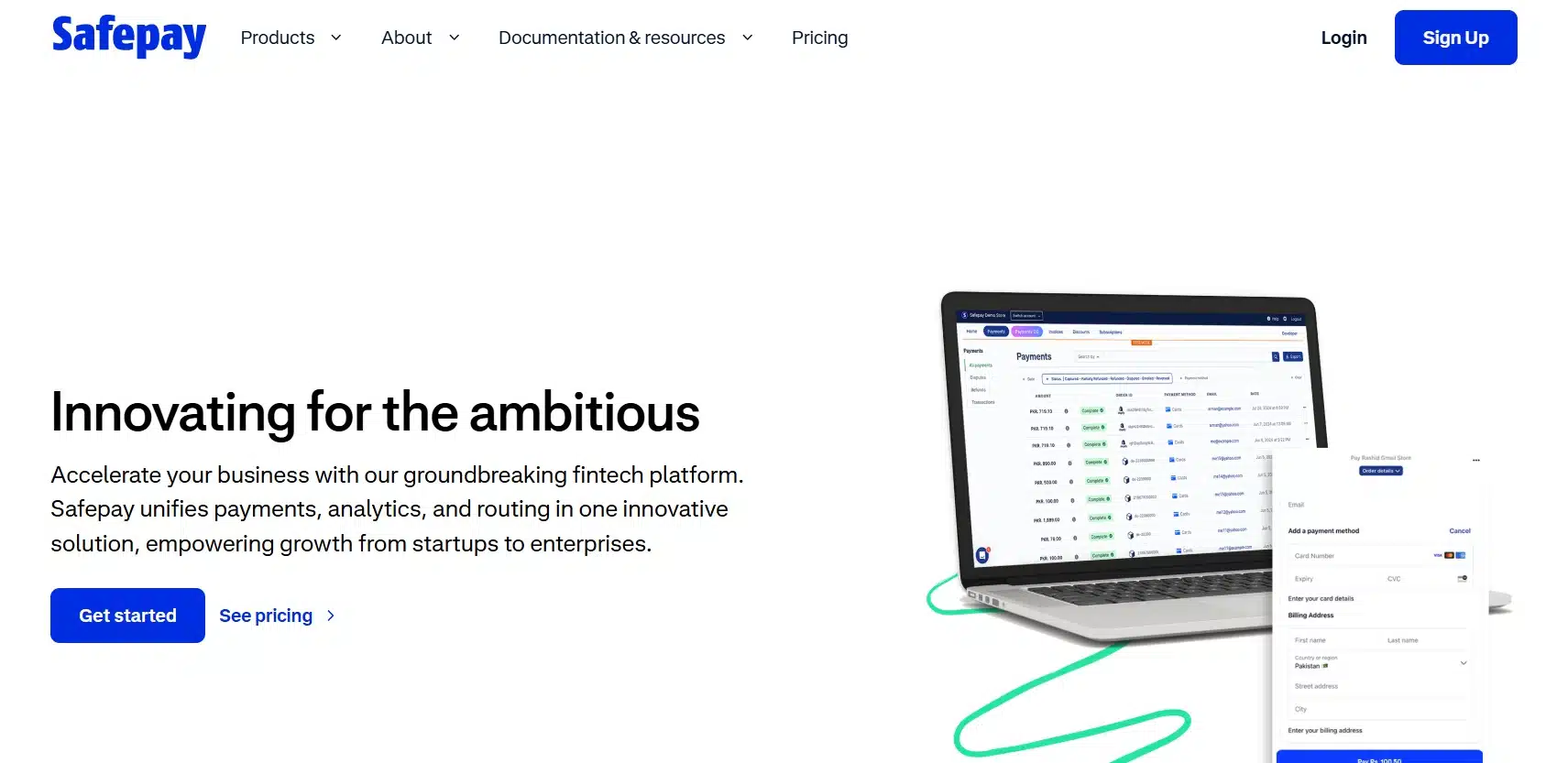
Safepay is the gateway most Pakistani founders converge on, and the reason is the developer experience—a readable API, a clean on-site checkout with no redirect, and current integrations for Shopify and WooCommerce. It is regulated by the State Bank of Pakistan and covers cards, JazzCash, Easypaisa and bank transfers through one integration.
Most Pakistani gateways quote merchant discount rates between 2% and 3.5% and negotiate per merchant rather than publishing. Ask for the number in writing.
For subscription billing specifically, PayPro is the better fit. Recurring billing in PKR through a local provider is genuinely rare, and PayPro supports it. The interface is dated and the integration takes patience, but the alternative is bolting on a global billing tool that does not handle rupees, which trades one problem for a worse one.
One thing to watch: Raast, the state bank’s real-time rail, carries near-zero merchant cost compared to cards and wallets. It is not yet a complete answer for subscriptions, but the pricing pressure it creates is real.
10. PayHere
Sri Lanka’s most widely used gateway, and the pricing structure has a detail that matters enormously for SaaS.
PayHere Lite is free to set up and charges around 3.30% per card sale, with caps of roughly Rs. 50,000 per payment and Rs. 200,000 per month. Recurring billing is not on this tier. It arrives on Plus, which costs about Rs. 3,990 a month and brings the card rate down to 2.99% while raising the limits considerably. Premium goes lower again. Foreign currency adds about 1%, and premium card brands add around 0.5%.
So if you are building a subscription product in Sri Lanka, your real starting cost is the monthly plan fee, not zero. Work out the volume at which Plus pays for itself before you launch, because below that line you are subsidising a feature you may not need yet.
Nepal Does Not Have a Clean Answer Yet
I looked for one and could not find it. eSewa, Khalti and Fonepay between them cover most of how Nepal pays, but they are wallets and QR rails. There is no stored instrument to charge on the 1st of next month.
Each has its own onboarding, credentials and signing scheme, and setup fees in the range of NPR 20,000 to 25,000 are common, with transaction rates roughly 1% to 2.5%. Integrating all three separately is three sets of everything. Aggregators like APINepal and PayBridgeNP now put them behind one API, which saves real engineering time even though it does not solve the recurring problem.
For now, the workable pattern in Nepal is annual or quarterly prepaid billing with a reminder flow, not automated monthly debits. It is not elegant, but it ships.
The Numbers Side By Side
Rates change and most providers negotiate, so use this to shortlist rather than to budget.
| Gateway | Where you can register | Headline rate | Recurring billing |
|---|---|---|---|
| Razorpay | India | 2% domestic, 3% international | Yes, +0.99% |
| Cashfree | India | 1.6% + 0.25% domestic | Yes. |
| PayU India | India | ~2% | Yes |
| Dodo Payments | Open to emerging markets | 4% + $0.40, +1.5% intl, +0.5% subs | Yes |
| Paddle | Most countries | 5% + $0.50 | Yes |
| Lemon Squeezy | Limited | 5% + $0.50, plus surcharges | Yes |
| Stripe | India (not BD/PK/NP/LK) | Varies by market | Yes |
| SSLCommerz | Bangladesh | ~2.5% cards, negotiated | Not natively |
| Safepay | Pakistan | ~2–3.5%, negotiated | Via PayPro |
| PayHere | Sri Lanka | 3.30% free tier, 2.99% on Plus | Paid tier only |
The pattern is hard to miss. Local gateways are cheap and weak on subscriptions. Merchant-of-record platforms cost double but take the tax and compliance work off your plate. Which side you land on depends less on your budget than on whether your customers are at home or abroad.
Mistakes I Keep Seeing
- Choosing on headline rate: A 1.6% gateway with a ₹5,000 annual fee costs more than a 2% gateway with none until you are processing serious volume. Do the arithmetic with your real numbers.
- Forgetting the fixed fee: Every $0.40 or $0.50 per transaction is a percentage in disguise, and on a low-priced plan it is the dominant cost. Monthly billing at $7 is a different business from annual billing at $70 through the same processor.
- Treating one gateway as the whole strategy: Serving both local and international customers almost always means two integrations. That is normal. Plan for it instead of discovering it after launch.
- Underestimating the account freeze: It happens, it happens without warning, and it happens to businesses doing nothing wrong. Have a second option that is already integrated and tested.
- Building for a market you have not researched: Payment friction is one signal among many that a market is underserved, and it is often where the good niche SaaS ideas are hiding.
What I Would Check Before Signing Anything
Ask for the merchant discount rate in writing, including what happens on international cards and what the settlement cycle actually is. Test the sandbox before you sign, not after. Confirm whether recurring billing is included in your tier or gated behind a paid plan. Ask what triggers a hold on your funds and how long a review usually takes. And confirm with your bank, before you launch, exactly how inward remittances from your chosen provider should be documented.
Final Thoughts
There is no single winner among payment gateways for SaaS startups in this region, and anyone who tells you otherwise is selling something. The choice comes down to one question: where do your paying customers live?
Selling locally in rupees, taka or Sri Lankan rupees means a local gateway, and it means accepting that recurring billing will be less automatic than you would like outside India. Selling globally means a merchant of record—Dodo if your tickets are small and you are based in the region, or Paddle if you are further along and want the established option. Selling to both means running both.
Start with whichever side of that split is already paying you. Getting one working checkout live this month beats a perfect payment architecture that ships next quarter. If your customers span multiple countries, the same thinking applies to how you localize the product itself — pricing and payment methods are part of localization, not separate from it.





















