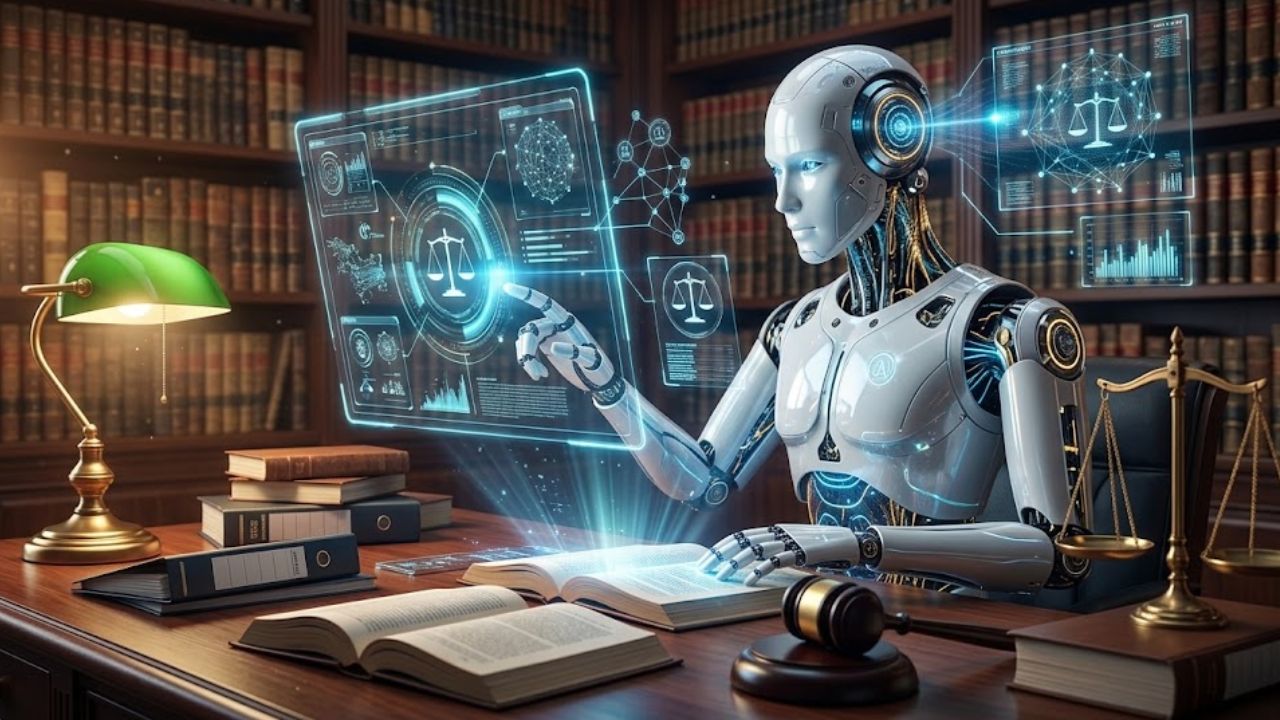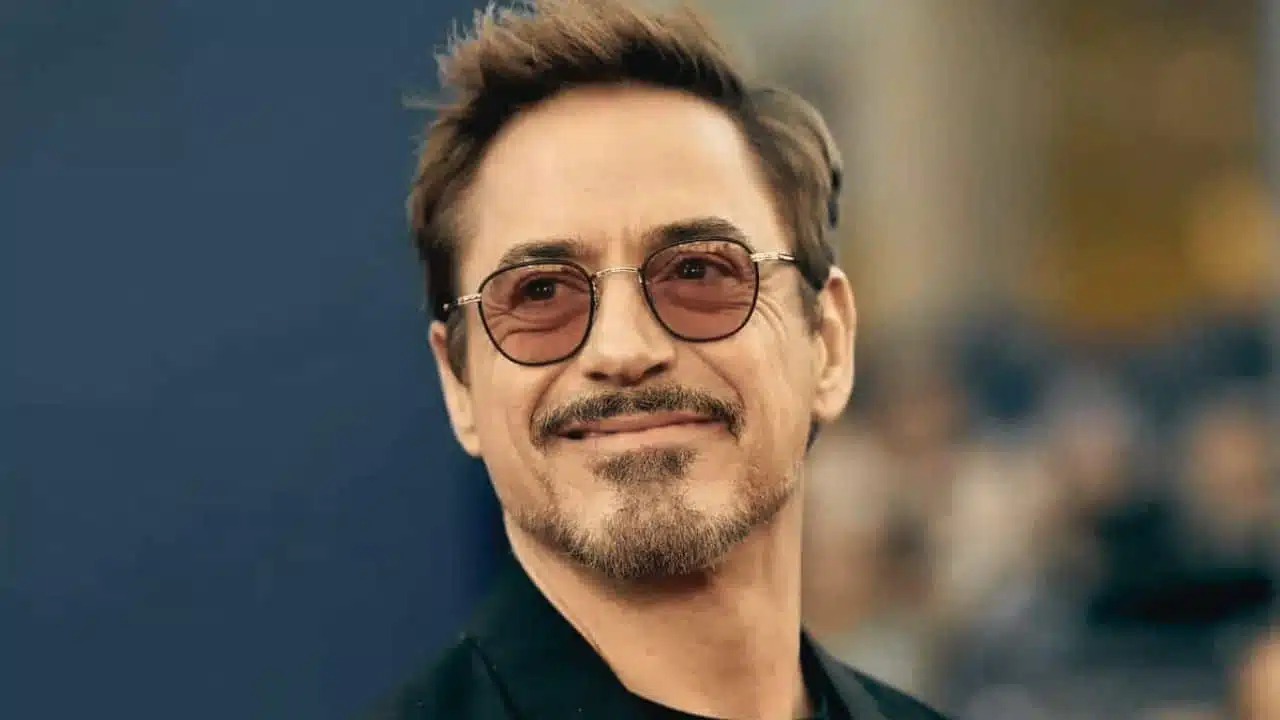
After more than a decade playing superheroes in blockbuster films, Robert Downey Jr. has taken a bold new direction, making his Broadway debut in McNeal, a play written by Pulitzer Prize-winning playwright Ayad Akhtar and directed by Bartlett Sher. Known for his iconic portrayal of Tony Stark in the Marvel Cinematic Universe, Downey is now tackling a serious role as a celebrated writer wrestling with cutting-edge technology, the weight of his fame, and deeply personal demons. The play, staged at the Vivian Beaumont Theater, places Downey’s character, Jacob McNeal, at the center of a contemporary debate on artificial intelligence (AI) and its potential to reshape art and society.
McNeal: A Modern Play on Technology and Personal Struggle
The play opens with a visually arresting scene: McNeal stands alone on the vast stage, beneath a towering projection of an iPhone screen. This futuristic set, designed by Michael Yeargan and Jake Barton, immediately signals the technological themes of the play. McNeal is introduced in the middle of a routine liver check-up with his doctor, played by Ruthie Ann Miles. Despite the doctor’s warnings to quit drinking, McNeal is preoccupied, anxiously awaiting a call that will determine whether he has finally won the Nobel Prize in Literature—a recognition he has long coveted.
The giant phone screen serves as a visual metaphor for the omnipresence of technology in McNeal’s life and the larger theme of AI’s encroachment on human creativity. McNeal frequently interacts with a chatbot, asking it trivial yet telling questions like who will win the Nobel. The audience soon learns that when McNeal does win the prize, he has an AI draft his acceptance speech—though he admits he didn’t like the bot’s version. This introduces one of the play’s central questions: Has McNeal, a revered author, been secretly using AI to write his novels? And more importantly, does it matter if he has?
Akhtar’s writing explores these questions but leaves much of the interpretation up to the audience. He delves into the implications of AI on creativity, hinting at a future where human authors may be replaced by machines that can generate stories with the same—or even greater—skill. But the play doesn’t stop at technology; it’s layered with personal and societal themes such as addiction, suicide, adultery, family trauma, and the complexities of fame, all of which make McNeal a deeply flawed, yet fascinating, character.
McNeal: A Reflection of Robert Downey Jr.’s Superhero Persona
Downey’s portrayal of Jacob McNeal feels like a natural progression from his years as Tony Stark, the tech-genius billionaire turned superhero. McNeal is an acclaimed writer, having gained recognition for his works about political figures like Ronald Reagan and Barry Goldwater, but he’s also prickly, egotistical, and emotionally distant—traits not unlike Stark. His character is defined by the tension between his public persona as a great man of letters and his private failings as a father and husband.
Much like Tony Stark, McNeal is a man of contradictions. He’s highly intellectual, capable of delivering impassioned monologues about literature and legacy, but he’s also deeply insecure, haunted by the fear that his greatest achievements might not be his own. Downey shines in these moments, particularly when McNeal goes off on professorial rants about Shakespeare, Saul Bellow, and the nature of genius, earning applause from the audience.
However, critics have noted that while Downey excels in these larger-than-life moments, his performance falters when the play requires more subtlety. A key scene between McNeal and his son (played by Rafi Gavron) highlights this imbalance. The two characters, who have a strained relationship, engage in a long conversation about their diverging memories of McNeal’s late wife. The scene, set in a barren re-creation of a country lodge, feels emotionally flat, with Downey struggling to convey the deep pain and regret that McNeal is meant to feel. Director Bartlett Sher’s blocking in this scene, which has the actors awkwardly circling the stage, further detracts from its emotional impact.
AI in the Arts: Does It Really Matter?
The play’s exploration of AI’s role in the creative process is perhaps its most compelling aspect, though it leaves many questions unanswered. Early on, McNeal’s agent (played by Andrea Martin) suggests that he sign a contract affirming he did not use an AI program to write his latest novel. McNeal hesitates, prompting the audience to wonder whether he’s been relying on AI all along. Akhtar uses this moment to raise a broader question: Should we care if AI is involved in the creation of art?
Akhtar seems more interested in the potential of AI than in passing judgment on it. In interviews, he has expressed curiosity about AI’s capabilities, noting that the technology is here to stay, whether we like it or not. In McNeal, he compares the work of AI to that of Shakespeare, who famously borrowed plots from existing plays and stories. The implication is that perhaps all art is derivative, and AI is simply the next evolution in that process.
However, the play’s treatment of AI remains somewhat surface-level. While McNeal gripes about the flood of “word slop” that AI programs can generate, McNeal doesn’t fully grapple with the more complex ethical and societal issues surrounding AI. For instance, the play briefly touches on concerns about copyright violations and the energy consumption required to run AI programs, but it doesn’t explore these topics in depth. Likewise, the potential for AI to replace human labor in creative industries is only mentioned in passing, even though it’s one of the most pressing concerns for artists today.
A Missed Opportunity for Deeper Commentary
One of the play’s missed opportunities lies in its failure to fully explore the darker sides of AI. Akhtar is known for his ability to dissect complex systems, whether it’s America’s relationship with Islam or the inner workings of the financial markets, but in McNeal, his exploration of AI feels disappointingly thin. The play doesn’t engage with the more thorny issues surrounding AI, such as the environmental toll of training large language models or the ways in which AI could be used to exploit labor and further consolidate corporate power.
Instead, McNeal often reverts to familiar tropes about the dangers of technology. McNeal expresses concern that AI could one day rival human creativity, but the play doesn’t provide any fresh insights into this debate. The comparison between AI-generated content and Shakespeare’s adaptations of older works is intriguing but ultimately doesn’t hold up under scrutiny. While Shakespeare may have borrowed plots, his genius lay in his ability to transform those stories into something entirely new and deeply personal. AI, on the other hand, lacks the capacity for true creativity or emotional resonance.
The Human Drama: Cliché or Commentary?
While the play’s exploration of AI takes center stage, McNeal also attempts to delve into the personal struggles of its characters. However, these human dynamics often feel underdeveloped and clichéd. McNeal’s relationships with the women in his life—his assistant (played by Saisha Talwar), a magazine journalist (Brittany Bellizeare), and a former New York Times books editor (Melora Hardin)—are particularly thin. These characters exist primarily as foils for McNeal’s rants about everything from the work of Annie Ernaux to Harvey Weinstein. They are given little agency or depth, which undercuts the play’s exploration of McNeal’s misogyny and his inability to connect with the women around him.
The play also struggles to balance its heavy themes. Addiction, family trauma, and suicide are all touched upon, but none are explored in much detail. The result is a play that feels overloaded with ideas but lacks the emotional weight to make them resonate. For example, McNeal’s strained relationship with his son, which could have been a central emotional thread, is instead relegated to a few awkward scenes that fail to capture the complexity of their bond.
The AI as Shakespeare: A Gimmick or Insight?
In one of the play’s more surreal moments, McNeal is confronted by a giant digital composite of himself, created by AI. This deepfake projection, credited to the Russo brothers’ AGBO studio, mimics Downey’s face but with a disconcerting, clay-like quality. The deepfake is meant to be an emotional climax, but it comes off as more of a tech demonstration than a meaningful part of the narrative. The play’s script suggests that the deepfake should appear to express an uncanny level of emotion, but the effect is more eerie than moving.
The play ends with McNeal delivering a farewell speech that mirrors Prospero’s famous monologue from The Tempest. According to Akhtar, this speech was generated with the help of an AI chatbot, which he carefully prompted to produce a Shakespearean-style text. While the speech does contain some clever rhymes and approximates the language of Shakespeare, it ultimately falls short of true poetic brilliance. The chatbot’s imitation of Shakespeare is impressive on a technical level, but it lacks the wit, imagery, and emotional depth that define the Bard’s work.
A Play Caught Between Ideas and Execution
McNeal is an ambitious production that tackles timely issues like AI, creativity, and the pressures of fame, but it ultimately struggles to deliver a cohesive and emotionally resonant narrative. Robert Downey Jr. brings his trademark charm and charisma to the role of Jacob McNeal, but the play’s exploration of AI feels superficial, and its human drama is weighed down by clichés.
While McNeal raises important questions about the future of art in an age of artificial intelligence, it stops short of providing any real answers. The play gestures toward deeper commentary on the ethical and societal implications of AI, but it doesn’t engage with these topics in a meaningful way. Instead, it feels more like an experiment in blending traditional theater with cutting-edge technology—a production that is more concerned with spectacle than substance.
For fans of Robert Downey Jr., McNeal offers a chance to see the actor in a new light, taking on a role that allows him to flex his dramatic muscles. But for those hoping for a play that delves deeply into the complexities of AI and human creativity, McNeal may leave them wanting more.