

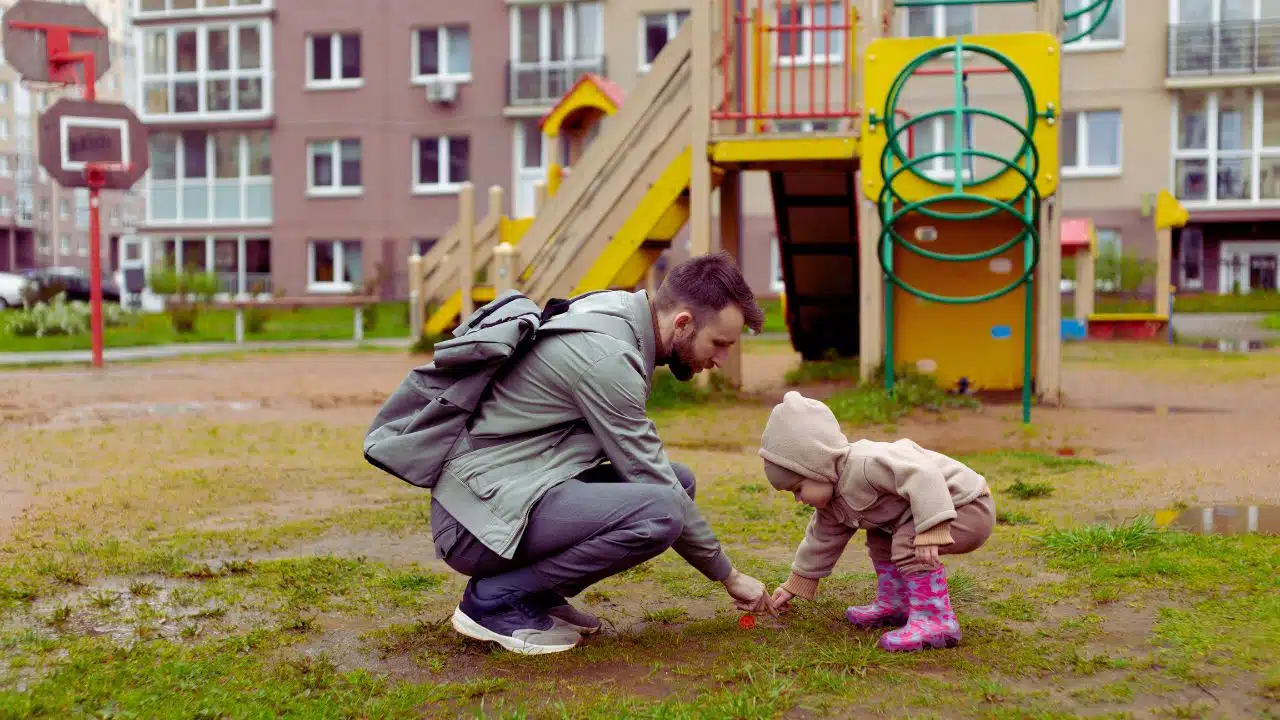
The United States is experiencing a crisis in education and has been for some time. Children suffered under the shutdown of schools during the global pandemic. Now they’re recovering in many schools that are struggling to keep up with their demands. Meanwhile, parents are exhausted and overwhelmed. Kids need a respite, a safe haven, and a place to just play while they work to meet academic expectations. Here’s how the American schoolyard can help:
It’s Crucial for Holistic Development
It might sound crazy, but virtually everything can be worked out with enough time on the playground. Sure, maybe not world issues, but kid issues can certainly be made better by a little, or a lot of play. Indeed, a lack of play can lead to a lack of joy in children’s lives. You’ve likely heard the many expressions about all work and no play. A life filled with only academia, screen time, and even team sports can find a child unhappy and, worse, underdeveloped.
When kids get enough time climbing play structures, swinging on swing sets, and running through grass they tend to develop better at a holistic level. Add in the social experiences they have with other kids, and playgrounds can be an integral part of children’s growth. If you want better students, better friends, and better humans, you can install more playgrounds in schoolyards, churches, and parks across the country.
It Fosters Social and Emotional Intelligence
About those social experiences: the social nature of school is often underplayed and underestimated. Of course, school boards, parents, teachers, and legislators alike are all concerned with the academic aspect of school. And yes, academics are important. But America’s children are suffering socially as well, and the two go hand-in-hand. Children struggling with depression, anxiety, and loneliness are unlikely to do well on tests and in class.
The playground offers an opportunity for children to blow off steam by moving their bodies and lift their moods by communicating with friends and classmates. On the playground, children learn to collaborate, share, and even resolve conflict. It provides a safe space with strong boundaries where children can engage in free play. Among all the other environments in their lives, the schoolyard most mimics what children will experience as adults in the real world.
It Aids in Cognitive Progress
Aside from the social aspect, children also actually learn better when they get more play. One of the great tragedies of the last decade has been the hit kids took during the pandemic. It was already a challenge to educate millions of children across the country in ways that remained competitive with the rest of the developed world. Now, with young children having fallen years behind their global peers, it’s more important than ever that schools support cognitive progress at every level.
This includes play. Again, the first instinct might be to push more books, more tests, more lessons, and more time in the classroom. However, increased academic pressure is not the answer to failing grades and academic skills. An increase in play just might be, at the very least it’s part of it. Children who get outside more, exercise more, and engage in more fun activities with friends do in fact perform better on their school work. Shifting to a greater focus on America’s schoolyards could be a solution to the educational problem.
It Supports Healthy Bodies
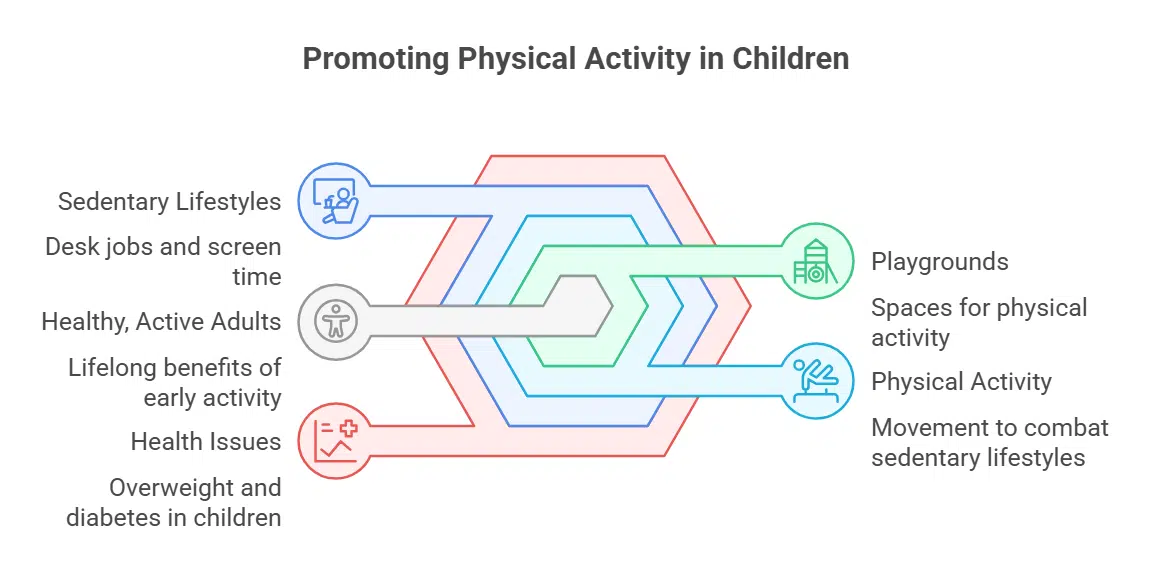
This one might seem obvious, but it really cannot be overstated: kids need to move their bodies more. An increasing number of children in the United States are unhealthily overweight, and more kids than ever before are diagnosed with juvenile diabetes. This shift has led to more doctors prescribing weight loss and diabetes medications to children, which can lead to even more, lifelong issues.
Finding a way to get kids moving their bodies more may help remedy this issue to some degree. Americans in general are becoming more sedentary, with desk jobs, classrooms, and screen time as ongoing reasons to sit and stay still. Playgrounds offer a counter to that compulsion, especially for kids. They can climb, run, jump, play, swing, and so much more. And the good news is that building healthy habits of moving every day lasts well into adulthood and beyond. So playgrounds can help create healthy, physically active adults.
It Provides Balance on a Stressful Day
Last but not least, the schoolyard offers kids balance to all the other events of their days. They get up early, get on the bus, get to school, and are expected to sit and focus all day. Then, they get home, have homework, and likely sit on a screen for hours. These experiences, even the ones they enjoy, can build up and create more stress in a child’s body and mind. They then take those stresses into a restless sleep that then gets interrupted when they have to wake up and start again.
A great playground gives kids a break from those stresses. They can play with their friends, use their imaginations to create new games, and just sit in nature and enjoy the sunshine. These activities are all well-known for relieving stress and providing a wonderful counterbalance to the rest of the day. Kids who get onto the playground for a couple of hours each day are likely to sleep better, perform better in class, and maybe even disengage from the screen more often.
In the end, America’s schoolyards, when supported by natural play structures and green spaces, can provide a solution to many of the problems kids have today. Parents, teachers, school board members, and legislators would do well to ensure the playgrounds at school are designed for kids to play, stay active, and even rest. Happy, healthy children will grow up to create a happy, healthy world. And that’s something everyone can get behind.






















