Quantum computers are no longer just science fiction. They promise to solve problems much faster than regular computers ever could. But with this power comes big risks, especially for cryptocurrencies like Bitcoin and Ethereum.
Cryptography, the backbone of crypto security, might crumble under quantum attacks. This threatens private keys, digital wallets, and blockchain systems we rely on today. In this blog, you’ll learn how “Quantum Computing Could Impact Crypto” in seven key ways.
Stay tuned!
Threats to Cryptographic Algorithms
Quantum computers can break many cryptographic codes quickly. This puts private keys and digital security at serious risk.
Breaking Public and Private Keys
Quantum computers could solve complex math problems much faster than normal computers. This would make it easier to crack public and private keys used in cryptographic security. These keys protect digital currencies like Bitcoin and Ethereum by keeping transactions safe.
Shor’s algorithm, designed for quantum systems, poses a big threat here. It can factorize large numbers quickly, breaking the encryption that secures blockchain technology. Without secure public key infrastructure, hackers might access funds or disrupt blockchains entirely.
– Weakening Digital Signatures
Weakening Digital Signatures
Breaking keys isn’t the only risk from quantum computing. Digital signatures, used to validate transactions in digital currencies like Bitcoin and Ethereum, could also fail. These signatures rely on cryptographic algorithms that secure data.
A strong enough quantum computer might decode these algorithms fast. This allows hackers to forge fake digital signatures or alter legit ones. Once tampered, transaction records become unreliable—impacting blockchain technology’s trust and security foundations.
Impact on Blockchain Security

Quantum computing poses a big threat to blockchain systems. It could crack codes that currently keep digital currencies safe.
Vulnerability of Bitcoin and Ethereum
Bitcoin and Ethereum rely on cryptographic security to protect transactions. Quantum computers could break private keys faster than current computers. This makes digital currencies like Bitcoin prone to theft or manipulation.
Ethereum also faces risks with its smart contracts. If quantum algorithms crack encryption, hackers could exploit these contracts. Both blockchains might lose trust without stronger protections against quantum threats.
Risks to Hash Functions
Hash functions face big threats from quantum computers. These machines can break their security by solving complex problems faster than regular computers. The SHA-256 hash, used in Bitcoin, could become weak if quantum attacks succeed.
Hackers with quantum power might undo hashing calculations to find original data. This can endanger blockchain technology‘s safety and trust. Stronger solutions are needed to secure digital currencies against such risks.
Looking ahead, creating post-quantum algorithms is vital for crypto protection.
Quantum-Resistant Cryptography
Hackers with quantum tech could crack today’s encryption. New algorithms aim to stop them in their tracks.
Development of Post-Quantum Algorithms
Scientists are creating new cryptographic algorithms to fight quantum threats. These post-quantum algorithms use math that even fast quantum computers can’t easily solve.
Many researchers are working on this, as the stakes are high. Bitcoin, Ethereum, and other digital currencies rely on strong encryption. Without it, they could collapse. Testing for these algorithms started years ago and continues today to avoid future risks.
Implications for Crypto Mining
Quantum computers could shake up crypto mining, making current methods look outdated.
Changes in Mining Efficiency
Crypto mining may speed up with quantum computers. These machines process vast amounts of data quickly. Complex calculations, like solving cryptographic puzzles for Bitcoin rewards, could become much faster.
Miners using quantum technology might outpace traditional systems. This advantage could lead to unfair competition in mining digital currencies. As a result, the balance in decentralized finance may shift drastically.
Evolution of Wallet Security
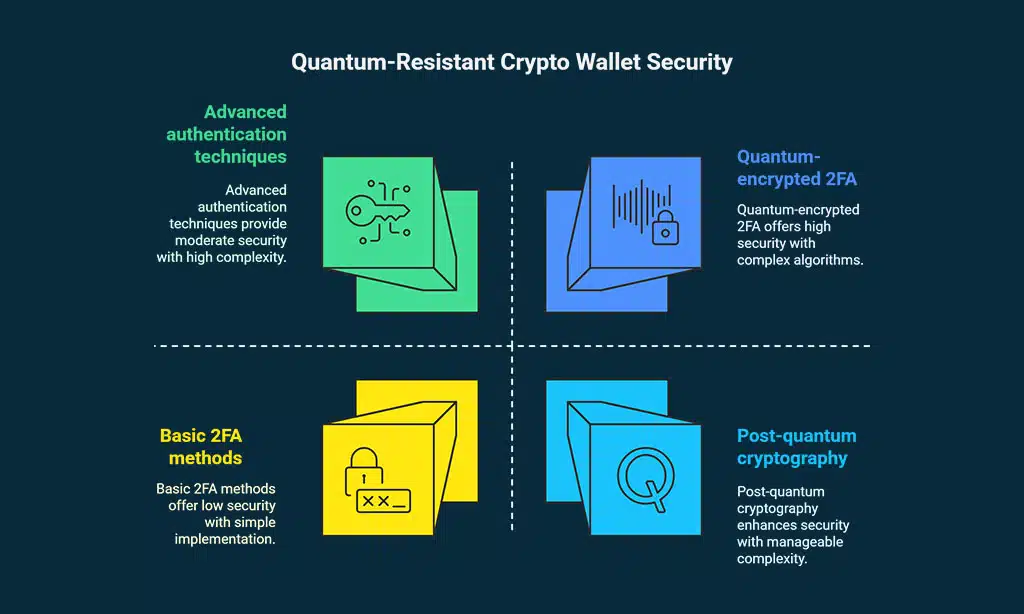
Quantum computers could make old wallet protections weak, fast. Crypto wallets must adapt or face big risks.
Enhancing Two-Factor Authentication (2FA)
2FA could become stronger with quantum encryption. Current methods rely on codes sent by text or apps, which hackers might steal. Quantum algorithms can add extra layers of protection by creating keys that are nearly impossible to crack.
Private and public key systems may evolve. With post-quantum cryptography, digital wallets could use advanced authentication techniques. This would make access tougher for attackers while keeping data private and secure.
Market Volatility Due to Quantum Advancements
Quantum computing can shake up digital currencies. It could break cryptographic algorithms used in Bitcoin, Ethereum, and other cryptocurrencies. This might cause sudden market drops as trust fades quickly.
Price swings may become unpredictable. Traders might rush to sell assets, fearing breaches in blockchain technology. Algorithmic trading systems could also act chaotically, adding fuel to the fire.
Takeaways
Quantum computing could reshape crypto in big ways. Encryption methods might need an upgrade, as current ones look weak against quantum power. Blockchain security and mining may change, while wallet protections will also evolve.
The risks are clear, but solutions like post-quantum cryptography offer hope. Acting now can protect the future of digital currencies and make them stronger than ever.