

History is not merely a static collection of dates and archived documents; it is a living, breathing narrative shaped by the triumphs, tragedies, and indomitable will of humanity. As we turn the pages of time to May 19, we uncover a profound tapestry of historical milestones that have left an indelible mark on the world. This specific date serves as a powerful reminder of how human resilience shapes our global narrative, from the deeply emotional linguistic struggles in the Indian subcontinent to the birth of modern nations, the tragic ends of controversial monarchs, and the arrival of visionary leaders.
To fully understand the gravity of this day, we must embark on a comprehensive journey through time. Looking back at the events of May 19 allows us to trace the roots of modern geopolitical conflicts, understand the evolution of human rights, and appreciate the cultural milestones that define our contemporary society. We will explore the regional impacts that defined the cultural identity of millions, examine the global political shifts that redrew maps, and remember the remarkable individuals who took their first—or last—breath on this date.
The Indian subcontinent, with its rich, complex, and often turbulent history, holds a particularly poignant connection to this day. Let us first examine the profound historical footprint left on the Bangalee sphere, where the fight for cultural identity required the ultimate sacrifice.
The Bangalee Sphere
The history of the Bangalee community and the broader Indian subcontinent on May 19 is largely defined by a deeply emotional struggle for linguistic rights, as well as the enduring contributions of pioneering visionaries in literature, industry, and politics.
The Barak Valley Language Movement in Assam (1961)
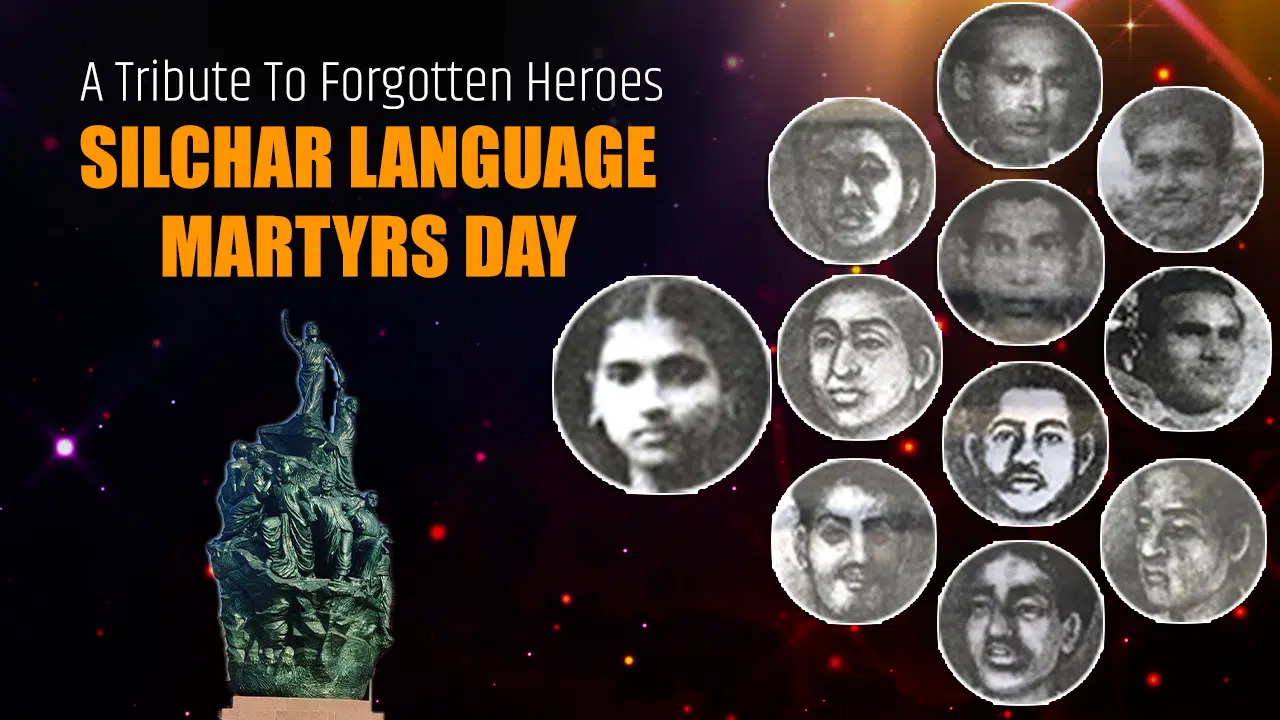
On May 19, 1961, paramilitary forces ruthlessly opened fire on unarmed Bengalis protesting for the rightful status of the Bengali language at the Silchar railway station in Assam.
The events of May 19, 1961, in Assam’s Barak Valley represent one of the most critical chapters in the global struggle for linguistic self-determination. This movement did not occur in a vacuum; it was the boiling point of deeply rooted post-partition demographic and political tensions between the Assamese-majority Brahmaputra Valley and the Bengali-majority Barak Valley (primarily comprising the Cachar district).
When the Assam government passed the Official Language Act of 1960, designating Assamese as the sole official language, it effectively marginalized the region’s Bengali-speaking population, threatening their access to education, government employment, and civic participation.
In response, the Cachar Zila Gana Sangram Parishad launched a peaceful Satyagraha (non-violent resistance). On May 19, protestors gathered at the Silchar railway station to blockade the tracks. Without provocation, the paramilitary Assam Rifles opened fire on the unarmed crowd.
The immediate toll was devastating. Eleven young protestors were killed. Among them was Kamala Bhattacharya, a 16-year-old schoolgirl who became India’s first female language martyr. The political fallout from this bloodshed was immense, forcing the government to amend the Act to recognize Bengali as the administrative language of the Cachar district. Much like the 1952 Language Movement in Dhaka, the Silchar massacre cemented the belief that linguistic identity is a fundamental human right, fundamentally shaping the political consciousness of the region.
Ruskin Bond: The Magician of Children’s Literature Raised in the Lap of the Himalayas
Anglo-Indian author Ruskin Bond was born on this day in 1934. He stepped into the literary world with his first novel, The Room on the Roof, written when he was just seventeen years old. Through stories of ordinary people growing up in Dehradun and Mussoorie in the foothills of the Himalayas, alongside his magical descriptions of nature, he has colored the childhoods of generation after generation. His writings have added a unique dimension to Indian English literature, where simplicity and nostalgia seamlessly blend. For his outstanding contribution to children’s literature, he was honored with the Sahitya Akademi Award, and later received the Padma Shri and Padma Bhushan from the Government of India.
Girish Karnad: The Uncrowned Emperor of Modern Indian Theatre
Renowned actor, director, and playwright Girish Karnad was born in 1938. His contribution to enriching modern Indian theatre through Kannada plays is undeniable. Through plays based on historical and mythological backdrops like Tughlaq, Hayavadana, and Nagamandala, he masterfully portrayed contemporary political and social crises. In recognition of his exceptional achievements in literature and theatre, he was awarded the Jnanpith Award, India’s highest literary honor. His presence in the acting world was also remarkably brilliant, and he was honored with the Padma Shri and Padma Bhushan for his work.
Manik Bandopadhyay: The Architect of Psychology and Realism in Bengali Literature
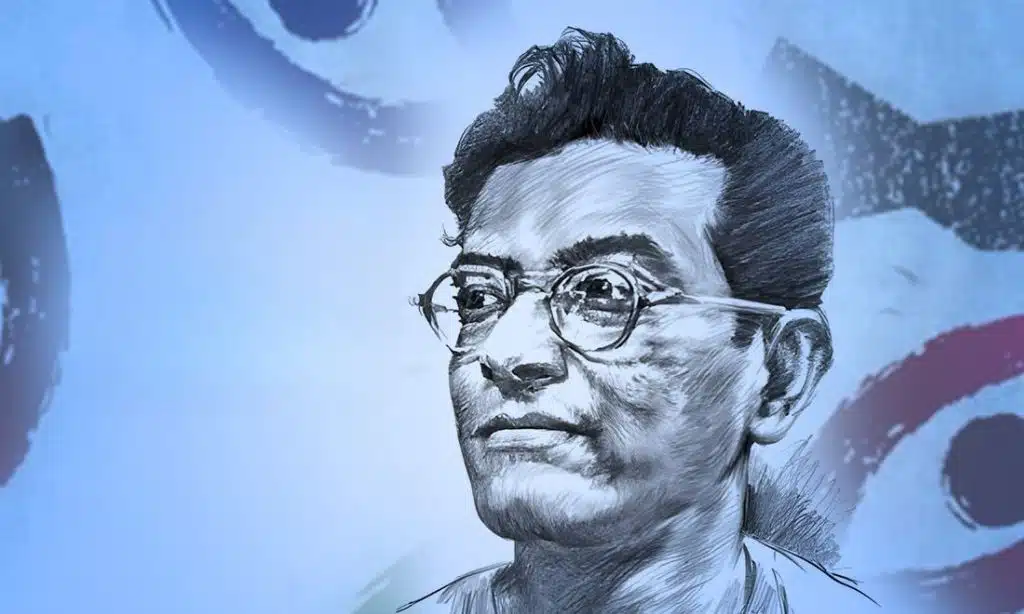
Born on May 19, 1908, Manik Bandopadhyay (whose real name was Prabodh Kumar Bandyopadhyay) is one of the greatest fiction writers in Bengali literature. Through timeless novels like Padma Nadir Majhi (The Boatman of the Padma), Putul Nacher Itikatha (The Puppet’s Tale), and Dibarattrir Kabya (Poetry of the Day and Night), he opened a new horizon of realism and Freudian psychoanalytical exploration in Bengali literature. Not only the dark aspects of the human mind, but also the class struggles of society and the lives of oppressed people are masterfully depicted in his writings. In a brief life of just 48 years, he authored around 39 novels and over 300 short stories. Although he battled extreme poverty and illness throughout his life, the invaluable literary treasure he left behind remains a vast source of profound thought for Bengali readers today.
Jamsetji Tata: Engineering Economic Sovereignty
While political freedom was fought for in the streets and legislatures, the foundation for India’s economic independence was laid by Jamsetji Tata, who passed away on May 19, 1904. Tata understood that true sovereignty required industrial self-reliance.
Operating under the oppressive economic policies of the British Raj—which viewed India merely as a source of raw materials—Tata envisioned heavy industry as a tool for national upliftment. He conceptualized the Tata Iron and Steel Company (TISCO), which eventually led to the creation of Jamshedpur, India’s first planned industrial city. Furthermore, recognizing that long-term progress depended on scientific research, he pledged his personal wealth to establish what would become the Indian Institute of Science (IISc) in Bangalore. Tata was not just a capitalist; he was an economic nationalist whose blueprints for steel, hydroelectric power, and education became the very scaffolding of the modern Indian economy.
International Observances & Holidays
May 19 serves as a day of remembrance and celebration across multiple continents. These observances focus on national independence, the promotion of public health, and the enduring legacies of pivotal historical figures who altered the course of their nations.
-
Major International Days: World IBD Day is observed globally on May 19 to raise awareness for Crohn’s disease and ulcerative colitis, aiming to support the millions of individuals living with inflammatory bowel diseases and advocate for better research funding. In the United States, May 19 is also recognized as Hepatitis Testing Day, a critical public health initiative promoting testing, education, and awareness for viral hepatitis to prevent long-term liver damage.
-
National Days: In Turkey, this date is vibrantly celebrated as the Commemoration of Atatürk, Youth and Sports Day, a national holiday marking the beginning of the Turkish War of Independence. Vietnam observes Hồ Chí Minh’s Birthday, honoring the revolutionary leader who fought for the nation’s independence with widespread national pride. Meanwhile, several states in the US observe Malcolm X Day to honor the influential civil rights leader born on this day, reflecting on his contributions to Black empowerment. Additionally, Greece observes Pontian Greek Genocide Remembrance Day, a solemn occasion remembering the ethnic Greeks who perished in the Ottoman Empire during the early 20th century.
These modern observances are deeply intertwined with the broader sweep of global events that occurred on this day in centuries past, spanning continents, shifting borders, and redefining human rights.
Global History
The global stage on May 19 has witnessed the dramatic fall of queens, the establishment of defining political borders, the dawn of youth movements, and the stirring of revolutions across distinct geographic realms.
-
United States: On May 19, 1921, the US Congress passed the Emergency Quota Act. This sweeping legislation introduced a highly restrictive system of national quotas on immigration, drastically altering the country’s demographic trajectory for decades by severely limiting the entry of Southern and Eastern Europeans. Decades later, in a drastically different cultural moment, May 19, 1962, saw Marilyn Monroe deliver her famous, sultry rendition of “Happy Birthday, Mr. President” to John F. Kennedy at a massive gala in Madison Square Garden, creating one of the most iconic pop-culture moments of the 20th century. On May 19, 2001, Apple Inc. revolutionized the retail technology landscape by opening its very first two retail stores in Tysons Corner, Virginia, and Glendale, California.
-
Russia: In 1922, the Young Pioneer Organization of the Soviet Union was established. Functioning as a mass youth movement akin to the Scouting movement but deeply rooted in communist ideology, it shaped the social, political, and moral upbringing of millions of Soviet children until the dissolution of the USSR in 1991.
-
China: During the turbulent era of the Nian Rebellion, May 19, 1865, marked a massive military turning point with the death of Sengge Rinchen. The prominent Qing dynasty Mongol military commander was ambushed and killed by Nian rebels at the Battle of Gaolouzhai, dealing a significant psychological and strategic blow to the Qing government’s efforts to suppress internal uprisings. In modern history, May 19, 2008, marked the beginning of three days of national mourning following the devastating Sichuan earthquake, which claimed tens of thousands of lives.
-
United Kingdom: English history was forever altered on May 19, 1536, when Anne Boleyn, the second wife of King Henry VIII, was executed by beheading at the Tower of London. Her controversial death on charges of treason, adultery, and incest—carried out uniquely with a French executioner’s sword rather than an axe—cleared the way for Henry’s marriage to Jane Seymour and accelerated the English Reformation. Over a century later, on May 19, 1649, an Act of Parliament officially declared England a Commonwealth, establishing a republic shortly after the unprecedented trial and execution of King Charles I.
-
Europe: Expanding his imperial ambitions, Napoleon Bonaparte and his massive French expeditionary force departed from Toulon on May 19, 1798, to invade Egypt. This early campaign in the Napoleonic Wars was strategically aimed at protecting French trade interests and undermining Britain’s vital access to its holdings in India. Earlier in European history, on May 19, 1568, Queen Elizabeth I of England ordered the arrest of her cousin, Mary, Queen of Scots, leading to Mary’s long imprisonment and eventual execution.
-
Australia: In 1861, the world-renowned operatic soprano Nellie Melba (born Helen Porter Mitchell) was born in Richmond, Victoria. She would go on to become the first Australian to achieve international recognition as a classical musician, bringing unprecedented cultural prestige to the young nation and dominating the global opera scene for decades.
-
Canada: Recognizing the escalating geopolitical tensions and nuclear paranoia of the Cold War, the North American Aerospace Defense Command (NORAD) was formally established on May 19, 1958. This bilateral agreement between the United States and Canada created a unified organization to monitor and fiercely defend North American airspace against potential Soviet bomber and missile threats.
-
Rest of World: May 19, 1919, is permanently etched in Turkish history as the day Mustafa Kemal Atatürk landed at Samsun on the Anatolian Black Sea coast. This defiant act is universally recognized as the spark of the Turkish War of Independence, a brutal but successful struggle that eventually dismantled the remnants of the Ottoman Empire, expelled occupying Allied forces, and led to the founding of the modern, secular Republic of Turkey.
Such immense historical shifts, political upheavals, and cultural advancements are inherently driven by the remarkable individuals whose lives began or ended on this date.
Notable Births & Deaths (Global)
The following table provides a comprehensive look at some of the most influential global figures whose lives began or ended on May 19. This roster spans revolutionary politicians, literary giants, cultural icons, and military strategists, noting their specific contributions, nationalities, and the enduring legacies they left behind.
| Name | Year | Nationality | Legacy / Cause of Death |
| Malcolm X | 1925 | American | Birth: A highly influential African American Muslim minister and human rights activist who fiercely advocated for Black empowerment, self-defense, and civil rights. |
| Mustafa Kemal Atatürk | 1881 | Turkish | Birth: The visionary statesman, field marshal, and founding father of the Republic of Turkey. (Note: While his exact birth date is disputed, May 19 is officially recognized). |
| Ho Chi Minh | 1890 | Vietnamese | Birth: The revolutionary leader and President of North Vietnam who successfully led the long struggle for independence against French colonialists and American forces. |
| Pol Pot | 1925 | Cambodian | Birth: The totalitarian political leader of the Khmer Rouge, whose brutal agrarian policies and purges resulted in the devastating Cambodian genocide. |
| André the Giant | 1946 | French | Birth: Born André René Roussimoff, he was a massive cultural icon and professional wrestler known globally as the “Eighth Wonder of the World.” |
| Sam Smith | 1992 | British | Birth: Multi-award-winning singer-songwriter known for their powerful vocal range and significant contributions to modern pop and soul music. |
| Nathaniel Hawthorne | 1864 | American | Death: The legendary novelist and short-story writer, author of The Scarlet Letter, who deeply influenced American dark romanticism; died in his sleep. |
| José Martí | 1895 | Cuban | Death: A revered national hero, intellectual, and literary figure who became the central symbol for Cuba’s bid for independence; he died valiantly in battle against Spanish troops. |
| T. E. Lawrence | 1935 | British | Death: Widely known as “Lawrence of Arabia,” he was a renowned archaeologist, military officer, and diplomat crucial to the Arab Revolt; he died tragically in a motorcycle crash. |
| Jacqueline Kennedy Onassis | 1994 | American | Death: The 37th First Lady of the United States and a prominent global cultural icon known for her elegance and historic preservation efforts; she died of non-Hodgkin lymphoma. |
While the lives of these prominent figures dominate the history books and academic curriculums, the margins of history are often flavored with unusual and obscure anomalies that make for excellent conversation pieces.
“Did You Know?” Trivia
History is rarely a straightforward timeline of predictable events; it is frequently punctuated by bizarre occurrences, accidental inventions, and fascinating astronomical anomalies that capture our imagination.
-
The Earth Passes Through a Comet’s Tail: On May 19, 1910, Earth actually passed through the tail of Halley’s Comet. Because the comet’s tail was known to contain poisonous cyanogen gas, widespread panic ensued globally. People bought “comet pills,” sealed their windows, and prepared for the end of the world, though the gas was far too diffuse to cause any actual harm.
-
The New England Dark Day: On May 19, 1780, an eerie, unexplained darkness fell over the New England states and parts of eastern Canada by mid-day, requiring residents to light candles at noon. While it caused widespread panic and intense religious fervor at the time, modern scientists attribute the phenomenon to a massive combination of thick smoke from immense Canadian forest fires, heavy fog, and dense cloud cover.
-
The Conceptualization of the Cube: While not the official release date of the toy, May 19, 1974, marks the day the Hungarian architecture professor Ernő Rubik is widely credited with conceptualizing the internal mechanism that would eventually become the world-famous “Rubik’s Cube.” He initially designed the complex wooden prototype strictly to teach his students about 3D geometry and spatial relationships.
-
A Tight Fit for History: When Marilyn Monroe sang her breathy rendition of “Happy Birthday” to JFK on this day in 1962, her flesh-colored, rhinestone-encrusted dress was famously so tight that she wore nothing underneath and had to be literally sewn into the garment just moments before stepping onto the stage. The dress was so iconic it later sold at auction for over $4.8 million.
-
The Dawn of the Apple Store: The very first Apple retail stores opened their doors to the public on May 19, 2001. Pundits at the time predicted the stores would be a massive failure for Steve Jobs, arguing that standalone tech brand stores couldn’t survive. Today, they are among the most profitable retail spaces per square foot in the world.
These captivating facts, blending the mysterious with the iconic and the astronomical, lead us naturally to the enduring words spoken by those whose destinies were forever intertwined with this day.
Quote of the Day
Words carry the heavy weight of history, and on this date, the thoughts of one of the 20th century’s most powerful orators continue to resonate deeply with modern generations, urging us to look forward while respecting the past.
-
“Education is the passport to the future, for tomorrow belongs to those who prepare for it today.” — Malcolm X (Born May 19, 1925). This powerful sentiment encapsulates his lifelong dedication to self-improvement, systemic awareness, and the vital necessity of empowering marginalized communities through rigorous intellectual preparation.
The events, lives, and words associated with this date offer a profound opportunity to look back and understand how our modern world was meticulously assembled over centuries of struggle and triumph.
The Enduring Imprint of May 19 on Our Global Consciousness
Reflecting on the myriad events of May 19 reveals a profound tapestry of human struggle, resilience, and transformation. History is rarely a linear progression of triumphs; it is often punctuated by tragic sacrifices that eventually pave the way for enduring rights and freedoms. The eleven martyrs who laid down their lives at the Silchar railway station in 1961 did not die in vain; their ultimate sacrifice solidified the linguistic identity of an entire community and serves as a stark reminder that cultural heritage is a right worth defending against legislative erasure. Similarly, the simultaneous births of revolutionary figures like Malcolm X and Ho Chi Minh on this very day underscore how singular moments in time can incubate the fierce leaders who will eventually rise to challenge deeply entrenched global hegemonies.
Whether it is the tragic fall of a queen like Anne Boleyn, which shifted the religious landscape of Europe, or the foundational steps of modern republics in Turkey and England, May 19 encapsulates the sheer volatility of power. As we observe these historical milestones, we are compelled to recognize that the freedoms, rights, and technological comforts we often take for granted today were meticulously forged in the fires of yesterday’s relentless struggles. Ultimately, exploring the depths of May 19 is not just an exercise in memorizing the past; it is a vital practice in understanding the complex, interconnected roots of our present reality, equipping us with the historical empathy needed to navigate the challenges of tomorrow.























