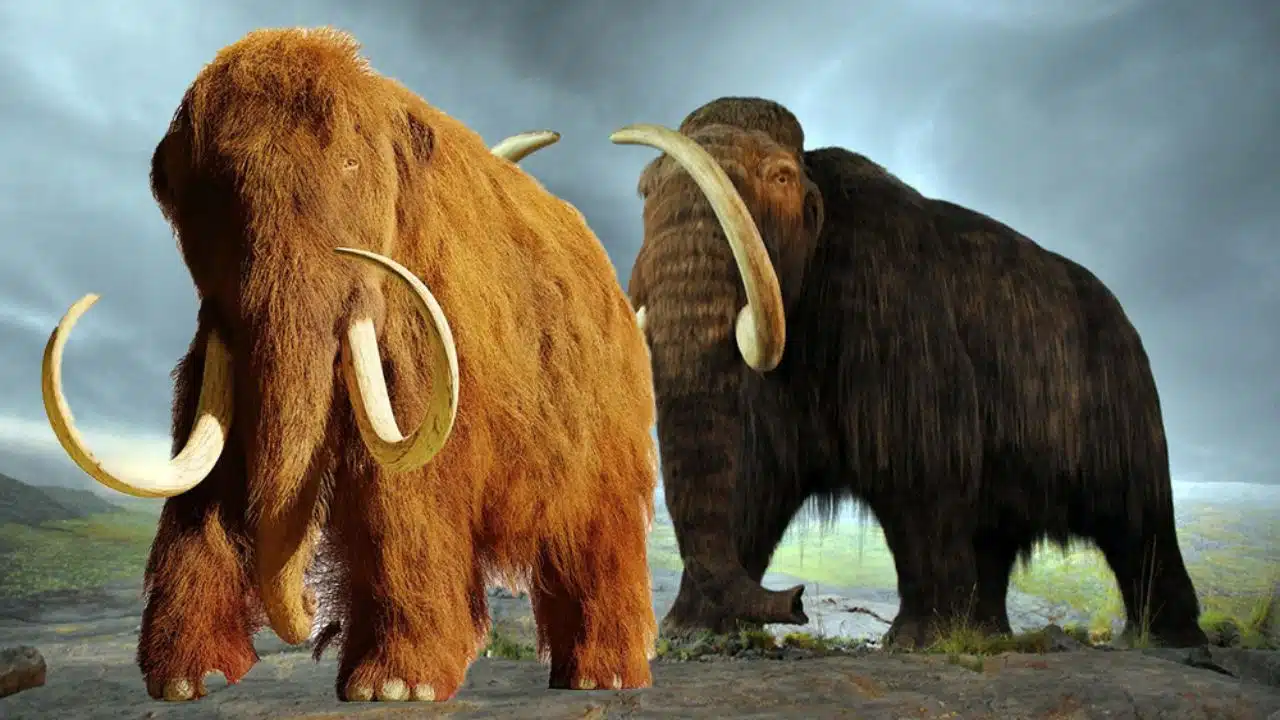
In a stunning breakthrough that opens a new frontier in paleontology, scientists have recovered and sequenced the Oldest Sequenced RNA ever found. Extracted from the 40,000-year-old mummified remains of a woolly mammoth named “Yuka,” the fragile molecules provide an unprecedented snapshot of the Ice Age creature’s active biology and “final moments” of life.
Key Facts & Quick Take
-
New World Record: At approximately 39,000-40,000 years old, the RNA from the “Yuka” mammoth shatters the previous record for ancient RNA, which was held by a 14,300-year-old wolf puppy.
-
The Science: Researchers from Stockholm University and the University of Copenhagen successfully sequenced “transcriptomes” (the full set of RNA molecules) from Yuka’s muscle and skin tissue, preserved for millennia in Siberian permafrost.
-
DNA vs. RNA: Unlike DNA (the stable “blueprint” of life), RNA is the fragile “messenger” molecule that translates the blueprint into action. Its presence reveals which genes were “turned on” or active, offering a dynamic look at the creature’s cellular activity at its time of death.
-
What It Revealed: The RNA profile showed genes related to metabolic stress, muscle contraction, and slow-twitch muscle fibers, consistent with an animal dying a slow, stressful death—possibly after being attacked by cave lions and getting stuck in mud.
-
Surprise Finding: The genetic data, confirmed by both RNA and DNA, proved that Yuka—long believed to be female—was definitively a male mammoth.
-
The Impact: This study, published in the journal Cell, establishes the field of “paleotranscriptomics,” proving that functional genetic information can be retrieved from deep time, far beyond what was thought possible.
A 40,000-Year ‘Snapshot’: Scientists Read the ‘Final Pulses’ of an Ice Age Mammoth
For more than a decade, the world has been fascinated by “Yuka,” an exceptionally well-preserved juvenile woolly mammoth (Mammuthus primigenuis) discovered in the Siberian permafrost in 2010. Its body, frozen in time, retained its strawberry-blonde fur, soft tissues, and even its brain.
But until now, the secrets it held were limited to its anatomy and its DNA—the static, genetic blueprint of what it was.
A new study, published just days ago on November 15, 2025, has achieved what many scientists believed to be impossible. An international team led by researchers at the Centre for Palaeogenetics (CPG) at Stockholm University, Sweden, and the Globe Institute in Denmark has successfully extracted and sequenced the Oldest Sequenced RNA from Yuka’s remains.
This is not just another record; it’s a fundamental shift in how we can study the past. The findings offer a “glimpse into the final moments of life of a mammoth that walked the Earth during the last Ice Age,” said Emilio Mármol-Sánchez, the study’s lead author and a genomicist formerly at Stockholm University.
Because RNA is the active “messenger” carrying out DNA’s instructions, scientists are no longer just looking at the mammoth’s genetic potential. They are, for the first time, reading the “final pulses” of its cellular life, frozen at the instant of its death 40,000 years ago.
Beyond the Blueprint: Why RNA is a Paleontological Game-Changer
To understand the magnitude of this discovery, one must understand the crucial difference between DNA and RNA.
Think of DNA (deoxyribonucleic acid) as a massive, ancient library containing the complete architectural blueprints for an entire city. DNA is a robust, double-stranded molecule designed for long-term storage. Under the right conditions, like the deep-freeze of permafrost, it can survive for astonishing periods. In fact, the oldest DNA ever sequenced is over 1.2 million years old, also from a Siberian mammoth.
RNA (ribonucleic acid), however, is like a single, handwritten work order sent from the library’s main office (the nucleus) to a construction site (the ribosome) with a specific instruction: “Build a keratin protein for hair right now,” or “Release energy for this muscle cell.”
RNA is a single-stranded molecule, notoriously fragile and designed to be temporary. Scientists have long operated under the assumption that it degrades within minutes or hours of an organism’s death, torn apart by enzymes and environmental exposure. This is why, until this new study, the record for ancient RNA was a “mere” 14,300 years from a permafrost-preserved wolf.
The Yuka study proves that under the exceptional, stable, and frigid conditions of the Siberian permafrost, these delicate messenger molecules can also be locked in time.
“We were all super surprised,” said Love Dalén, a professor of evolutionary genomics at CPG and senior author of the paper, in a statement. “Our results demonstrate that RNA molecules can survive much longer than previously thought.
This breakthrough effectively creates a new field: paleotranscriptomics, the study of ancient and extinct gene expression.
Data & Statistics: Shattering the Record
The leap made by this study is best understood through the numbers. The research team analyzed tissue samples from 10 different permafrost-preserved mammoths, but only Yuka’s yielded RNA of high enough quality for this deep analysis.
By the Numbers: A New Timeline for Ancient Molecules
-
39,000-40,000 Years: The approximate age of the Yuka mammoth specimen. This now stands as the new world record for the Oldest Sequenced RNA recovered from an organism.
-
14,300 Years: The previous record for the oldest RNA sequenced, which came from a Siberian wolf puppy. The Yuka find pushes this timeline back by nearly 25,000 years, or almost threefold.
-
>1.2 Million Years: The age of the oldest DNA ever sequenced, from the “Krestovka” mammoth. This statistic highlights the vast difference in stability between the two molecules and why the 40,000-year-old RNA discovery is so revolutionary.
What Yuka’s ‘Active’ Genes Reveal
By sequencing the RNA, the team identified thousands of unique transcripts, or active genes, from Yuka’s muscle tissue. This profile painted a grim, dynamic picture of its final moments.
Signs of Stress and a Lion Attack?
The most significant findings were patterns of gene expression related to metabolic regulation under stress. The team also found active genes for muscle contraction proteins, such as titin and nebulin, and a predominance of slow-twitch muscle fibers.
This molecular evidence aligns perfectly with the physical evidence found on Yuka’s body. The mammoth’s hide bears deep cuts, which paleontologists have long hypothesized were inflicted by cave lions. It is believed Yuka was attacked, fled, and subsequently died in a mudhole or by drowning, which led to its rapid burial and exceptional preservation.
The active stress-response genes and engaged muscle fibers are consistent with an animal undergoing extreme physical exertion and trauma.
“We do hypothesize that this animal was close to death, and this is manifested in the metabolism of the muscle,” Mármol-Sánchez explained. The RNA is, in effect, a biological echo of Yuka’s struggle to survive.
A ‘Smoking Gun’ and a Surprise Correction
A key challenge in ancient genomics is distinguishing authentic ancient molecules from modern contamination. The team found their “smoking gun” in the form of microRNAs—small molecules that regulate other genes.
“We found rare mutations in certain microRNAs that provided a smoking-gun demonstration of their mammoth origin,” noted co-author Bastian Fromm of The Arctic University of Norway (UiT). The team even identified two novel microRNAs that had never been reported in any animal.
This deep genetic dive also solved a long-standing mystery. Since its discovery, Yuka had been referred to as a female. However, the RNA and DNA analysis clearly identified a Y chromosome, confirming the juvenile mammoth was, in fact, male.
Expert Analysis: The Birth of ‘Paleotranscriptomics’
The consensus among experts is that this study is a landmark paper, moving paleontology from reconstructing genomes to reconstructing biology.
This opens the door to answering questions DNA alone cannot. How did Ice Age animals adapt to cold on a cellular level? What genes were active during hibernation? How did their metabolism differ from modern elephants?
“It’s about how which genes are turned on and turned off in different cell types,” senior author Love Dalén told CNN. “All the cells in an organism have the same DNA. What makes cells different from each other is essentially the RNA.
What’s Next: From Ancient Viruses to De-Extinction Debates
The implications of this study extend far beyond mammoths. Professor Dalén noted that this technique could allow scientists to hunt for ancient RNA viruses, such as influenza or coronaviruses, preserved in permafrost remains. This could provide a deep-time perspective on viral evolution.
The discovery also has implications for the high-profile “de-extinction” projects aiming to resurrect the woolly mammoth. While those projects have focused on editing elephant DNA to match the mammoth’s genetic blueprint, this new RNA data provides crucial information about which genes were functionally important and how they were regulated.
Knowing which genes were active in a mammoth’s muscle and skin provides a functional roadmap, moving the effort from simple genetic engineering to applied functional biology.
Conclusion: A New Chapter in Reading the Past
The recovery of 40,000-year-old RNA from the Yuka mammoth is a technical marvel that was, until this week, considered biologically impossible. It fundamentally changes the boundaries of molecular paleontology.
By proving that the “messenger” molecules of life can survive for millennia, the researchers at Stockholm University and their colleagues have unlocked a new library of ancient information. We can now move beyond the static blueprint of DNA and begin to read the active, living biology of the past—one frozen, 40,000-year-old “work order” at a time.