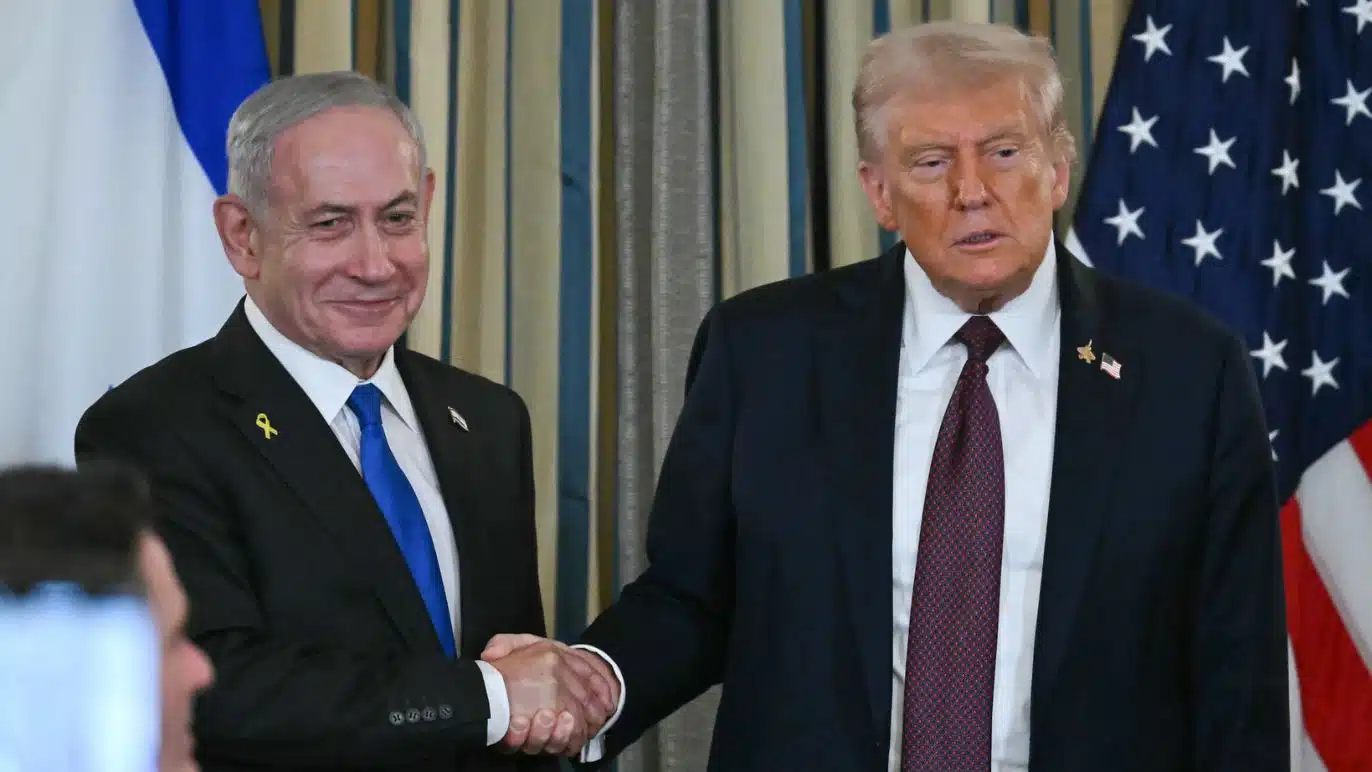
Israeli Prime Minister Benjamin Netanyahu convened with U.S. President Donald Trump at the Mar-a-Lago estate in Florida on December 29, 2025, amid mounting tensions over the stalled second phase of a Gaza ceasefire plan. The meeting, their sixth since Trump’s January inauguration, highlighted public displays of unity even as Trump’s top advisers expressed deepening frustration with Netanyahu’s perceived delays.
Meeting at Mar-a-Lago: A Show of Alliance
Netanyahu arrived at Trump’s Palm Beach resort on Monday afternoon, following a brief discussion with U.S. Secretary of State Marco Rubio. The leaders held a joint press conference where they exchanged praise, with Trump expressing hope to advance “phase two of the Gaza ceasefire very quickly.” Netanyahu, in turn, announced that Trump would receive Israel’s prestigious Israel Prize, underscoring the “overwhelming sentiment” of Israelis grateful for U.S. support against terrorism.
The summit came at a pivotal moment, just days before a U.S.-imposed New Year’s deadline for Hezbollah’s disarmament in Lebanon and amid accusations that both Israel and Hamas have violated phase one terms of the October ceasefire. Trump used the occasion to issue stark warnings to Iran—threatening potential strikes—and to Hamas, urging its full disarmament as a prerequisite for progress. Despite the warm rhetoric, underlying strains surfaced, with no immediate announcement on phase two details or the anticipated Board of Peace members.
Observers noted the sparse public schedule for Netanyahu’s multi-day U.S. visit, which extended through Thursday and overlapped with Trump’s golf outings and a prior meeting with Ukrainian President Volodymyr Zelensky. The Florida setting evoked Trump’s first-term diplomacy style, blending high-stakes talks with personal rapport, yet it masked growing policy divergences.
Trump’s 20-Point Gaza Plan: Vision and Sticking Points
At the core of discussions lies Trump’s ambitious 20-point Gaza ceasefire framework, approved by the UN Security Council and designed to end Hamas’s rule in the Strip through a multi-phase rollout. Phase one, activated October 10 around the second anniversary of Hamas’s October 7, 2023, attack on Israel, facilitated a hostage-prisoner exchange but faltered on commitments like Hamas returning the body of Israeli soldier Master Sgt. Ran Gvili and Israel fully reopening the Rafah Crossing.
Phase two envisions a technocratic Palestinian government overseeing Gaza, supervised by a Trump-led Board of Peace under a renewable two-year UN mandate, alongside an International Stabilization Force to replace phasing-out IDF troops. Reconstruction funds from Arab states and demilitarization of the Strip form key pillars, with Trump pushing for rapid implementation to avert collapse. Netanyahu has defended the plan to his skeptical hardline cabinet but voiced reservations, particularly on proposals from Trump’s envoy Steve Witkoff and son-in-law Jared Kushner regarding Gaza’s demilitarization scope.
The plan builds on Trump’s broader Middle East strategy, including expanded Arab-Israeli normalization and outreach to Syria’s new leadership under Ahmad al-Sharaa. Yet, mutual accusations plague progress: Palestinians report over 400 deaths from Israeli strikes since phase one began, while Israel cites Hamas intransigence. International pressure, especially from Washington, targets Tel Aviv for slow-walking the deal, complicating alliances with Arab partners wary of Palestinian governance vacuums.
Advisers’ Frustration: A Rift in Trump’s Inner Circle
Ahead of the Mar-a-Lago talks, reports emerged of acute frustration among Trump’s closest aides toward Netanyahu. Key figures—Vice President JD Vance, Secretary of State Rubio, Kushner, Witkoff, and Chief of Staff Susie Wiles—accuse the Israeli leader of deliberately undermining the ceasefire by stalling phase two. A White House official bluntly stated Netanyahu has “lost” their support, leaving Trump as his sole advocate, albeit one demanding faster movement.
Sources describe Netanyahu’s strategy as “slow-walking” the agreement, with skepticism focused on U.S. ideas for Gaza’s future administration and security arrangements. An Axios report highlighted how the prime minister plans to bypass these advisers by appealing directly to Trump, leveraging their personal bond forged during Trump’s first term and recent frequent meetings. While Rubio appears more aligned with Netanyahu’s hawkish stance, the broader team views delays as risking resumption of full-scale war.
This tension reflects deeper U.S.-Israel divergences on the Israeli-occupied West Bank and post-Hamas governance. Trump acknowledged partial disagreements during the meeting but prioritized unity, warning that failure to advance could invite Iranian opportunism or Hezbollah violations. Israeli officials counter that Hamas’s non-compliance justifies caution, framing Netanyahu’s trip as a bid to recalibrate the plan toward Israel’s security red lines.
Broader Regional Stakes: Iran, Hezbollah, and Beyond
The Netanyahu-Trump dialogue extended beyond Gaza to escalating threats from Iran and Hezbollah. Israel expresses alarm over Tehran’s ballistic missile rebuilding post a June 2025 12-day war, with Trump reiterating strike threats if provocations continue. On Hezbollah, Israel demands the Lebanese group meet a U.S.-set January 1 deadline for disarmament, or face resumed hostilities halted by a November 2024 ceasefire.
These issues intertwine with Gaza dynamics, as Trump positions his administration as a peace broker amid Russia’s Ukraine war and Syrian transitions. Netanyahu’s U.S. itinerary, including prior White House invites, underscores his reliance on Trump amid domestic corruption probes—rumors of a potential U.S. pardon swirled, though unconfirmed. The leaders’ mutual accolades, including Netanyahu’s Israel Prize nod for Trump, signal enduring alliance despite advisory friction.
Arab states’ involvement in Gaza reconstruction hinges on phase two clarity, with divisions emerging over Palestinian Authority roles versus technocratic models. Failure risks humanitarian catastrophe, with Gaza’s crisis persisting despite phase one aid flows. Trump’s team eyes January unveiling of the Board of Peace, potentially post-meeting, to inject momentum.
Netanyahu’s Domestic Pressures and Strategic Calculus
Back home, Netanyahu navigates a fractious coalition where far-right allies like National Security Minister Itamar Ben-Gvir decry the Gaza plan as “full of holes,” jeopardizing war aims like total Hamas defeat and full IDF withdrawal reversal. The premier defended the framework in cabinet sessions, assuring alignment with Israel’s objectives, but faces backlash over perceived concessions on international forces and Palestinian statehood hints.
His Mar-a-Lago pilgrimage—delayed post-Trump’s 2024 reelection—tests whether U.S. support endures amid advisory vexation. Netanyahu’s office frames the visit as advancing shared goals: Hamas dismantlement, Gaza demilitarization, and regional deals. Critics, however, see it as stalling tactics to appease hardliners while buying time against Hezbollah and Iran.
Polls reflect divided Israeli opinion: appreciation for Trump’s backing clashes with fatigue over Gaza’s unresolved status, now over two years since October 7. Netanyahu’s frequent U.S. trips—five prior White House visits—bolster his image as a global statesman, yet risk alienating Trump’s impatient circle.
Implications for Gaza’s Future and Global Diplomacy
The Mar-a-Lago outcome could dictate Gaza’s trajectory into 2026, with phase two success hinging on bridging U.S.-Israeli gaps. Trump’s personal intervention may override advisory frustrations, accelerating technocratic governance and stabilization forces. Yet, persistent violations—Rafah closures, hostage delays, strikes—threaten unraveling, potentially reigniting conflict.
Regionally, progress bolsters Trump’s peacemaker credentials, aiding Ukraine talks and Syrian outreach while deterring Iran. For Netanyahu, alignment with Trump sustains leverage against domestic foes and foes abroad, though at the cost of U.S. team trust. Palestinians and Arabs watch warily, demanding reconstruction timelines amid 411+ deaths since ceasefire.
As 2025 closes, the alliance endures publicly, but advisory rifts underscore the fragility of phase two. Trump’s warnings to adversaries signal resolve, yet Netanyahu’s appeals aim to harden the plan. The world awaits concrete steps—Board announcements, Rafah openings, disarmament proofs—to turn rhetoric into reality.