Nepal is witnessing one of the most significant youth-led protest movements in its modern history. What began as anger against a controversial social media ban has transformed into a nationwide uprising against corruption, nepotism, political stagnation, and lack of accountability. Streets in Kathmandu and other cities remain tense, with soldiers deployed to enforce curfews after days of violent clashes between demonstrators and security forces.
The protests, largely driven by Generation Z, escalated into direct confrontations that left parliament partially destroyed, politicians’ residences damaged, and key government buildings attacked. The army and police have been ordered to restore order, but the unrest has already resulted in at least 30 deaths and more than a thousand injuries, according to official figures. Hospitals in the capital have been overwhelmed with casualties, and many protesters remain missing or detained.
Choosing a Leader Outside Politics
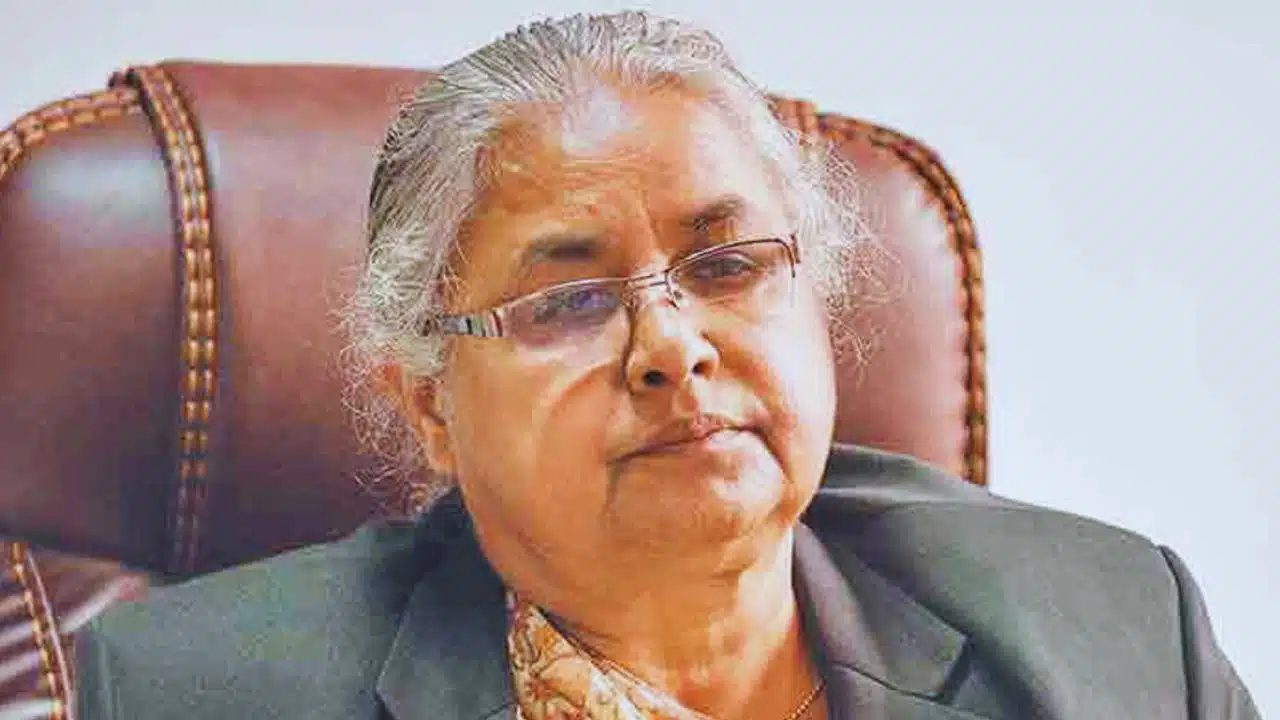
Faced with pressure to unify and present a negotiating front, young organizers convened virtually for nearly four hours to decide on interim leadership. Their consensus was clear: no youth directly tied to political parties should lead, since traditional parties are widely blamed for corruption and political stagnation. After debate, they chose former Chief Justice Sushila Karki as interim leader.
The decision reflects the protesters’ desire for a figure who symbolizes independence, credibility, and fairness. Karki, with her background in law and justice, was seen as the most acceptable option by diverse groups within the movement. Her appointment also signals that protesters want governance built on rule of law rather than party loyalty.
Profile of Sushila Karki
Sushila Karki made history in July 2016 when she became Nepal’s first female Chief Justice. She was born on June 7, 1952, in Biratnagar. Her education included a degree in Political Science from Banaras Hindu University in India in 1975 and a Law degree from Tribhuvan University in 1978. Before becoming Chief Justice, she served as a law professor, a senior advocate, and later as a Supreme Court justice.
Her judicial career is remembered for her willingness to take strong stands against political interference. She was known for rulings that emphasized transparency, fairness, and the importance of seniority in public appointments. In one of her most controversial decisions, her court overturned a government appointment of a police chief, stating that the selection process unfairly ignored seniority.
This ruling led to her impeachment motion in 2017, initiated by lawmakers who accused her of bias and overstepping judicial boundaries. Although the impeachment automatically suspended her from duty, the process failed to secure the required parliamentary majority, and she retired later that year. Despite this episode, many continue to see her as a principled figure who resisted political pressure.
Beyond her judicial work, Karki has written about gender equality and actively participated in women’s rights and human rights organizations. She has been recognized with awards such as the Sambhav Kanoon Puraskar in 2004, highlighting her role in strengthening Nepal’s legal framework.
Alternative Candidate: Balendra “Balen” Shah
Before Karki was chosen, another figure had emerged as a potential leader: Kathmandu’s young mayor, Balendra Shah, also known as Balen. Shah is an engineer by training, having studied structural engineering at Visvesvaraya Technological University in India. He is also known as a rapper who used his music to criticize corruption and social inequality, making him a popular figure among Nepal’s urban youth.
Elected as an independent mayor in 2022, Shah quickly gained national attention for defying traditional party politics. He introduced local governance reforms, improved waste management in Kathmandu, and often clashed with the federal government on issues of autonomy. In 2023, he drew headlines by banning Indian films in Kathmandu cinemas over cultural controversies, further strengthening his image as a bold and independent leader.
While Shah enjoys strong grassroots support, the protest organizers ultimately decided against him as interim leader, believing that someone with a non-political judicial background would carry more credibility in negotiations with both domestic power players and international observers.
Why the Protests Erupted
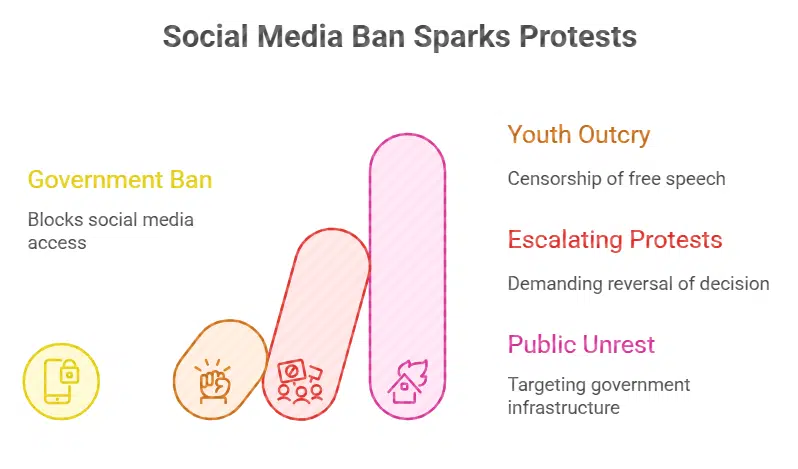
The immediate trigger was a government ban on 26 major social media platforms, including Facebook, YouTube, and X (formerly Twitter). The official justification was that the companies had not registered with authorities or set up liaison offices. For many young people, however, this was seen as a form of censorship and suppression of free speech.
The ban struck a nerve with Nepal’s Gen Z, who depend heavily on digital platforms for communication, education, business, and activism. Within hours, students and young professionals poured into the streets, demanding that the government reverse the decision. As protests grew, their focus shifted toward long-standing issues: lack of job opportunities, widespread corruption, and a political system dominated by aging elites with little accountability.
As anger deepened, protesters targeted parliament, government offices, and even the private homes of senior politicians. Tires were burned in the streets, roads were blocked, and public transport ground to a halt. The government imposed curfews in Kathmandu and other districts, deploying military units to protect infrastructure.
Current Situation in Kathmandu
Kathmandu has been under heavy curfew for days, with soldiers and armed police patrolling major intersections. Social media access was restored after the government backed down, but the protests had already grown beyond the original issue. Shops and businesses remain closed in central districts, and banks and schools are operating under restricted hours.
Security forces have been accused by rights organizations of excessive force, including the use of live ammunition in crowd control. Human rights groups are urging the government to allow peaceful demonstrations and open dialogue with youth leaders. Meanwhile, the families of those killed have demanded justice, claiming that the government used unnecessary violence against unarmed civilians.
What Happens Next
The appointment of Sushila Karki as interim leader is seen as a turning point. Negotiations are expected between her, the military, and other stakeholders to determine the framework of an interim government. However, many questions remain unanswered:
-
How long will the interim government last?
-
Will new elections be scheduled quickly, or will broader constitutional reforms be considered?
-
What role will existing political parties play in the transition?
-
How will justice and accountability for protest deaths and injuries be ensured?
The protesters’ main demand is systemic reform, not just temporary concessions. For many young Nepalis, this is not only about lifting a social media ban but also about dismantling a political culture marked by corruption and unfulfilled promises.
Broader Implications
Nepal’s crisis has drawn international attention. Neighboring India and China, as well as global institutions, are closely watching developments, given Nepal’s strategic location between the two Asian giants. Analysts warn that prolonged instability could disrupt regional trade and migration patterns.
At home, the crisis highlights a generational divide. Gen Z, which makes up a growing share of Nepal’s population, is demonstrating unprecedented political energy. They are demanding not only representation but also accountability and modernization in governance.
The choice of Sushila Karki reflects this shift. By elevating a respected legal figure with a history of independence, the youth movement has signaled that they want rule of law and justice at the core of political transition. Whether this momentum can translate into long-term reform remains to be seen, but for now, Nepal stands at a critical crossroads.