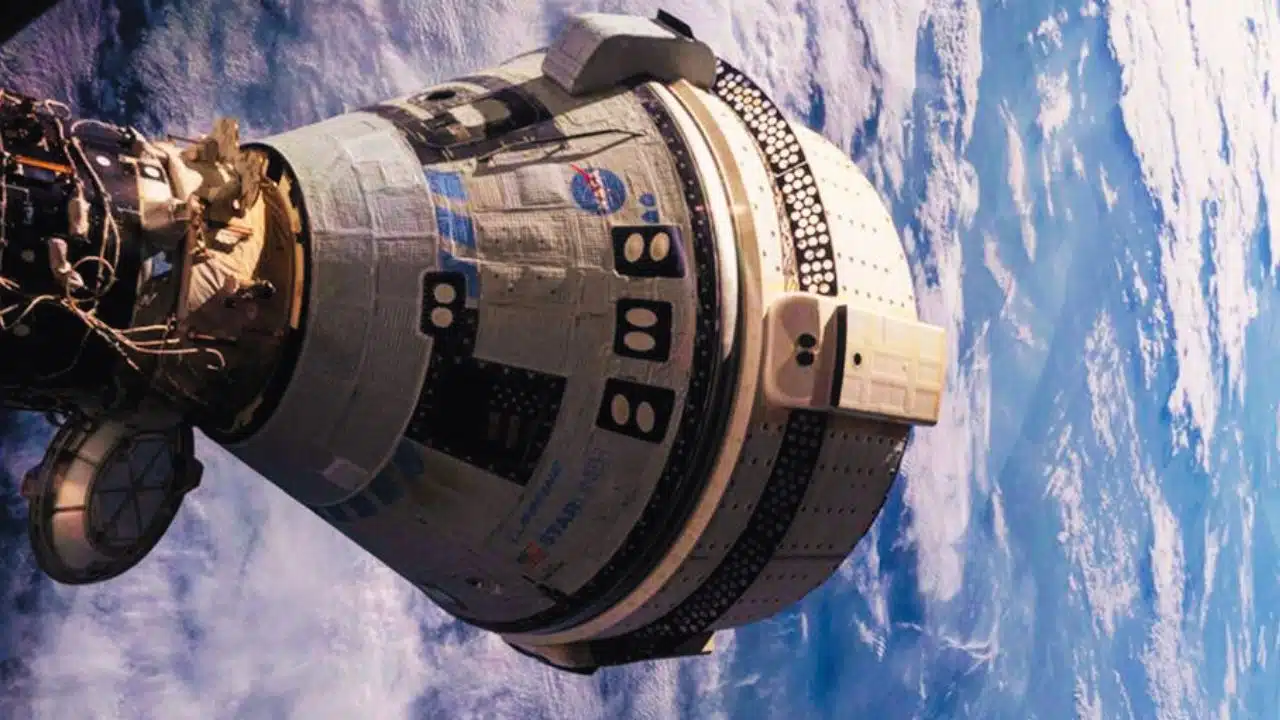
A recent incident aboard the International Space Station (ISS) has sparked concerns as NASA astronaut Butch Wilmore reported hearing a “strange noise” coming from the Boeing Starliner spacecraft. The report comes just days before the Starliner is set to undock from the ISS and attempt an automated return to Earth. The spacecraft’s journey back is considered a critical mission for Boeing, as the company has faced numerous setbacks and delays with the Starliner program.
The Unexpected Discovery: A Strange Noise in Space
On a routine day aboard the ISS, astronaut Butch Wilmore, who is part of NASA’s team, encountered an unusual situation. While inside the orbiting laboratory, he noticed a sound coming from the Starliner spacecraft that caught his attention. Concerned by the noise, Wilmore immediately took action to document it and relay the information to Mission Control at NASA’s Johnson Space Center in Houston.
The sound, described as a rhythmic, pulsating noise, seemed to originate from within the Starliner’s speaker system. Understanding the potential gravity of any unexplained anomaly in space, Wilmore carefully used his communication device to capture the sound and shared it with Mission Control. The exchange, which was recorded, shows Wilmore holding a phone up to the speaker so that the ground team could hear exactly what he was describing.
Initially, Mission Control struggled to detect the sound. However, after Wilmore’s persistent efforts, the team finally heard it. “Butch, that one came through,” Mission Control responded after the sound was transmitted. “It was kind of like a pulsating noise, almost like a sonar ping.” The comparison to a sonar ping—a sound often associated with underwater navigation and exploration—added a layer of intrigue and mystery to the situation.
Not one to leave anything to chance, Wilmore played the sound again for Mission Control, hoping that a second listen might provide more clarity. I’ll do it one more time and let you all scratch your heads and see if you can figure out what’s going on,” Wilmore said, demonstrating his commitment to resolving the issue and ensuring the safety and success of the mission.
The Response from Mission Control and Boeing’s Involvement
NASA’s Mission Control acknowledged the anomaly and assured Wilmore that the recording would be passed along to the appropriate teams for thorough analysis. The ground team expressed a clear intent to investigate the sound, recognizing the importance of addressing any irregularities, especially so close to the spacecraft’s planned undocking and re-entry.
The unusual sound was first reported by Ars Technica, a well-respected technology and science news outlet, which cited the recording initially captured and shared by Rob Dale, a meteorologist based in Michigan. Dale, who is known for his keen interest in space-related events, played a pivotal role in bringing the incident to the public’s attention. Following the report, other media outlets, including Fox News Digital, reached out to both NASA and Boeing for more information, seeking to uncover whether the source of the noise had been identified.
Starliner’s Upcoming Autopilot Mission: A High-Stakes Journey
The Boeing Starliner spacecraft is currently slated to undock from the ISS and embark on a crucial return to Earth, with a touchdown planned in the New Mexico desert. Unlike previous missions, this flight will be unmanned, operating on autopilot—a decision made by NASA due to a series of technical issues that have plagued the spacecraft.
Initially, NASA had planned for astronauts Butch Wilmore and Suni Williams to be aboard the Starliner for its return journey in June. The weeklong mission was highly anticipated as the first crewed flight of the Starliner, which Boeing hoped would mark a significant milestone in the spacecraft’s troubled history. However, the mission was delayed after the spacecraft encountered multiple issues, including thruster failures and helium leaks, which were deemed too risky to attempt a manned return at this time.
These technical setbacks have not only delayed the mission but have also heightened the stakes for Boeing. The company, which has been working tirelessly to restore confidence in the Starliner program, is under immense pressure to ensure the spacecraft’s safe and successful return. Boeing had hoped that this mission, even without a crew on board, would demonstrate the Starliner’s reliability and help revive the program after years of challenges.
Boeing’s Struggles with Starliner: A History of Delays and Cost Overruns
The Boeing Starliner program has been beset by difficulties since its inception. Designed as part of NASA’s Commercial Crew Program, the Starliner was intended to provide a reliable and cost-effective means of transporting astronauts to and from the ISS, complementing SpaceX’s Crew Dragon spacecraft. However, the road to operational status for the Starliner has been anything but smooth.
Boeing has faced multiple technical challenges, including software glitches, hardware malfunctions, and issues with the spacecraft’s thrusters. These problems have led to repeated delays in the Starliner’s development timeline and have caused the program’s costs to balloon significantly. The delays and cost overruns have been a source of frustration for both NASA and Boeing, as the Starliner’s success is critical to maintaining the U.S. space agency’s ability to independently access low Earth orbit.
Despite these challenges, Boeing has remained committed to the Starliner program. The company has conducted numerous tests, both in space and on the ground, to resolve the technical issues and ensure the spacecraft’s safety and reliability. The upcoming unmanned return mission is seen as a pivotal moment for the program—an opportunity for Boeing to demonstrate that the Starliner is ready for operational service.
The Implications of the Mysterious Noise: What’s Next?
The strange noise reported by Wilmore has added a new layer of complexity to an already high-stakes mission. As Boeing and NASA work to identify the source of the noise, there is a sense of urgency to resolve any potential issues before the Starliner begins its return journey. The incident has raised concerns about the spacecraft’s systems and whether they are fully prepared for the challenges of re-entry and landing.
For NASA, ensuring the safety and success of the Starliner mission is paramount. The space agency is likely to conduct a thorough investigation into the noise, examining all possible sources, from the spacecraft’s internal systems to potential external factors that could have caused the anomaly. Depending on the outcome of this investigation, NASA and Boeing may need to make adjustments to the mission plan to mitigate any risks.
As the situation develops, the space community and the public are watching closely. The outcome of this mission will have significant implications for the future of Boeing’s Starliner program and NASA’s Commercial Crew Program as a whole. A successful return could help restore confidence in the Starliner and pave the way for future manned missions. Conversely, any failure could further delay the program and raise questions about the viability of the spacecraft.
A Mission Fraught with Challenges
The discovery of a mysterious noise aboard the Starliner just days before its return to Earth underscores the challenges that Boeing and NASA face as they work to bring the spacecraft into operational service. While the source of the noise remains unidentified, the incident highlights the complexities of space travel and the importance of rigorous testing and safety protocols.
As Boeing prepares for the Starliner’s critical unmanned return mission, the company is under immense pressure to deliver a flawless performance. The mission represents a crucial opportunity to demonstrate the spacecraft’s capabilities and to overcome the setbacks that have plagued the program. For NASA, the mission is a test of the Starliner’s readiness to become a reliable part of the Commercial Crew Program, ensuring continued access to space for U.S. astronauts.
The space community will be watching closely as the Starliner prepares to undock and return to Earth. The outcome of this mission will not only impact Boeing’s Starliner program but also shape the future of human spaceflight for years to come.