

Minimalism has changed. What used to sound like “get rid of everything” is now becoming something more realistic and more useful. Minimalism 2.0 is not about living with the bare minimum. It is about owning what truly supports your life and letting go of what silently drains your time, money, and attention.
This modern approach focuses on one big idea: own less so you can experience more. More peace at home. More freedom in your schedule. More money for meaningful moments. More energy for the people and goals that matter.
In this guide, you will learn what Minimalism 2.0 means, why experiences often bring deeper satisfaction than possessions, and exactly how to apply this mindset in your home, digital life, spending habits, and daily commitments. You will also get practical steps, real-world examples, and simple tools you can start using today.
What Is Minimalism 2.0?
Minimalism 2.0 is a modern version of minimalism focused on intentional ownership, not extreme decluttering. It asks a different question than traditional minimalism. Instead of “How little can I live with?” it asks, “What do I want my life to feel like, and what supports that?”
At its core, modern minimalism is about aligning your stuff, habits, and decisions with your values. It is not a contest. It is not a strict rulebook. It is a flexible way of living that helps you spend less time managing possessions and more time enjoying life.
The Evolution From Traditional Minimalism
Traditional minimalism helped many people, but it also created confusion.
Some early minimalism trends made it look like:
- You must own a tiny number of items
- Your home must look empty
- You should avoid buying almost anything
- You are “failing” if you like comfort or style
That extreme version is not realistic for most people. It also ignores real life. Families have kids. People have jobs. Some hobbies need equipment. Some climates require more clothing. Some people need extra supplies for health, work, or caregiving.
Minimalism 2.0 keeps the good parts of minimalism, like clarity and freedom, but removes the pressure to be perfect. It recognizes that your “enough” will look different from someone else’s.
Real-world example: A photographer might own fewer clothes but keep high-quality gear because photography is a meaningful part of their life and income. Minimalism 2.0 supports that choice.
Core Philosophy of Minimalism 2.0
The philosophy is simple. Own what adds real value, and release what does not.
Minimalism 2.0 is built on three pillars:
- Intentional ownership: You keep items because they serve your life, not because you feel guilty, pressured, or uncertain.
- Value-based decisions: You choose what to own, buy, and keep based on what matters most to you.
- Experience-first living: You prioritize experiences, relationships, learning, health, and time freedom over collecting more stuff.
If you are looking for a modern minimalism lifestyle that feels practical, this is the version that fits real life.
Owning Less Does Not Mean Living With Less
Many people hear “owning less” and assume it means sacrifice. But owning less can create more of what you actually want.
When you reduce excess, you often gain:
- More space
- More calm
- More control over your time
- Less stress about money
- Fewer decisions and distractions
Minimalism 2.0 is not about deprivation. It is about removing friction.
Redefining Wealth and Fulfillment
Traditional success is often measured by what you own. Bigger home. More clothing. More upgrades. More gadgets.
But fulfillment is rarely about volume. A rich life usually includes:
- Time to rest
- Energy to create
- Space to think
- Strong relationships
- Meaningful work
- Health and peace
Minimalism 2.0 treats these as real forms of wealth.
A helpful mindset shift: Instead of asking “Can I afford this?” ask:
- “Will this make my life better next month?”
- “Will this cost me time, attention, or space?”
- “What will I need to maintain, store, clean, or manage?”
The Psychological Impact of Fewer Possessions
Too much stuff can quietly affect mental health. More items create more tasks, more choices, and more background stress.
Here are some common psychological benefits of owning less:
- Reduced decision fatigue: Fewer choices can make daily life feel lighter. You spend less energy deciding what to wear, where to put things, and what to clean.
- More mental clarity: Physical clutter can feel like mental clutter. When your environment is calmer, your mind often follows.
- Less guilt and emotional weight: Many people keep items because of guilt. Gifts you do not use. Clothes you never wear. Items for “someday.” Minimalism 2.0 helps you release that burden.
Real-world example: A busy professional clears a crowded closet and creates a simple “work uniform” of a few outfits they love. Mornings become faster and calmer. They feel more confident and less rushed.
Why Experiences Matter More Than Possessions
Minimalism 2.0 is closely linked with the idea of choosing experiences over possessions. This is not just a trendy phrase. It reflects how people often feel after years of buying more.
A new item can feel exciting for a short time. But the satisfaction fades. Experiences, on the other hand, often grow in value because you remember them, share them, and build your identity around them.
Experiences Create Long-Term Happiness
Experiences tend to deliver happiness in several ways:
- Anticipation: Planning a trip, class, or event creates positive feelings before it even happens.
- Presence: Experiences pull you into the moment. That often leads to deeper emotional impact.
- Memory value: You can relive experiences through stories, photos, and shared moments.
- Connection: Many experiences strengthen relationships, which is one of the strongest predictors of life satisfaction.
Simple example: A weekend hike with friends can cost less than a shopping trip. Yet it often creates stronger happiness because it includes movement, nature, laughter, and connection.
Experiences Shape Identity and Growth
Experiences shape who you become. A new purchase might change your wardrobe. But a new experience can change your skills, confidence, and outlook.
Experiences that support growth include:
- Learning a new language
- Taking a cooking class
- Volunteering for a cause you believe in
- Traveling to a new place
- Training for a fitness goal
- Starting a creative hobby
Minimalism 2.0 supports the idea that your life is not a storage unit. It is a story you are building.
Practical Areas Where Minimalism 2.0 Applies
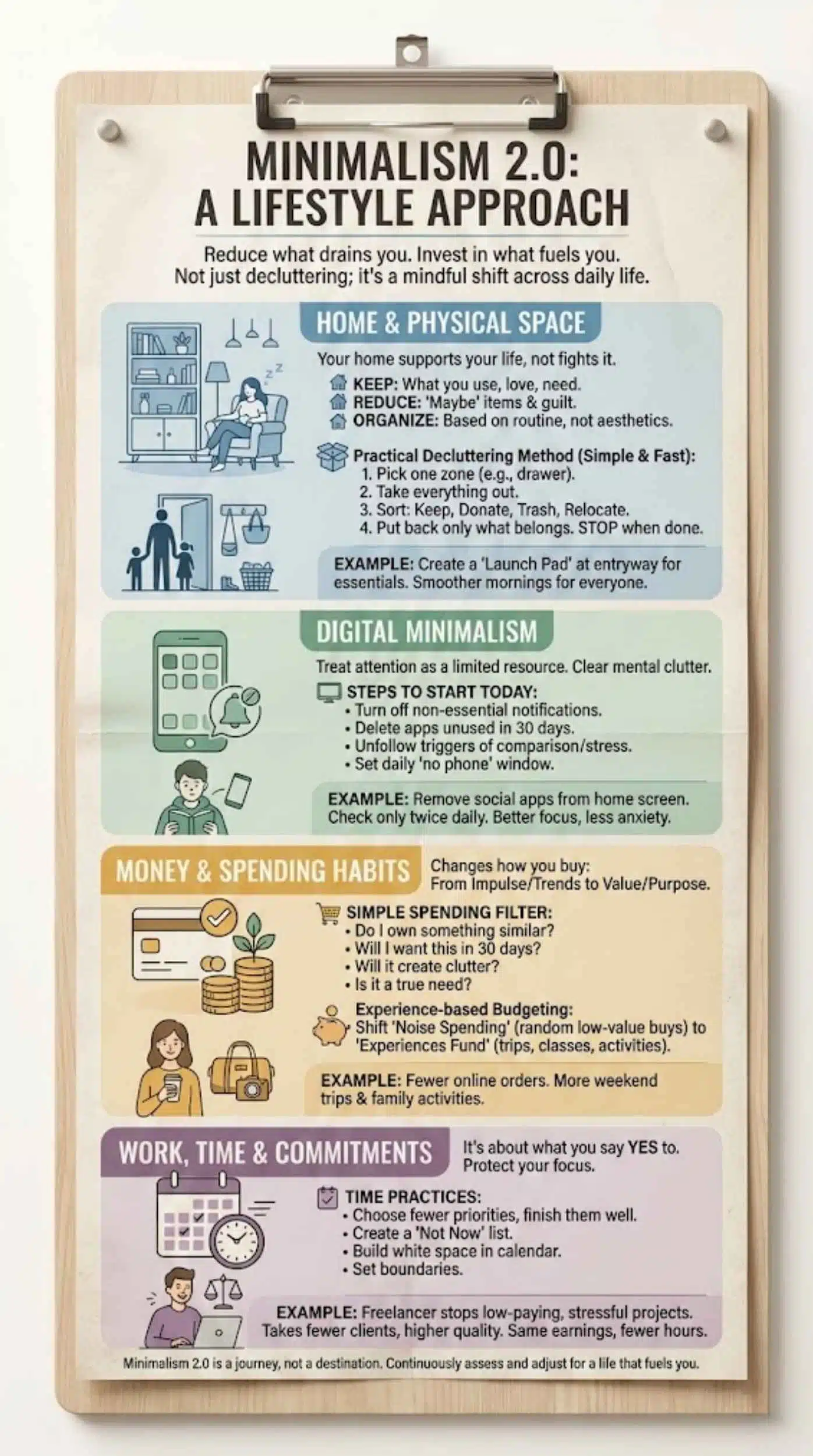
Minimalism 2.0 is not a single action like “declutter your closet.” It is a lifestyle approach that touches many parts of daily life. The goal is to reduce what drains you and invest in what fuels you.
Below are four practical areas where this approach works especially well.
Home and Physical Space
Your home should support your life, not fight it. If you spend your weekends cleaning, organizing, and searching for things, your possessions may be owning you.
Signs your space is working against you:
- You avoid certain rooms because they feel stressful
- Surfaces fill up quickly
- You buy duplicates because you cannot find what you own
- Cleaning feels like a never-ending project
Minimalism 2.0 approach to the home:
- Keep what you use, love, and need
- Reduce “maybe” items that live on guilt
- Organize based on your routine, not aesthetics
A practical decluttering method (simple and fast):
- Pick one zone, like a drawer or shelf
- Take everything out
- Sort into four groups: Keep, Donate, Trash, Relocate
- Put back only what belongs in that zone
- Stop when the zone is done
This prevents burnout and helps you build momentum.
Real-world example: A family creates a “launch pad” near the front door with hooks, a small basket, and a charging station. Shoes, keys, bags, and essentials stay in one place. Mornings become smoother for everyone.
Quick list of high-impact areas to declutter first:
- Kitchen counters
- Entryway
- Bedroom nightstand
- Closet floor
- Bathroom drawers
Digital Minimalism
Digital clutter is real. It may not fill your living room, but it can fill your mind.
Digital minimalism includes:
- Too many apps
- Too many notifications
- Too many open tabs
- Too much scrolling
- Too many subscriptions
Minimalism 2.0 treats attention as a limited resource.
Digital minimalism steps you can start today:
- Turn off non-essential notifications
- Delete apps you have not used in 30 days
- Unfollow accounts that trigger comparison or stress
- Set a daily “no phone” window, like the first 30 minutes after waking
- Use one folder for “rarely used” apps to reduce visual clutter
Real-world example: A student removes social apps from the home screen and checks them only twice a day. They report better focus and less anxiety within a week.
Money and Spending Habits
Minimalism 2.0 often improves finances because it changes how you buy.
Instead of buying based on:
- Impulse
- Trends
- Discounts
- Fear of missing out
You buy based on:
- Value
- Longevity
- Purpose
- Real need
This also supports conscious consumption.
A simple spending filter (use before buying):
- Do I already own something that does this job?
- Will I still want this in 30 days?
- Will this create clutter or simplify my life?
- Is this a quick emotional fix or a true need?
Experience-based budgeting: Many people want more experiences but feel they cannot afford them. Often, money is leaking into small purchases that do not add much joy.
Try creating two categories:
- Enjoyment spending: things that truly improve your life
- Noise spending: things you buy without real value
Then shift even a small part of noise spending into an “experiences fund.”
Example shift:
- Fewer random online orders
- More weekend trips, classes, or family activities
Work, Time, and Commitments
Minimalism 2.0 is also about what you say yes to.
Many people feel overwhelmed not because they own too much, but because they commit to too much.
Common sources of overload include:
- Meetings that could be emails
- Projects with unclear goals
- Social obligations out of guilt
- Too many side tasks that create mental clutter
Minimalism 2.0 time practices:
- Choose fewer priorities and finish them well
- Create a “not now” list for ideas that can wait
- Build white space into your calendar
- Set boundaries that protect your focus
Real-world example: A freelancer stops accepting low-paying projects that cause stress. They take fewer clients, raise quality, and earn the same or more while working fewer hours.
Minimalism 2.0 vs Consumer Culture
Consumer culture teaches us that more is better. More upgrades. More options. More stuff. More status.
Minimalism 2.0 challenges that message. Not by rejecting all buying, but by rejecting unconscious buying.
Breaking the Buy-More Cycle
The buy-more cycle often looks like this:
- Feel stress, boredom, or insecurity
- Buy something for a quick emotional boost
- Feel excitement for a short time
- Return to stress
- Repeat
This cycle is profitable for companies, but costly for your life.
Minimalism 2.0 breaks the cycle by building awareness.
A simple technique: When you want to buy something, wait 24 hours. For bigger purchases, wait 7 days. Most impulse purchases fade when you give them time.
Conscious Consumption as a Rebellion
Conscious consumption does not mean never buying. It means buying with intention.
Conscious consumption looks like:
- Choosing quality over quantity
- Repairing and maintaining what you own
- Buying fewer items that last longer
- Avoiding purchases driven by trends
- Supporting brands that align with your values when possible
Minimalism 2.0 often connects with sustainability because owning less reduces waste. But the main focus is still personal freedom and life quality.
How to Start Practicing Minimalism 2.0
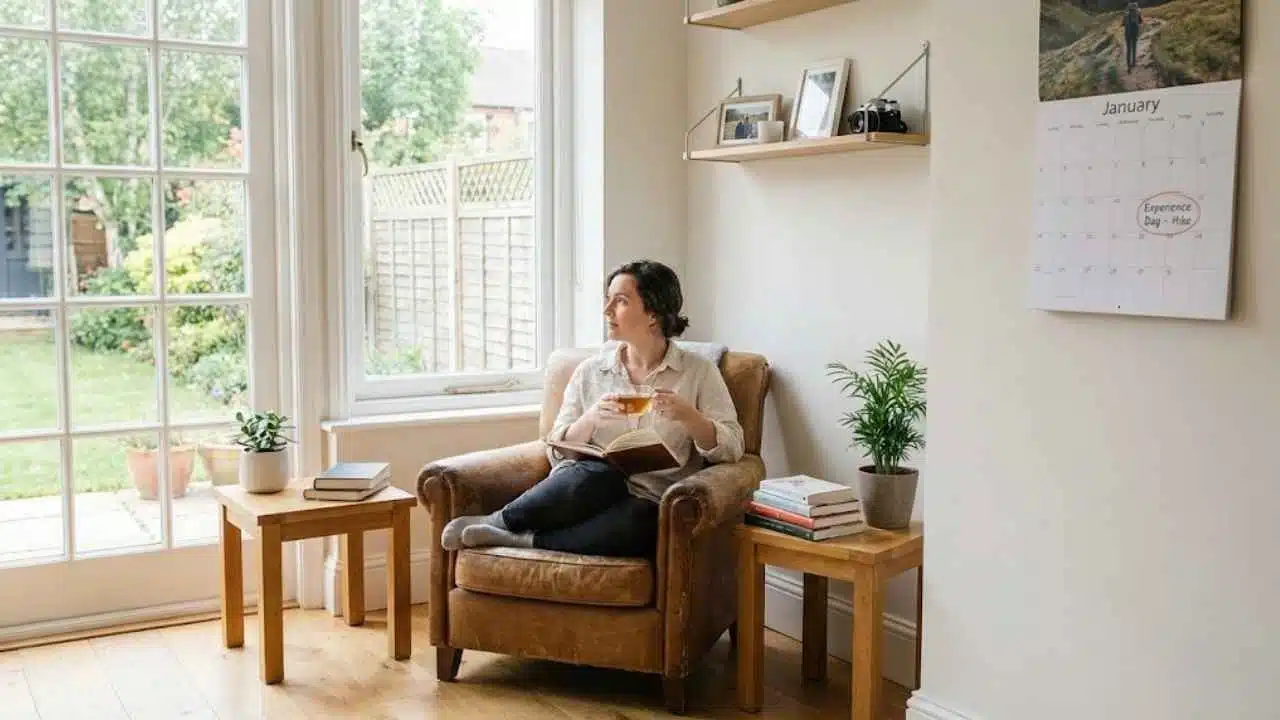
Starting can feel overwhelming, especially if you think minimalism requires a complete lifestyle change. It does not.
Minimalism 2.0 is easiest when you begin with clarity, not with trash bags.
Shift the Mindset First
Before you declutter, decide what you are making room for.
Ask yourself:
- What do I want more of in my life?
- What stresses me the most right now?
- Where do I feel most stuck?
Common answers include:
- More time with family
- More money freedom
- Less anxiety
- More creative energy
- A calmer home
- Better focus
When you know the “why,” the “how” becomes easier.
Ask the Right Ownership Questions
Minimalism 2.0 works best when you use simple decision rules.
Here are helpful questions to ask about any item:
- Do I use this regularly?
- Would I buy this again today?
- Does this support the life I want now?
- Am I keeping this out of guilt or fear?
- Is this replacing something more important, like space or calm?
Tip: If you are unsure, use a “test box.” Put uncertain items in a box, label the date, and store it out of sight. If you do not open it in 60 to 90 days, you likely do not need those items.
Design a Life Around Experiences
Owning less is only half the story. The other half is what you choose instead.
Ideas for experience-first living:
- A monthly “experience day” with friends or family
- A new skill goal every season
- A planned weekend trip instead of a shopping spree
- A budget line for classes, books, or hobbies
- A walking routine with a friend
- A weekly screen-free evening
Possessions vs Experiences
| What You Want | Typical Purchase Response | Minimalism 2.0 Alternative |
| Comfort | New decor or clothes | Declutter space and add one quality item |
| Relaxation | Online shopping | Nature walk, bath, reading time |
| Status | Trendy brand items | Skill-building, health goals, relationships |
| Fun | More gadgets | Trip, class, local event, shared activity |
| Confidence | New outfits | Fitness routine, personal project, learning |
Minimalism 2.0 helps you invest in experiences that build lasting satisfaction.
Common Misconceptions About Minimalism 2.0
Many people avoid minimalism because they think it is extreme or unrealistic. Minimalism 2.0 clears up these misunderstandings.
“Minimalism Means Owning Nothing”
No. Minimalism 2.0 is not about owning nothing. It is about owning what supports your life.
If you love books, you can keep books. If you cook often, you can keep kitchen tools that help you. If you have kids, you will have kid items. The goal is to remove what does not serve you.
“It Is Only for Privileged People”
Minimalism 2.0 can support many income levels.
In fact, intentional living often helps people:
- Reduce wasteful spending
- Avoid debt from impulse purchases
- Focus on needs and long-term value
- Build savings for important goals
It is not about buying expensive “minimalist” products. It is often about buying less and using what you already have.
“Minimalism Is Boring or Restrictive”
Minimalism 2.0 is about freedom, not restriction.
A cluttered life can be restrictive because you are always managing and maintaining. A simpler life can feel more open, creative, and spontaneous.
Many people find they do more after simplifying:
- Travel more
- Create more
- Spend more time with friends
- Feel calmer at home
- Take better care of their health
Is Minimalism 2.0 Right for You?
Minimalism 2.0 is for anyone who wants more control over their life and less noise in their environment.
It may be a strong fit if you:
- Feel overwhelmed by clutter or commitments
- Want more time and mental clarity
- Feel stuck in a buy-and-discard cycle
- Want to focus on experiences over possessions
- Want your spending to reflect your values
You do not need to change everything. You can start small and still feel real benefits.
A good starting goal is not “own fewer things.” A better goal is:
- “Make daily life easier”
- “Reduce stress at home”
- “Spend money on what matters”
- “Protect my attention”
Final Thoughts: Living Rich With Less
Minimalism 2.0 is a practical, modern approach to living well. It is not a trend and it is not a performance. It is a tool for building a life with more peace, more purpose, and more experiences that you actually remember.
Owning less does not make you smaller. It often makes your life bigger. It gives you space to breathe, time to focus, and freedom to choose what matters.
If you want to start today, choose one small step:
- Declutter one drawer
- Cancel one unused subscription
- Turn off notifications for one week
- Plan one meaningful experience this month
Minimalism 2.0 is not about perfection. It is about alignment. Own less. Experience more. Live better.






















