

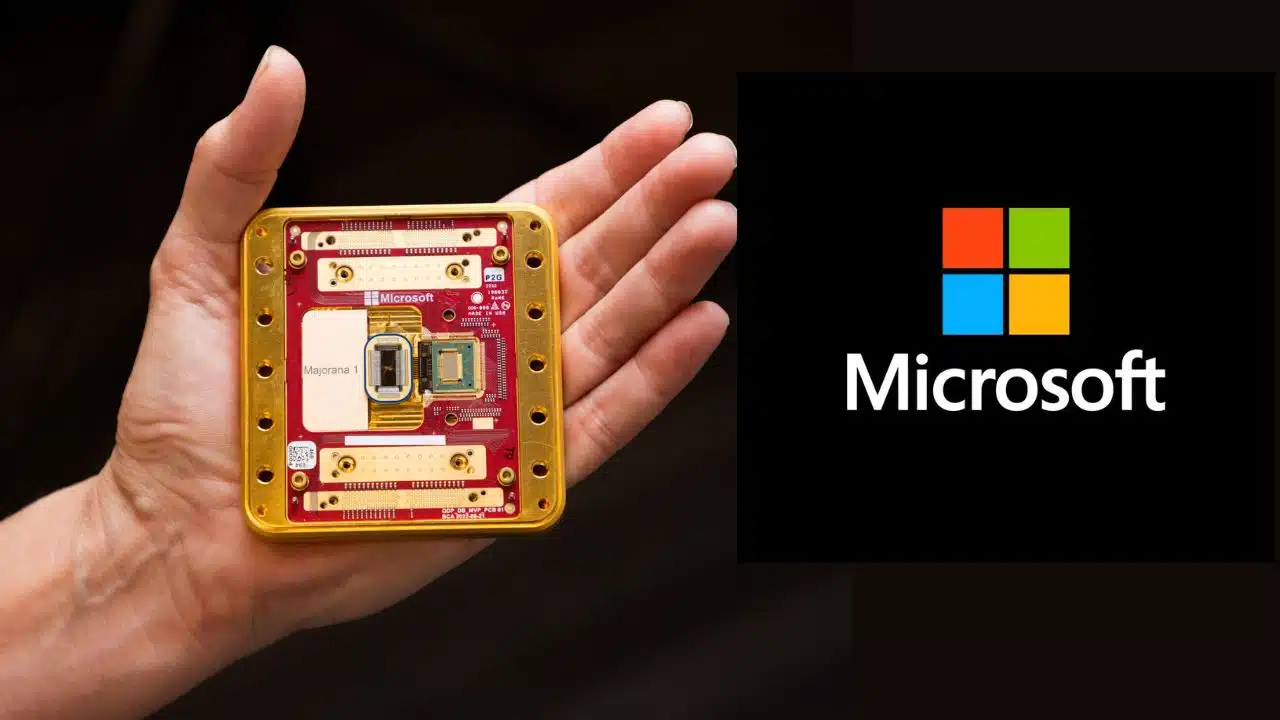
Microsoft has recently unveiled a groundbreaking advancement in quantum computing with the introduction of its Majorana 1 chip, powered by a novel Topological Core architecture. This development signifies a pivotal moment in the pursuit of stable and scalable quantum computers, potentially revolutionizing various industries by addressing complex computational challenges more efficiently.
Unveiling Majorana 1 and the Topological Core Architecture
The Majorana 1 chip represents a significant leap in quantum processing technology. Designed to enhance the reliability and scalability of qubits—the fundamental units of quantum information—this chip incorporates a unique material known as a “topoconductor.” This material facilitates the observation and control of Majorana particles, which are theorized to provide a more stable foundation for qubits. Microsoft asserts that this innovation could enable a single chip to support up to one million qubits, vastly improving computational power for complex simulations and real-world problem-solving in fields such as medicine, cryptography, and material science.
The Science Behind Topological Conductors and Majorana Particles
Topological conductors are engineered materials designed to host Majorana zero modes (MZMs), which are quasiparticles acting as their own antiparticles. In the Majorana 1 chip, these MZMs are formed at the ends of superconducting nanowires composed of indium arsenide and aluminum. When cooled to near absolute zero and subjected to specific magnetic fields, these nanowires create a unique state of matter known as a topological superconductor. This state is crucial for developing qubits that are both stable and controllable, addressing the trade-offs present in existing quantum computing technologies.
Simplifying Quantum Error Correction
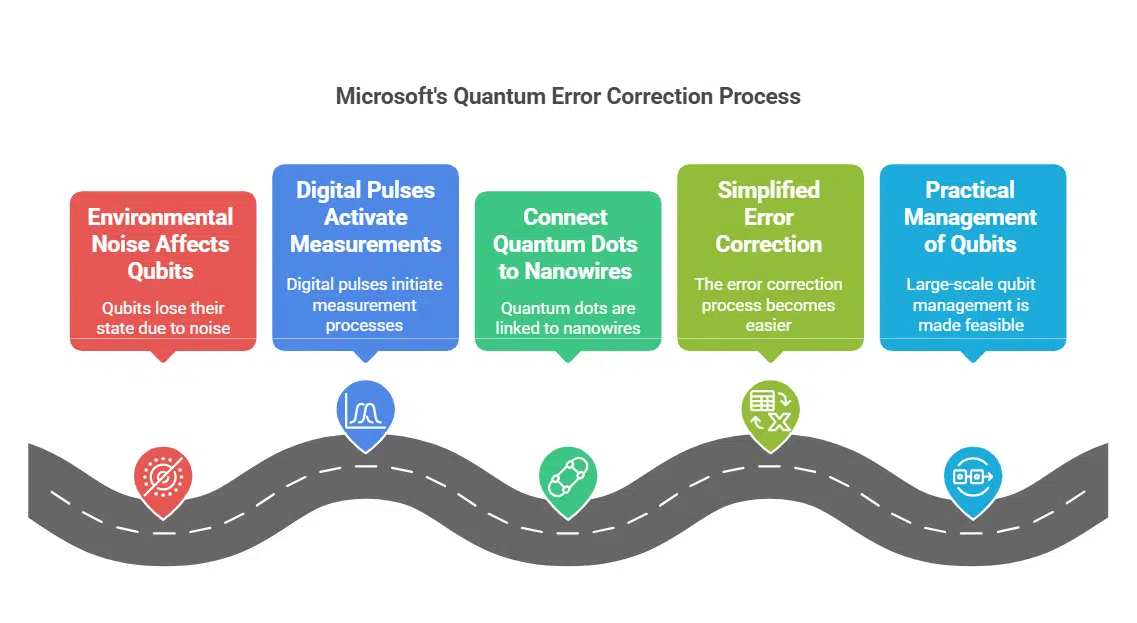
A major hurdle in quantum computing is error correction, as qubits can easily lose their quantum state due to environmental noise. Microsoft’s approach simplifies this process by utilizing measurements activated by digital pulses to connect and disconnect quantum dots from nanowires. This method reduces the complexity of error correction, making it more practical to manage large numbers of qubits necessary for real-world applications.
Community Response and Scientific Scrutiny
While Microsoft’s announcement has generated excitement, it has also prompted scrutiny within the scientific community. Some researchers urge caution due to the lack of detailed evidence accompanying the claims. Physicist Georgios Katsaros noted that without additional data from qubit operations, it’s challenging to fully assess the breakthrough. This sentiment reflects the broader scientific community’s call for thorough validation of such significant advancements.
Implications Across Various Industries
The potential applications of Majorana 1 extend across multiple sectors. In healthcare, for instance, quantum computers could revolutionize drug discovery and diagnostic decision-making by processing complex biological data more efficiently. The enhanced computational capabilities could lead to the development of personalized medicine and more effective treatments. In the field of cryptography, quantum computing poses both opportunities and challenges; while it could break existing encryption methods, it also offers the potential for creating virtually unbreakable codes. Additionally, industries such as finance, logistics, and materials science could benefit from optimized solutions to complex problems, leading to increased efficiency and innovation.
Collaboration with DARPA and Future Prospects
In recognition of its progress, Microsoft has been selected as one of two finalists in the Defense Advanced Research Projects Agency’s (DARPA) Underexplored Systems for Utility-Scale Quantum Computing (US2QC) program. This initiative aims to evaluate quantum systems capable of addressing challenges beyond the reach of classical computers, further underscoring the potential of Microsoft’s approach to quantum computing. The collaboration with DARPA signifies a strategic effort to accelerate the development of practical quantum computing solutions, potentially leading to advancements in national security, scientific research, and beyond.
In summary, Microsoft’s introduction of the Majorana 1 chip represents a promising step forward in the quest for practical quantum computing. By leveraging topological superconductors and focusing on scalable, stable qubits, this development holds the potential to transform industries and solve complex problems more efficiently. However, as with all scientific advancements, further validation and peer-reviewed research are essential to fully realize its potential. The coming years will be critical in determining the practical applications and impact of this technology on various sectors.






















